
Dior
LES TRIOMPHES
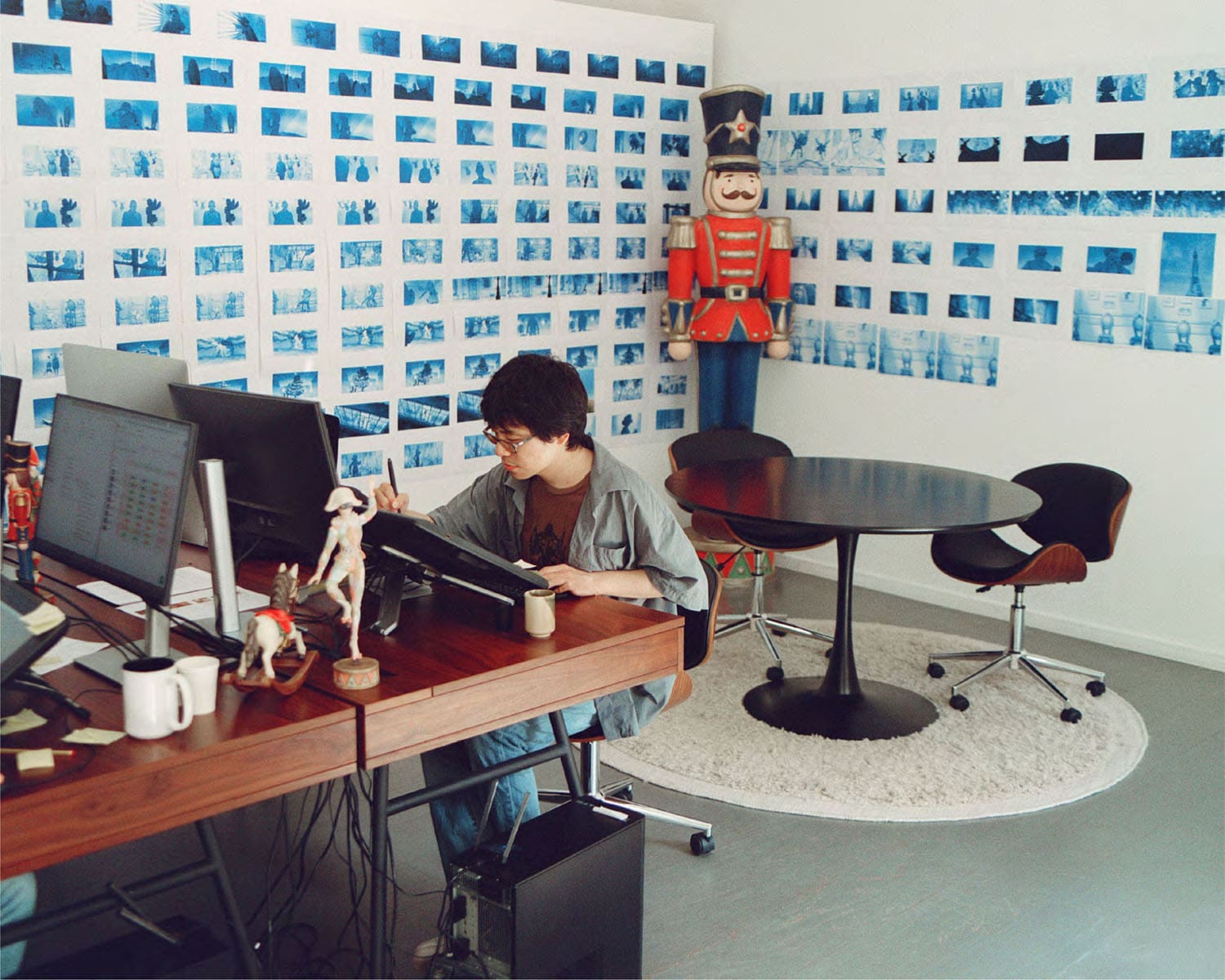
- Physical Cutout Mastery: Sylvain Chomet eschewed synthetic shortcuts, reviving the exacting frame-by-frame paper cutout mechanics of the 1940s to honor the New Look’s golden decade.
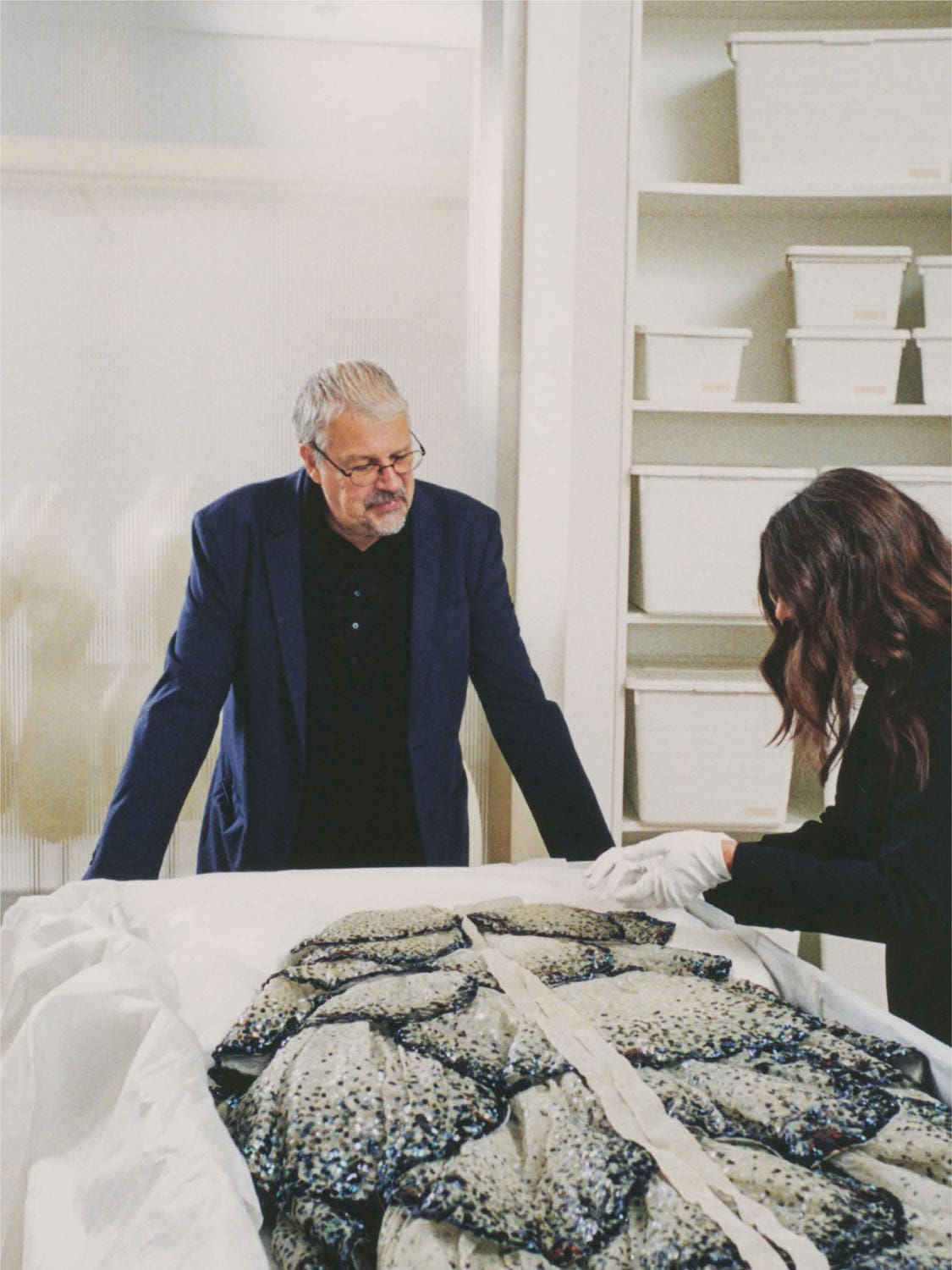
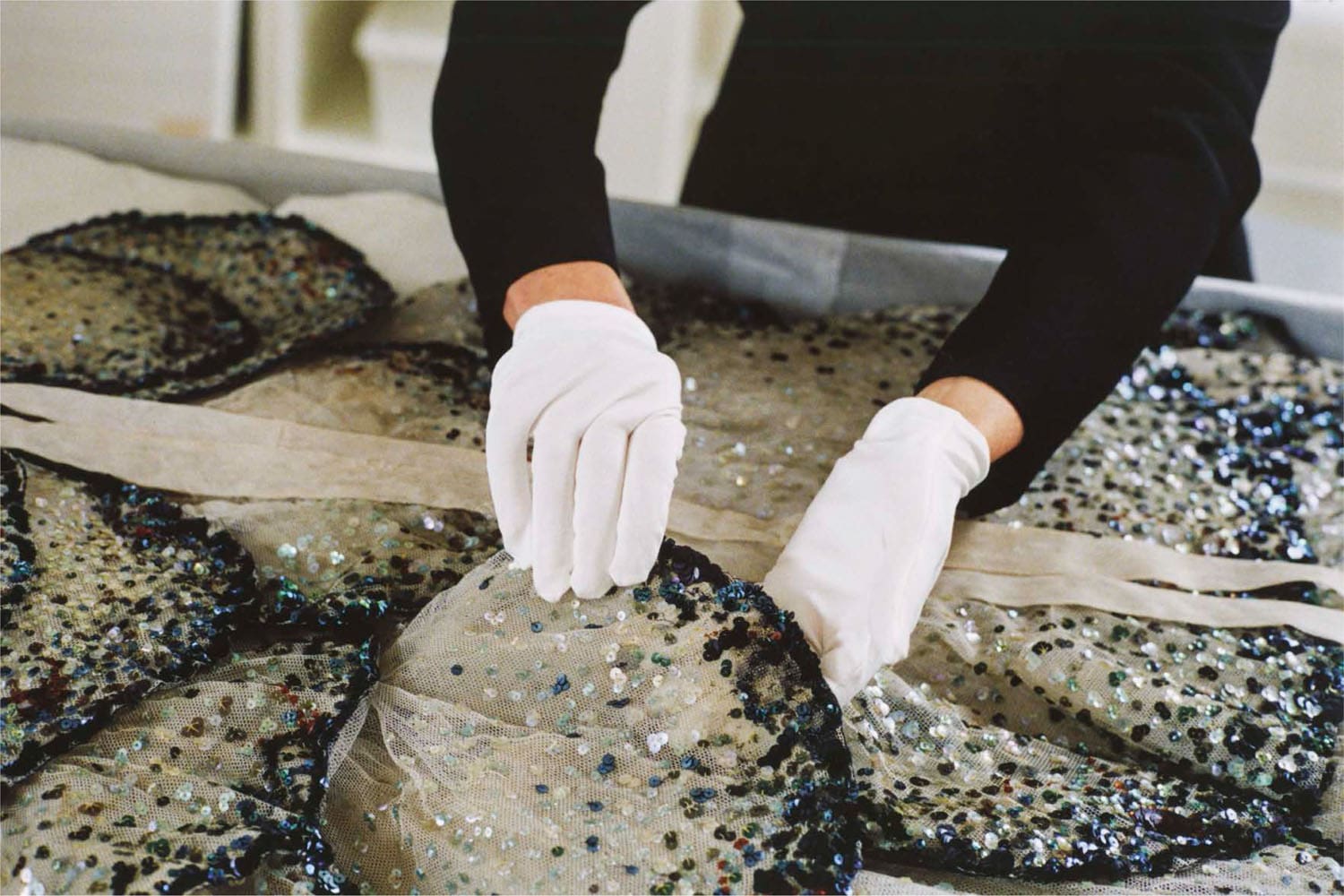
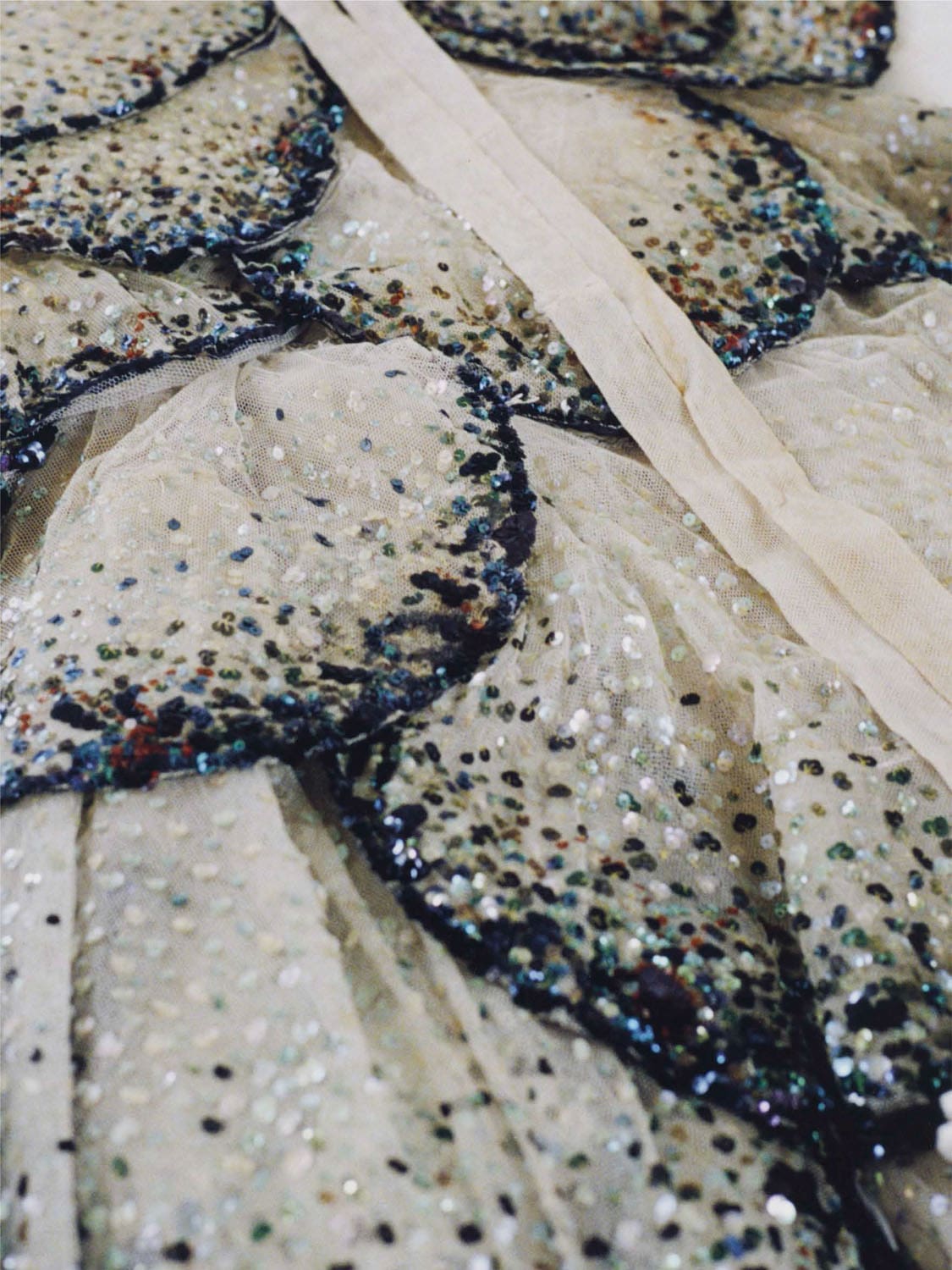
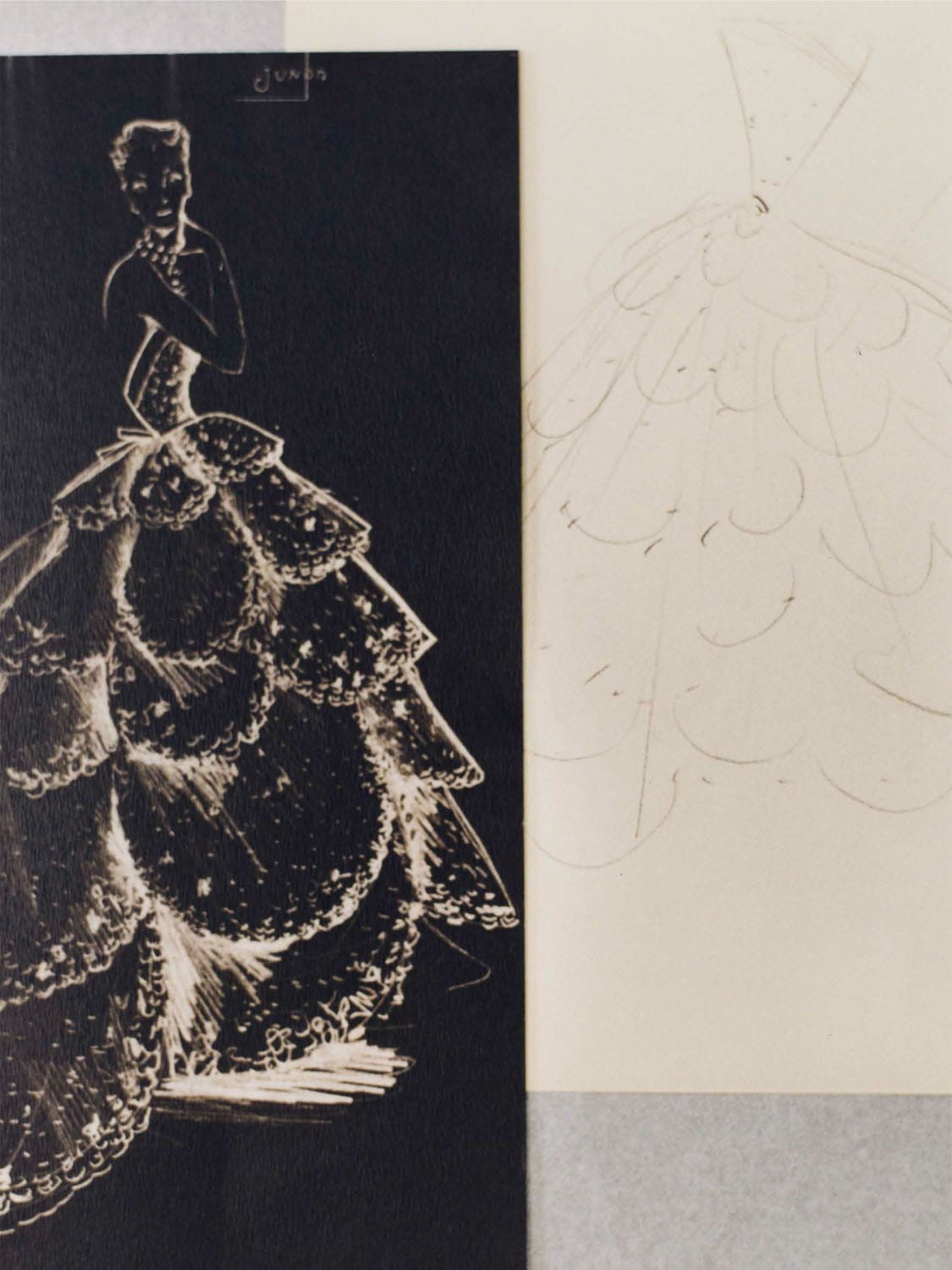
- Archival Rigor: Direct examination of the 1949 Junon gown in the Dior heritage vaults translated every scalloped petal, sequin weight, and structural seam into authentic visual weight.
- Petite-Main Tribute: Immortalizing real historical artisans—Dame Marguerite Carré, Yvonne Ansermier, and Paulette Boncoure—elevated the atelier workforce from anonymous background hands into legitimate storybook legends.
- Human Hand Defiance: Direct rebuke to the entertainment industry’s rush toward generative algorithmic shortcuts, positioning couture as the last fierce protector of analog draftsmanship.
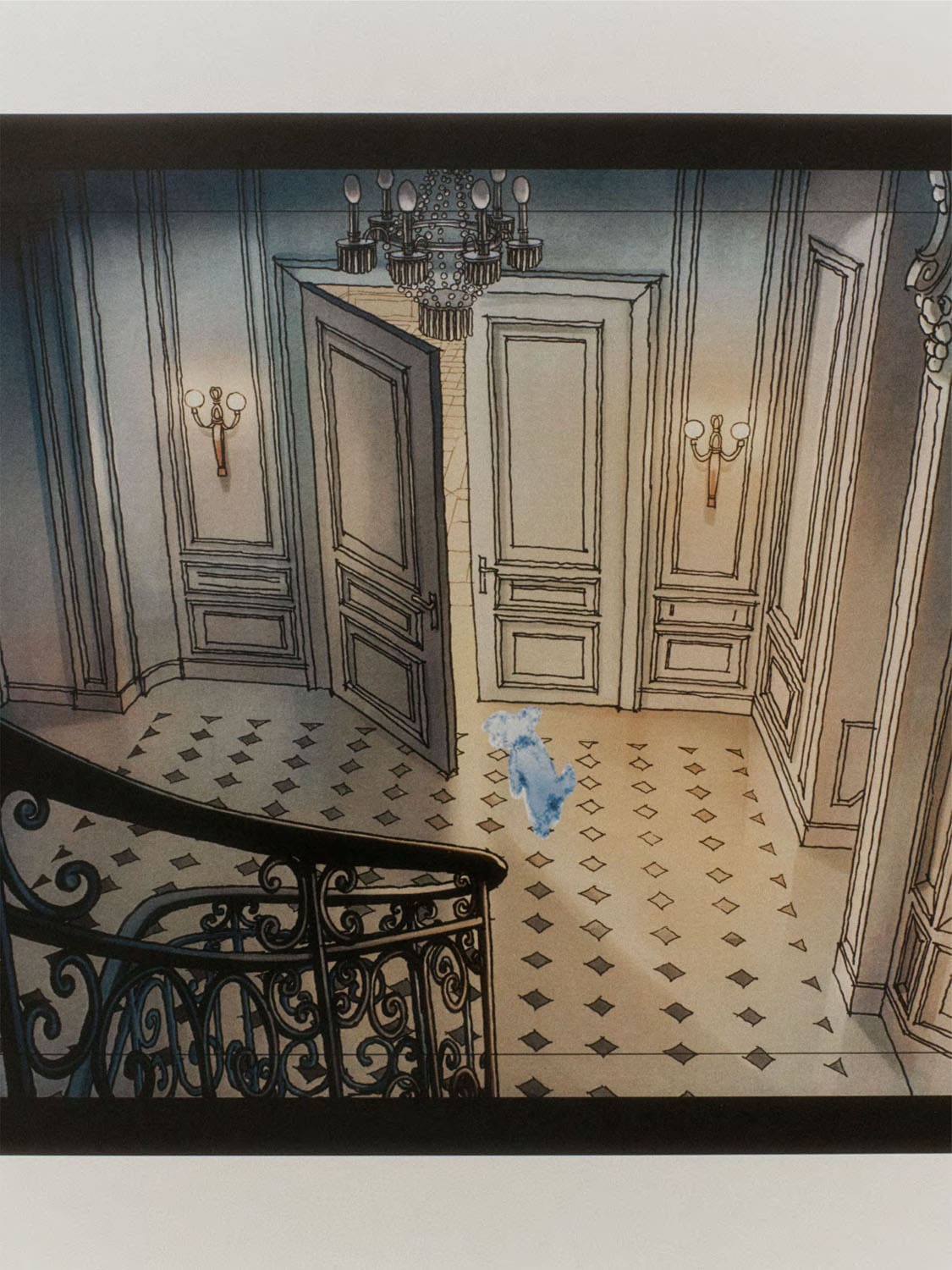
- Uncompromising Medium: Hand-painted gouache and watercolor backdrops lent mid-century Paris a velvety, tactile depth that mechanical rendering engines cannot fake.
- Educational Intent: A deliberate choice to inspire the next generation of illustrators and couturiers rather than feeding automated content loops.
- Chiaroscuro Palette Shift: A fluid chromatic arc moving from the cold, ink-blue stillness of Avenue Montaigne into the blinding, saturated warmth of early Hollywood Technicolor.
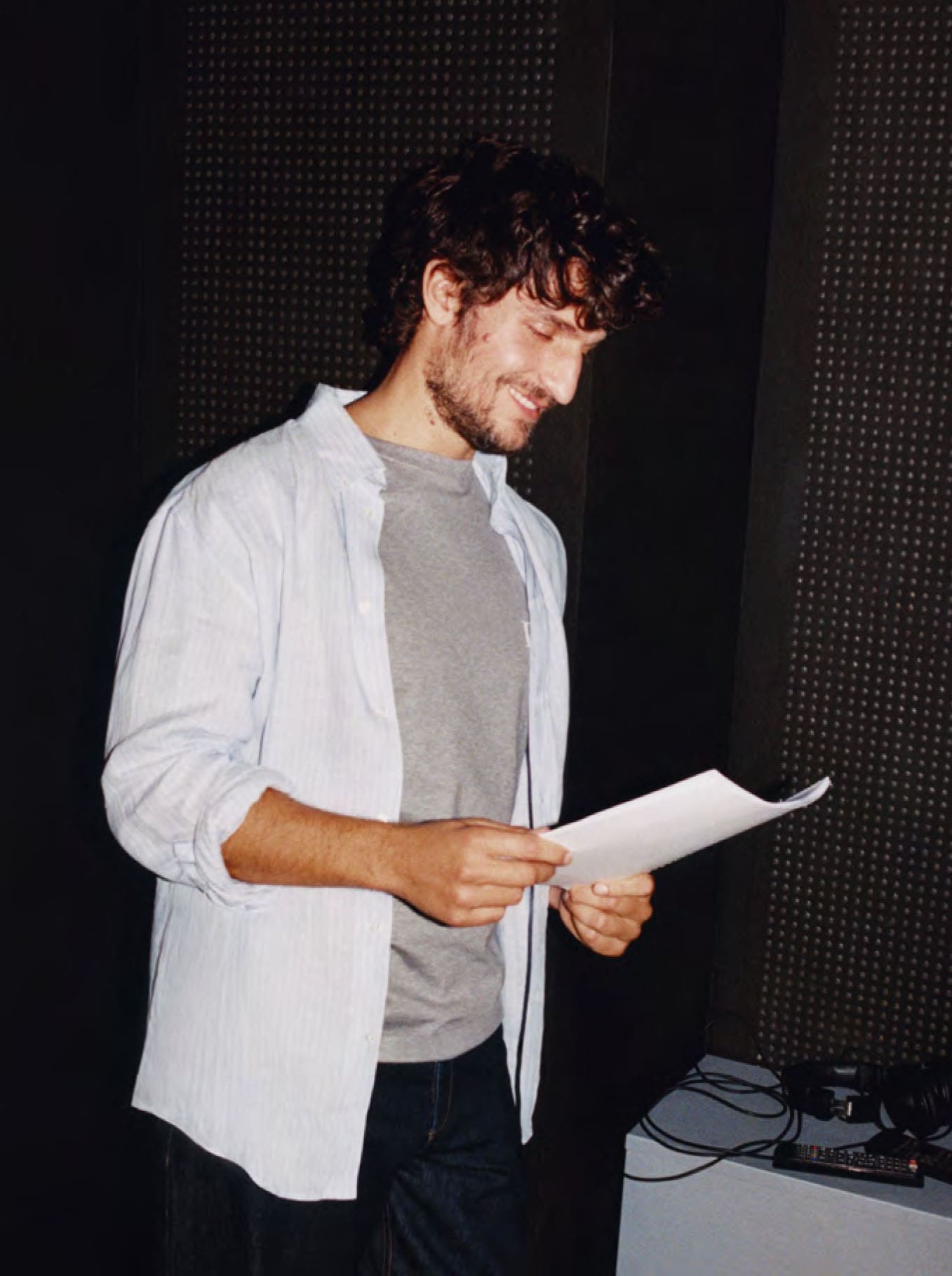
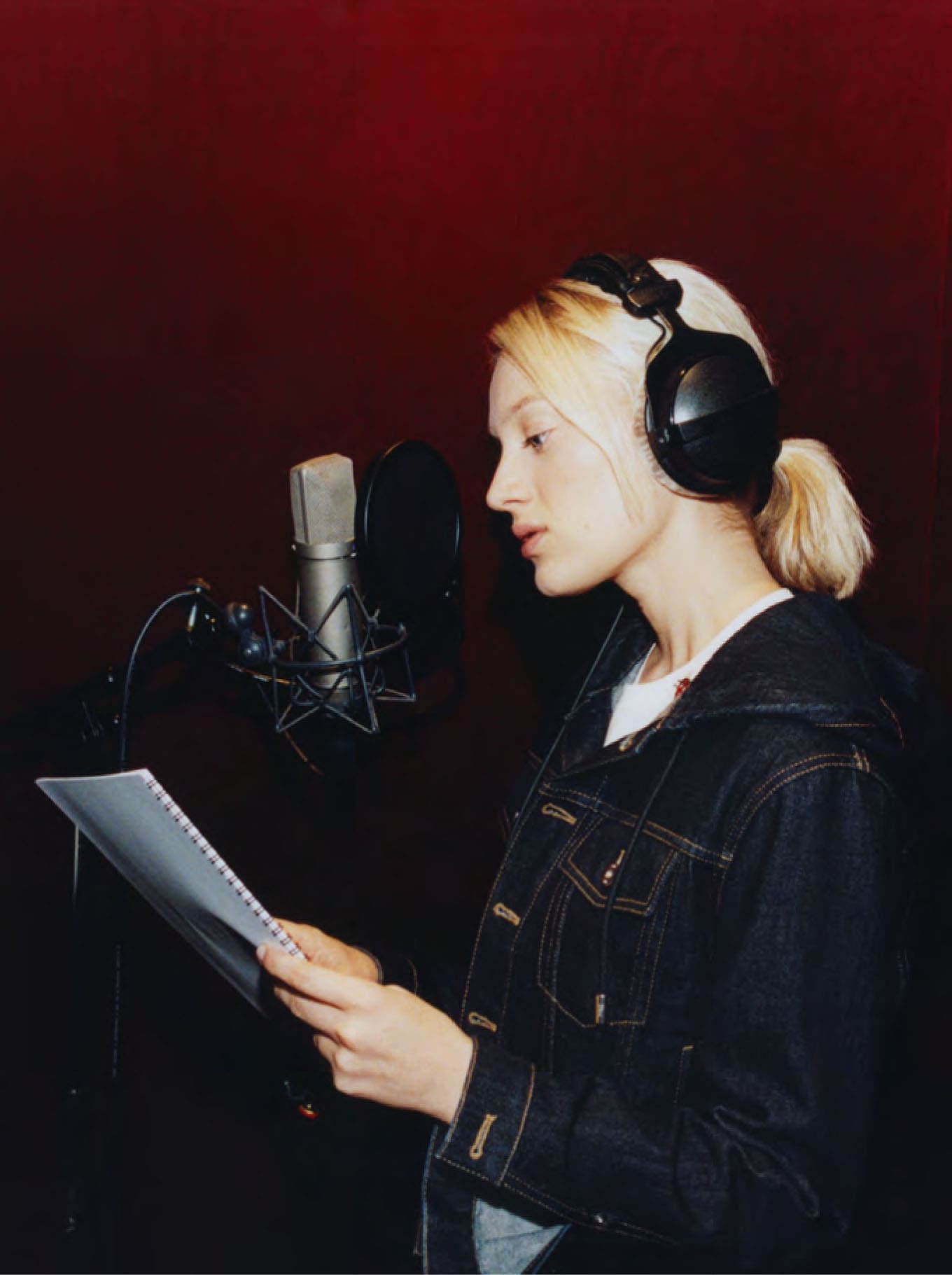
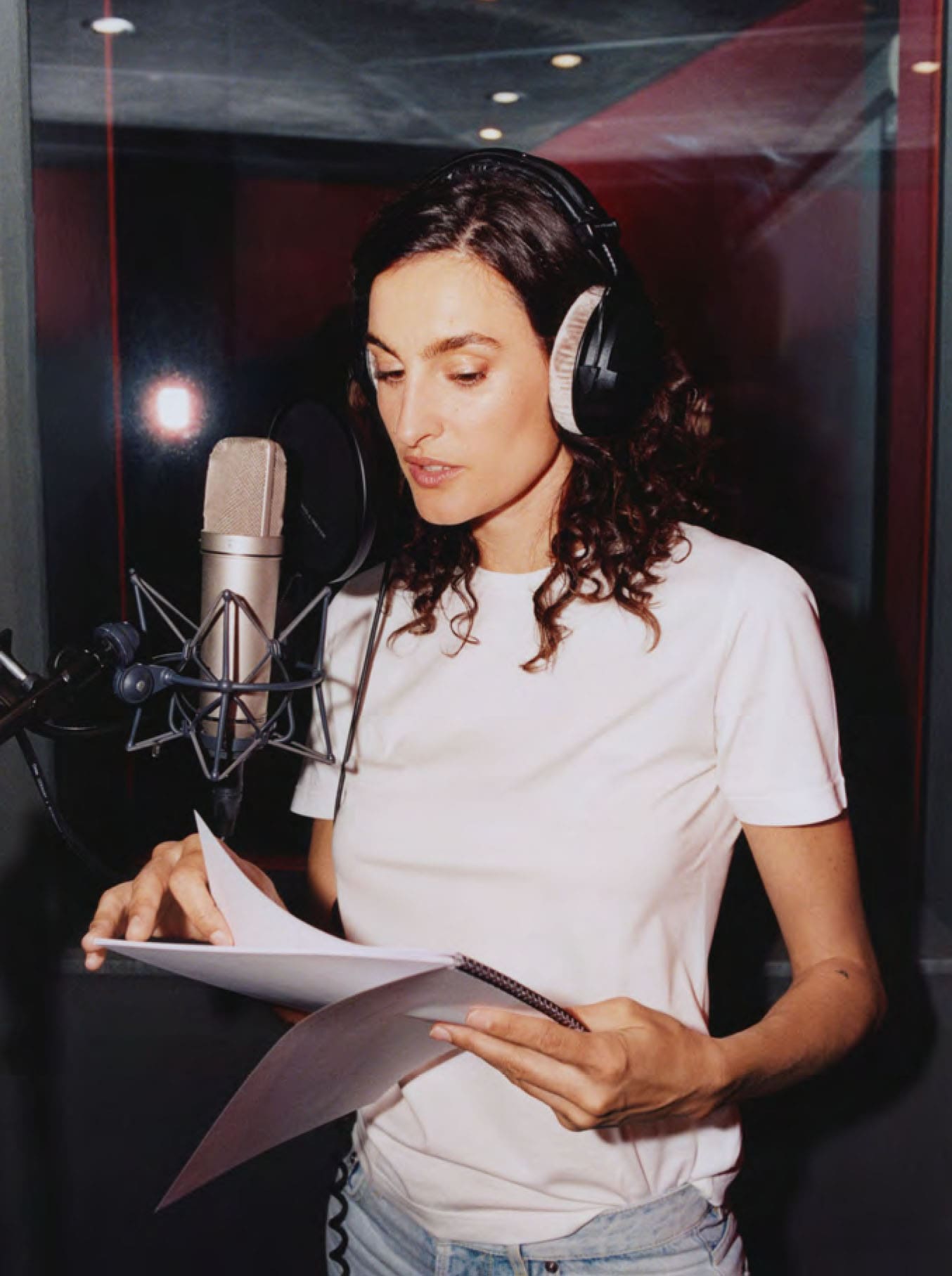
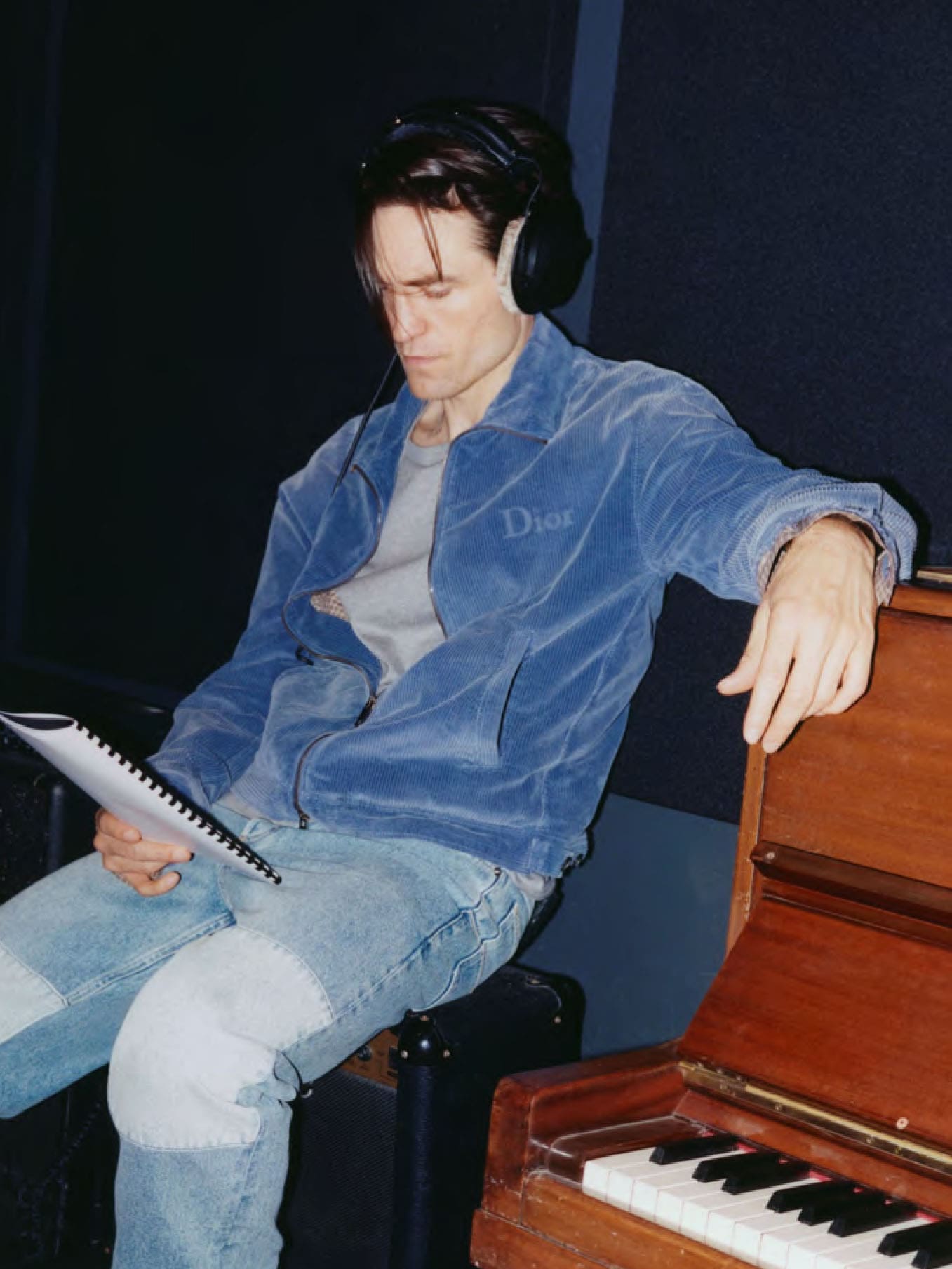
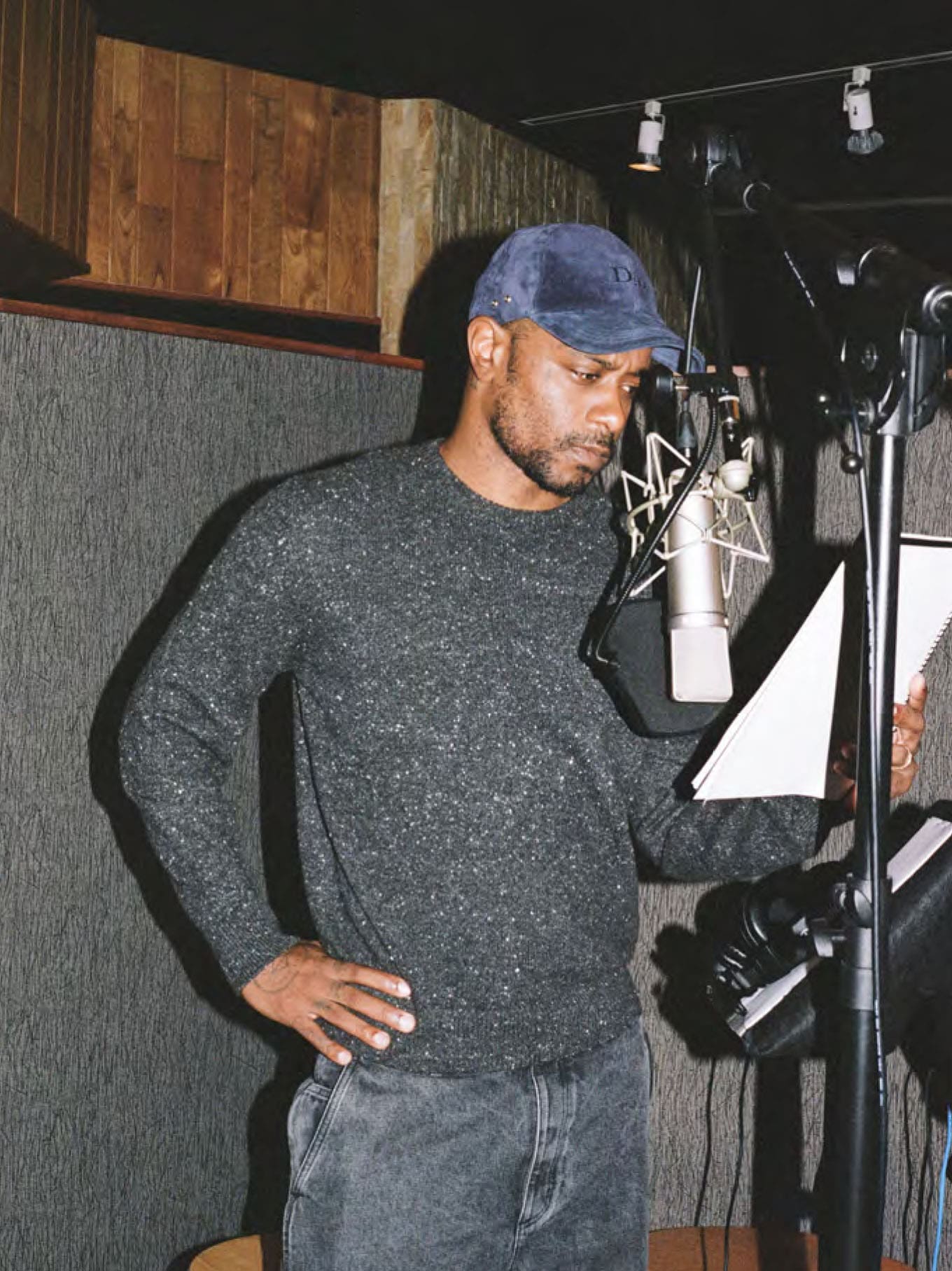
- Sonic Texture: Vocal casting acted as structural counterpoint—Robert Pattinson’s rhythmic narration, Louis Garrel’s quiet hesitation, Camille Cottin’s sharp Dietrich drawl, and Rihanna’s breezy, irreverent Lucky Star avoided stunt casting in favor of theatrical cohesion.
- Proportional Pacing: Seamless narrative tension packed an entire cinematic quest—from panic to drafting table, oceanic flight, and soundstage unveiling—into a tight, breathtaking holiday capsule.
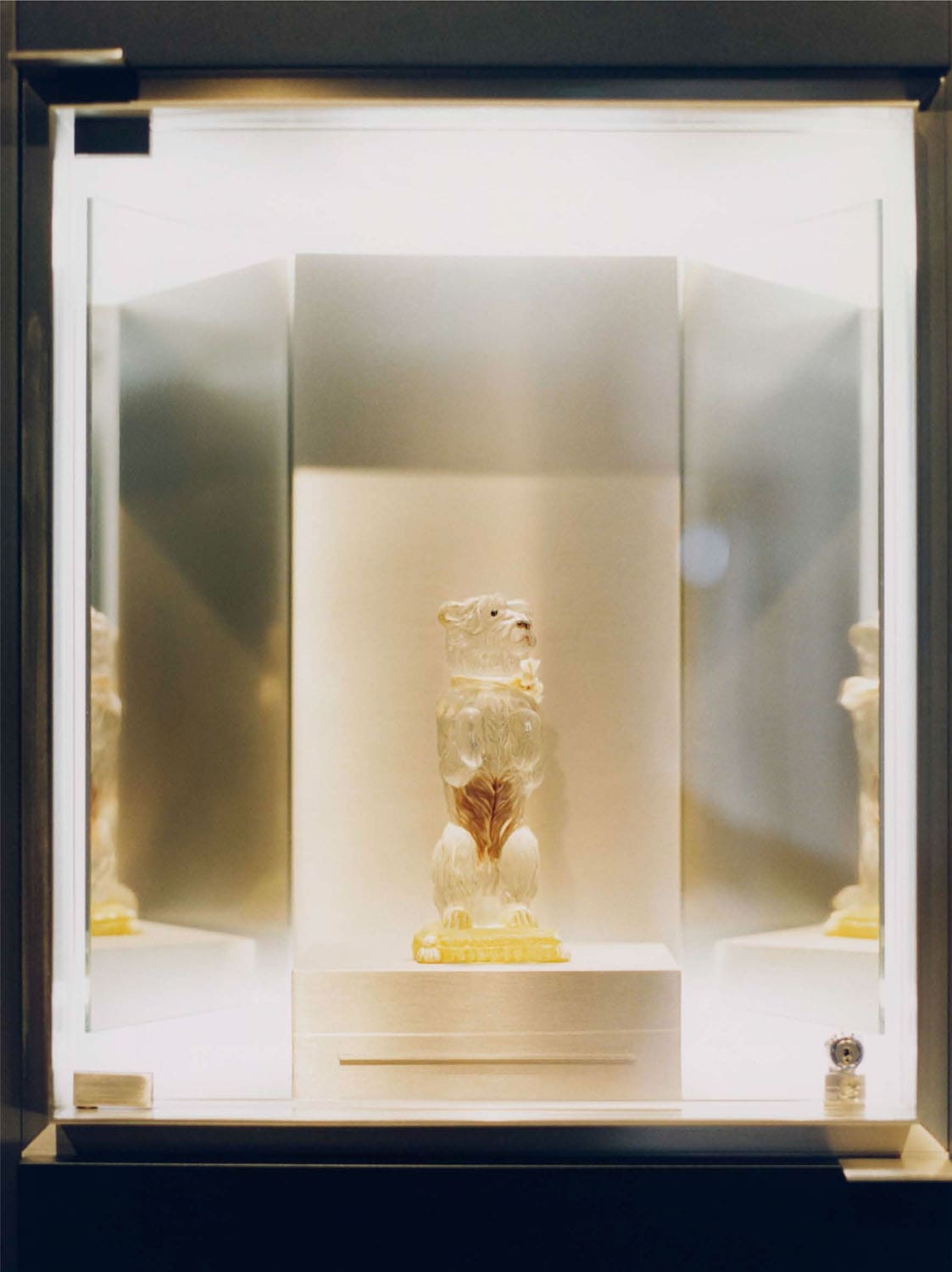
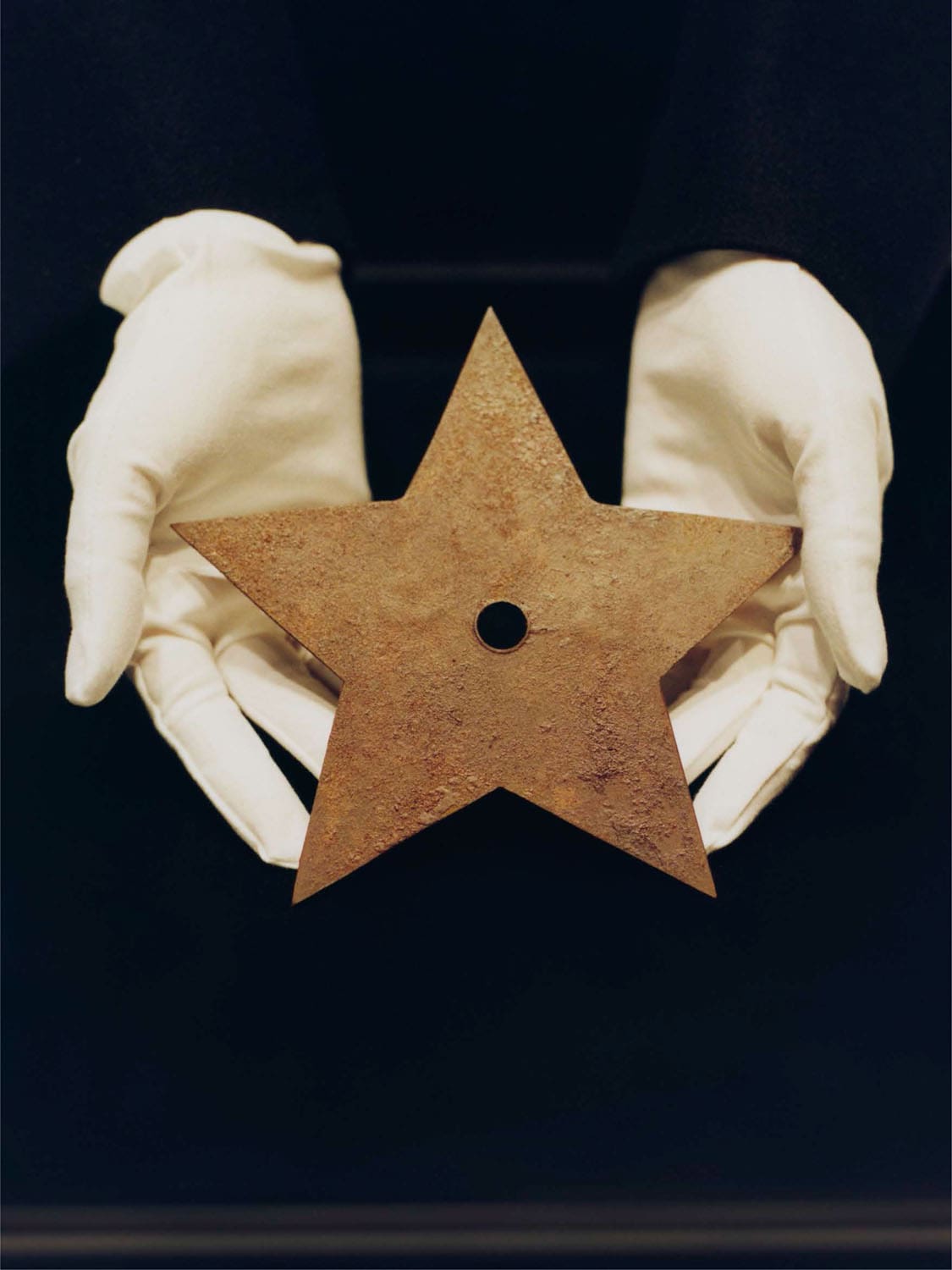
- Sentient Brand Mythology: The iconic cane armchair from the Galerie Dior, Bobby the dog, and the 1946 lucky star drove the plot forward as dramatic actors rather than static brand inventory.
- Subversive Humor: Telling Christian Dior to simply "chill" under a snowy Paris sky instantly stripped away the stuffy, untouchable museum dust often suffocating heritage luxury.
- Couture Desire: Reimagining the Junon gown as a luminous, snow-thawed Christmas tree transformed archival history into the ultimate seasonal obsession.
RÉSERVATIONS
- Aucun
La Nuit de Christian Dior, film d'animation en couleurs du réalisateur français primé Sylvain Chomet. Scénario d'Eleonora de Gray, rédactrice en chef de RUNWAY MAGAZINE. Photo / Video Courtesy: CHRISTIAN DIOR / PEP Perez Guarro / Thomas Chene / Matt Kelly / Lee Mary Manning. Original Music by Come Ordas.
Introduction
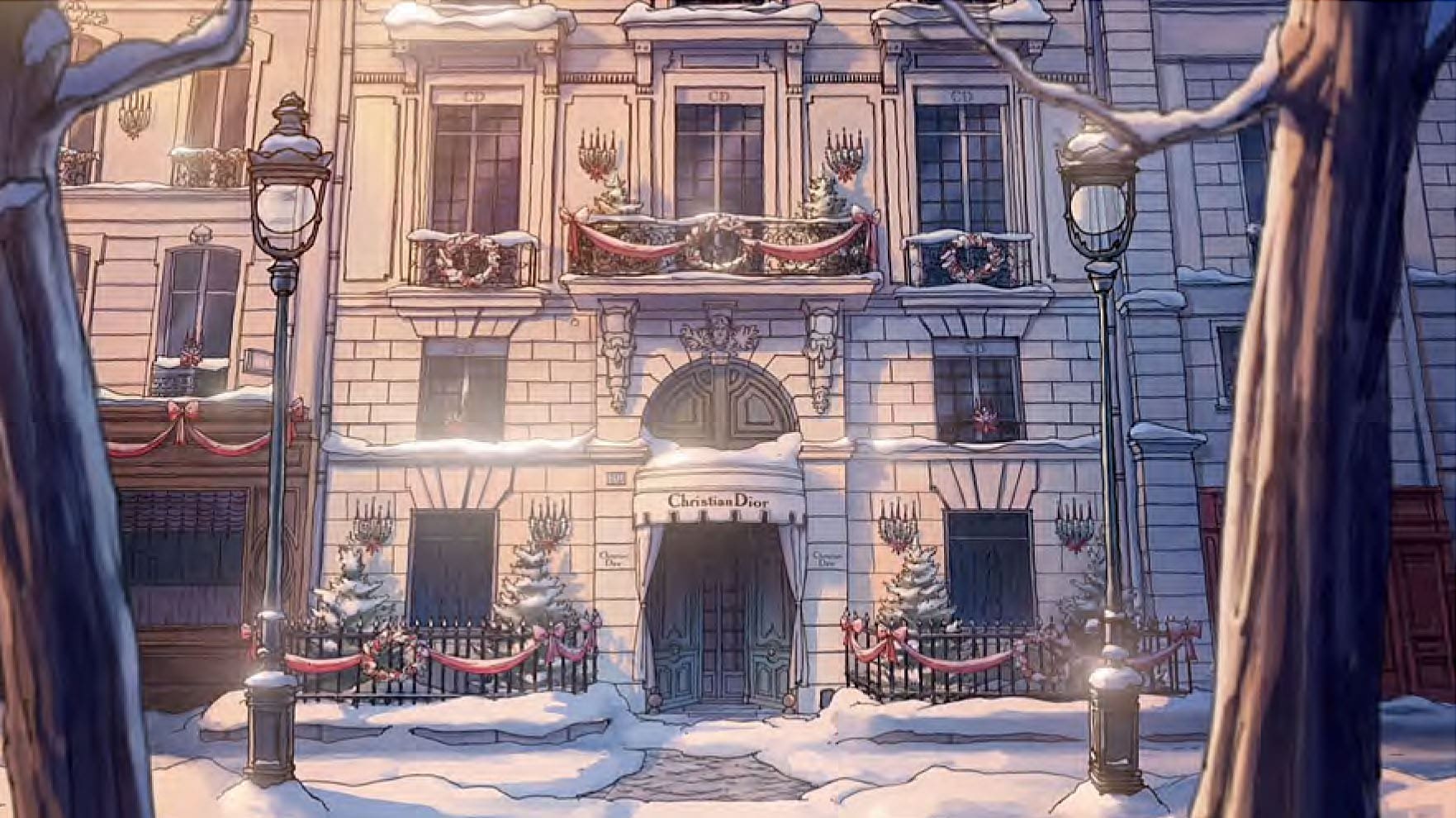
While Disney boardrooms spend their fiscal quarters pink-slipping actual illustrators to AI, scraping voice libraries to train mechanical counterfeits, and systematically stripping the wonder out of their so-called Magic Kingdoms, something extraordinary just slipped out of 30 Avenue Montaigne.
True holiday magic, as it turns out, is no longer manufactured on digital studio lots. It has sought sanctuary in the French couture ateliers.
A comment on Dior’s socials caught the cultural pulse dead-on: “You know the world is healing when we get hand-drawn Christmas movies from brands. Thank you for reminding the world of the power of human art.”
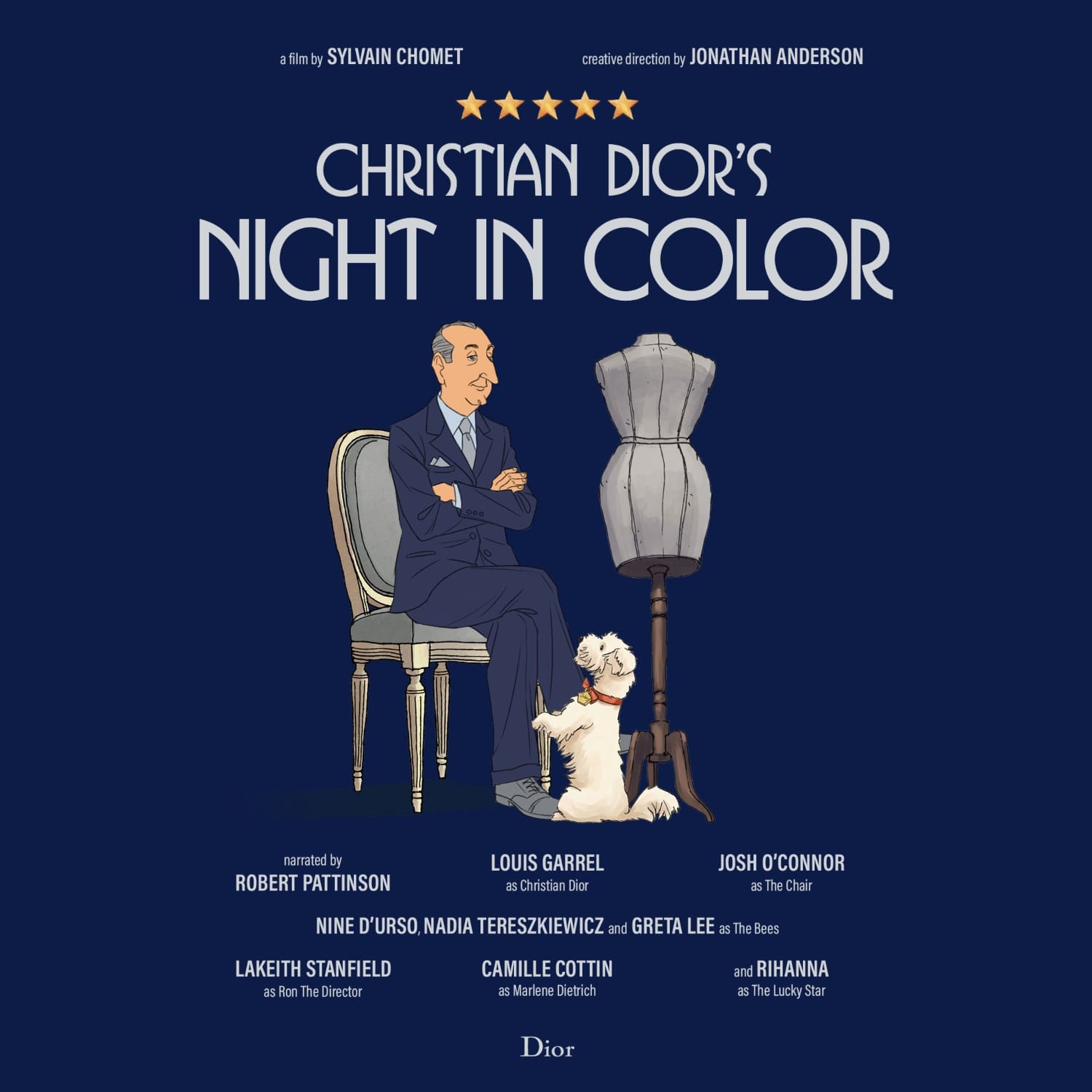
It sounds hyperbolic until the screen flickers to life. To commemorate the 2026 holiday season, the house unveiled La Nuit en Couleur de Christian Dior, a spellbinding hand-drawn animated fable conceived and brought to life by French filmmaker Sylvain Chomet (Les Triplettes de Belleville, The Illusionist). The short film does not just tell a story; it mounts a defiant, gloriously whimsical defense of the human hand, inspired by Christian Dior’s deep-seated affection for Hollywood, his kinship with Marlene Dietrich, and the birth of the monumental 1949 Juin robe.
The Midnight SOS from Sunset Boulevard
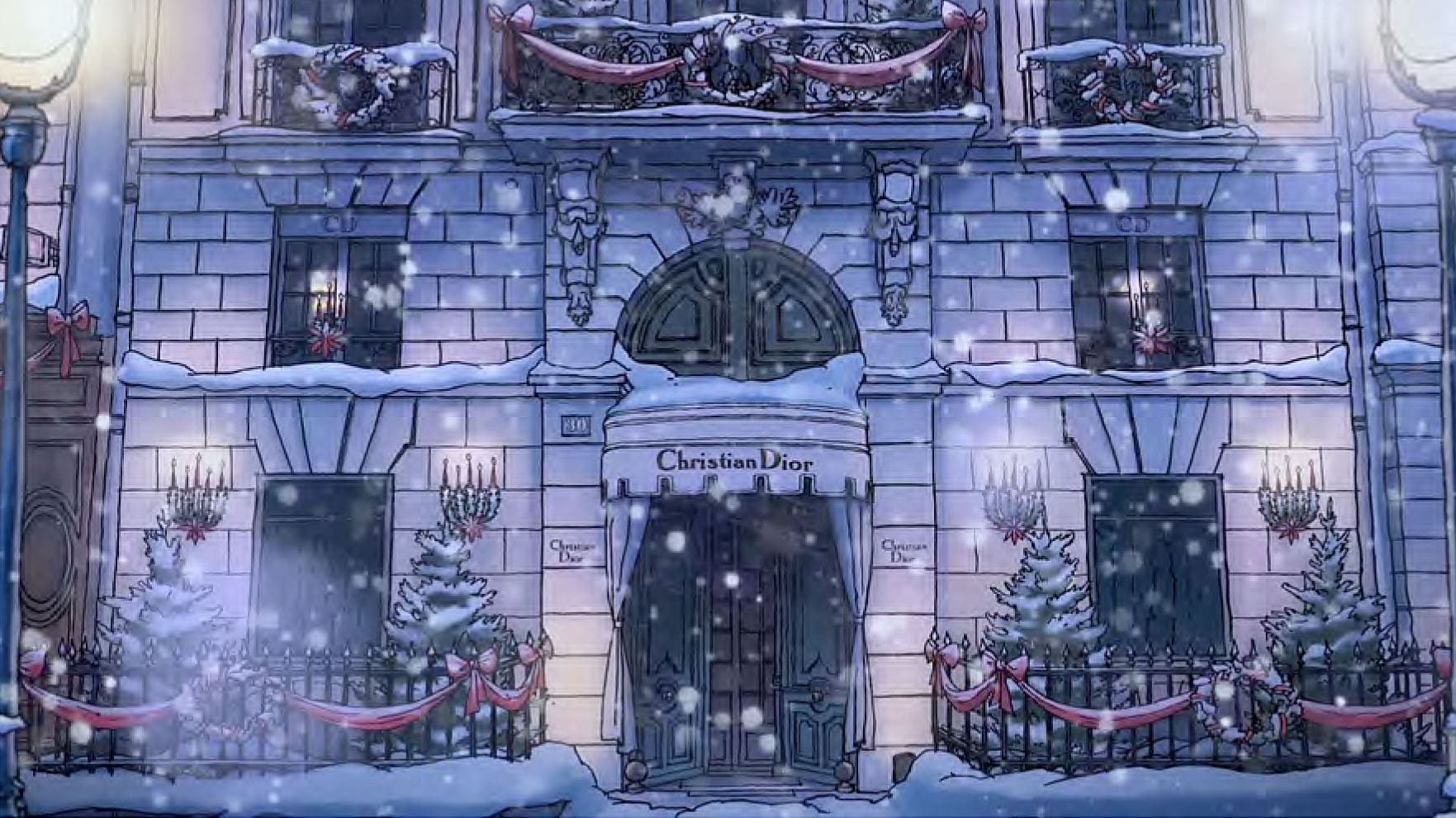
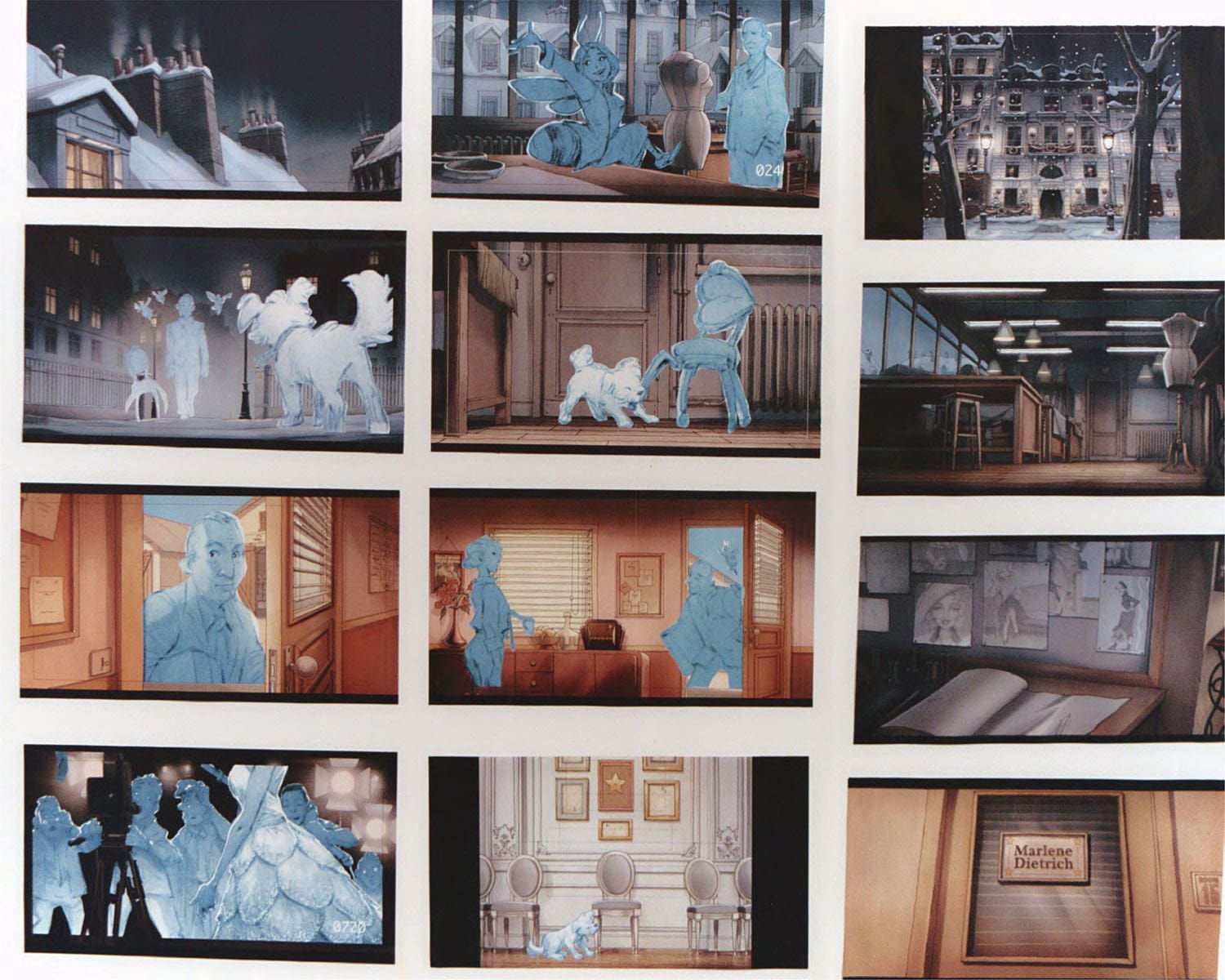
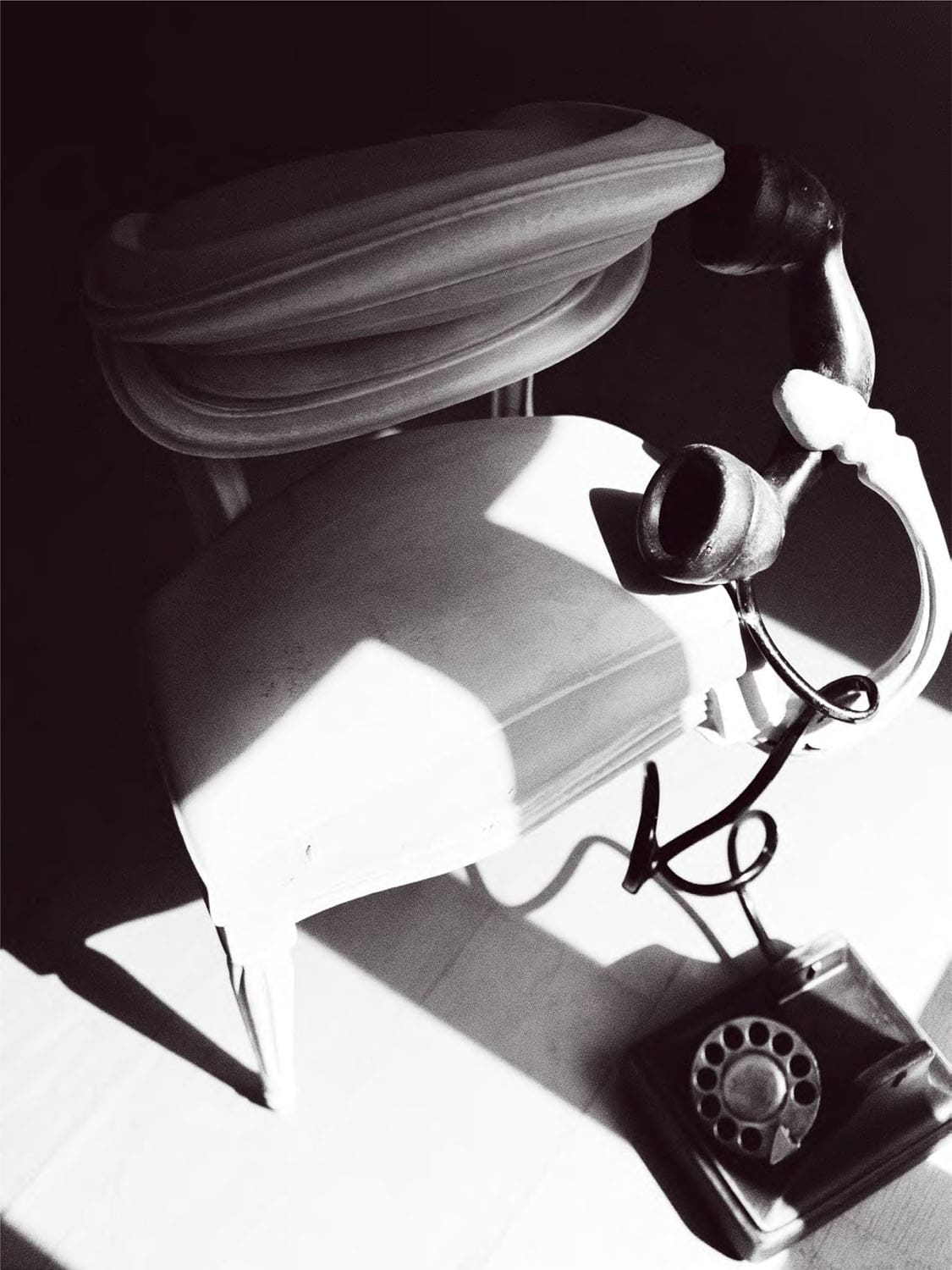
The tale begins in the deep, ink-blue quiet of a snowy Parisian winter night. Narrated with velvety, slow-burn cadence by Robert Pattinson, the peace at 30 Avenue Montaigne shatters when an overseas telephone rings off the hook.
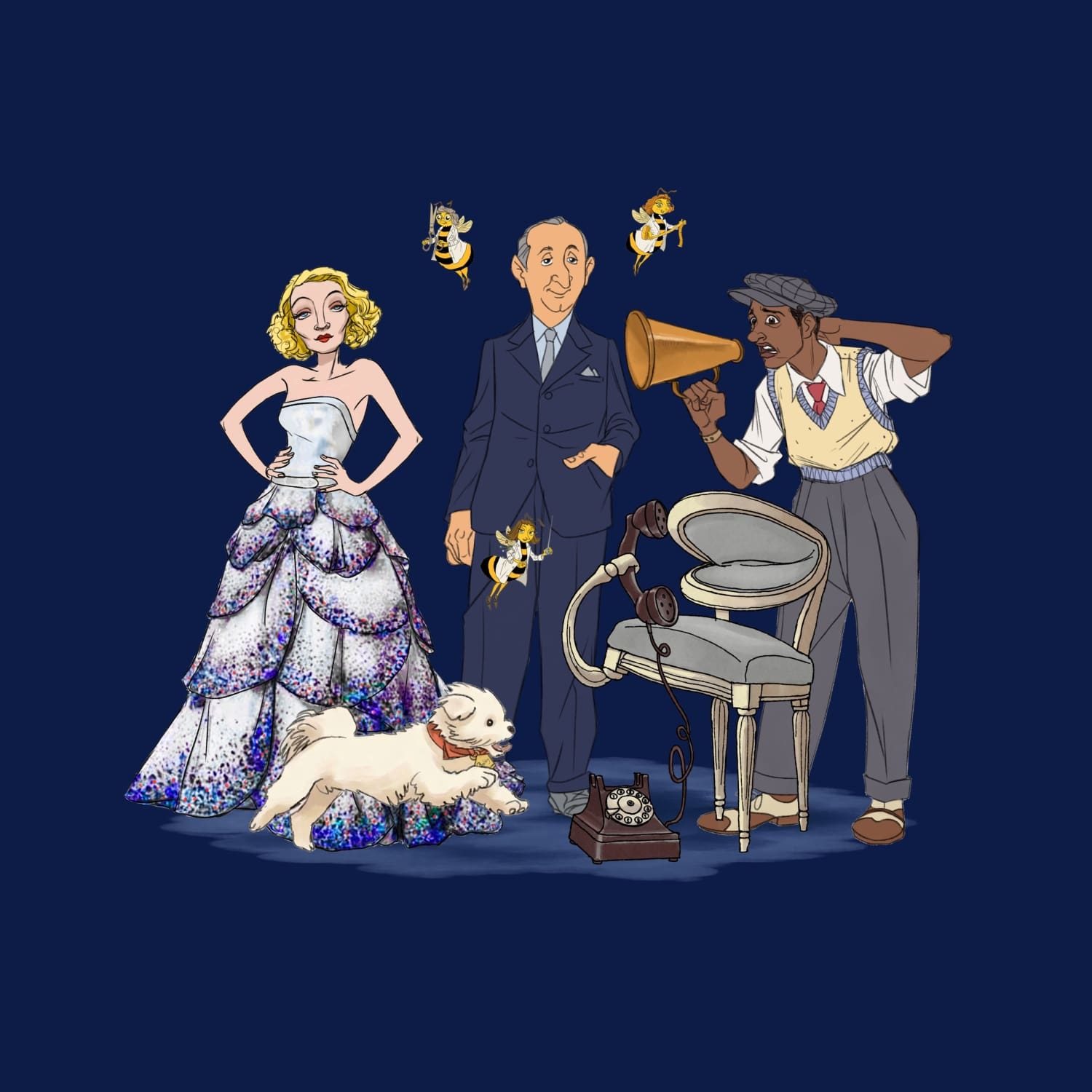
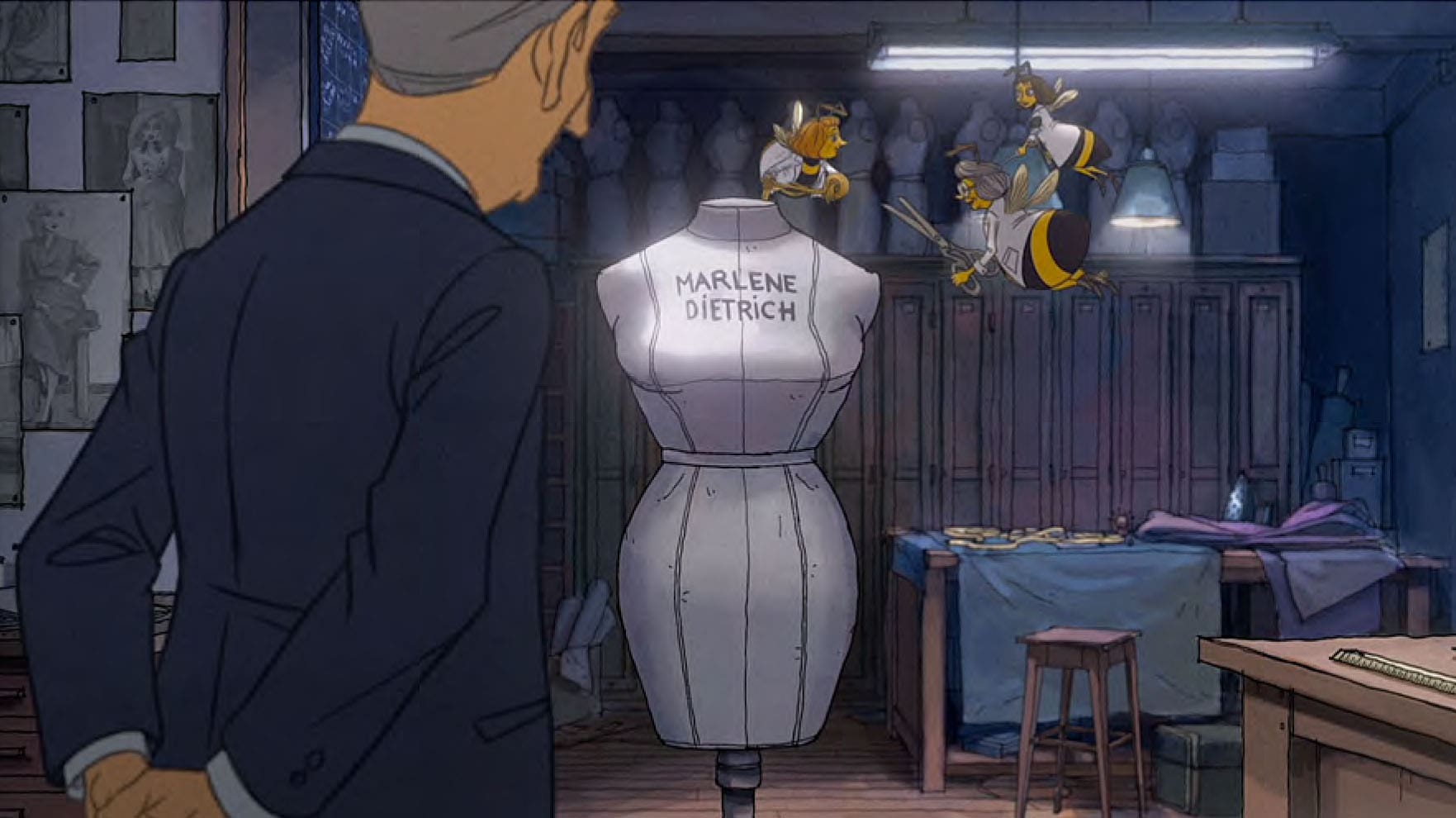
The call comes straight from a Hollywood soundstage. Marlene Dietrich—voiced with dry, razor-sharp hauteur by Camille Cottin—and her frantic director have made an eleventh-hour gamble: their film will abandon monochrome and shoot entirely in glorious, unforgiving Technicolor. Panic sets in. Dietrich has plenty of drama, but she possesses not a single dress engineered for the lush depths of a color camera.
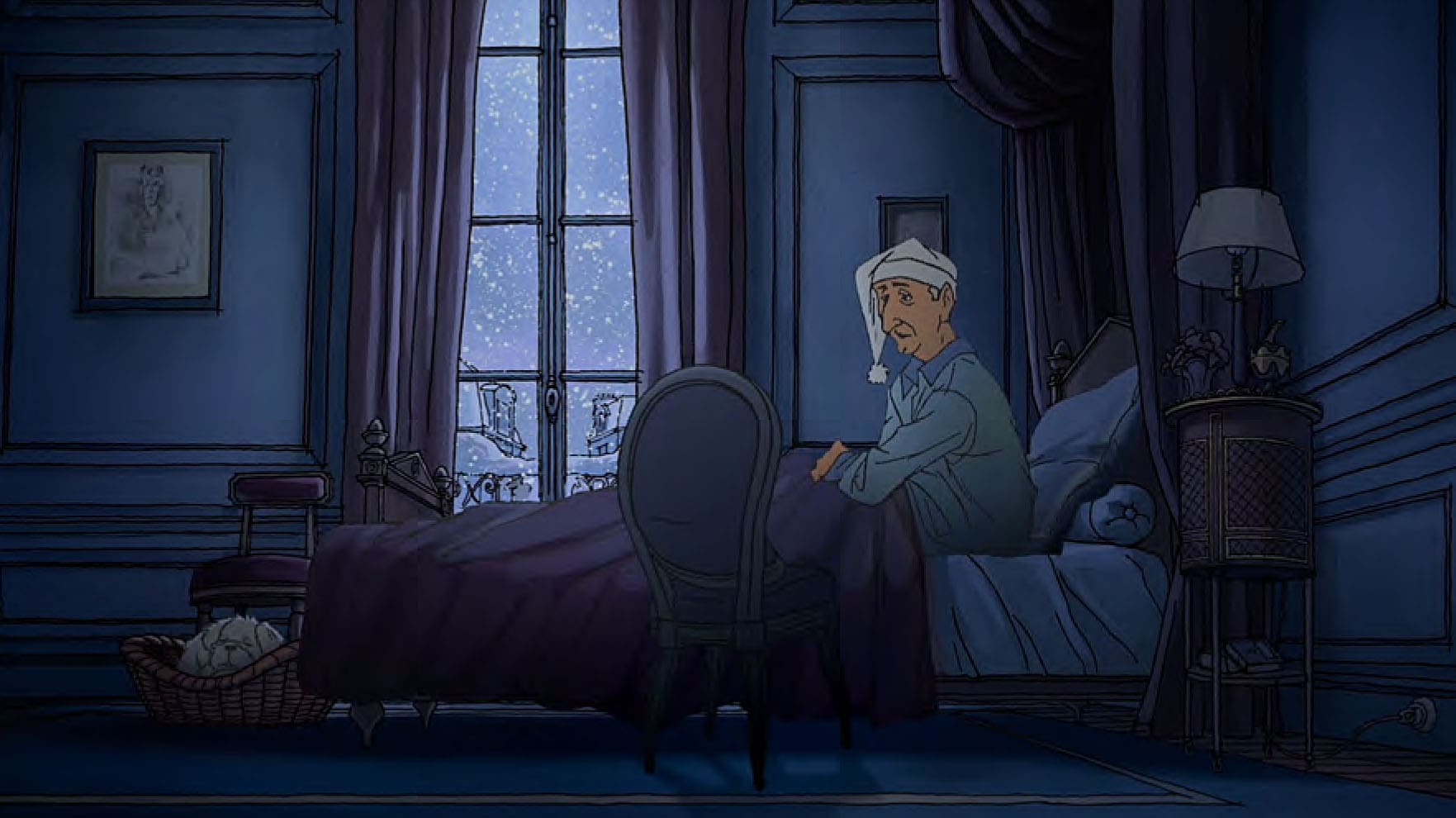
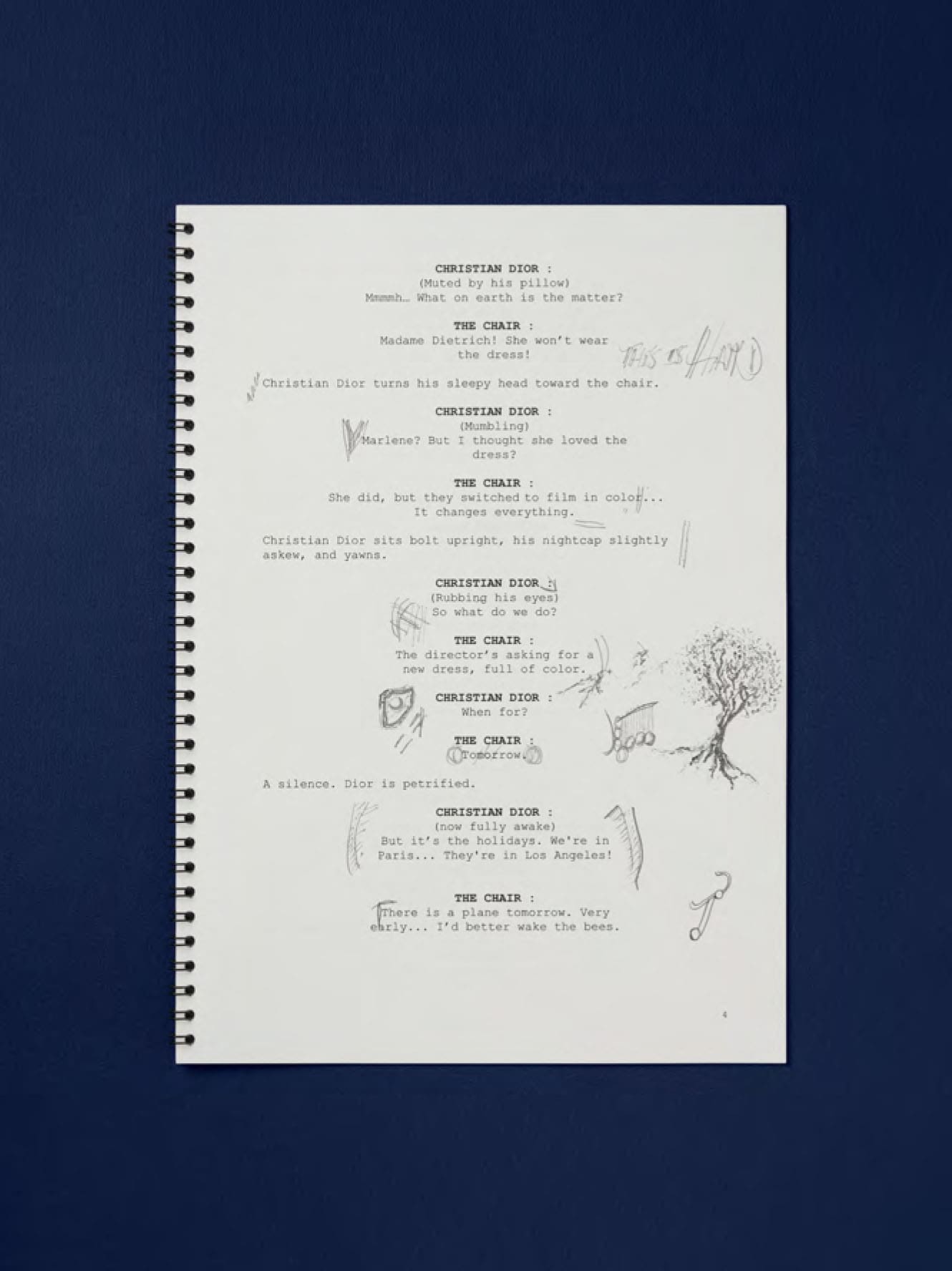
Enter the furniture. Monsieur Dior’s iconic oval-backed cane chair—the very silhouette visitors pass with reverent murmurs at the Galerie Dior on Rue Montaigne—springs to life. Voiced with neurotic theatrical urgency by Josh O’Connor, the armchair sprints across parquet floors, leaps up staircases, and bursts into Christian Dior’s private bedroom to sound the alarm.
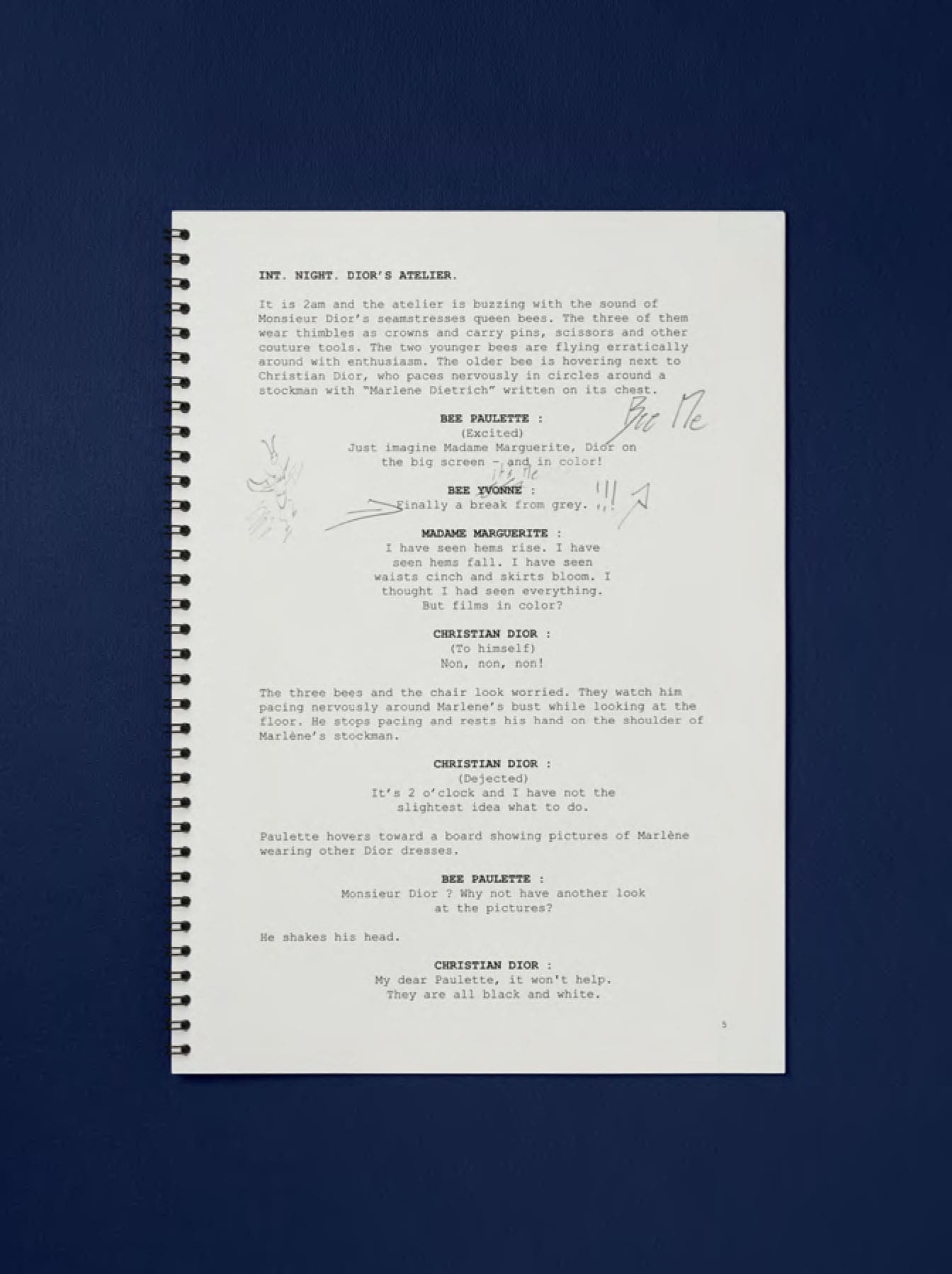
Louis Garrel voices Christian Dior with the gentle, melancholic hesitation that defined the man. Awakened to an impossible deadline, Dior freezes. The sketchpad remains glaringly white. The pencil hesitates. Creative paralysis sets in; no concept, no shape, no divine spark presents itself.
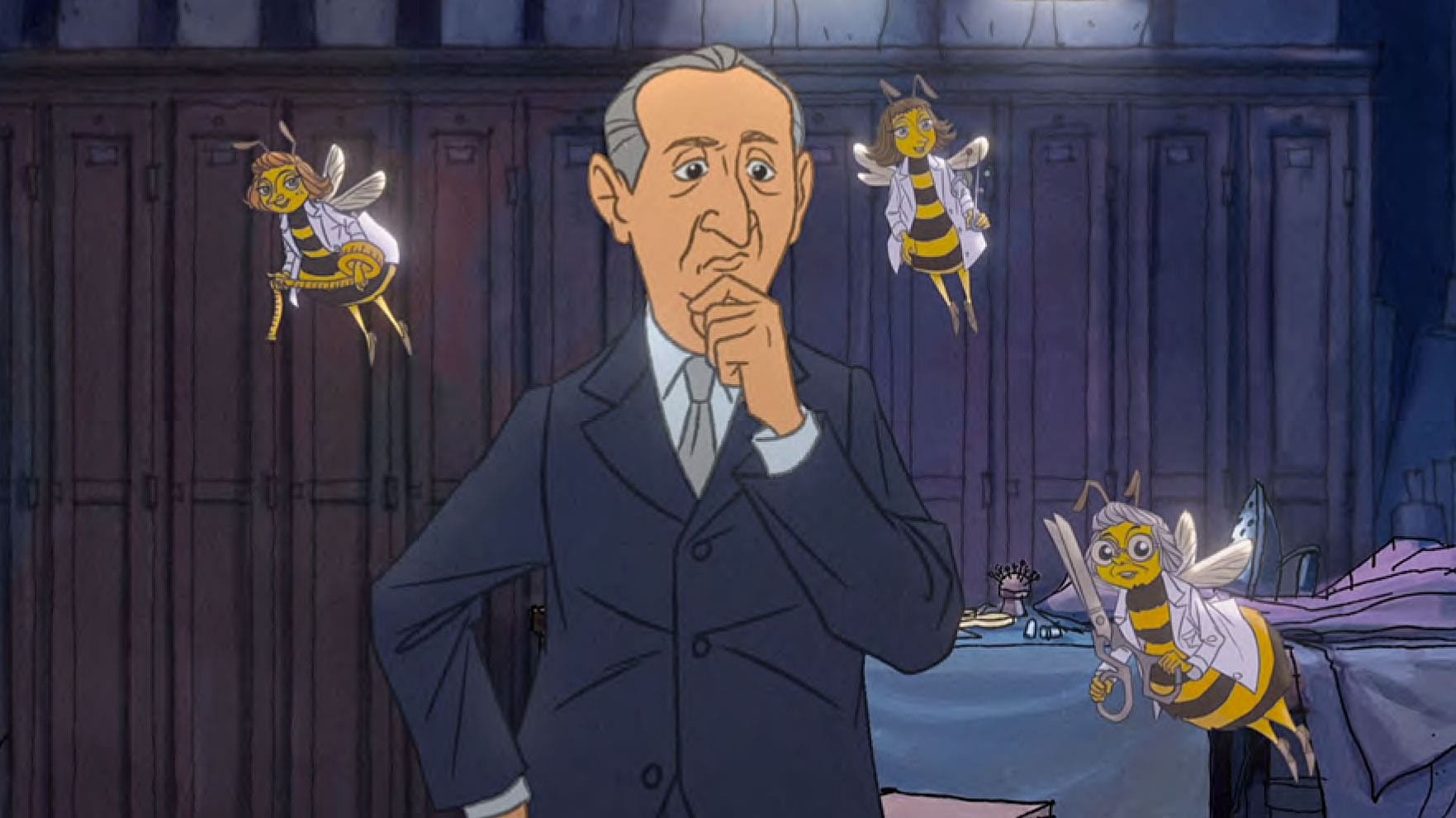
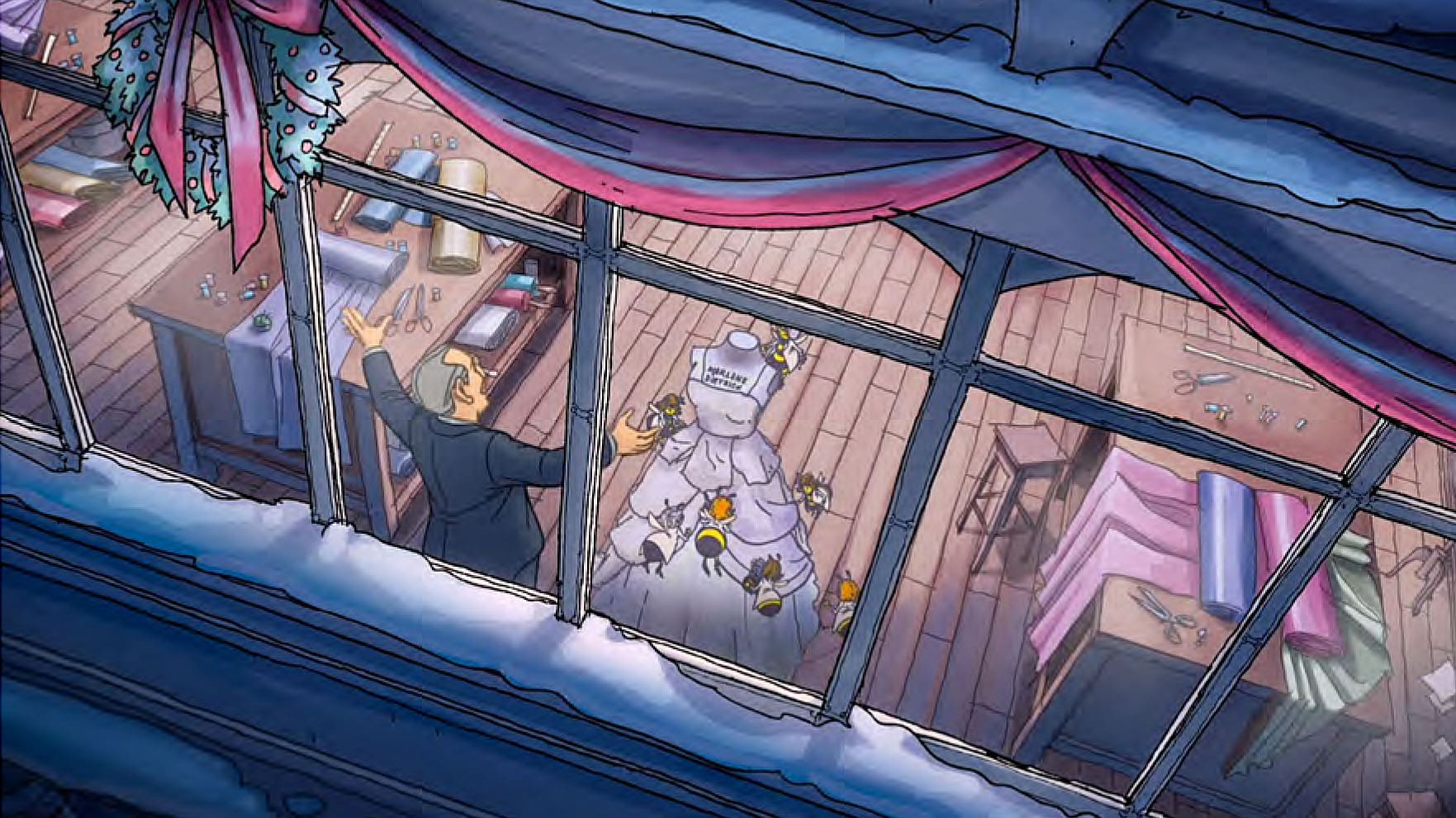
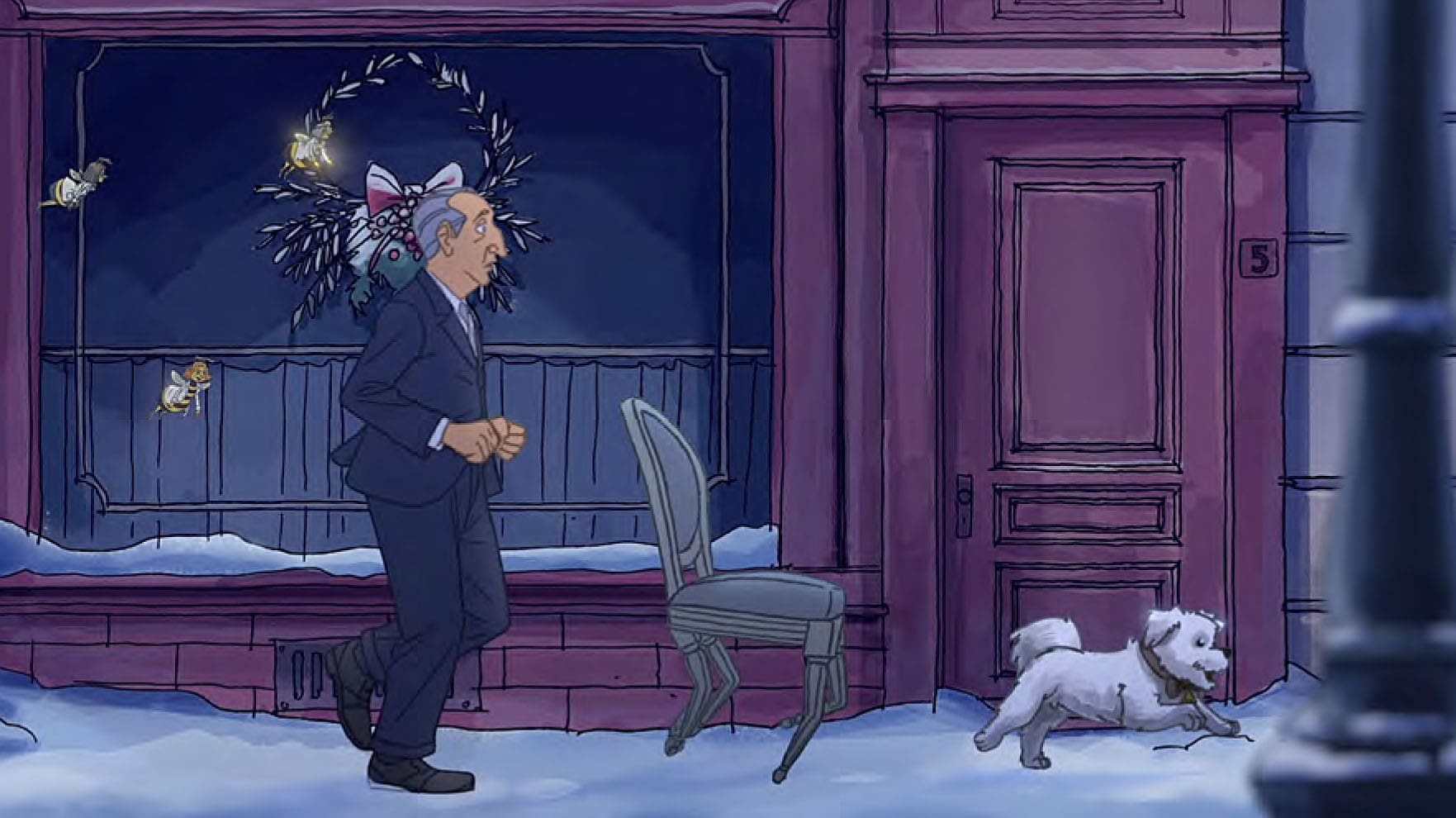
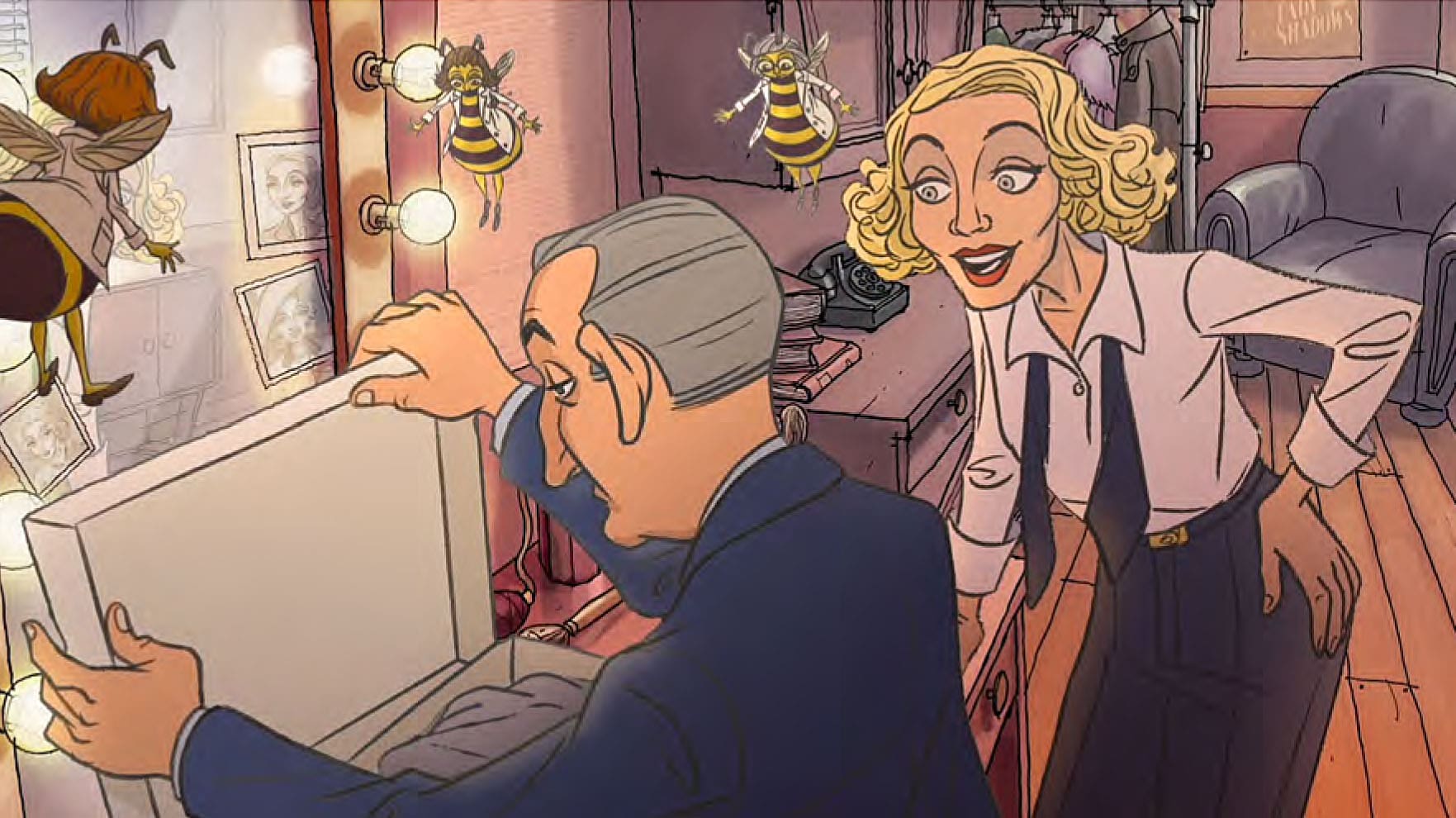
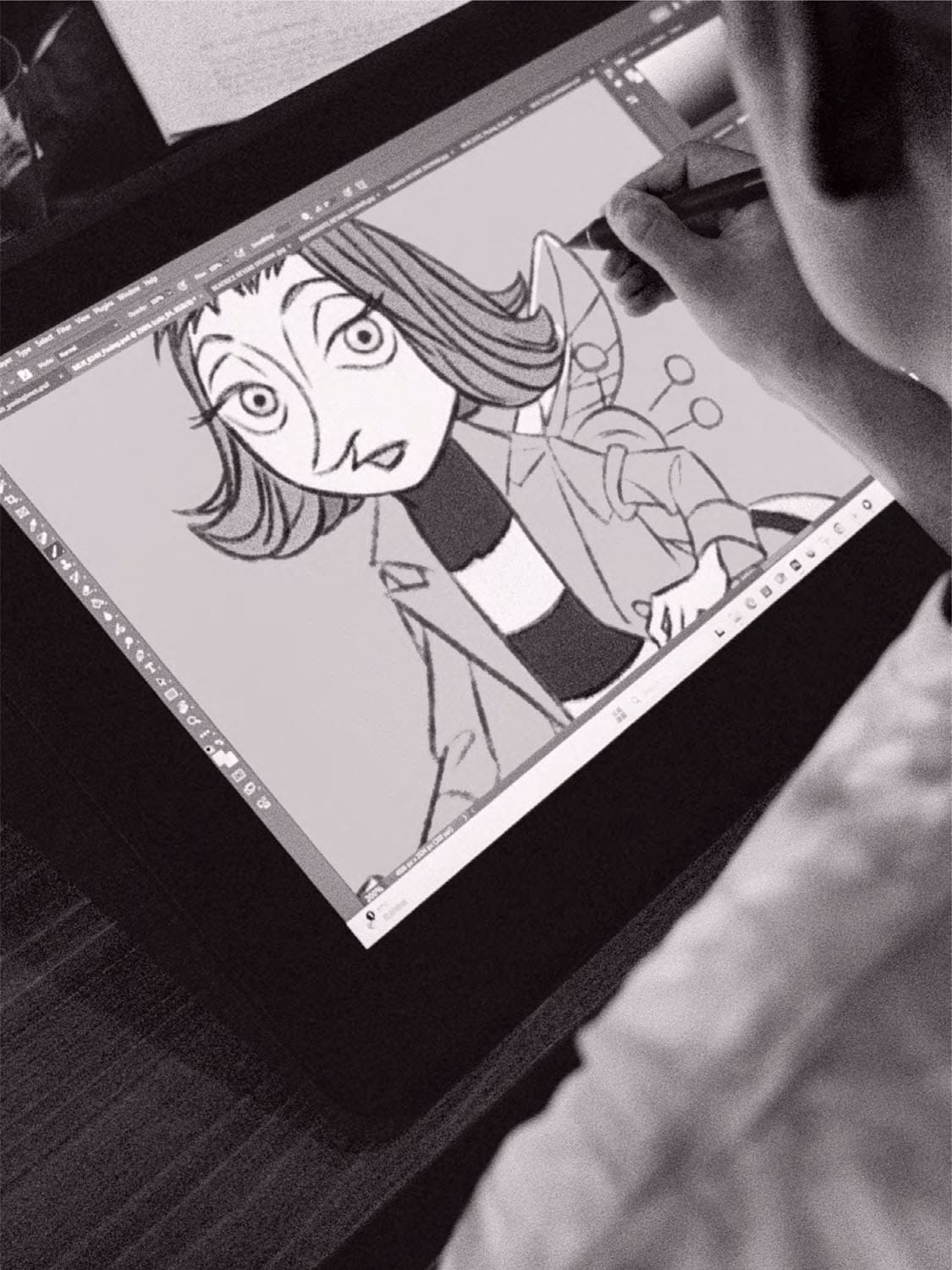
Desperate, Dior summons his legendary petites mains. In Chomet’s world, these seamstresses are transformed into literal, industrious “busy bees,” buzzing about in thimbles and spectacles. These are not anonymous worker bees; they bear the real names of the women who built the architecture of the New Look alongside Monsieur Dior from day one: Yvonne Ansermier, Paulette Boncoure, and the revered technical director Marguerite Carré, universally known around the salon as “Dame Couture.”
The bees flap their wings, measuring tapes trailing behind them, but the drafting table remains a desert.
The Unlit Pine, Bobby, and a Star with Attitude
Couture crises wait for no one, but Bobby does not care. Dior’s beloved canine companion barks insistently, scratching at the door for his late-night stroll. Dior, accompanied by the flurry of petite-main bees, wraps his wool coat tightly and steps out into the deserted, lamplit avenues of Paris.
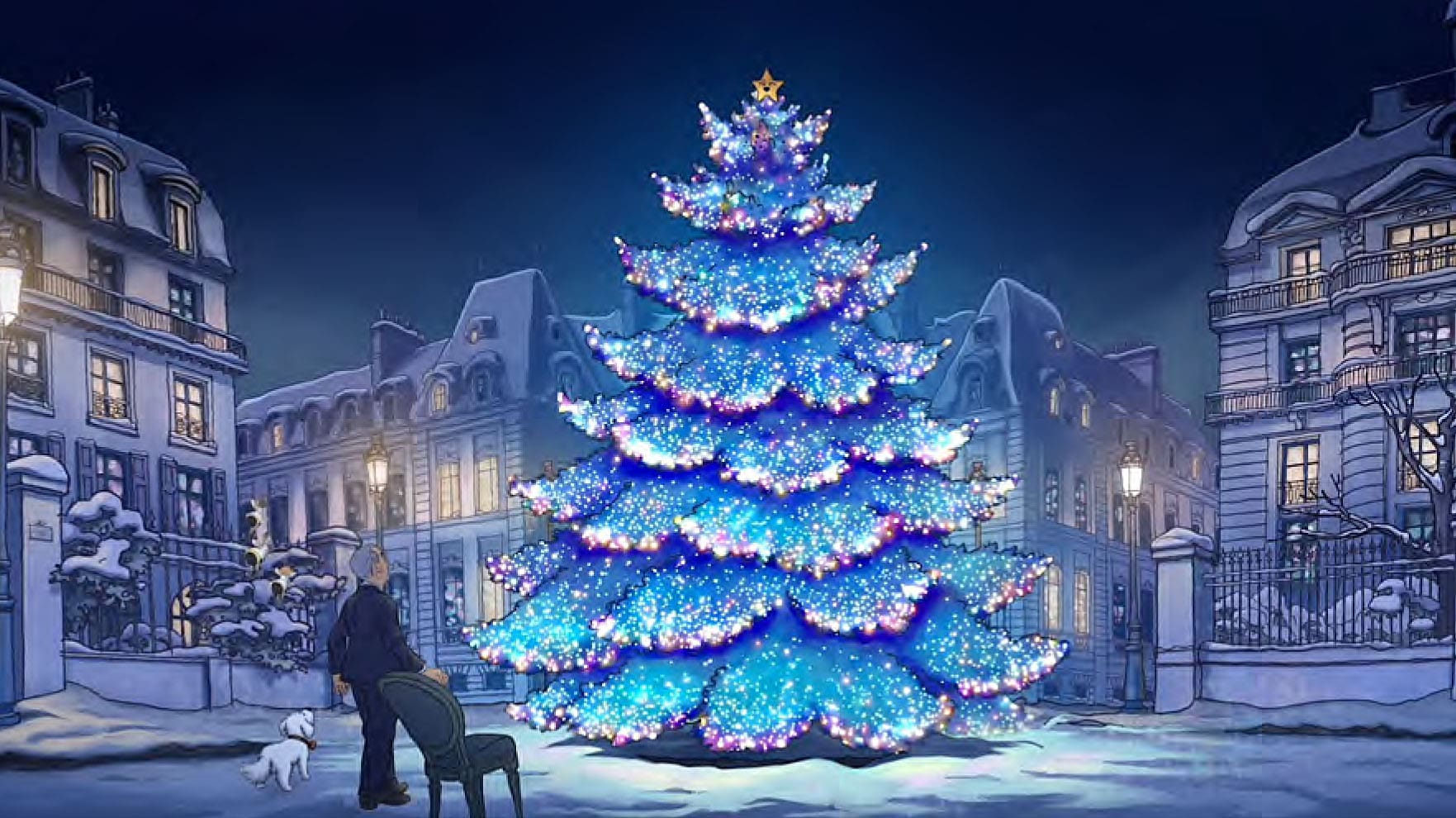
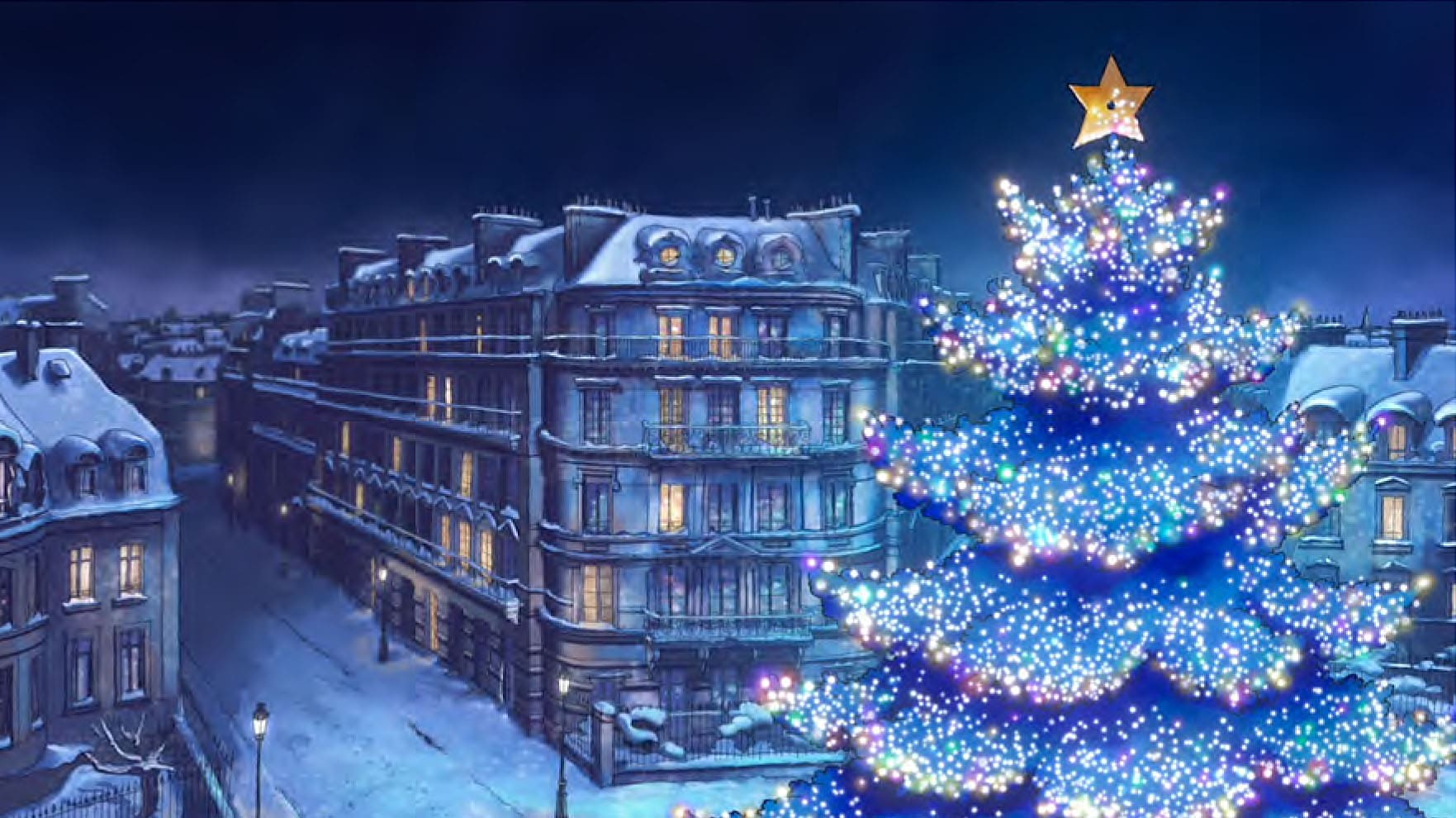
At the center of a silent square stands a monumental Christmas tree. Yet something is desperately wrong: the fir is swallowed in heavy, joyless snow, pitch-black and devoid of a single festive spark. Bobby sniffs the frozen cobblestones and unearths two disconnected, frayed electrical cables lying dead in the snow.
Dior pauses. He studies the severed lines, bends down into the frost, and splices them back together with his own hands.
The current surges, and the mythos of Dior cracks open.
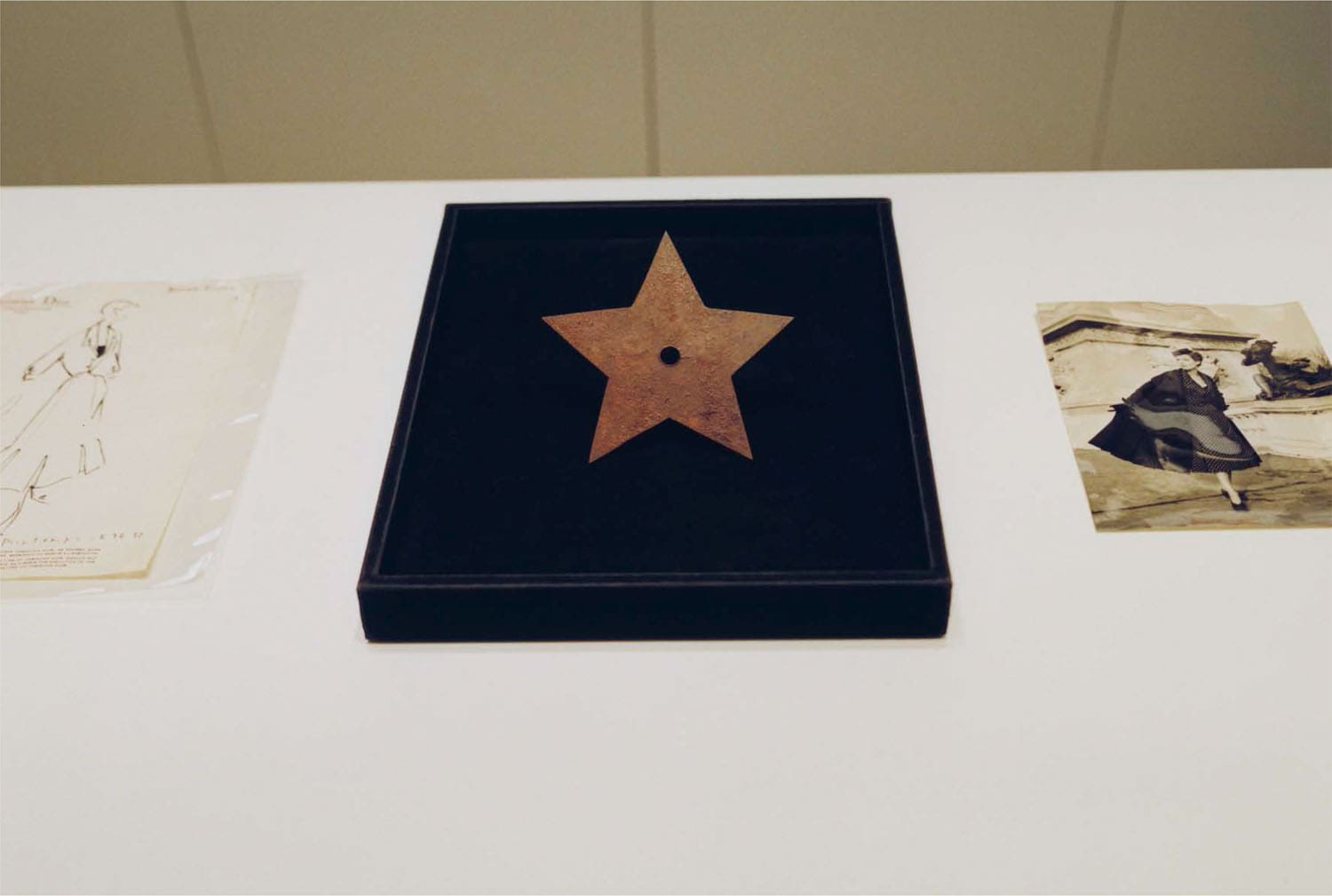
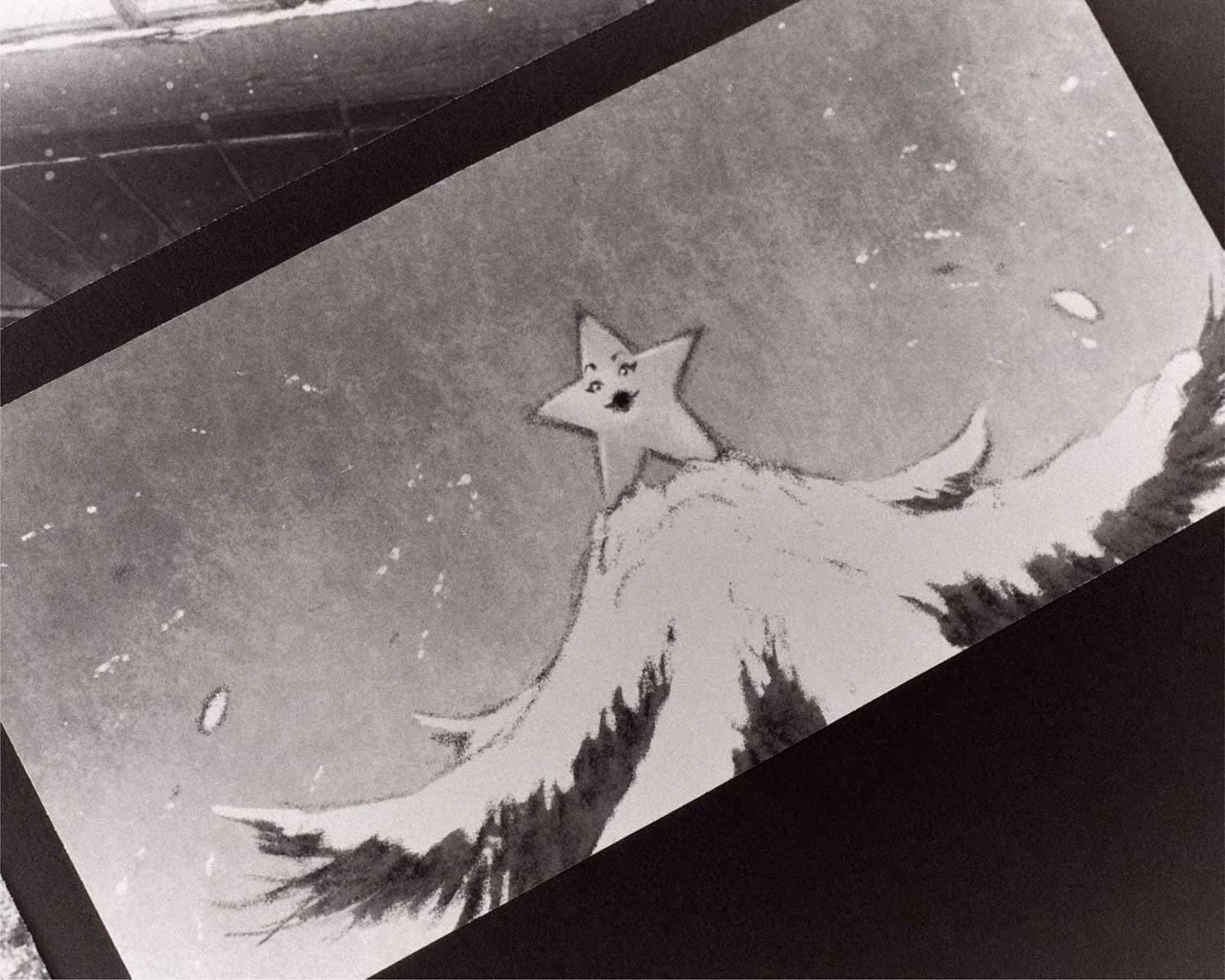
Suspended above, the golden five-pointed star—the legendary talisman Christian Dior tripped over on Rue du Faubourg Saint-Honoré in 1946, convincing him to open his own couture house—snaps awake. Voiced with unapologetic swagger and modern charisma by Rihanna, the Lucky Star looks down at the flustered, sweating couturier and tells him point-blank to se détendre.
She gives herself a dazzling, full-bodied shake. A torrential cascade of golden sparks, stardust, and luminous glitter rains down onto the branches. As the snow melts away in ribbons of warm light, the illuminated boughs twist, shimmer, and reveal an unmistakable silhouette: an ethereal cascade of layered, iridescent scales resembling an incandescent gown.
Il est de la Juin dress of 1949, rendered entirely in winter light.
Dior smiles through the falling snow: “Always trust your Star.”

The Dawn Sprint to Sunset
Inspiration is an erratic beast, but once caught, the atelier moves with military speed. Dior and his buzzing trio—Marguerite, Yvonne, and Paulette—scramble back through the courtyard of Avenue Montaigne. Needles flash like silver lightning. Pale blue faille, seafoam tulle, and thousands of iridescent, midnight sequins are pinned, basted, and hand-stitched through the twilight hours.
By the time the early winter sun breaks, the gown sits packed in its crisp white archival box. Dior and his wing-flapping seamstresses board an early cross-Atlantic flight to California.
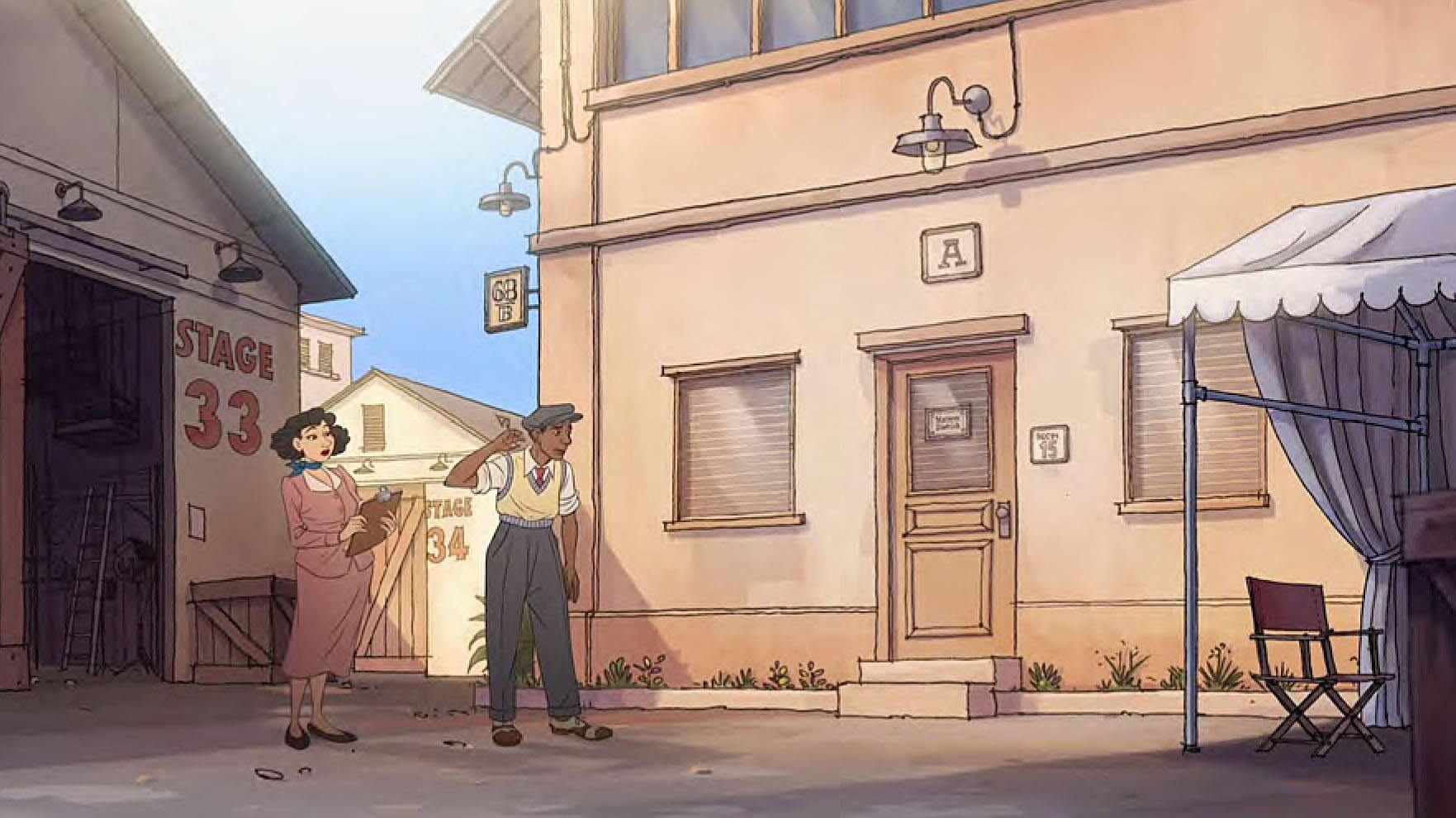
On the Hollywood set, dawn arrives with tension hanging thick enough to slice. A sharp knock lands on the dressing room door. Marlene opens it to find Christian Dior himself, breathless and dusted in Parisian travel grit, holding the box. She lifts the lid, and the room falls dead silent.
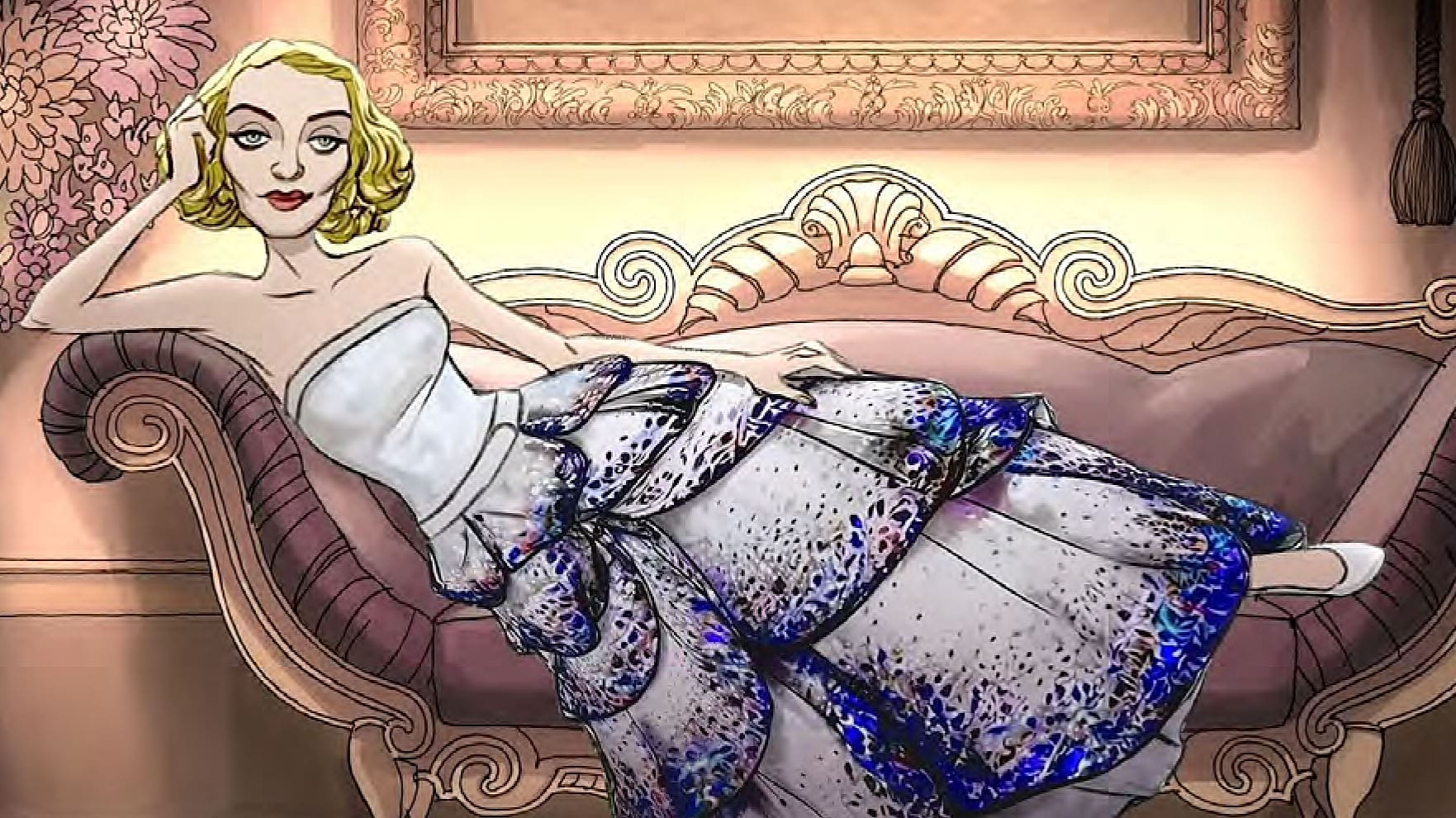
Under the scorching heat of the Technicolor stage lights, the director holds his breath. Dietrich drapes herself across the velvet fainting couch, swathed in scalloped ombré petals of blue, silver, and sea-green luster. The camera rolls. The monochrome screen is shattered forever.
Miles away, the morning light slips softly through the tall windows of 30 Avenue Montaigne. The armchair settles back into its stately stillness, delivering the fable’s final, resonant thought: “All you need is to trust the stars, and the world will turn into colors.”
The Holy Resistance of the Drawing Table
Ce qui élève La Nuit en Couleur de Christian Dior from a charming holiday advertisement to a landmark artistic statement is Sylvain Chomet’s uncompromising technique.
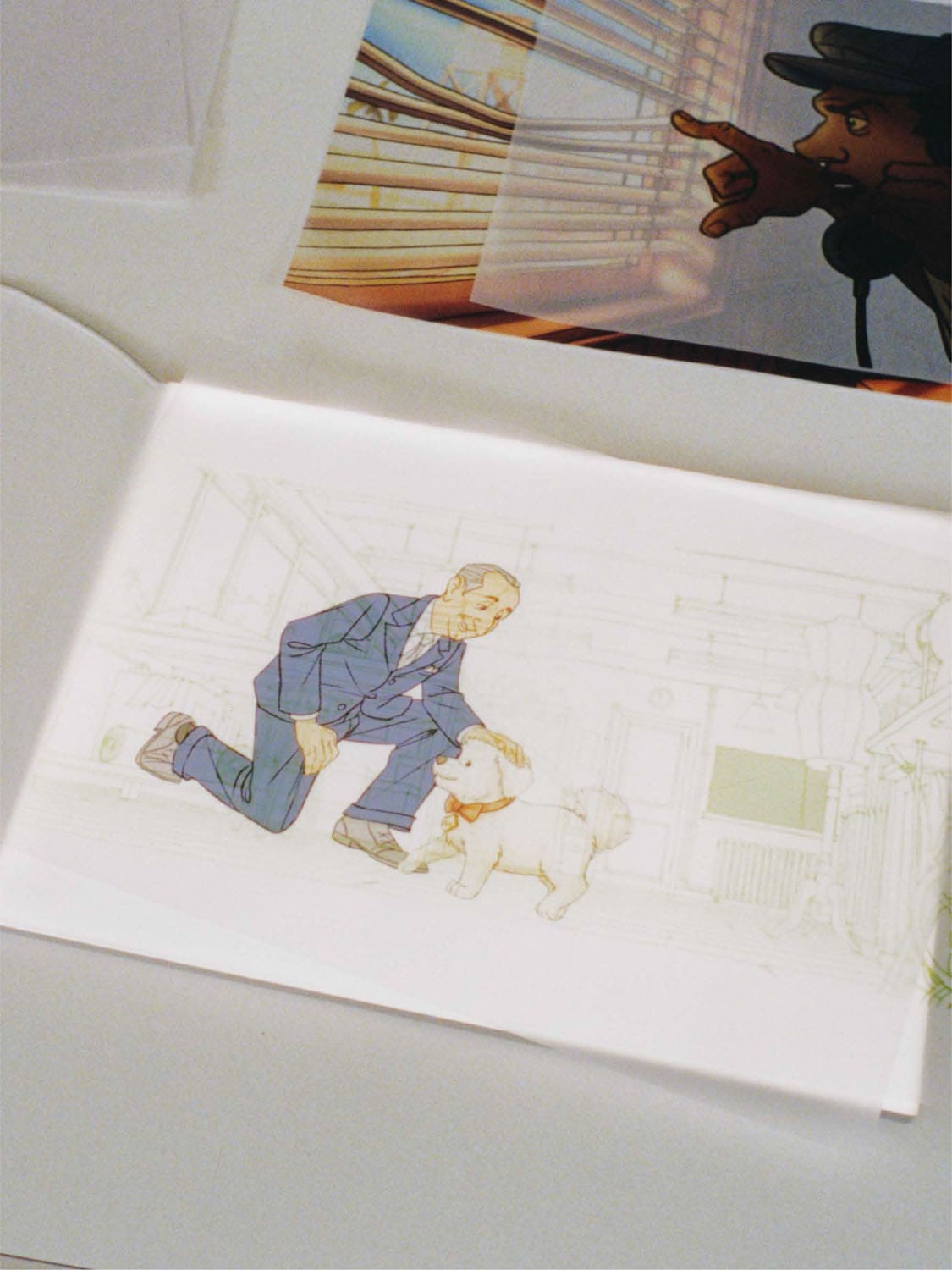
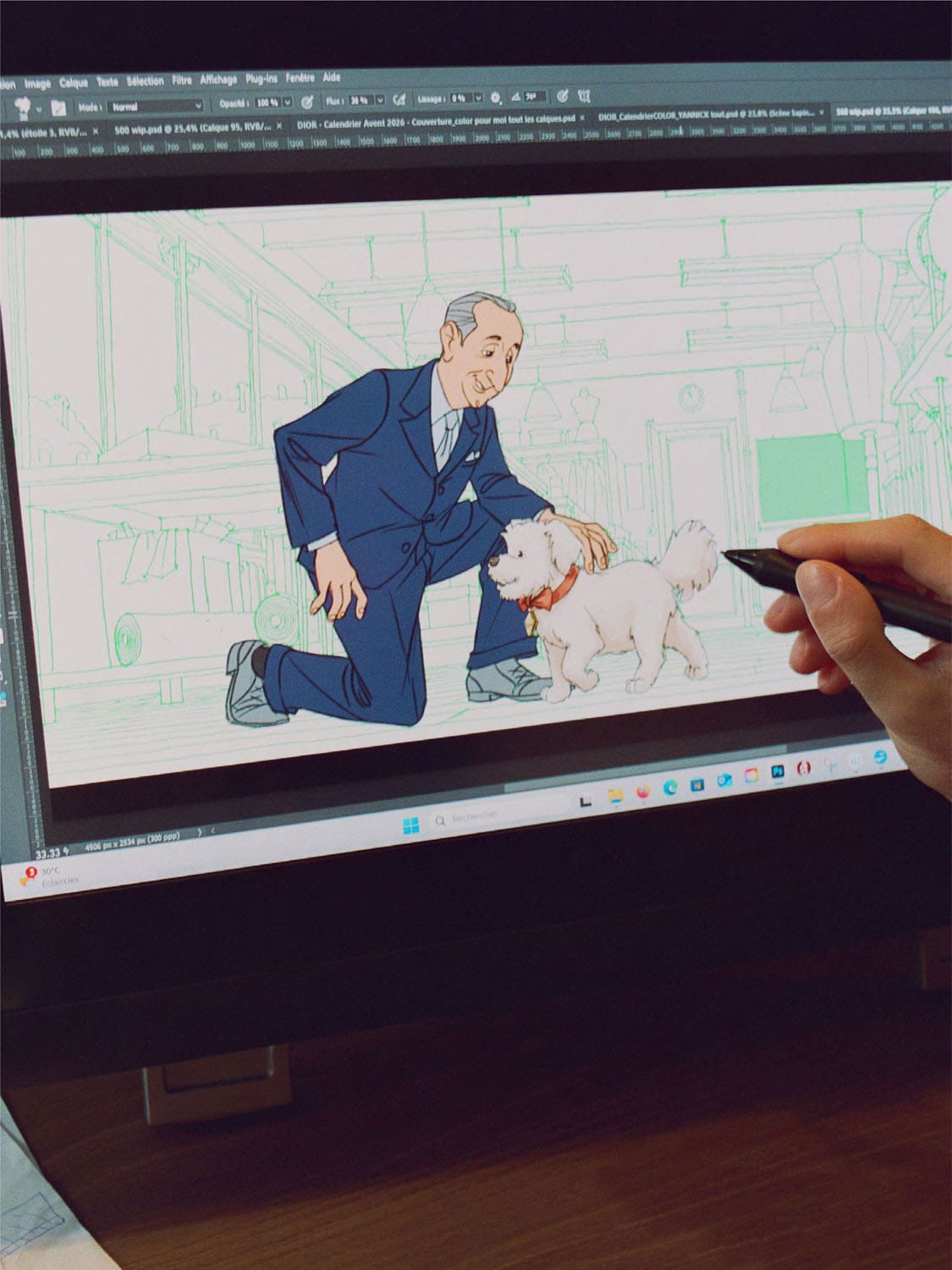
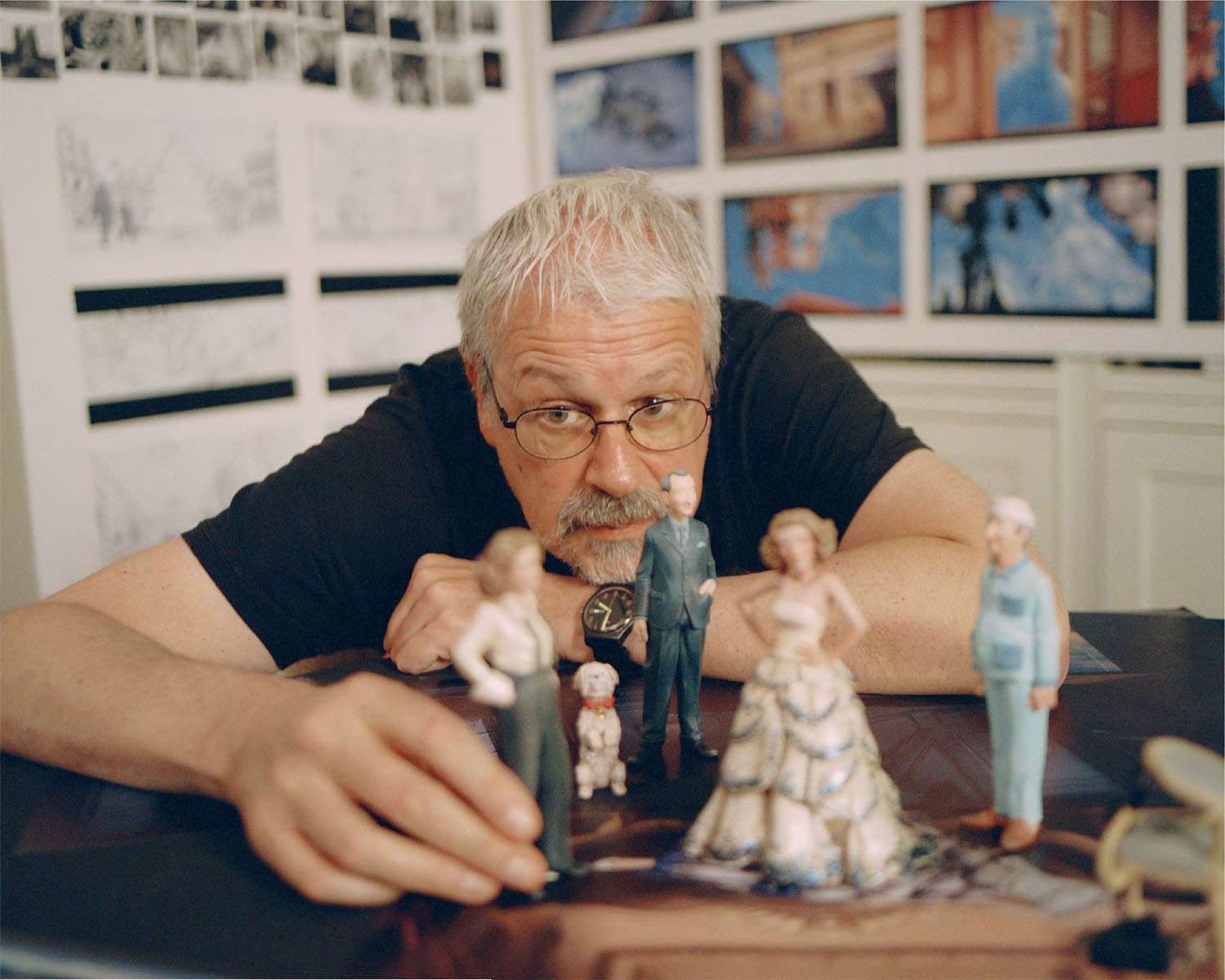
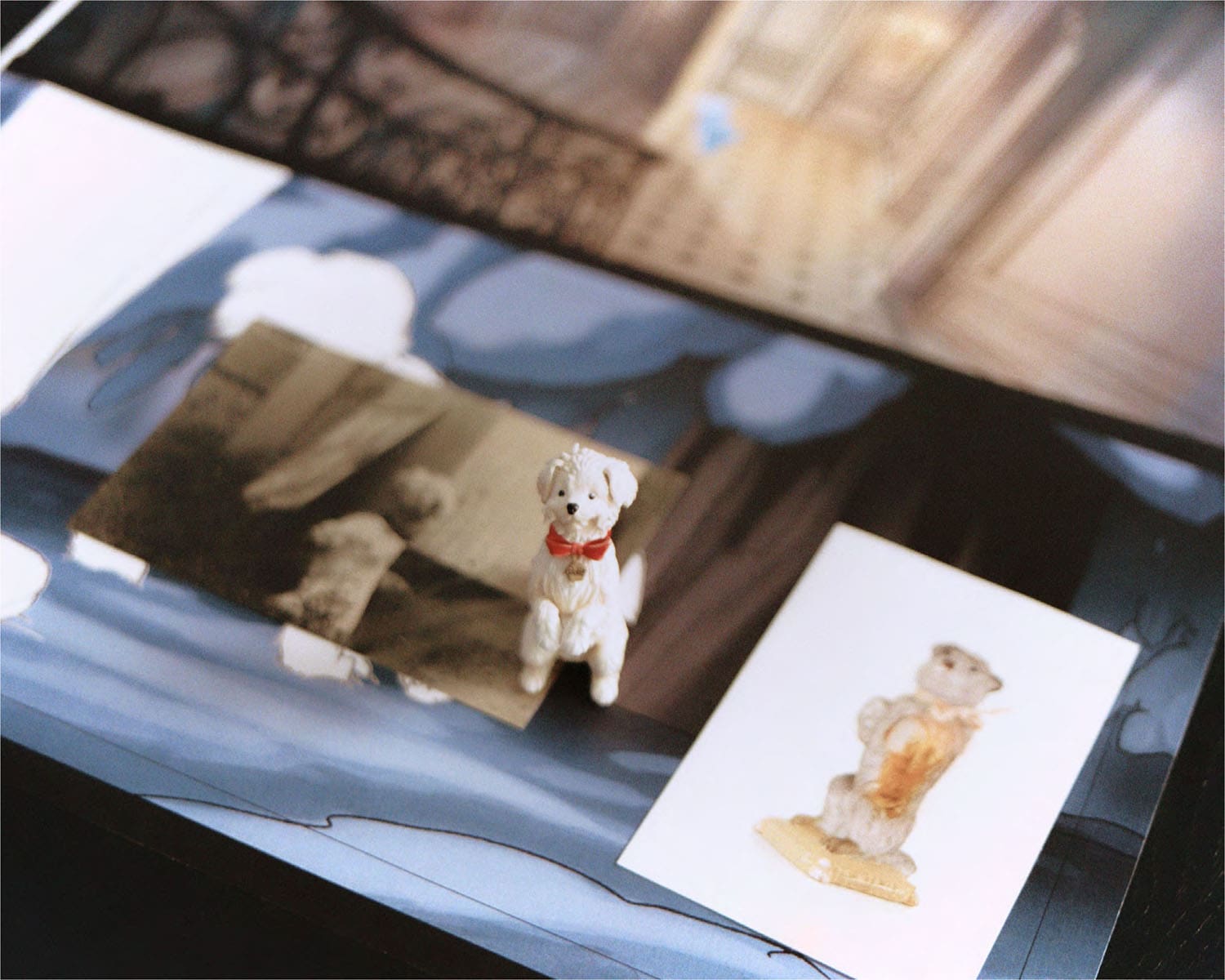
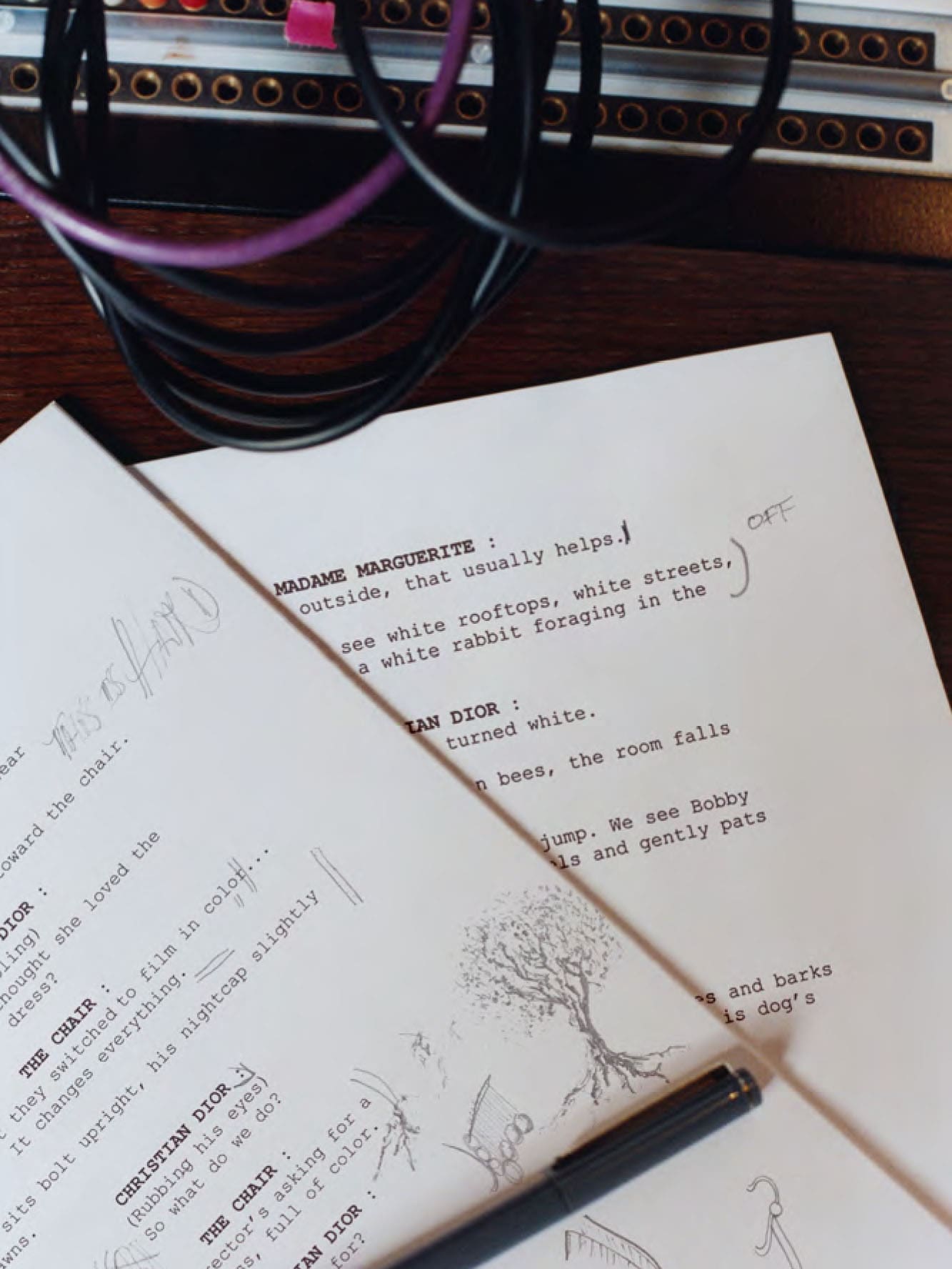
Chomet did not prompt a server farm to regurgitate statistical averages of Disney classics. He built this film using the exact mechanical and physical animation methodologies developed in the late 1940s. Every character was drafted by hand, physically cut out from heavy paper, and manipulated frame by frame. Each layer was animated separately before being painstakingly composited onto lush, hand-painted gouache and watercolor backdrops of mid-century Paris and Golden Age Hollywood.
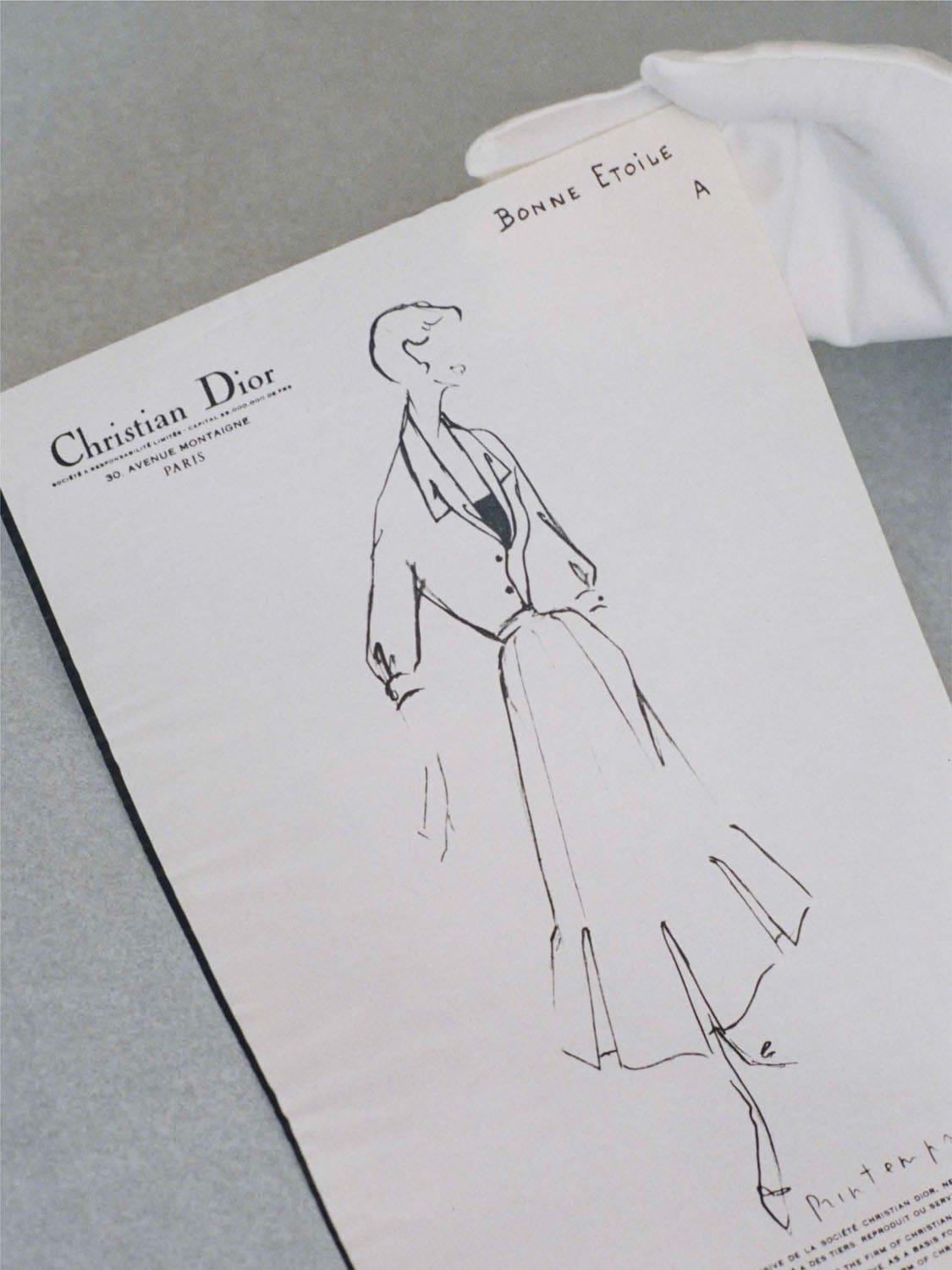
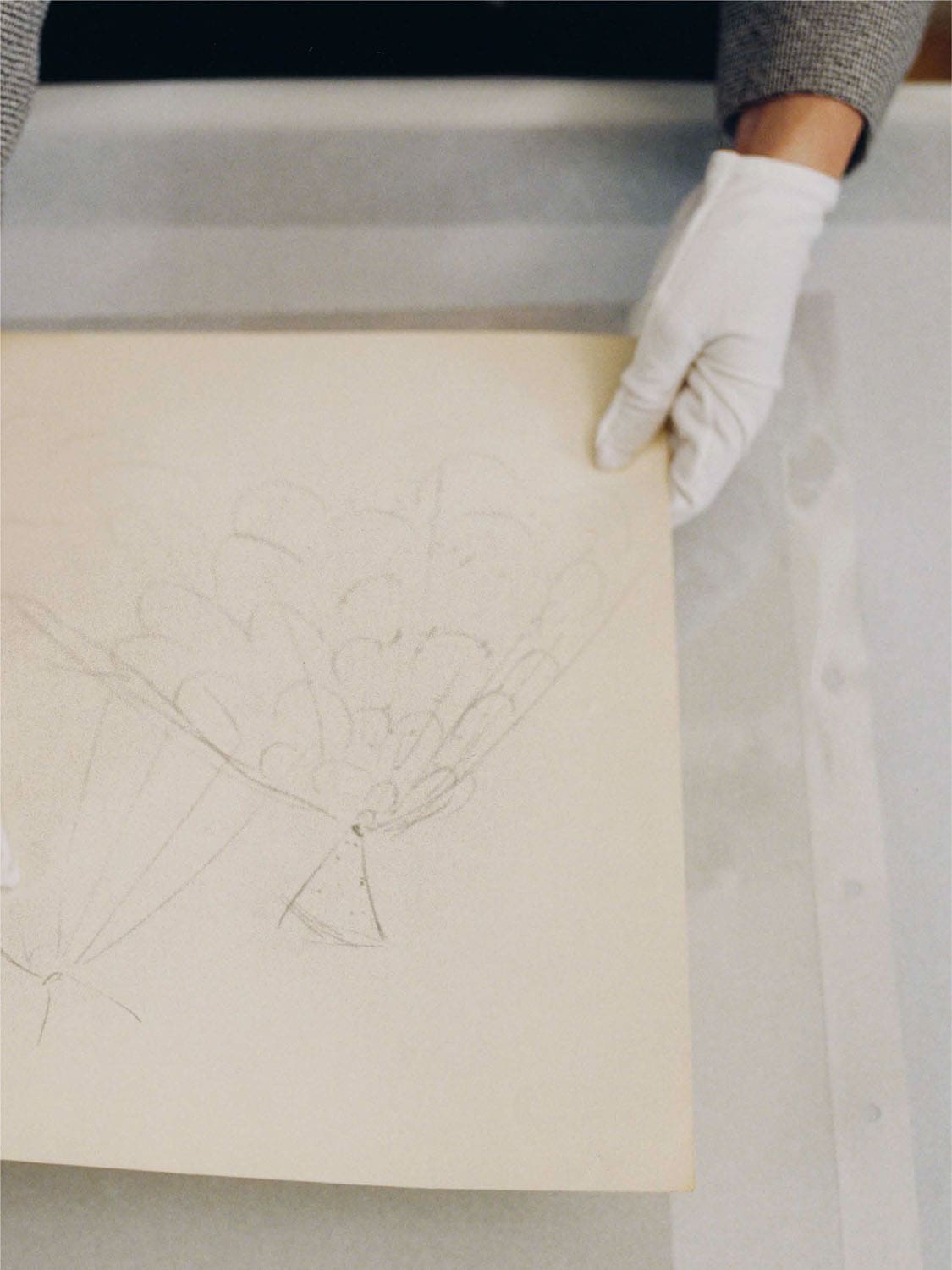
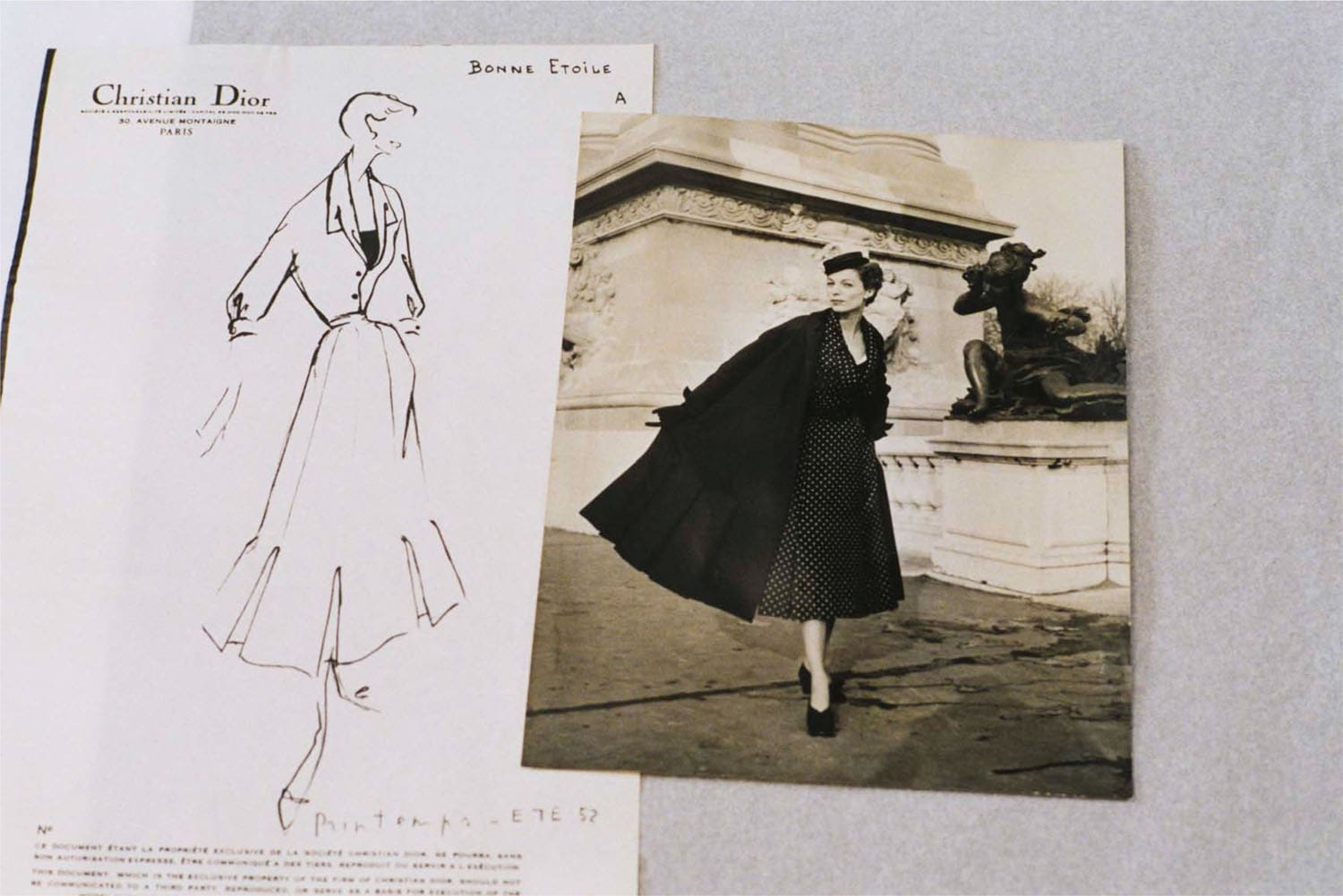
To ensure historical fidelity, Chomet was granted private access to the vault of the Dior Heritage department. He stood inches from the original 1949 Juin gown, inspecting the weight of its sequined petals, the tension of its boning, and the quiet hand-stitches left by Marguerite Carré’s team nearly eight decades ago. He studied the archival floor plans, the precise pitch of Christian Dior’s voice, and the idiosyncratic gait of Bobby across the salon carpets.
“I think it will be wonderful for children to see that,” Chomet noted during production. “If it can inspire children to go into haute couture, or take up drawing one day, that’s what really matters.”
In an entertainment landscape currently addicted to synthetic AI shortcuts and soulless automation, Dior and Chomet have staged a quiet, breathtaking coup. They remind us that the human hand—whether holding an HB pencil or a couture needle—cannot be replaced.
True luxury, like true art, lives in the patience of the craft. And sometimes, it only takes a little faith in your lucky star to bring the whole world back into color.
Dior Movie Making Of with Sylvain Chomet
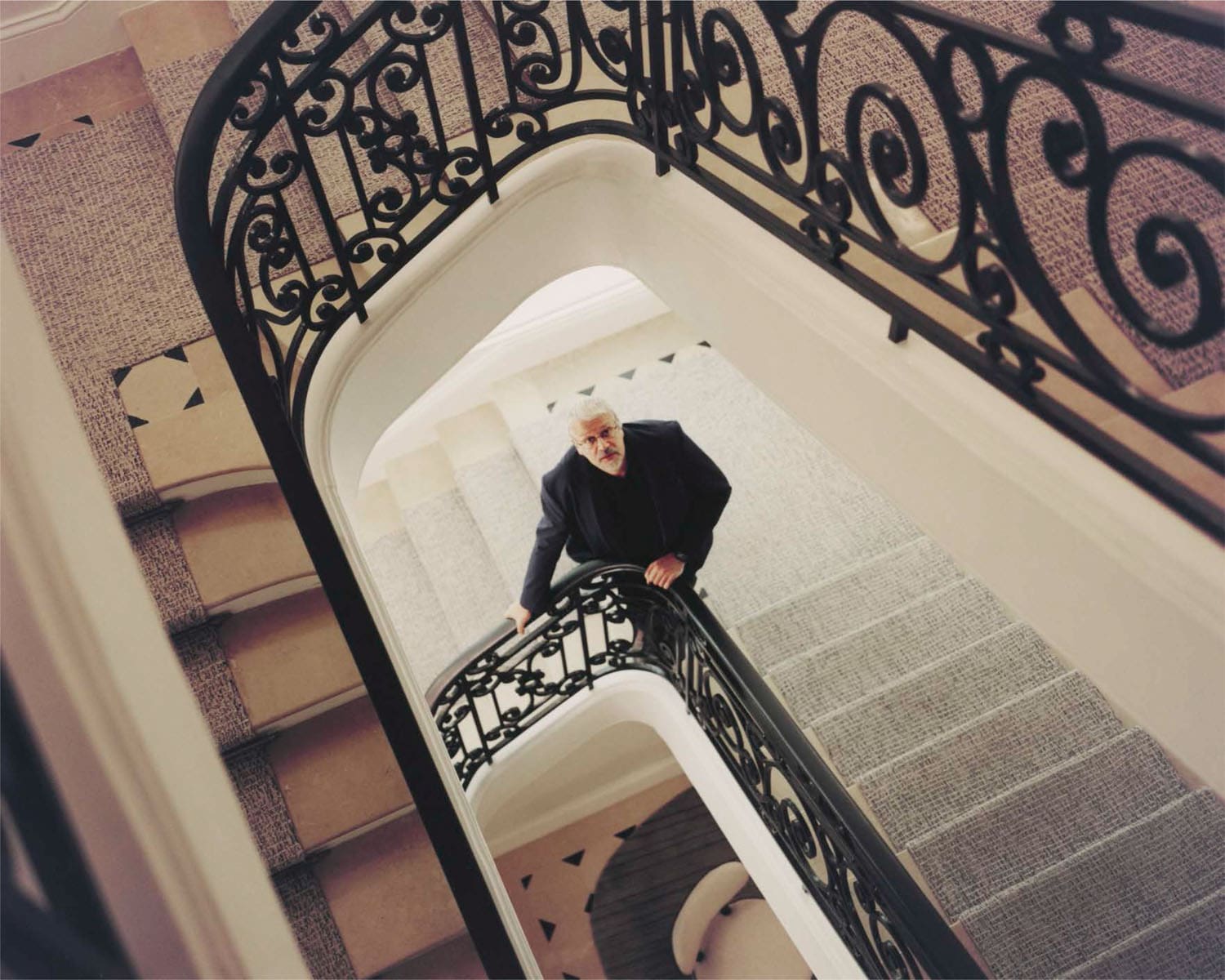
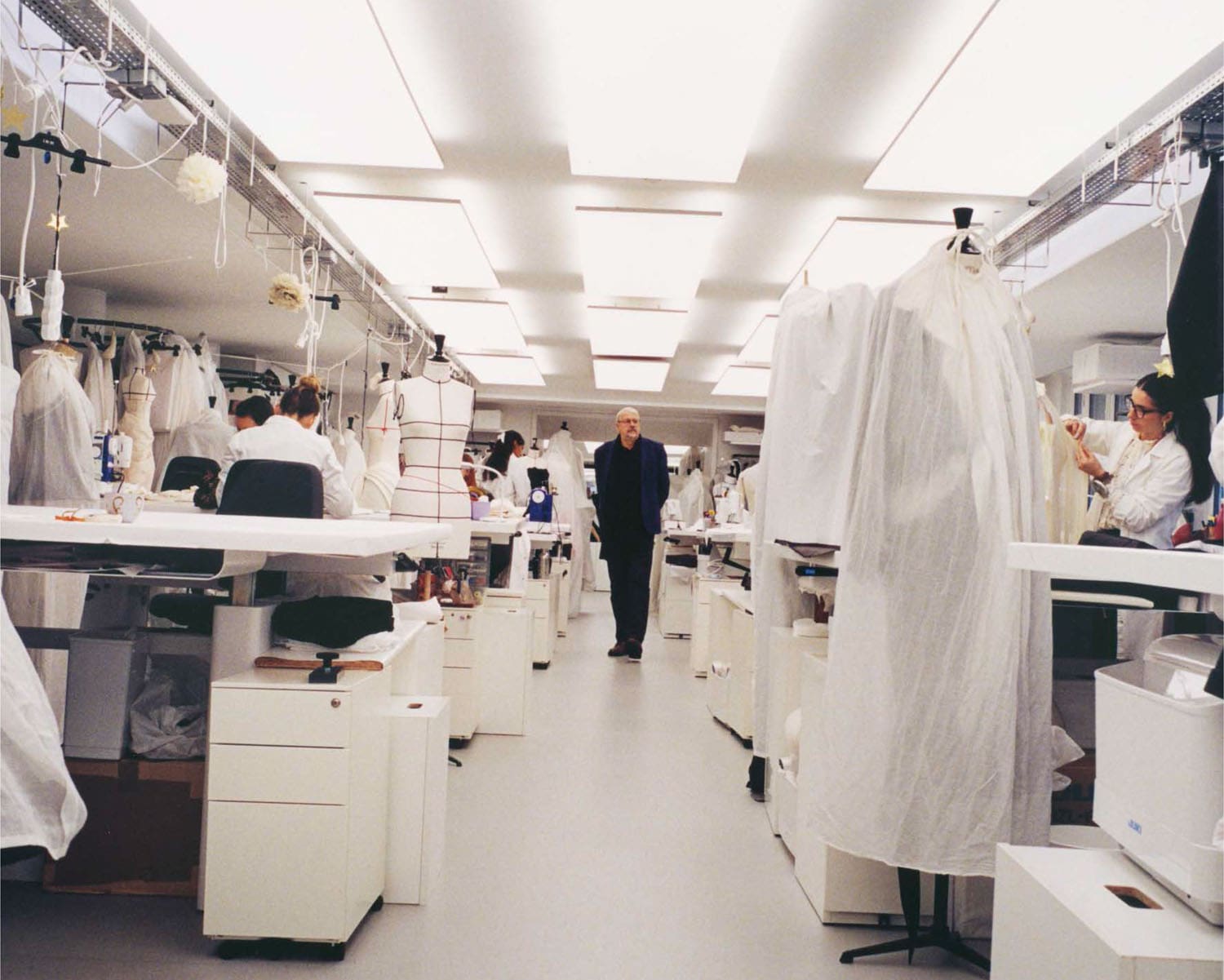
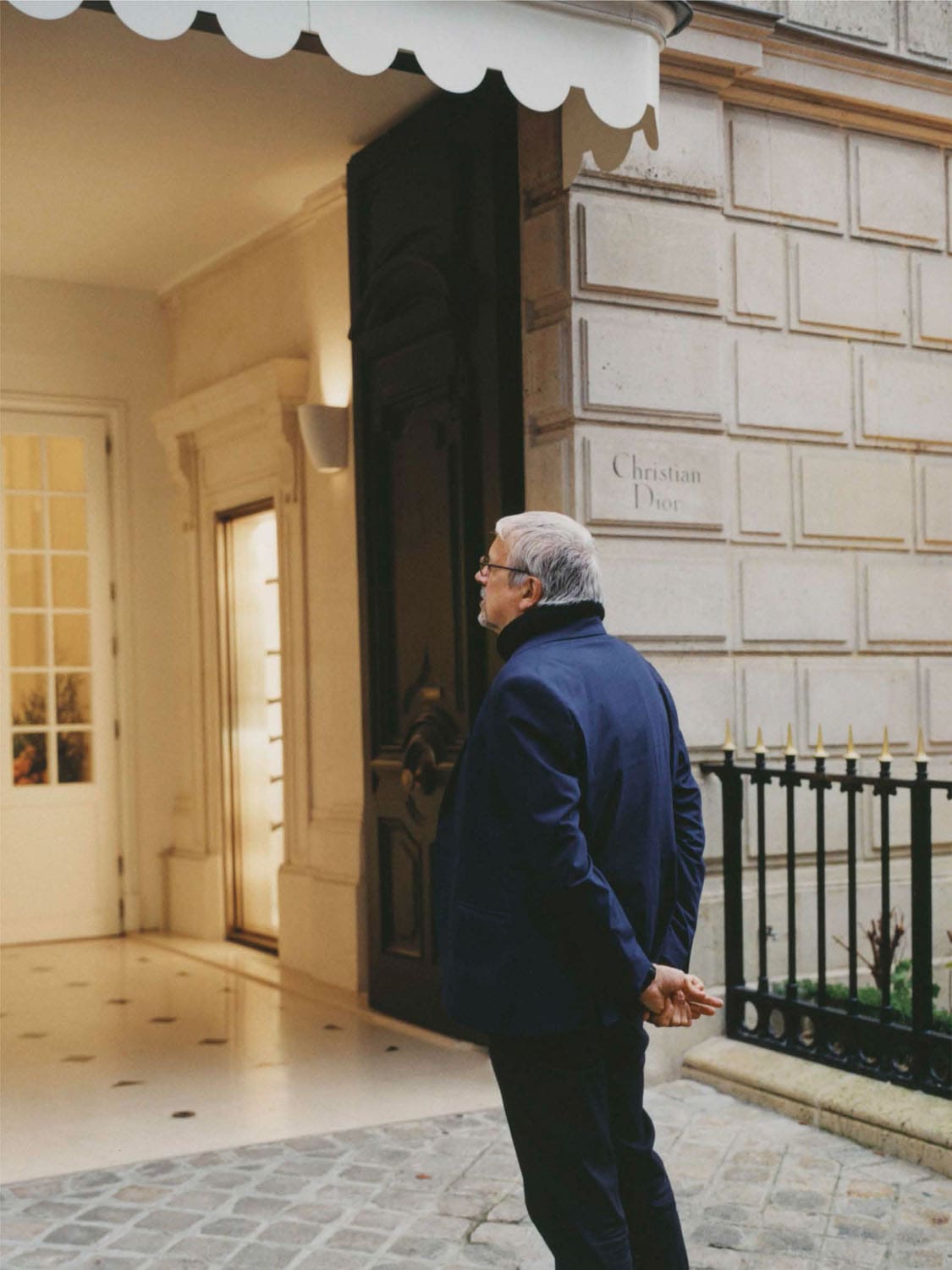
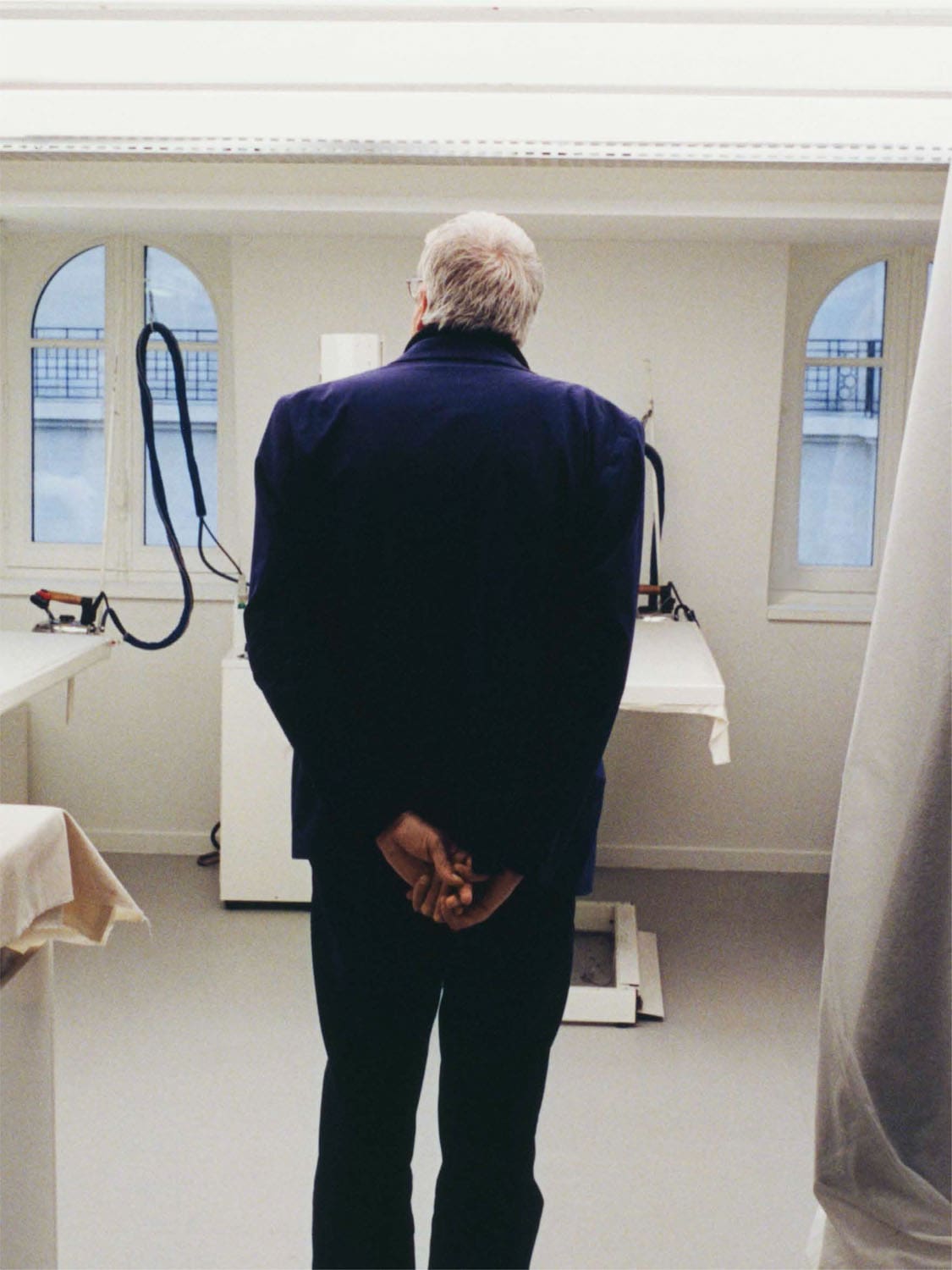
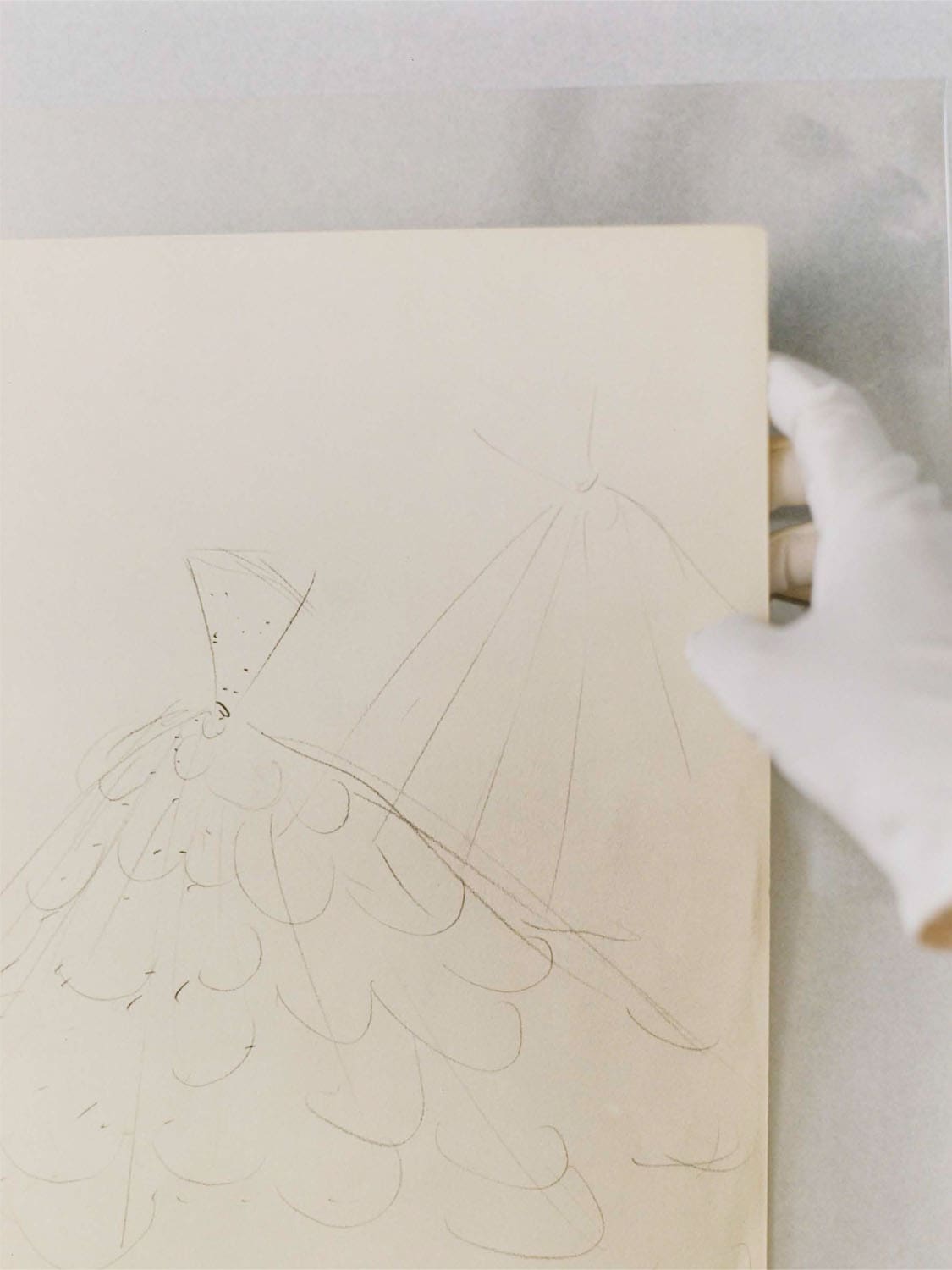
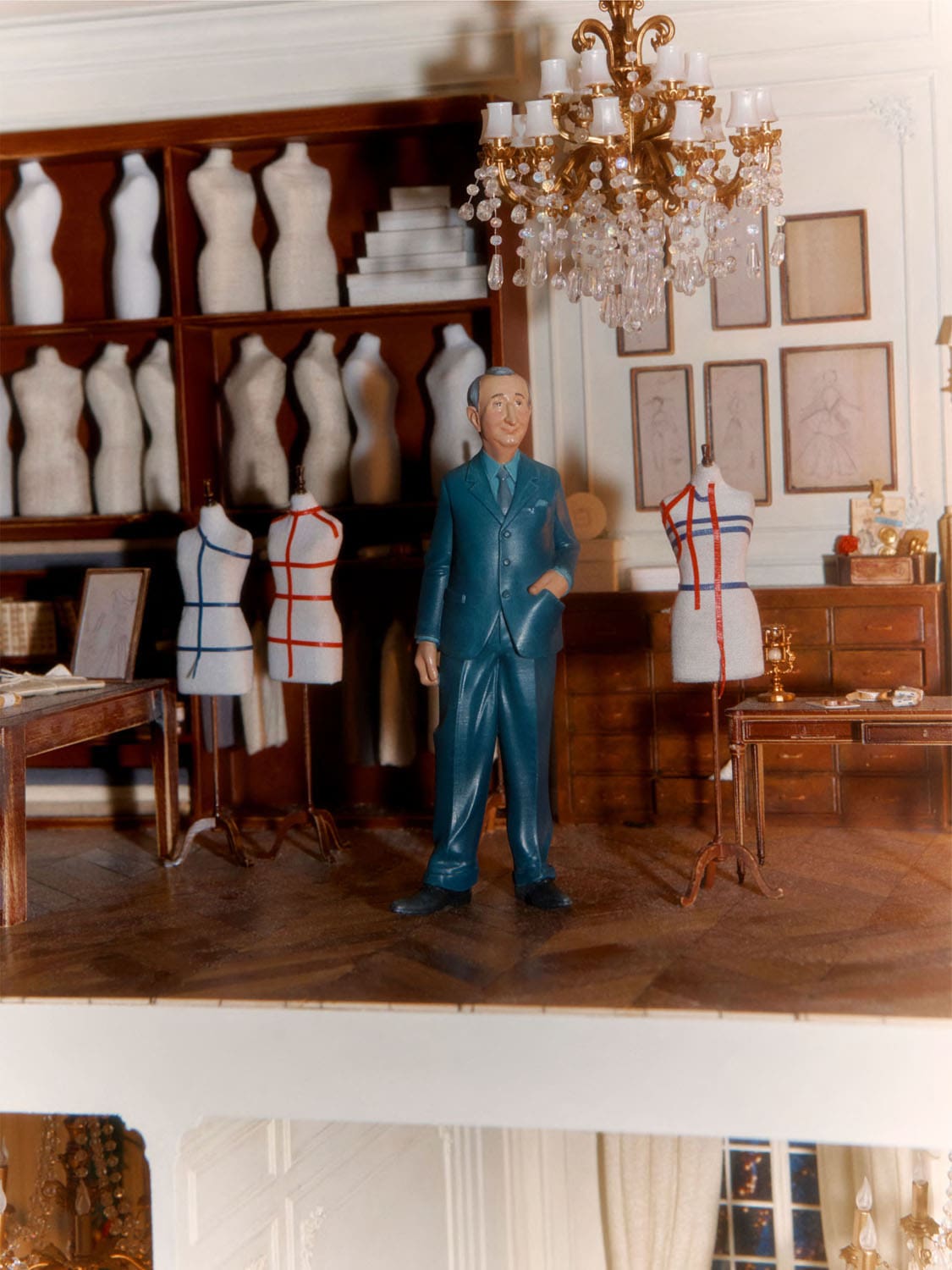
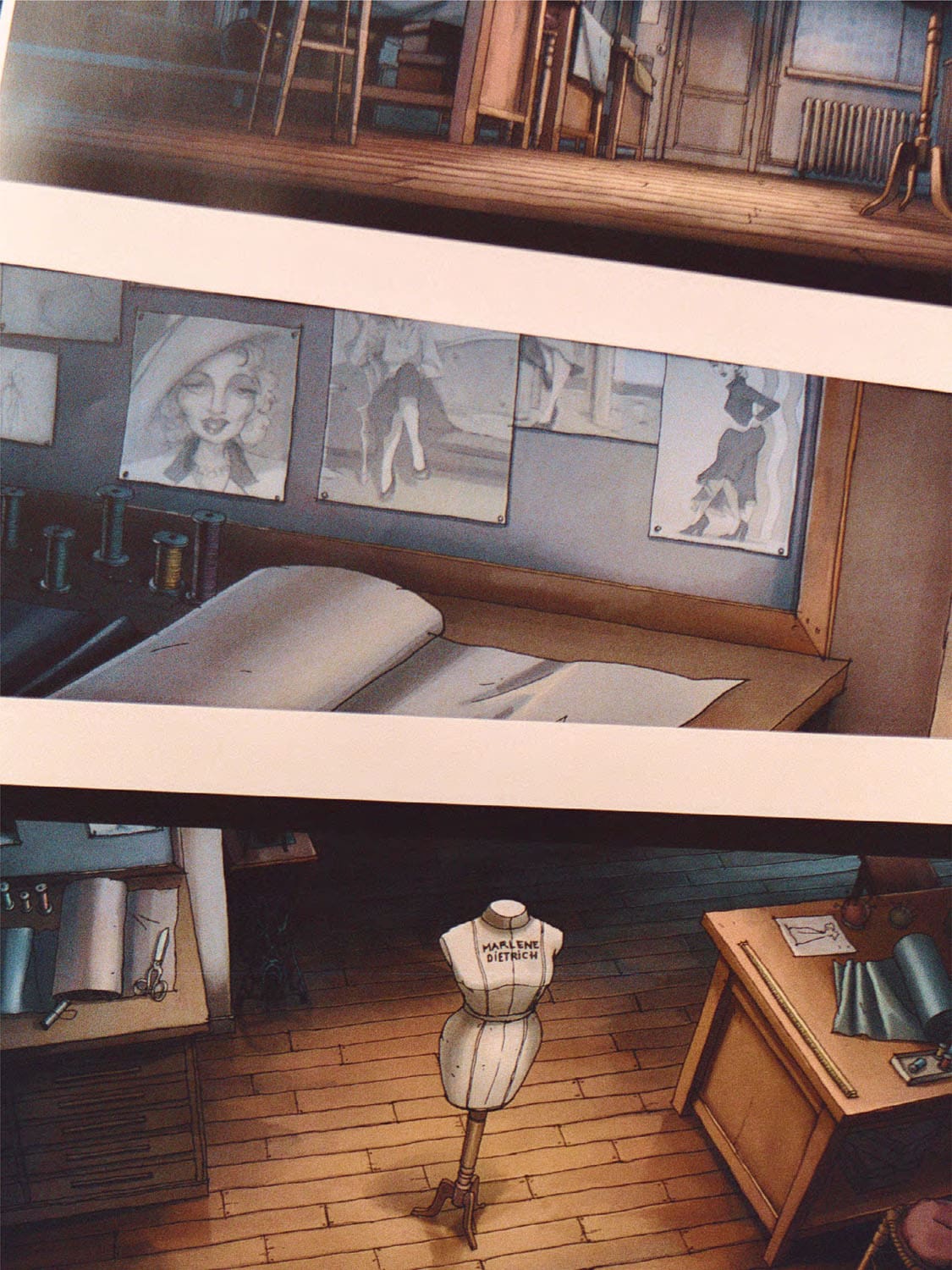
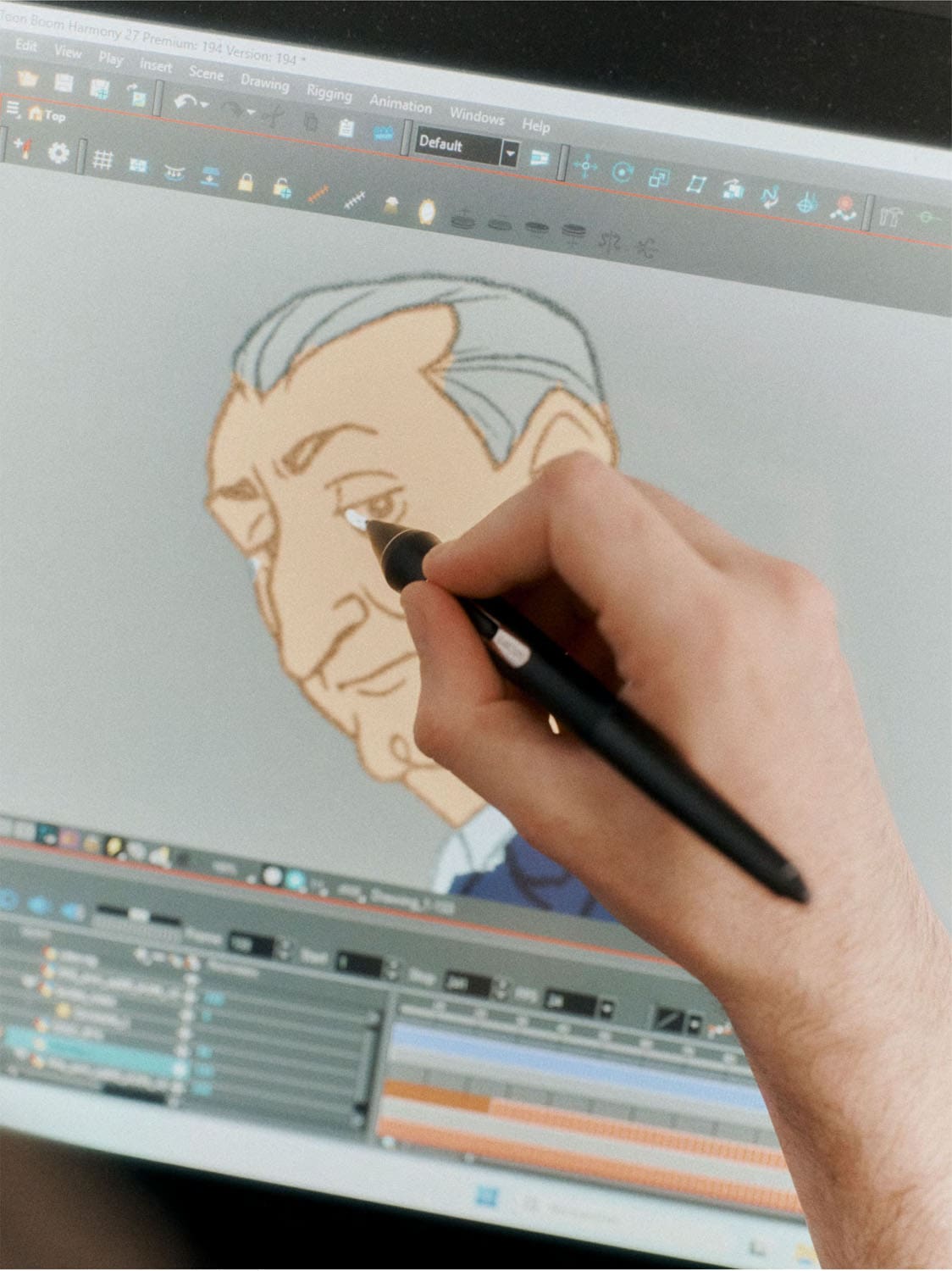
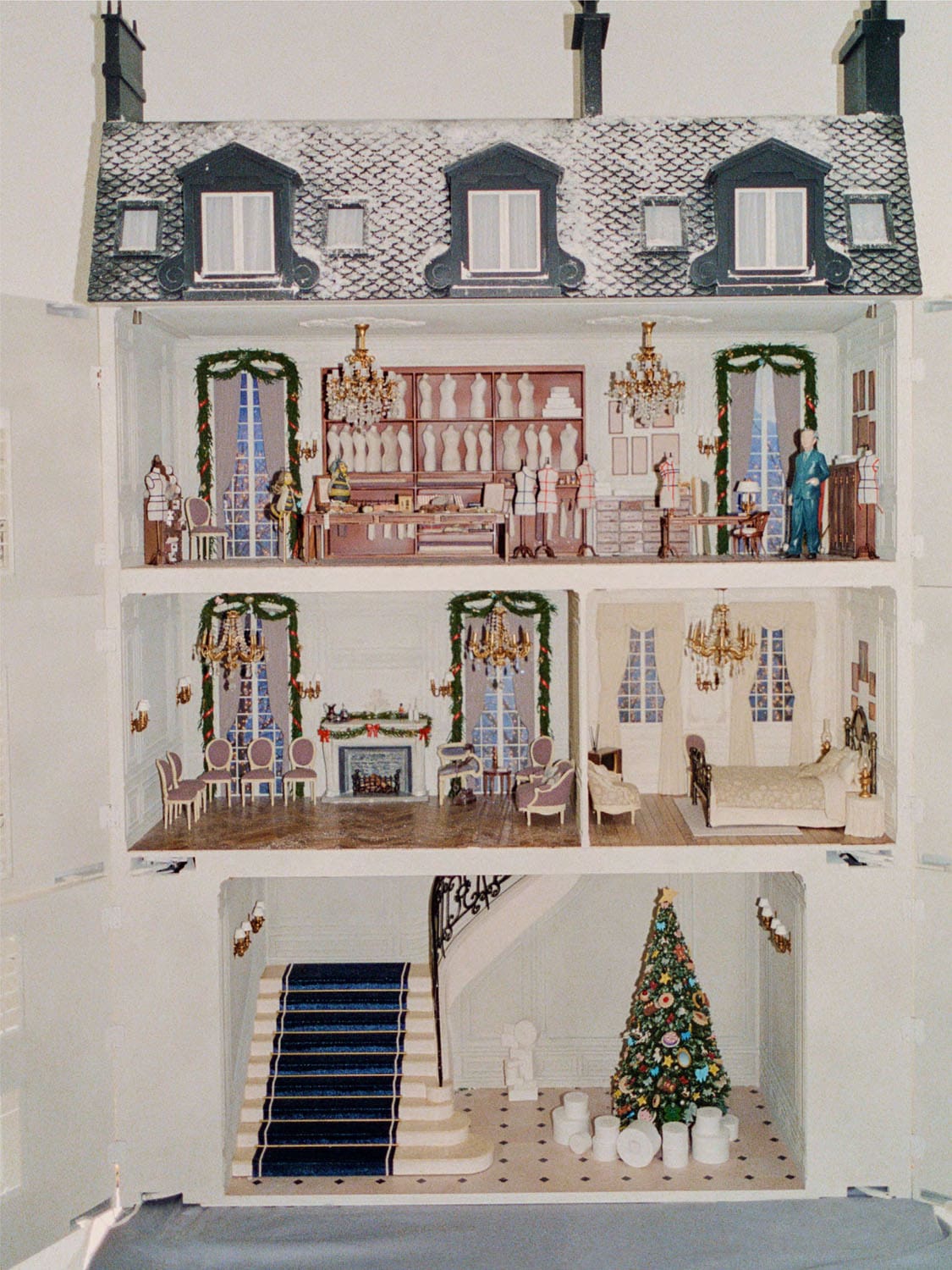
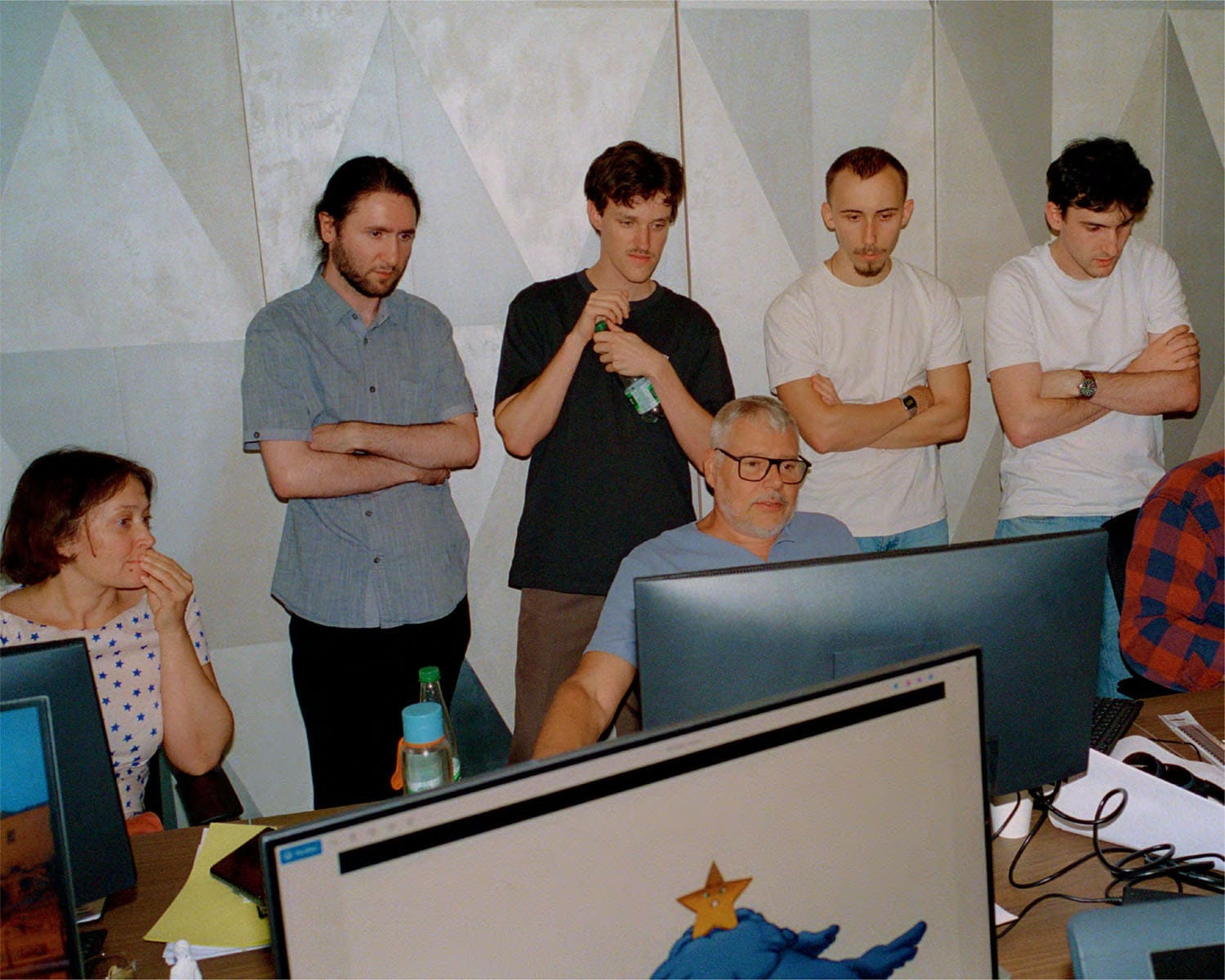
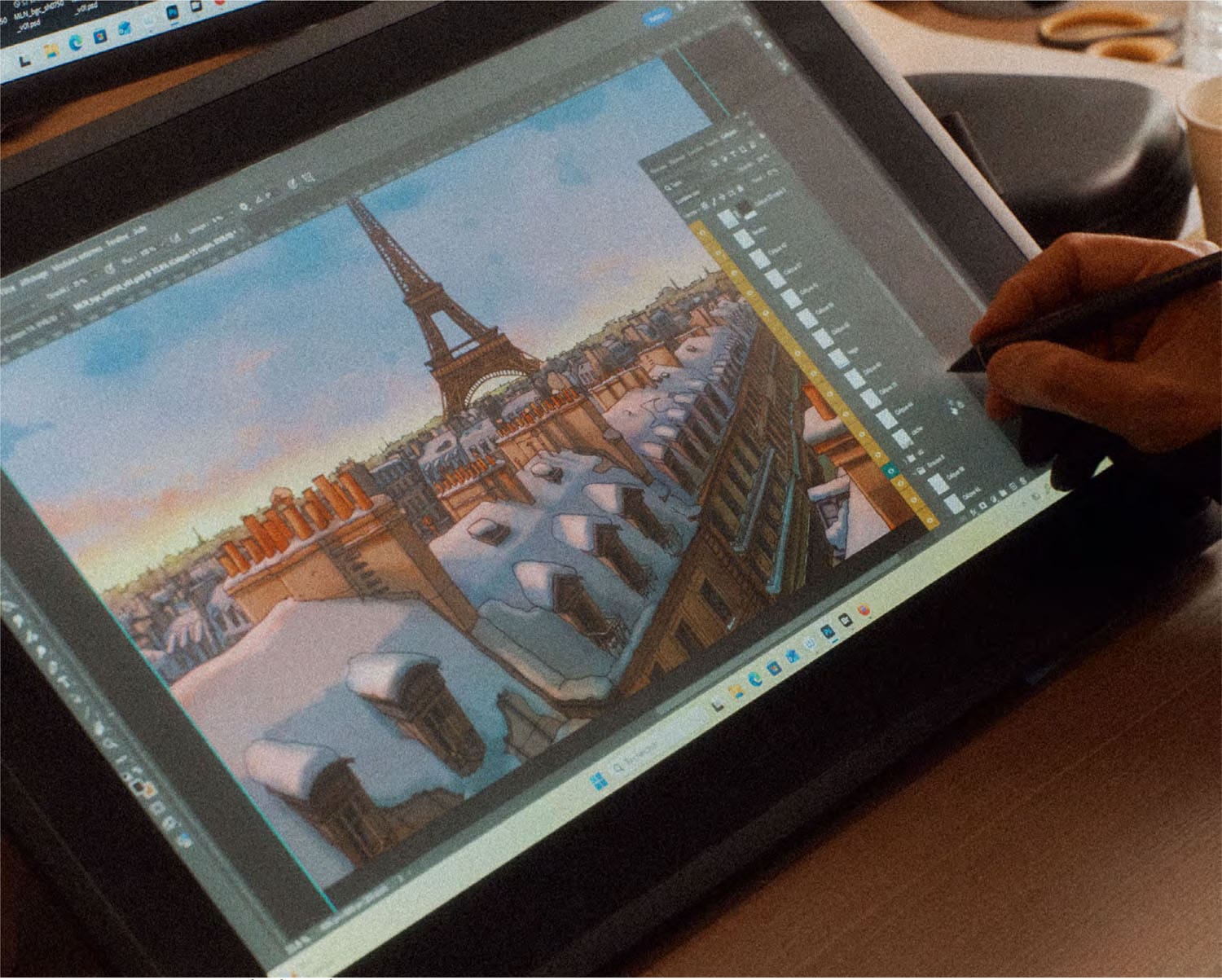
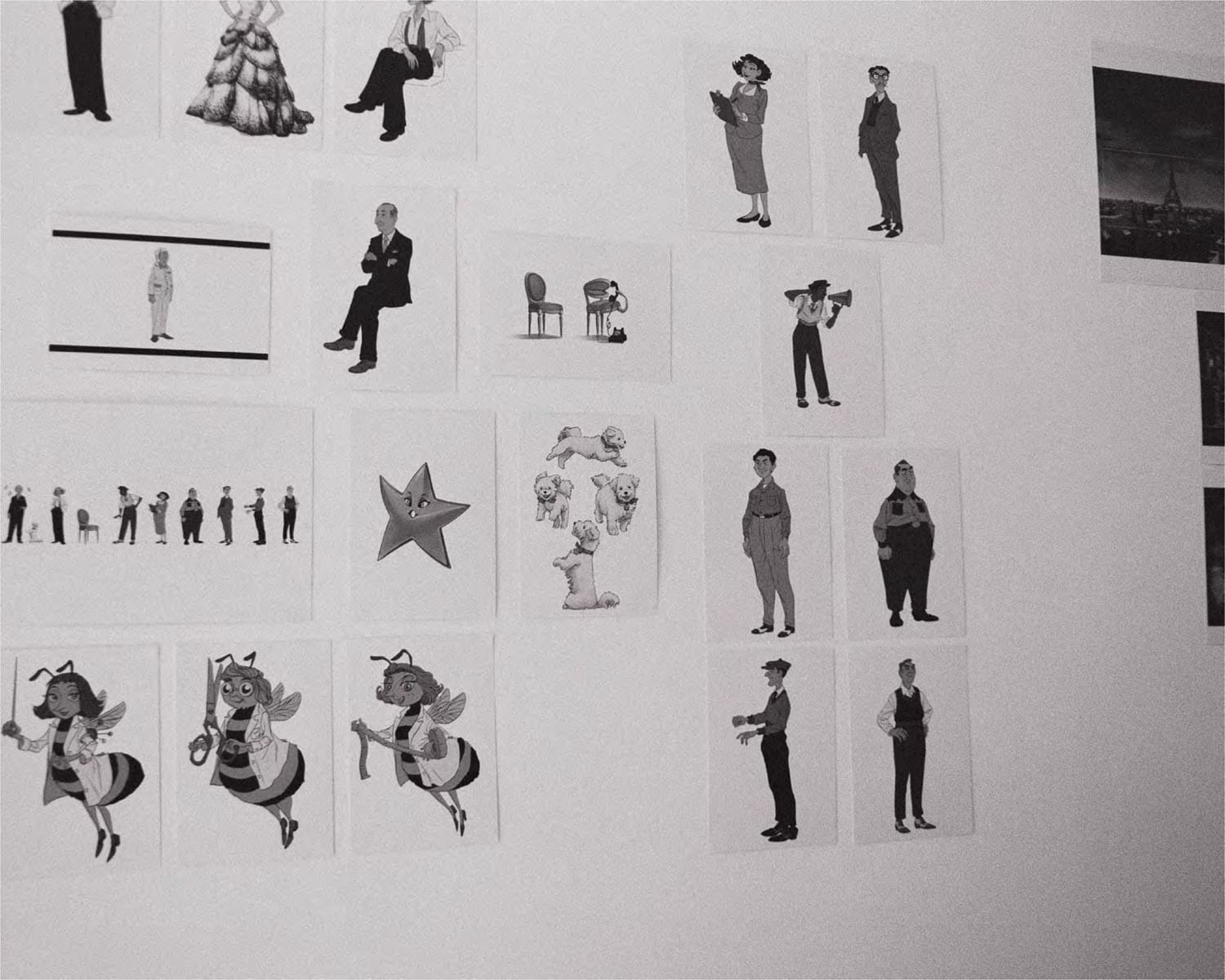
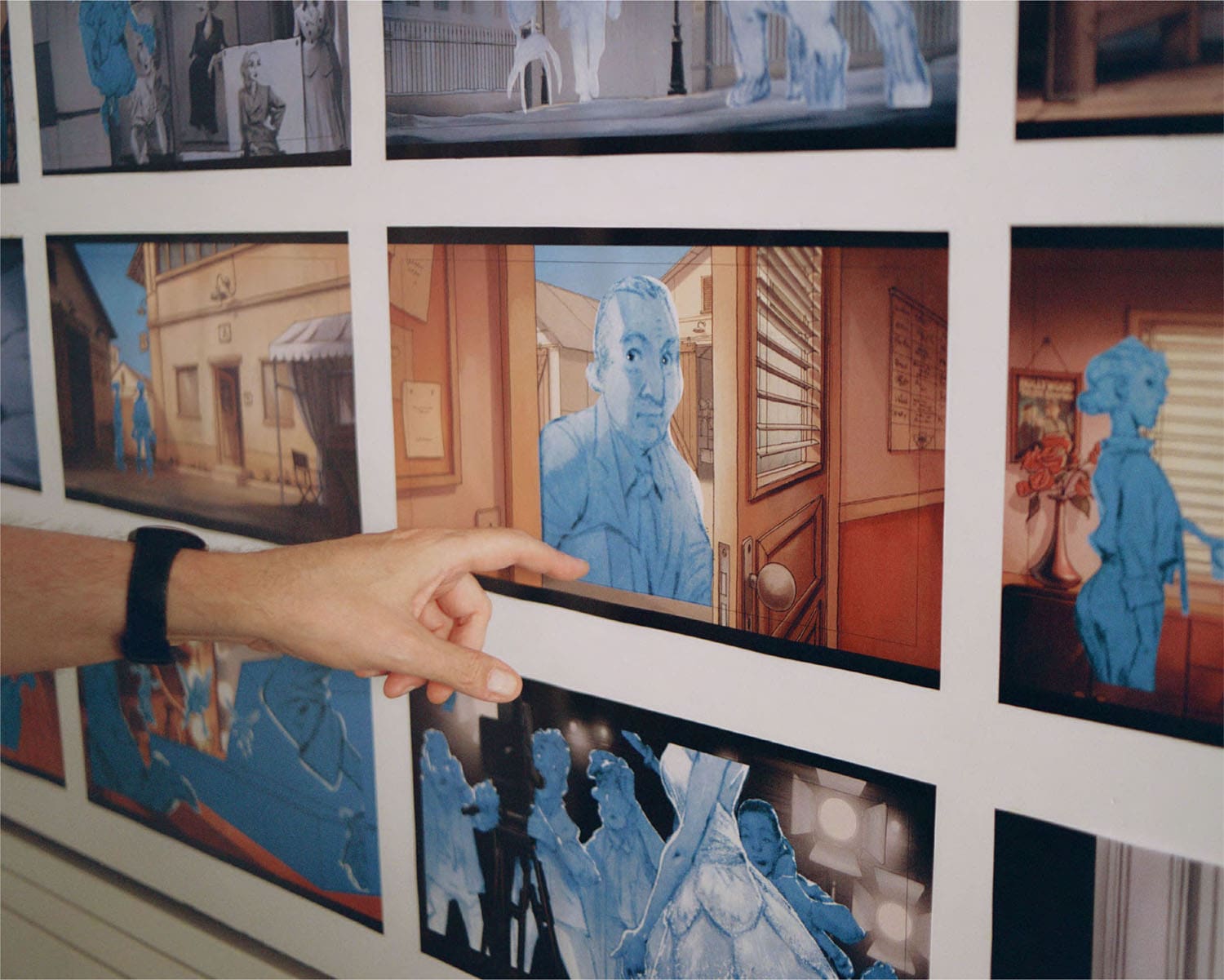
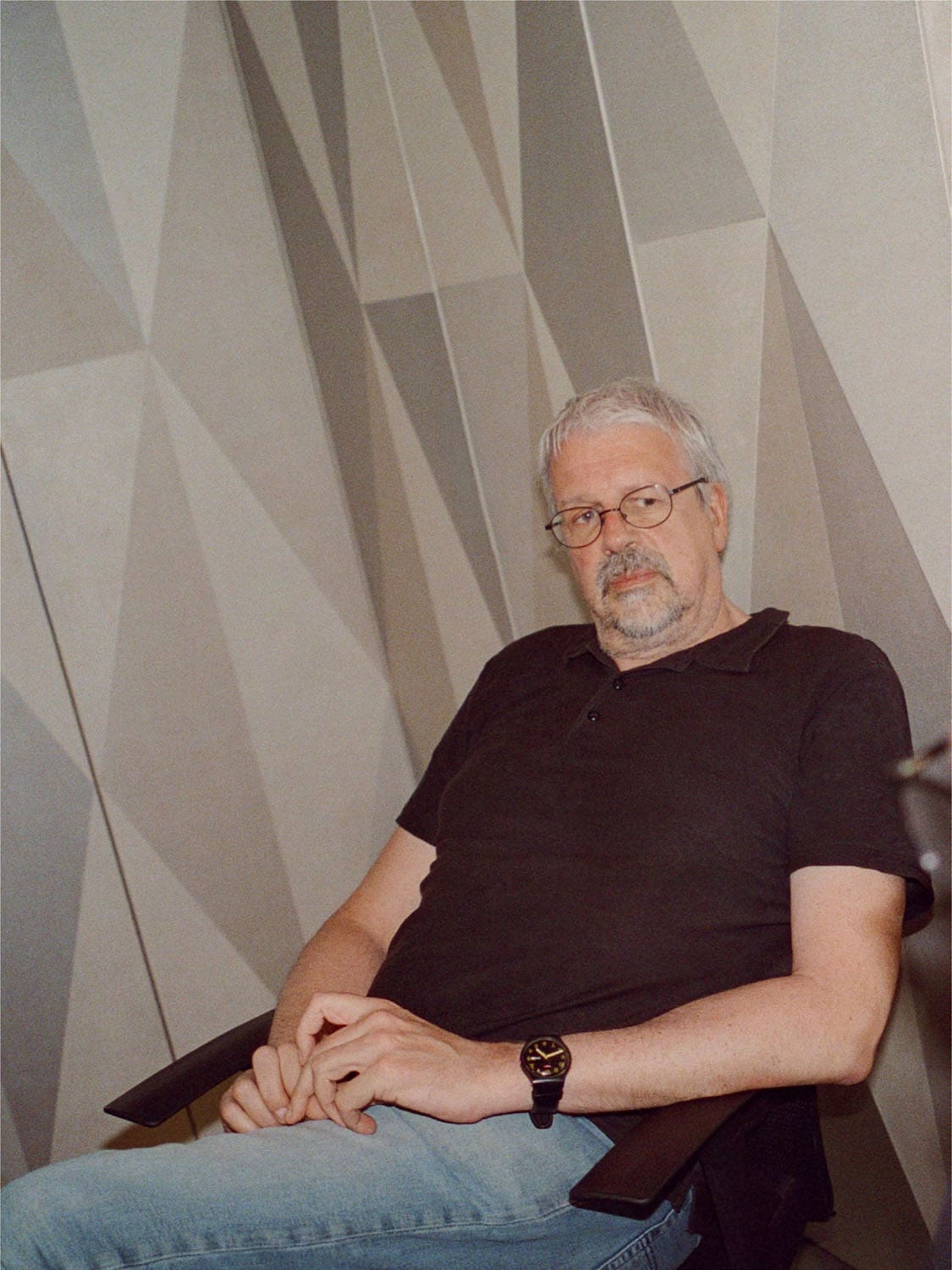
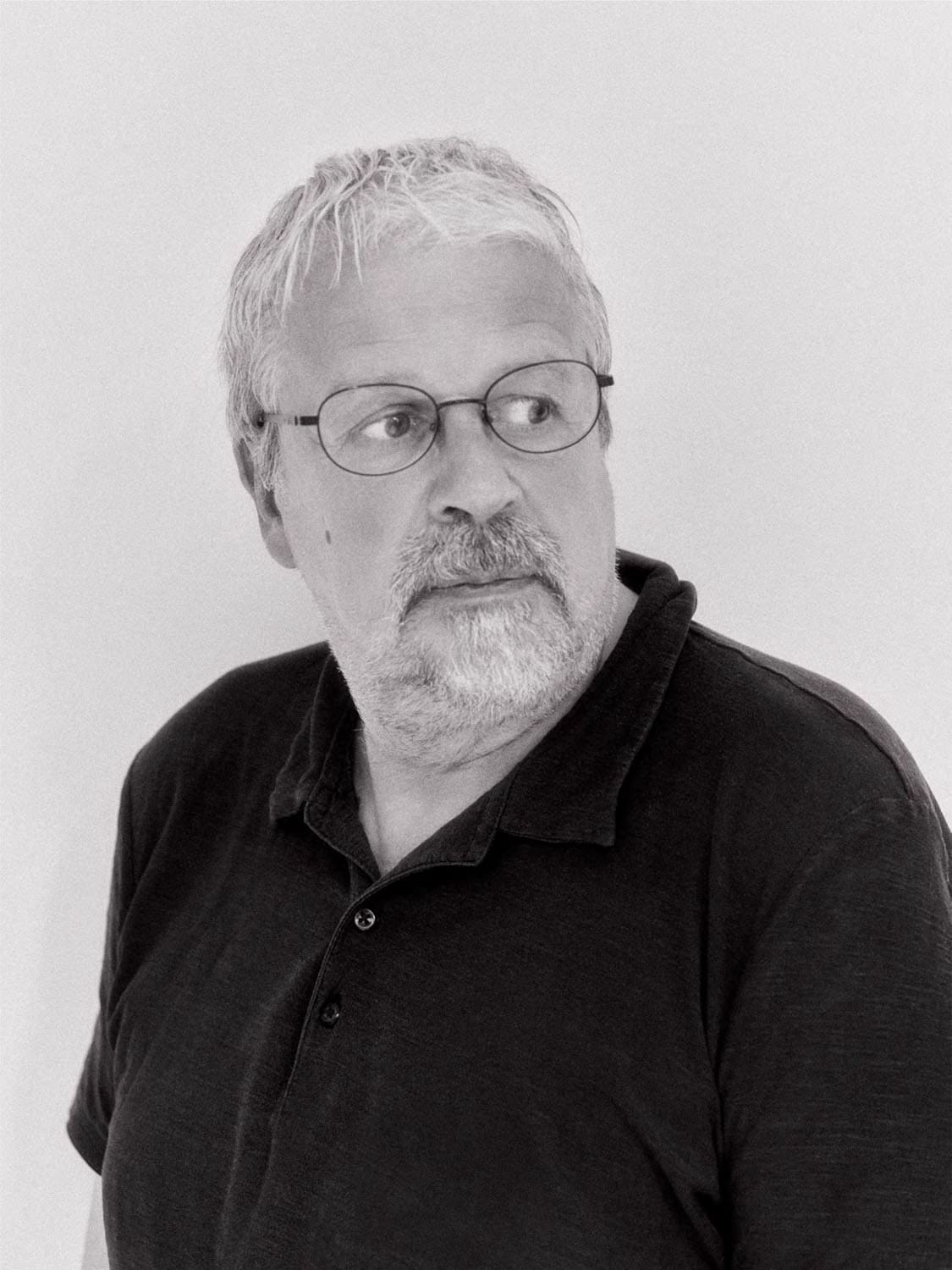
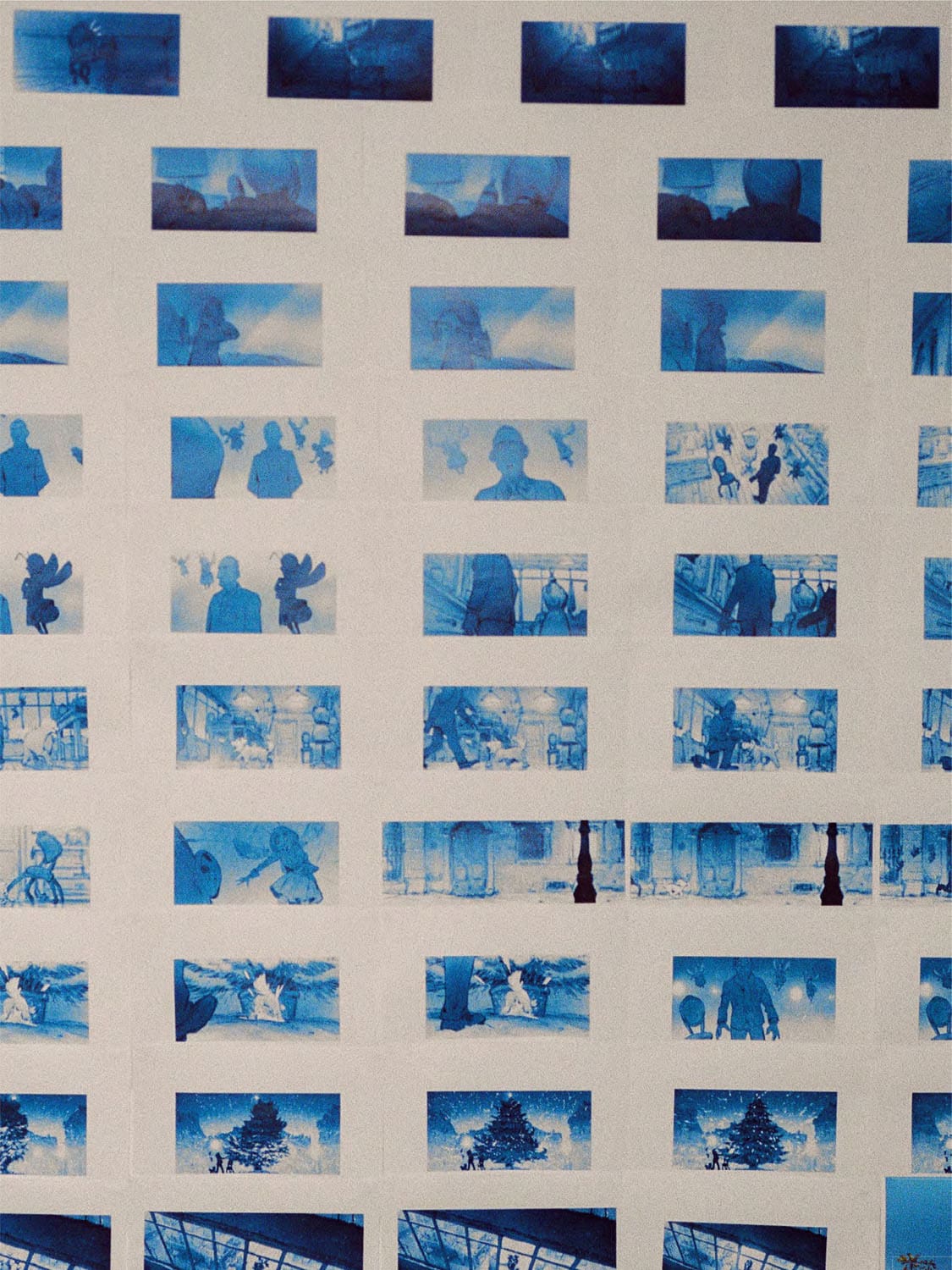
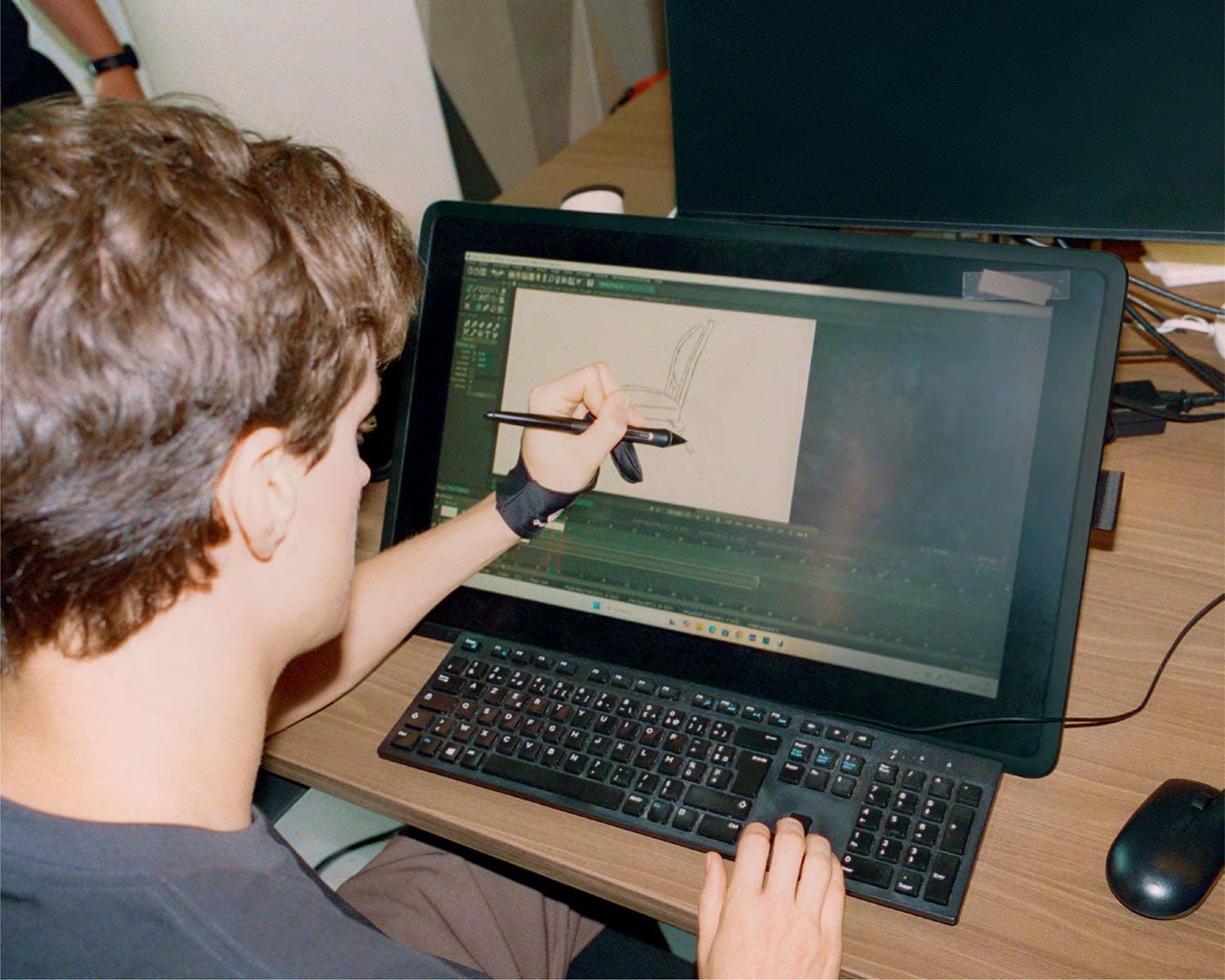
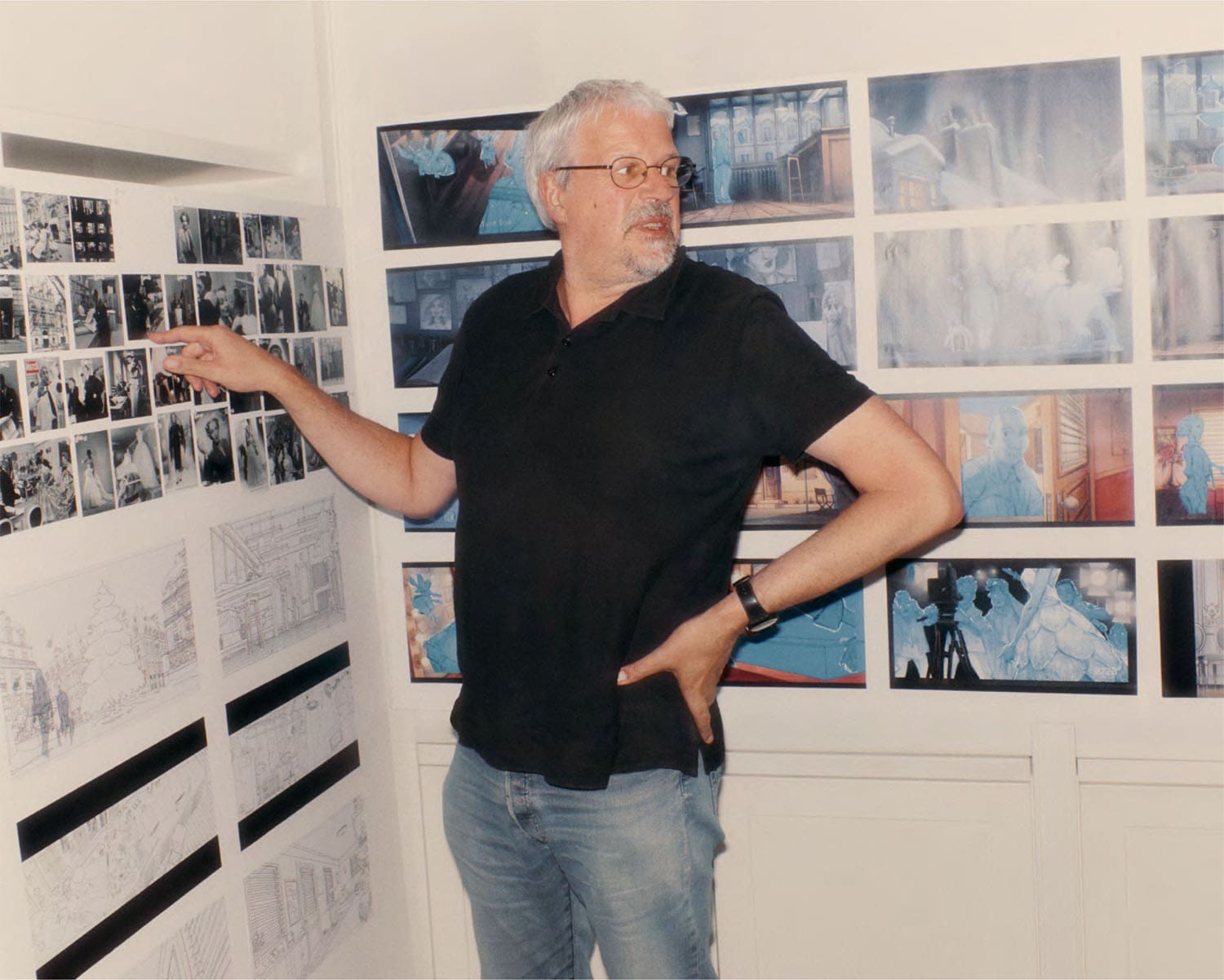
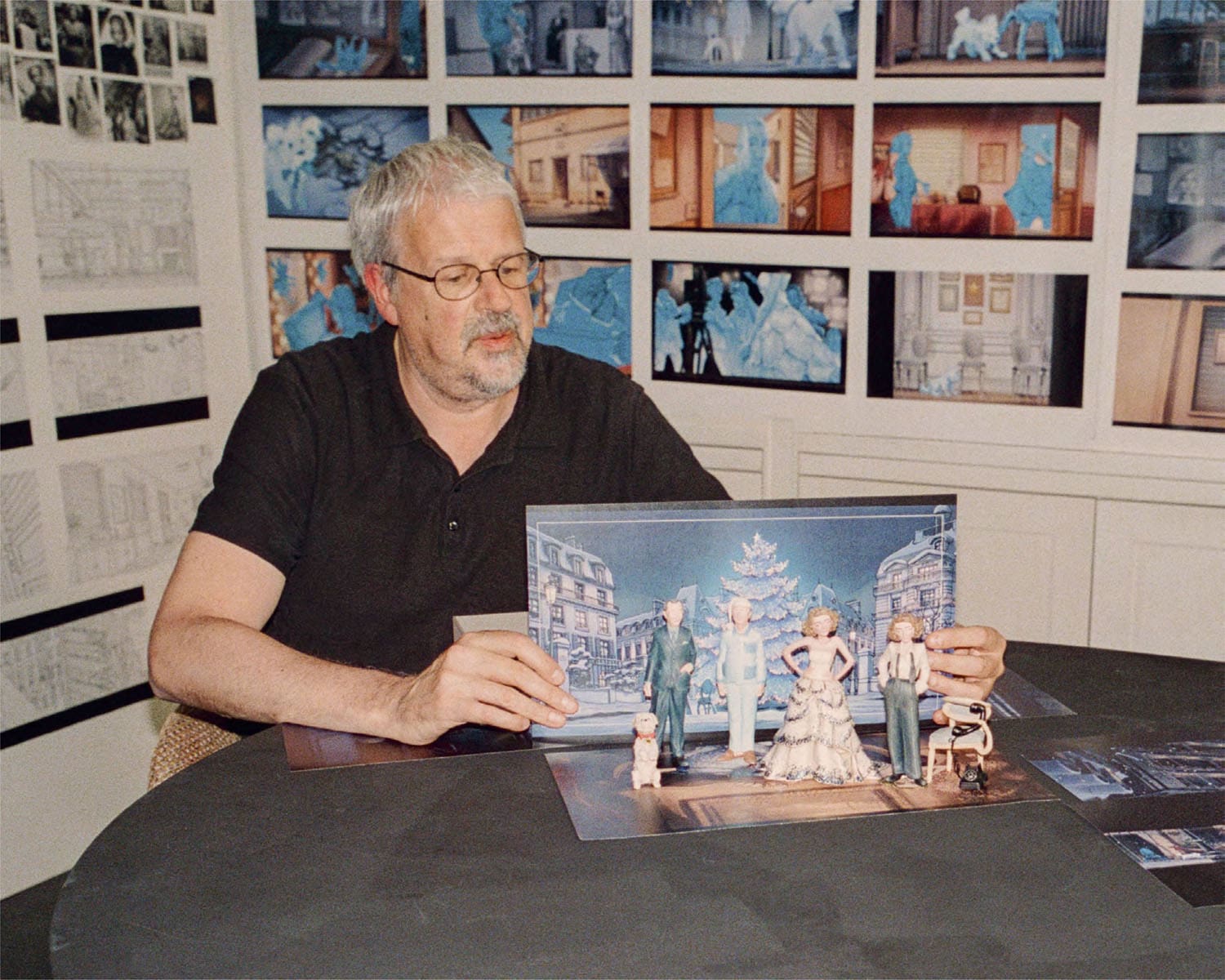
Making of Characters
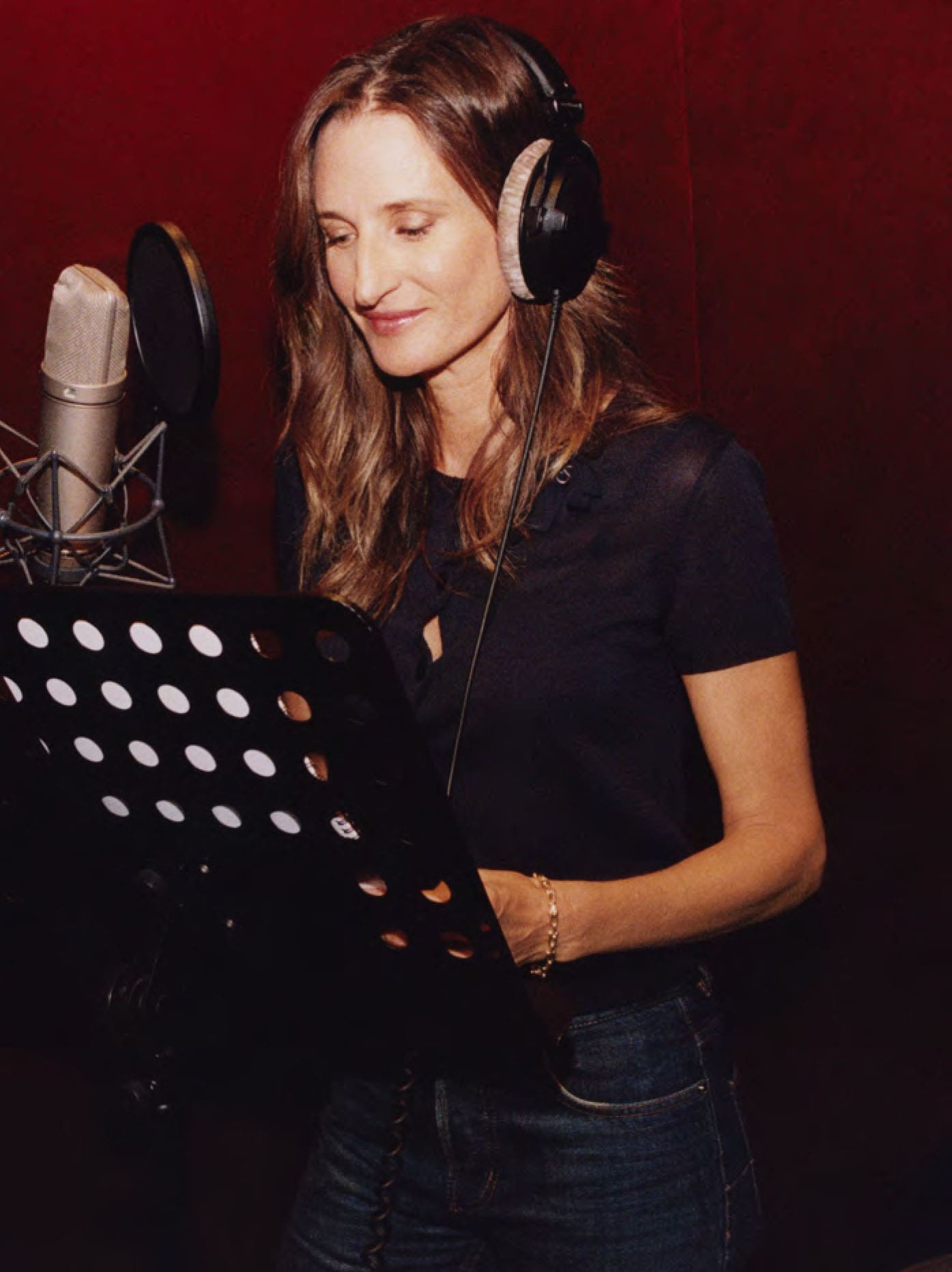
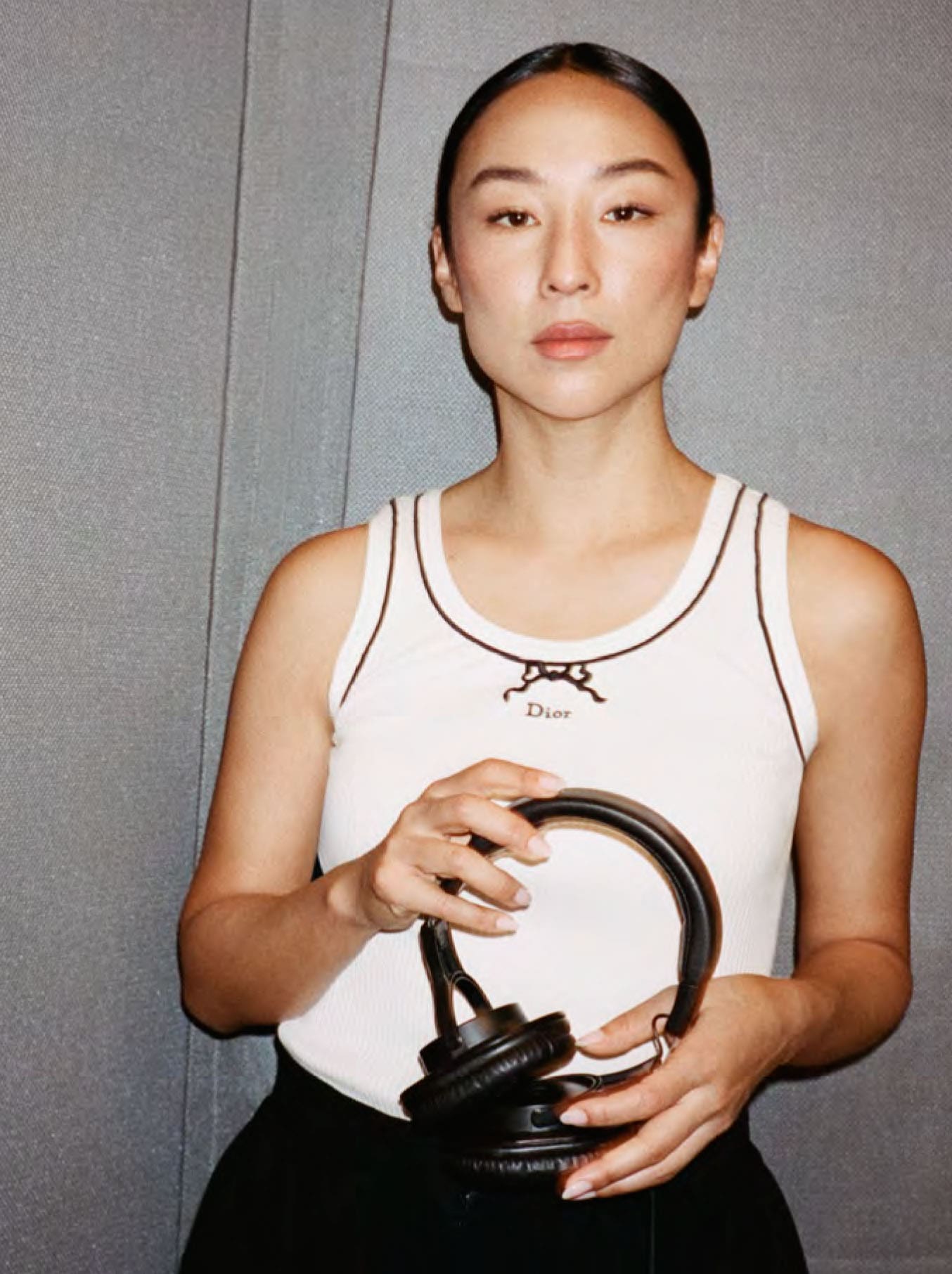

Points clés à retenir
- Christian Dior Night in Color is a hand-drawn animated movie directed by Sylvain Chomet, celebrating human artistry in contrast to AI-driven animation.
- The film features a whimsical story about Christian Dior responding to a last-minute request from Marlene Dietrich for a Technicolor dress.
- Chomet uses traditional animation techniques from the 1940s, ensuring each character and scene reflects historical accuracy and craftsmanship.
- The film emphasizes creativity, inspiration, and the irreplaceable value of the human hand in art and fashion.
