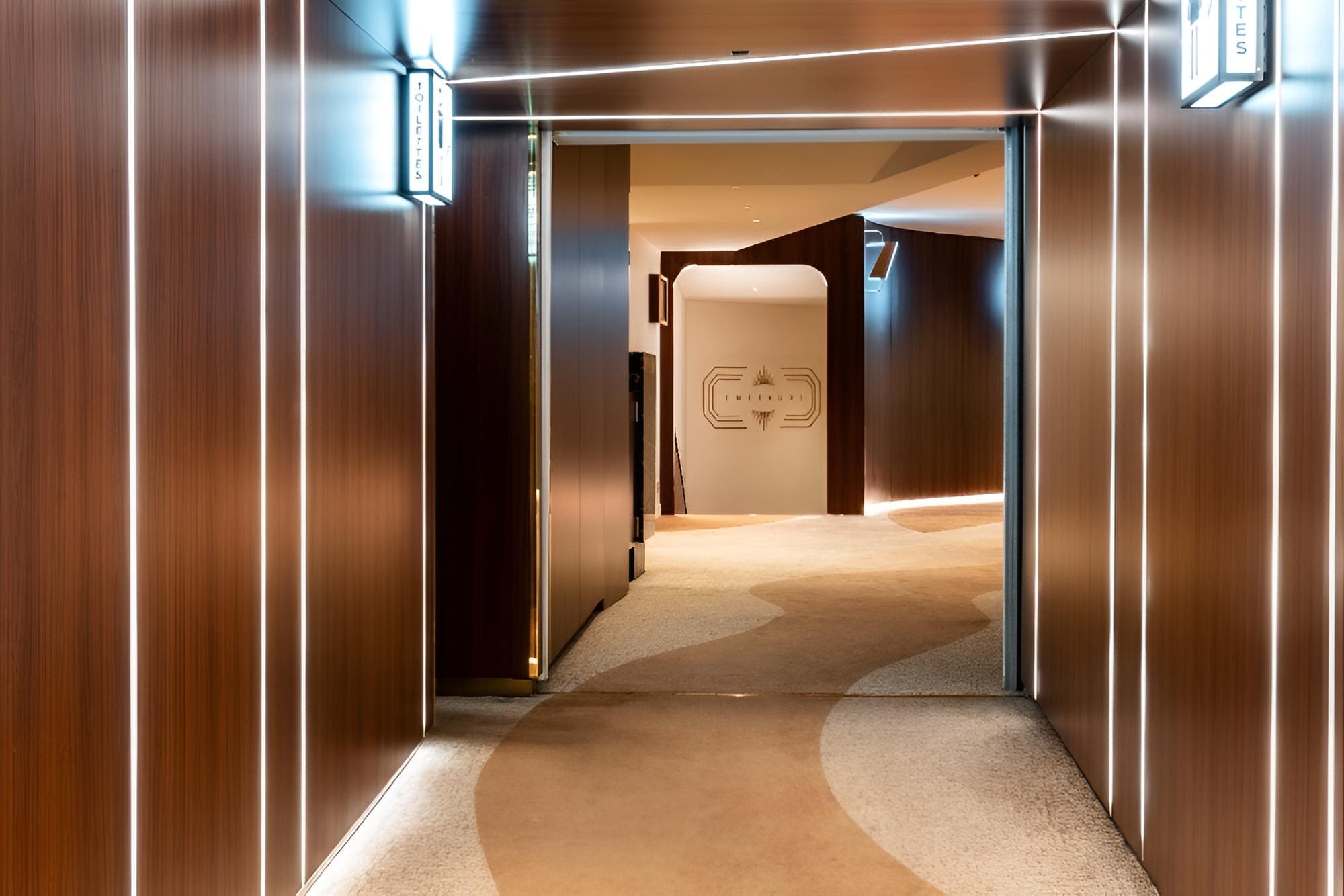
Grand Rex’s Emerald Cinema “The Temple on the Grands Boulevards”. Story by Ana Topi, Lifestyle Editor of RUNWAY MAGAZINE. Photo Courtesy: Grand Rex / ABP Architectes/ Stanislas Gros.
Paris possesses plenty of monuments to cinema, yet only one behaves like a palace that refuses to grow old. Since December 8, 1932, when producer Jacques Haïk unveiled his dream at 1 boulevard Poissonnière, Le Grand Rex has operated on an audacity that borders on the theatrical sublime. Classified as a Historic Monument in 1981 and steered across three generations by the Hellmann family, this Art Deco titan has spent nearly a century hosting the world’s most electric red-carpet premieres. Hollywood royalty treats its stage like sacred ground—Steven Spielberg himself famously counts the Rex among his favorite cinemas on earth.
What makes the building endlessly captivating is how it holds two opposing instincts in balance: monumental scale and obsessive intimacy. Over the past decade, without ever locking its doors to the million-plus visitors who pass beneath its rotating tower each year, the cinema poured more than fifteen million euros into a quiet, methodical rebirth. First came the 2015 replacement of the legendary escalator once inaugurated by Gary Cooper. Two years later, the cavernous Grande Salle received a meticulous refresh. By December 2022, just in time for its ninetieth birthday, the entire facade recovered its original 1932 champagne glow and vintage marquee. Then arrived the futuristic Infinite auditorium in 2023 and a gleaming, brass-and-alabaster main lobby in the summer of 2025. Every step honored Haïk’s original blueprint while smuggling twenty-first-century wizardry behind the plasterwork.
The Paradox of Scale
To grasp the charm of the newest chapter, one must first appreciate the sheer immensity of the house’s reputation. Le Grand Rex holds the crown for the largest cinema auditorium in the world: 2,700 seats gathered inside a fantastical Mediterranean courtyard beneath an artificial starry sky, facing the colossal Grand Large screen. Scale has always been its signature boast.
Which is precisely why Salle Émeraude, unveiled to the public on November 18, 2026, feels like such a delicious plot twist. Rather than squeezing more spectators into the building, president Alexandre Hellmann and his team decided to subtract. Where the old Salle 7 once packed in 109 standard cinema seats, the new room welcomes just seventy-one guests. By trading volume for breathing room, the world’s grandest movie palace suddenly possesses one of Paris’s most private salons.
A Cocoon of Walnut, Velvet, and Light
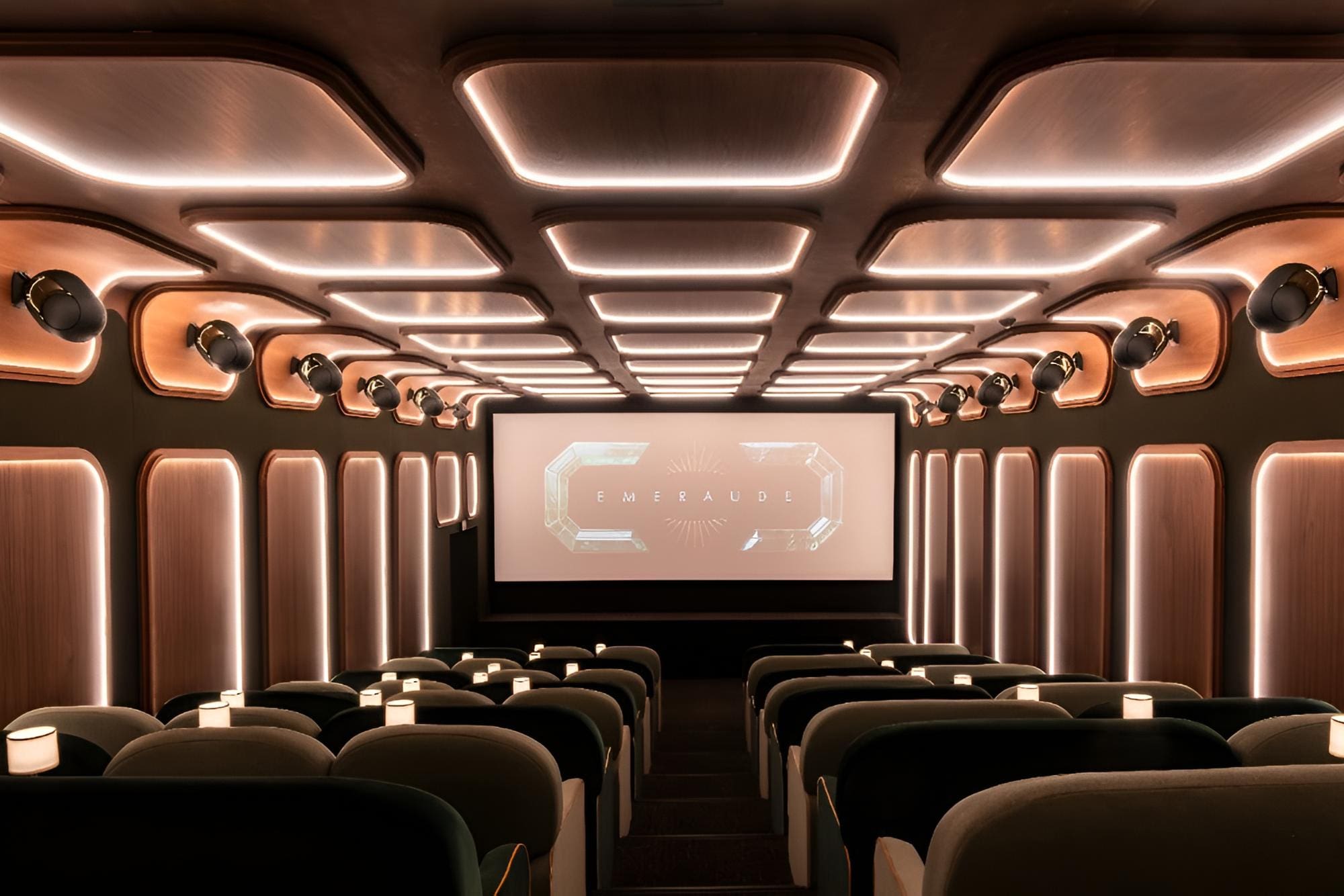
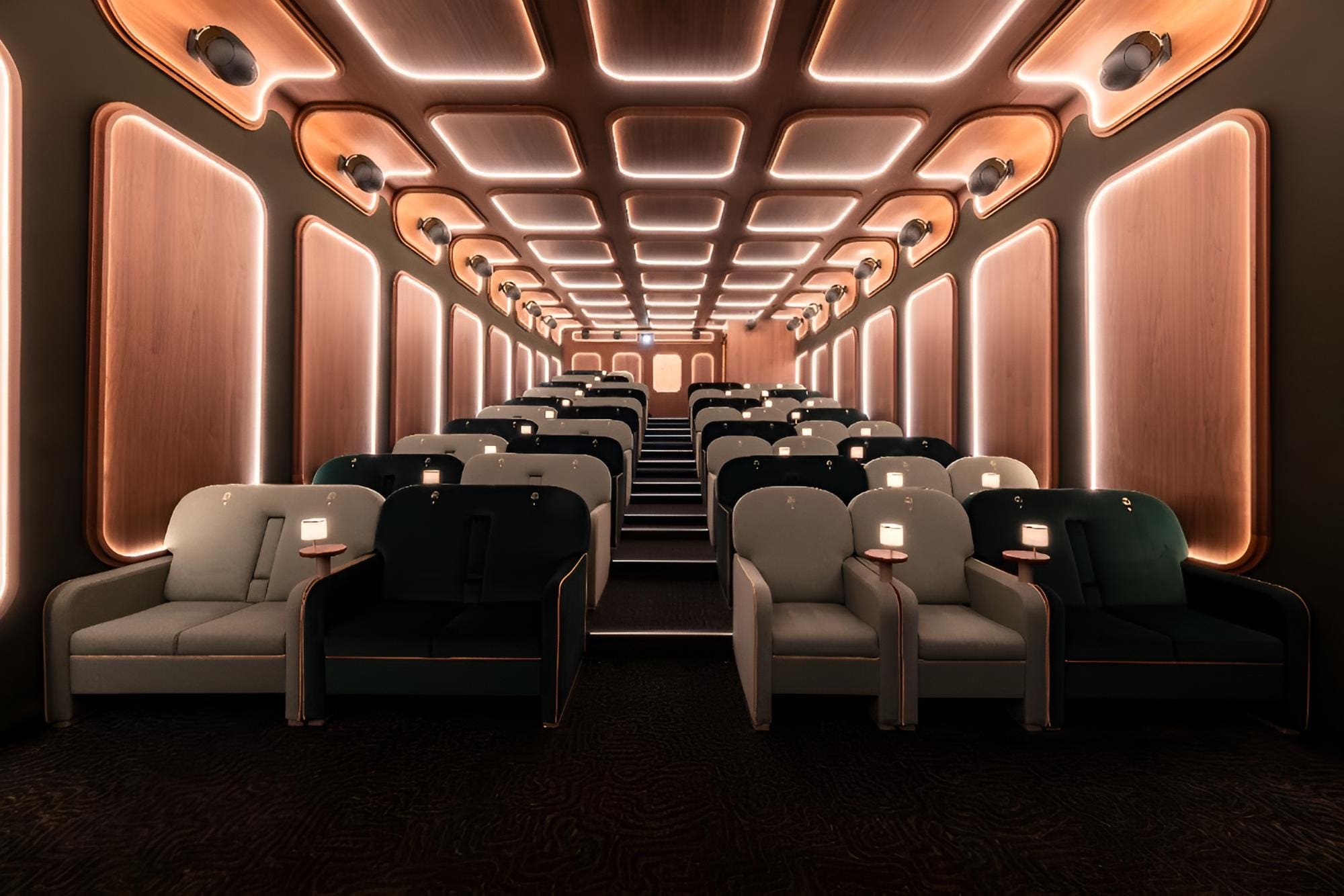
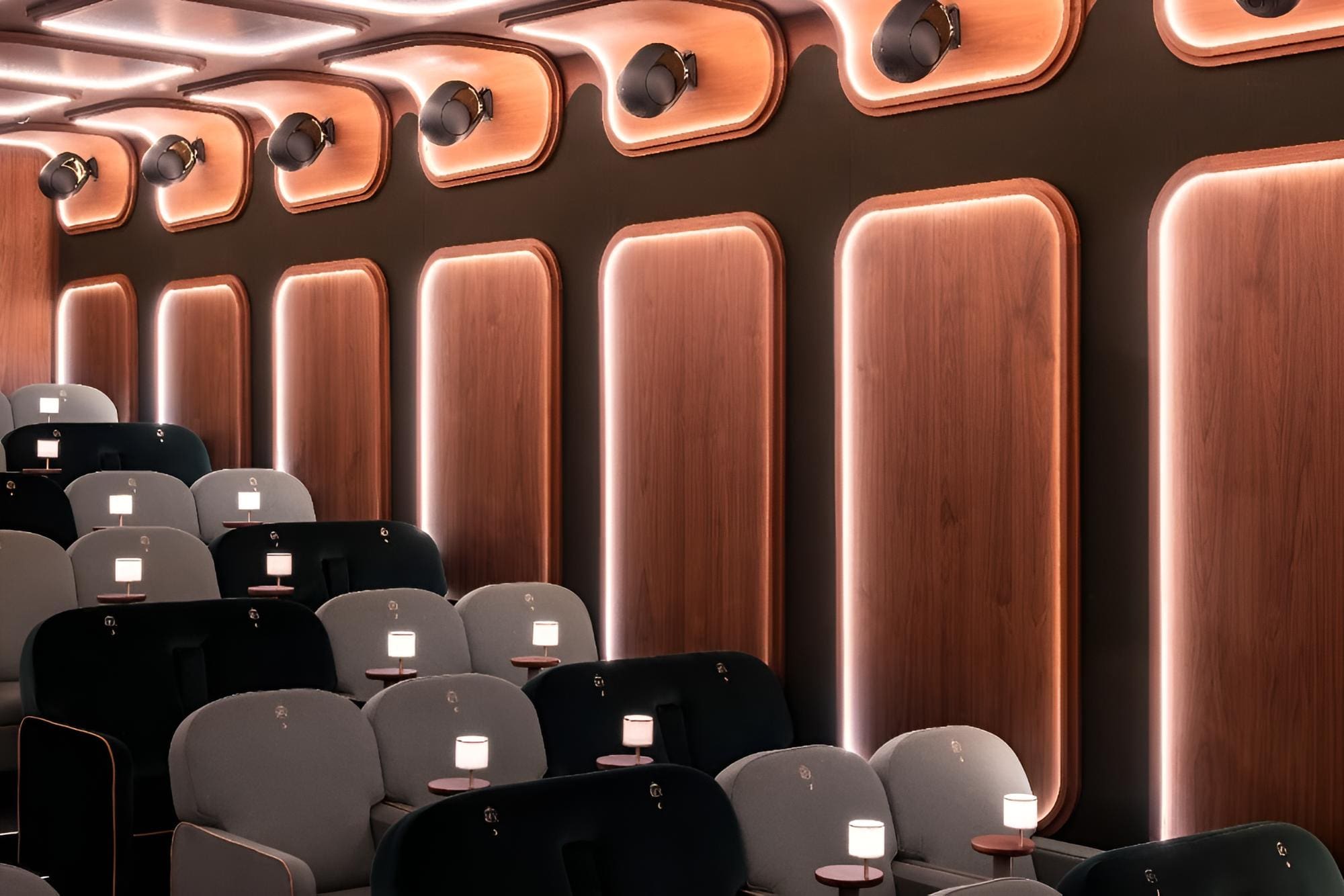
Step inside the space designed by ABP Architectes, and the sensation is closer to entering a private collector’s library—or a gilded transatlantic liner—than a neighborhood multiplex. Warm walnut paneling wraps the walls in tall, rounded arches and climbs smoothly across a coffered ceiling, each geometric frame traced by a continuous ribbon of soft, amber-gold light. Down the center aisle, dark patterned carpeting leads the eye toward glowing backlit alabaster arches that dim gently to a pearlescent hush right before the projector wakes up.
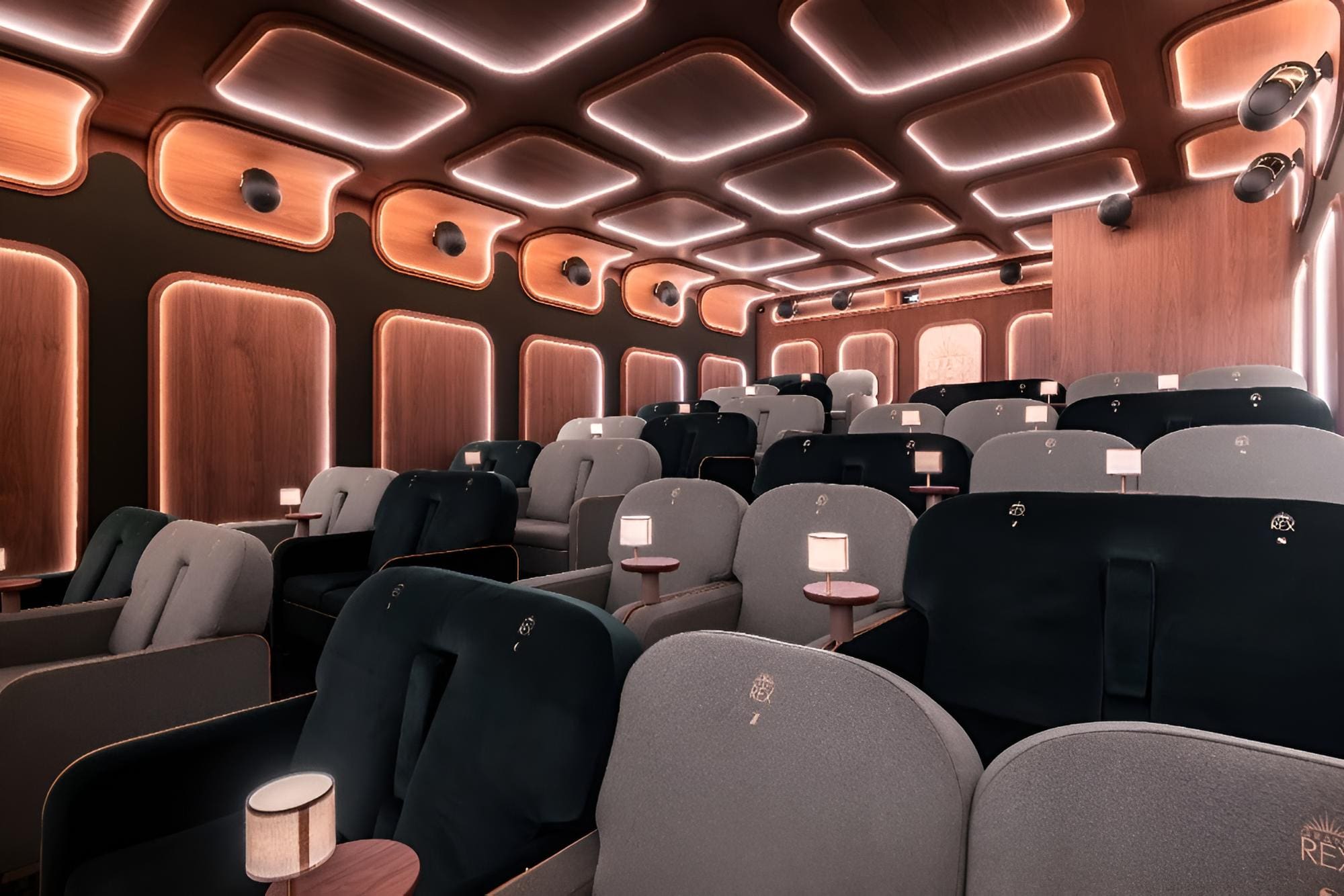
Arranged in generous rows are custom English-style lounge armchairs crafted with Figueras: thirty-five individual seats alongside eighteen deep two-seater loveseats whose central armrests fold away, letting couples turn two chairs into a single sofa. Upholstered in alternating blocks of rich emerald green and soft dove-grey velvet edged with fine brass piping, the seats look cloud-soft and aristocratic, each headrest stamped with a discreet golden emblem. Beside every spectator stands a small round walnut table topped with a miniature glowing lamp, casting a personal halo of warm light so every guest occupies a tiny stage of their own.
Whispering Behind the Shoulder
Luxury in a screening room fails the moment the lights go down if the sound remains ordinary. In a compact seventy-one-seat salon, every viewer sits close to the walls, meaning ambient audio carries just as much emotional weight as the dialogue coming from behind the screen. Hellmann partnered with Devialet, the French acoustic house celebrated from the Paris Opera to Formula 1, to pull off a world first: equipping a commercial cinema with a full Devialet surround system.
Look up toward the curved upper coffers along the walnut walls, and you spot them—seventeen sculpted Devialet Phantom Ultimate speakers tucked like sleek metallic pods into the architecture, working in lockstep with a Dolby cinema processor and a razor-sharp Christie laser projector. Micro-perforated wood panels swallow stray echoes while letting pure, undistorted sound pass straight through. Bass notes arrive with physical gravity rather than floor-rattling noise, and delicate textures gain startling geography. A character’s whisper lands right behind your left ear; sudden rainfall seems to fall across the entire room.
Devialet chief executive Jacques Demont notes that merging the sculptural silhouette of those speakers with an Art Deco jewel box demanded relentless precision. Yet the miracle of Salle Émeraude lies in how effortlessly it hides its muscle. Priced at fifteen euros for a standard ticket—and accessible without surcharge to subscription cardholders—this emerald sanctuary refuses to lock beauty behind a velvet rope. Nearly a century after Jacques Haïk built a palace where everyday Parisians could dream like royalty, Le Grand Rex proves that true grandeur does not always need two thousand seats. Sometimes, seventy-one will do nicely.