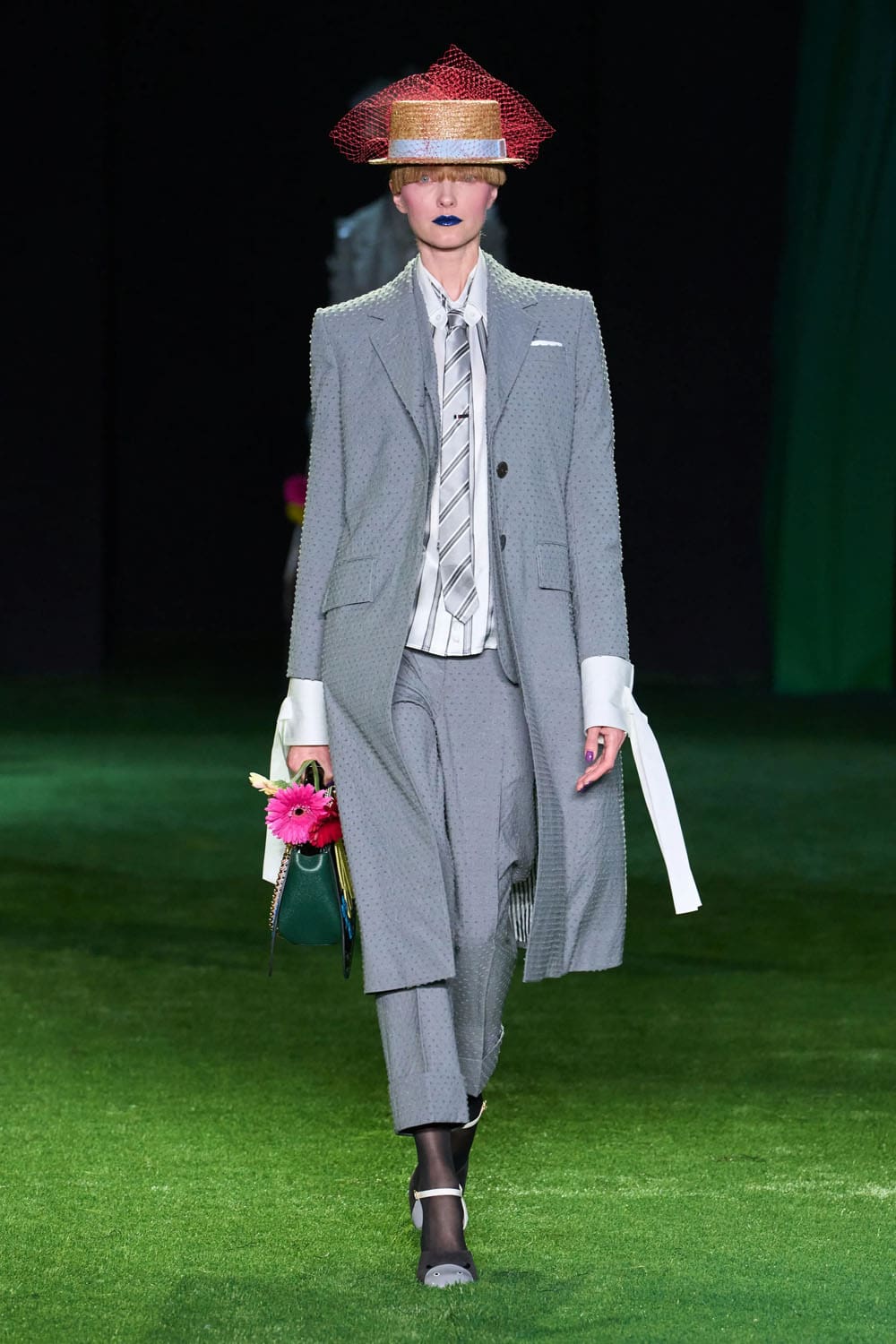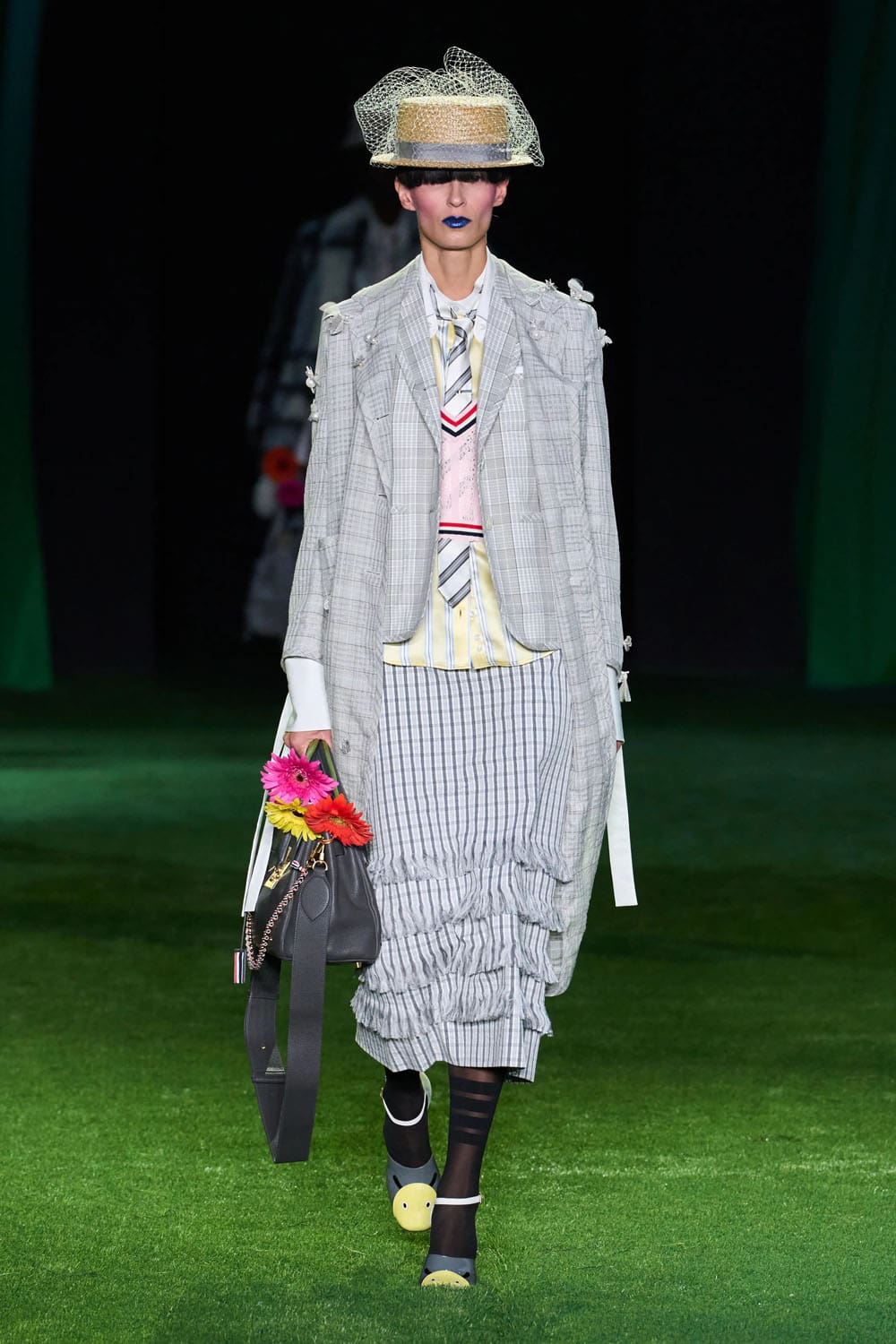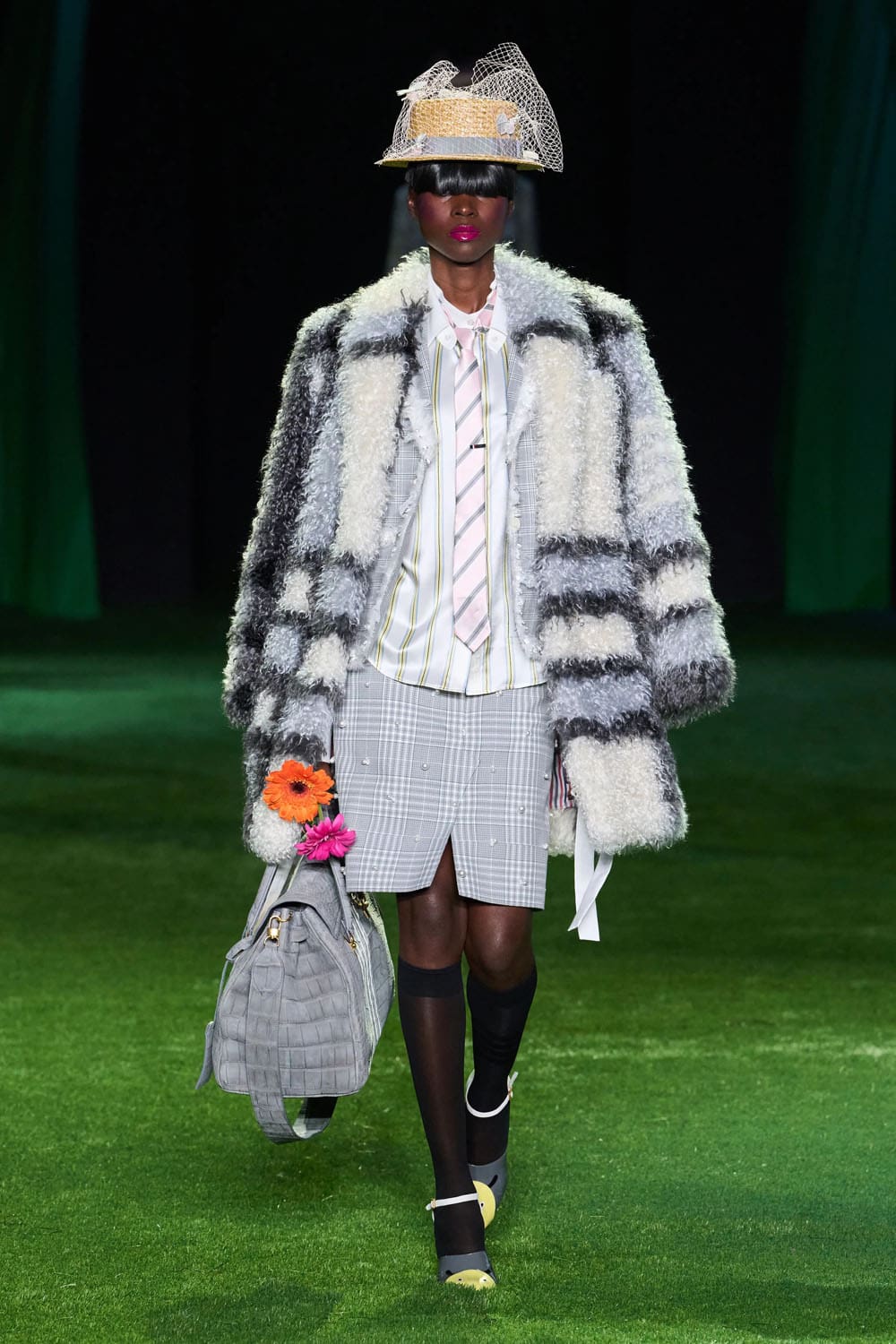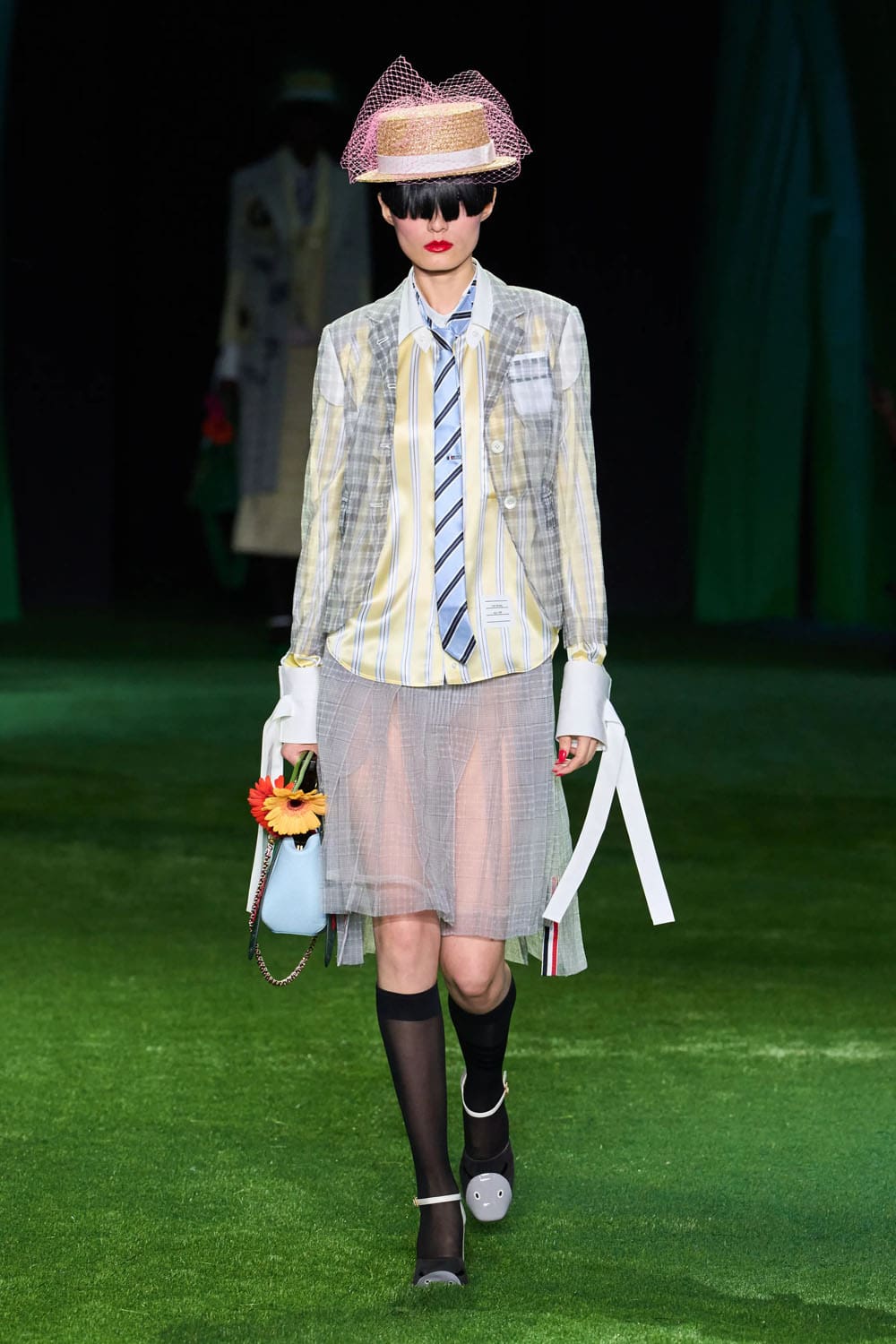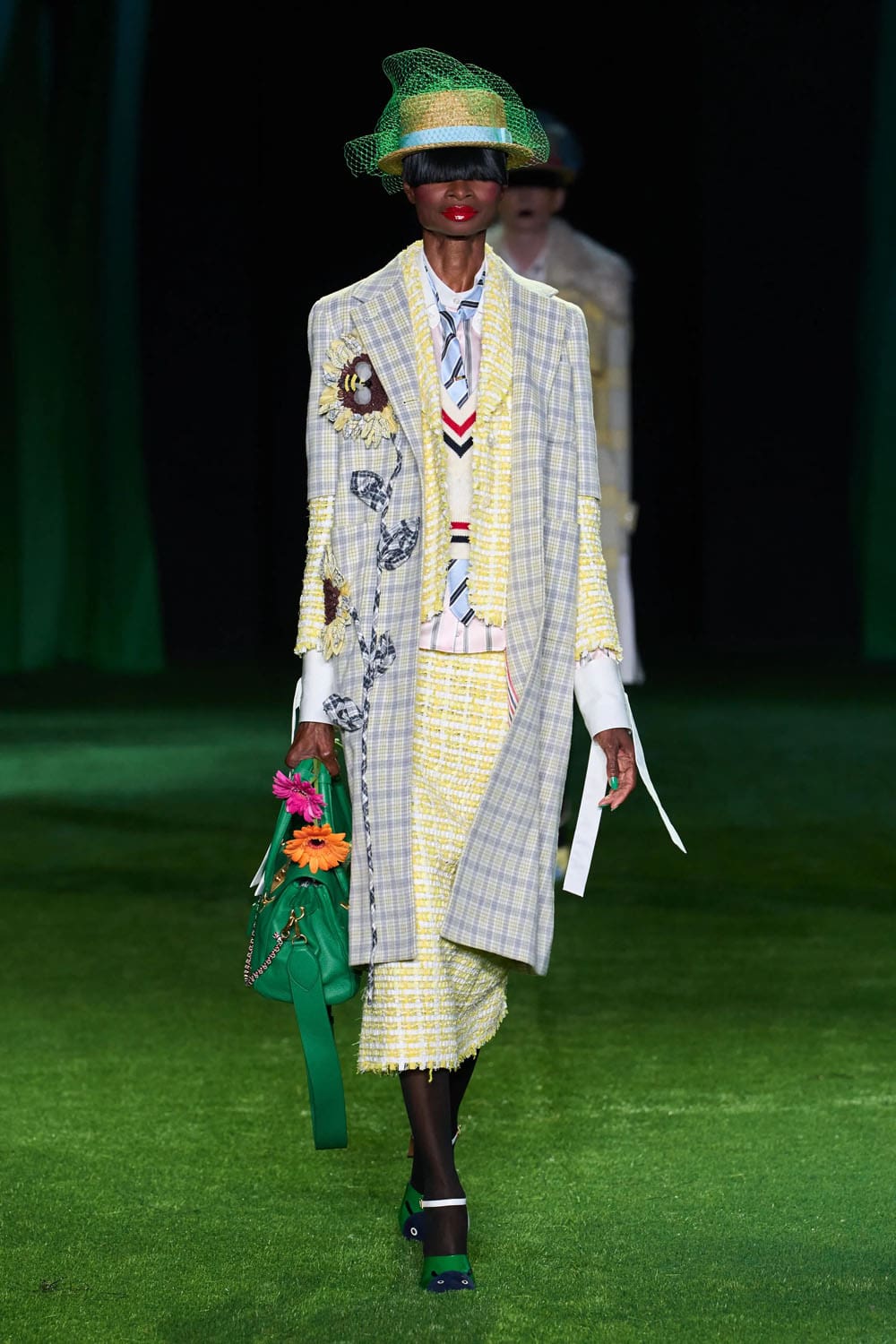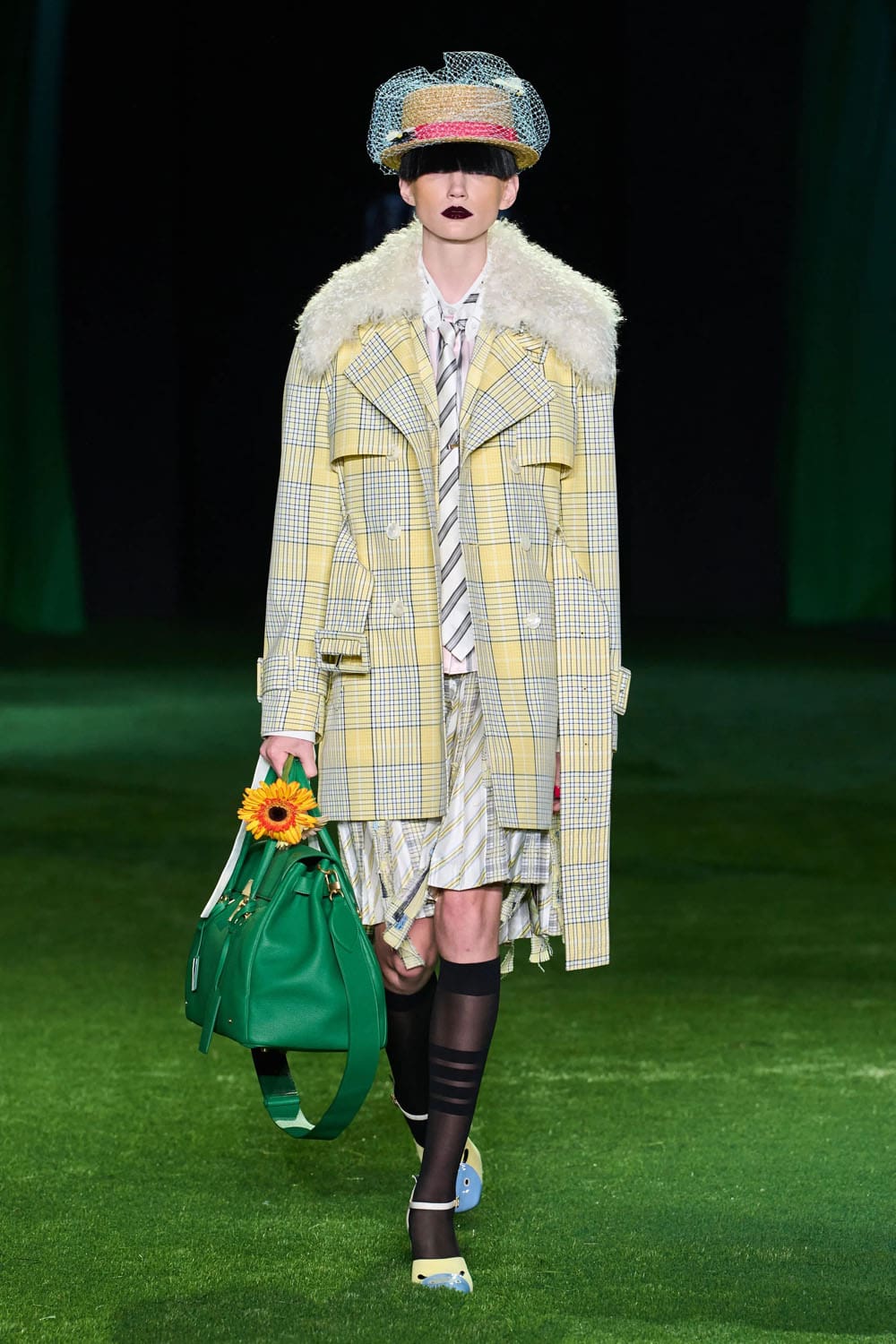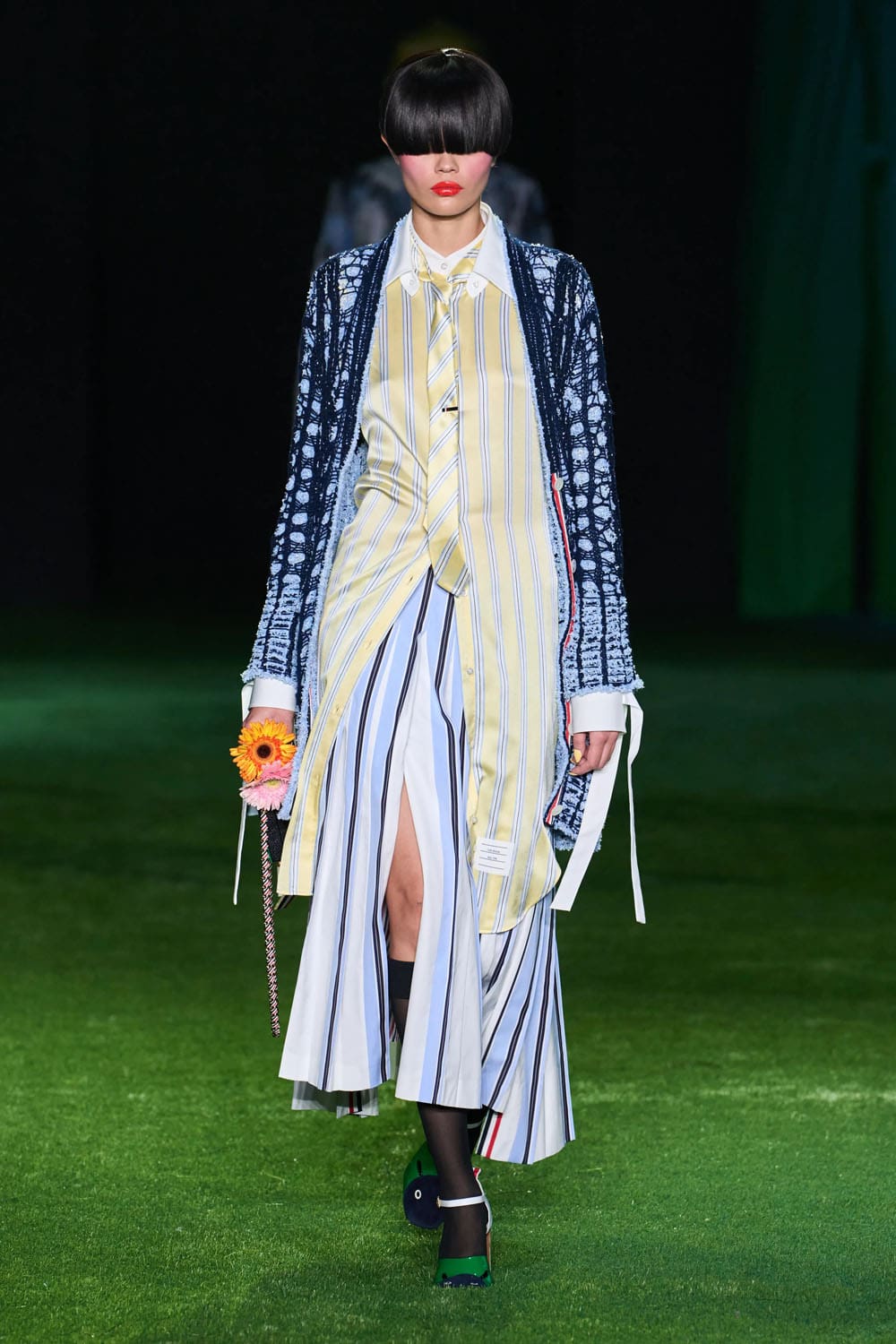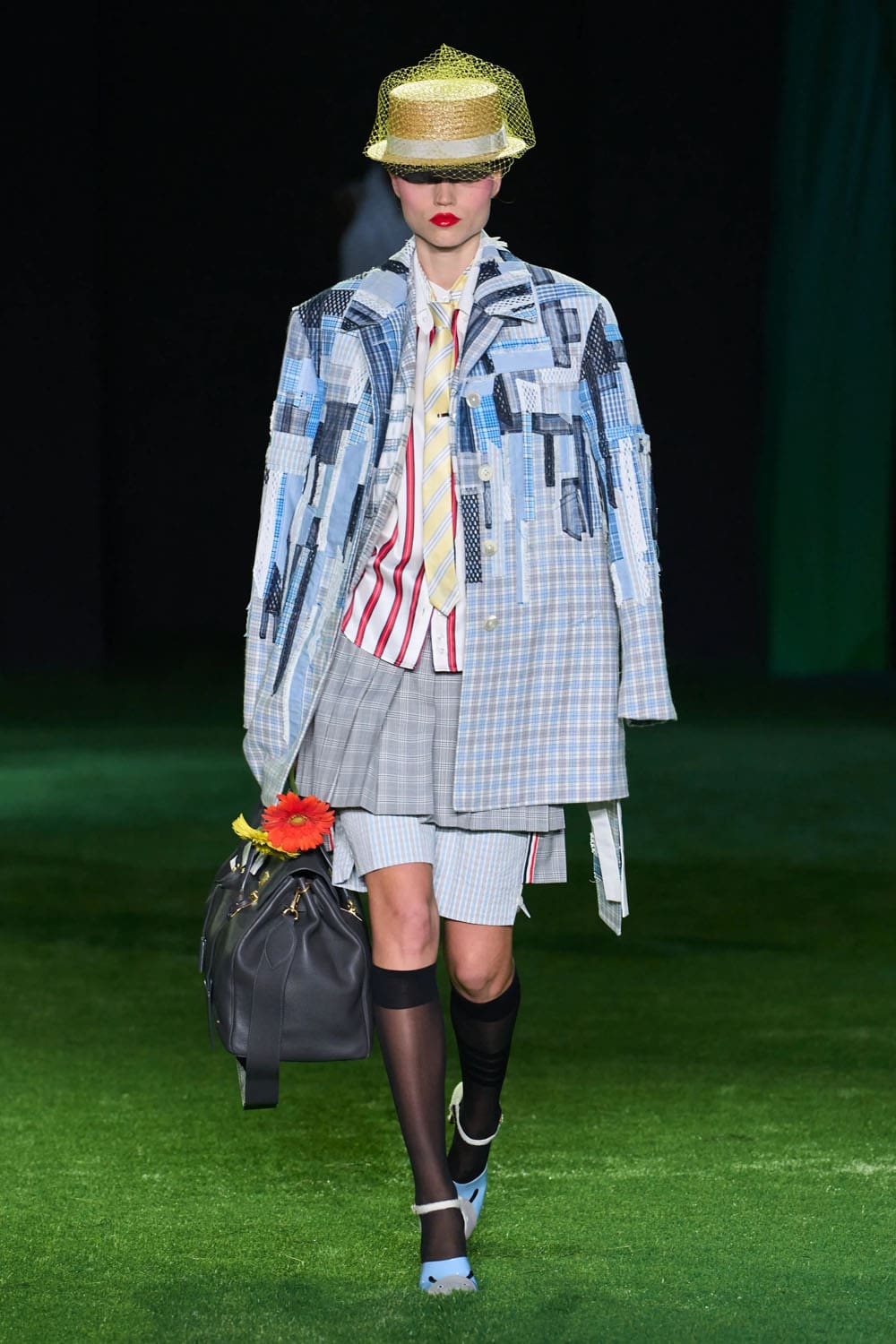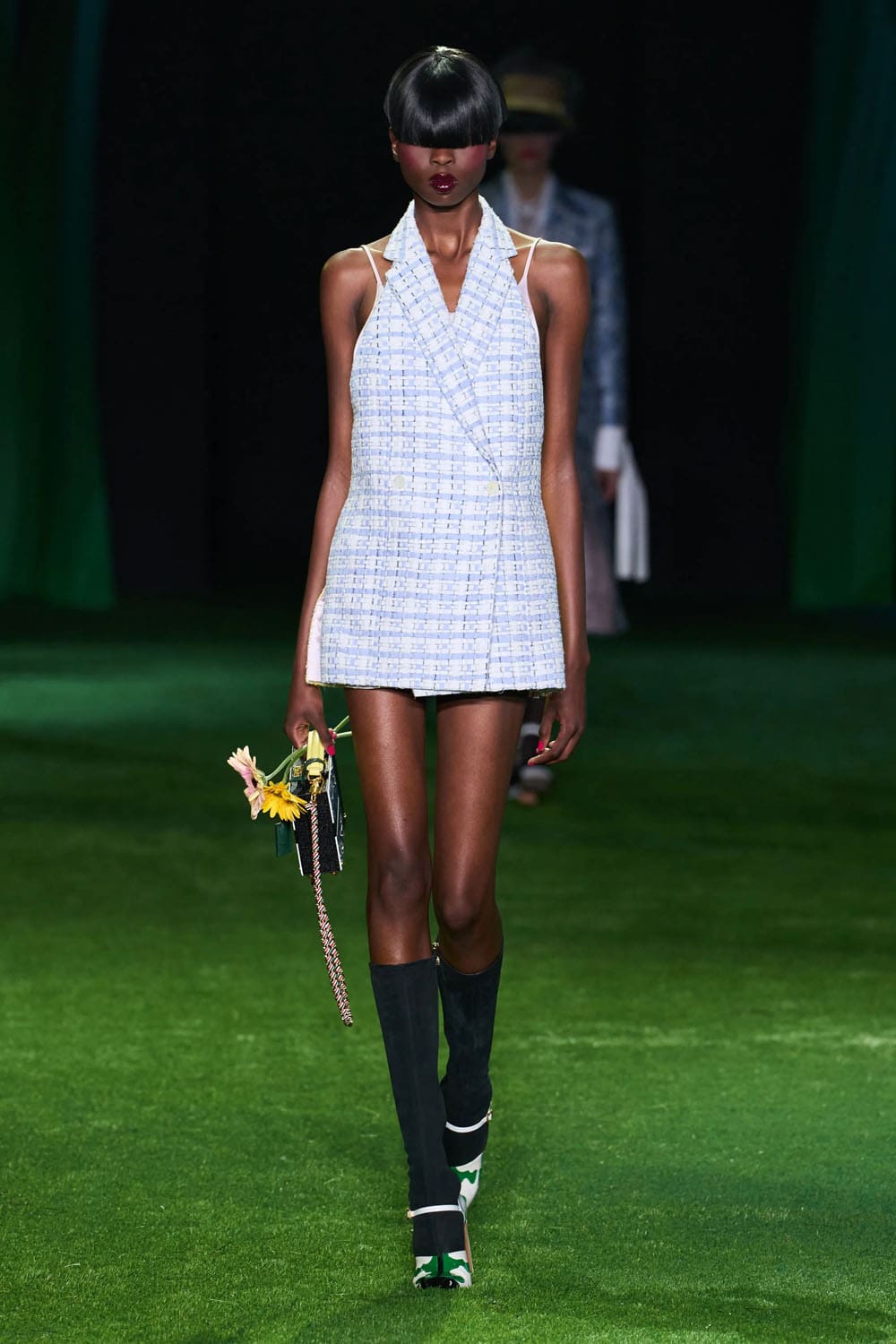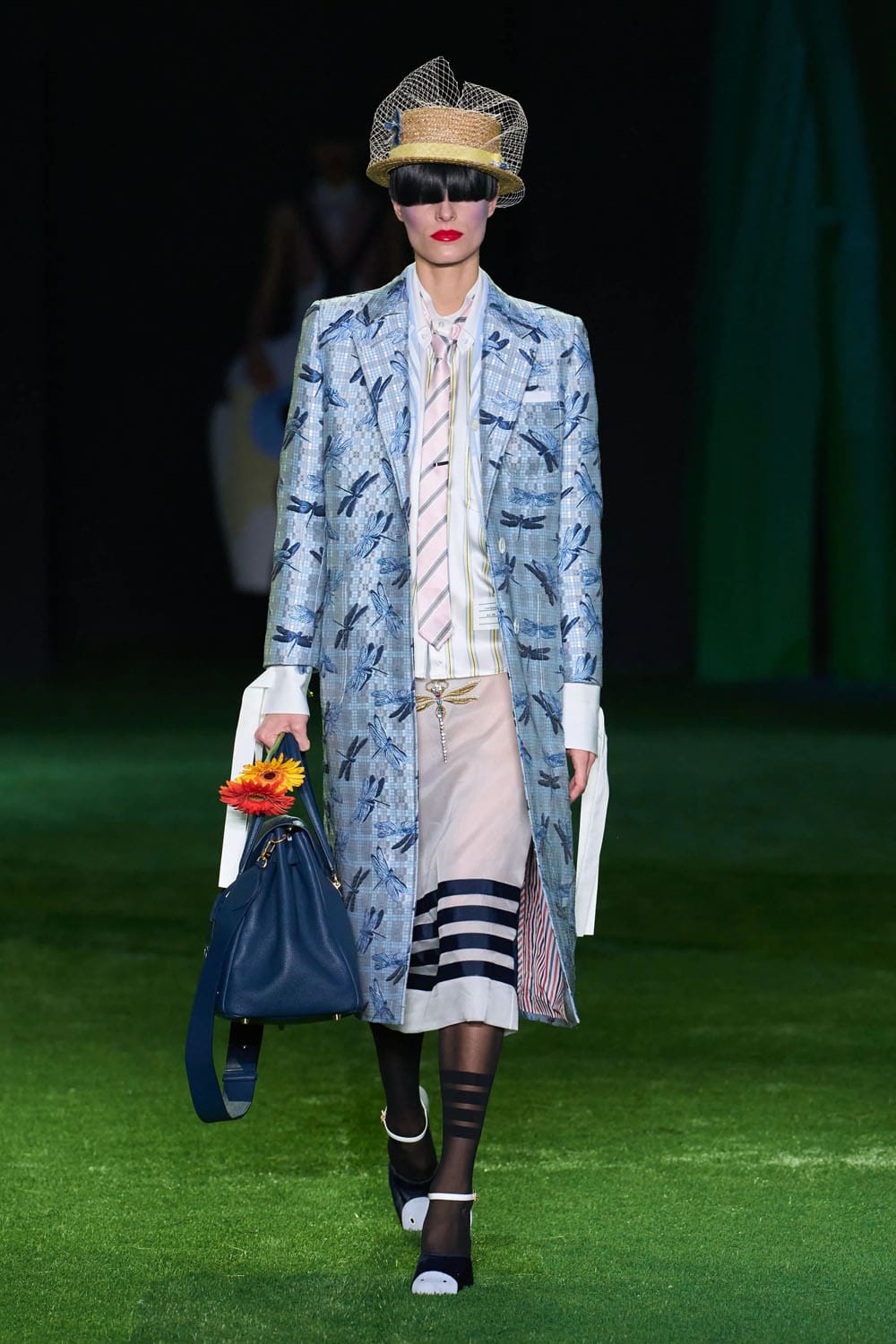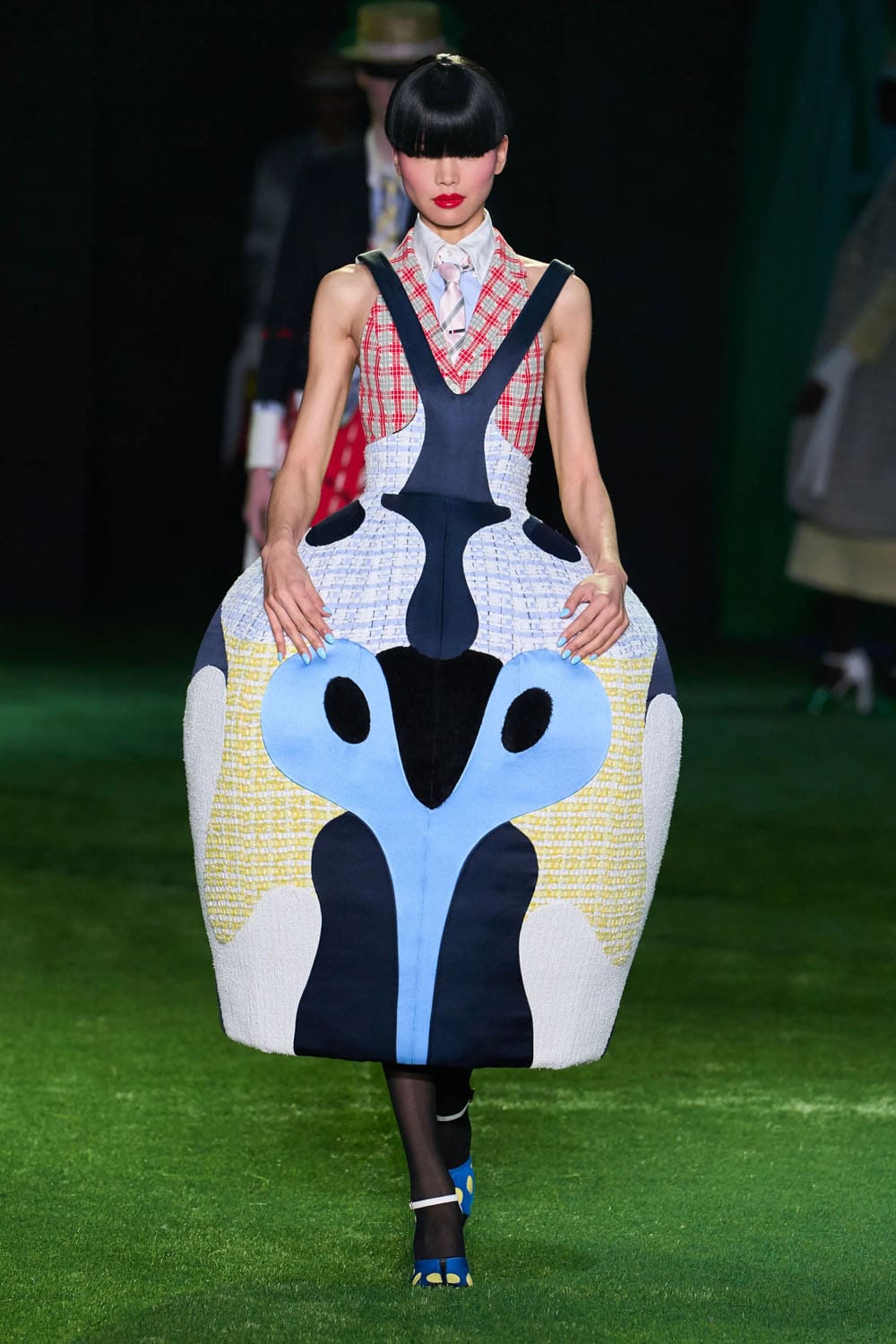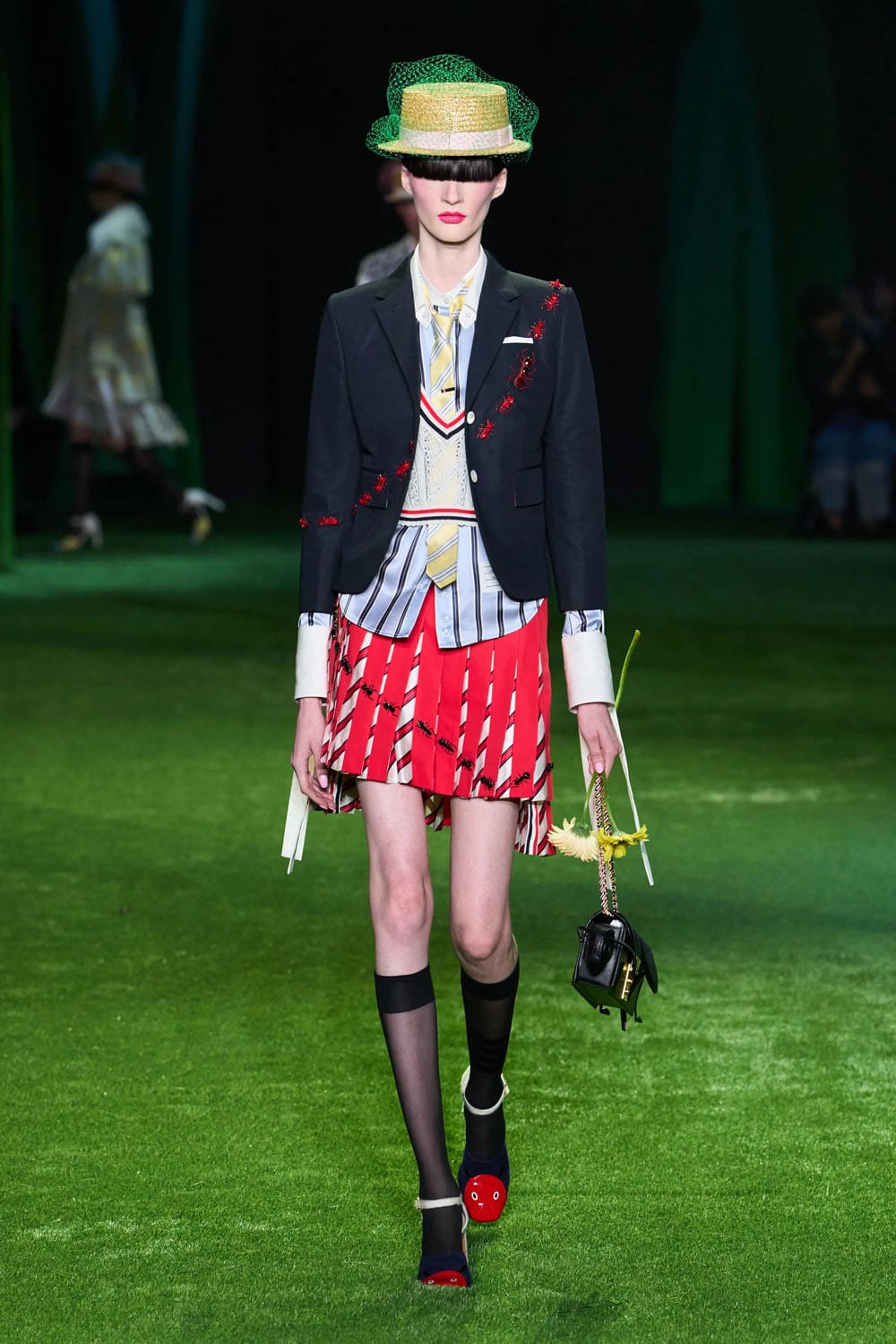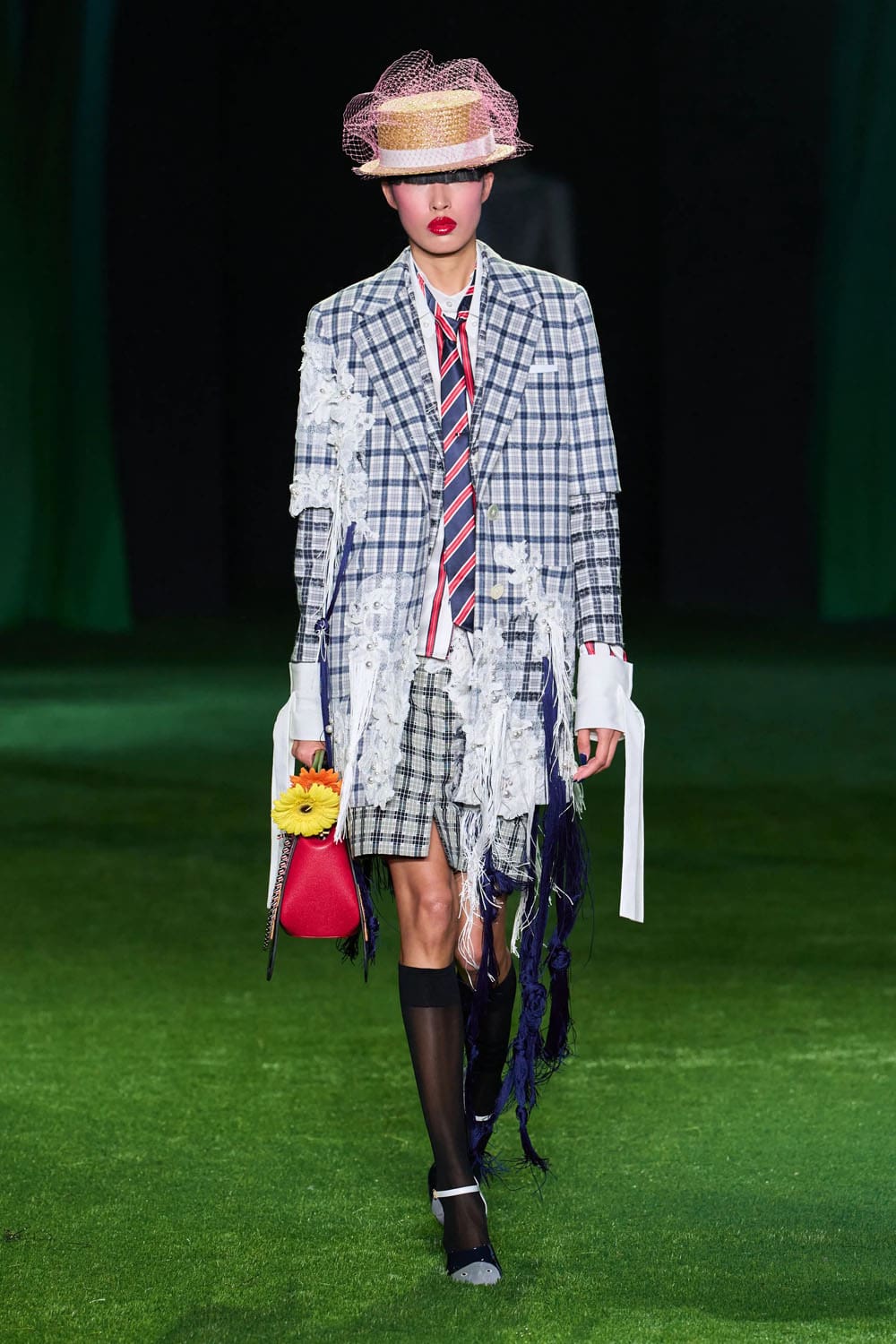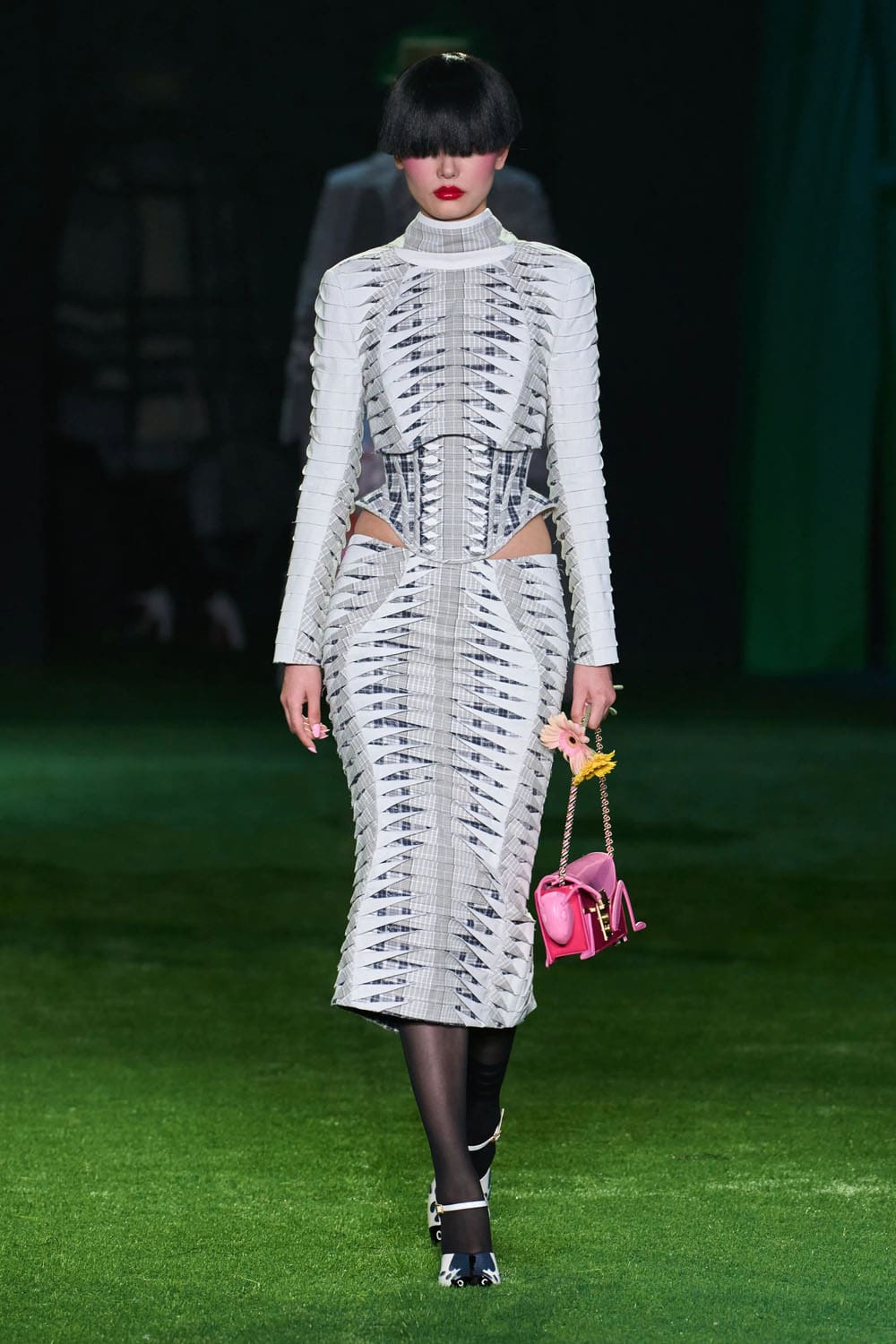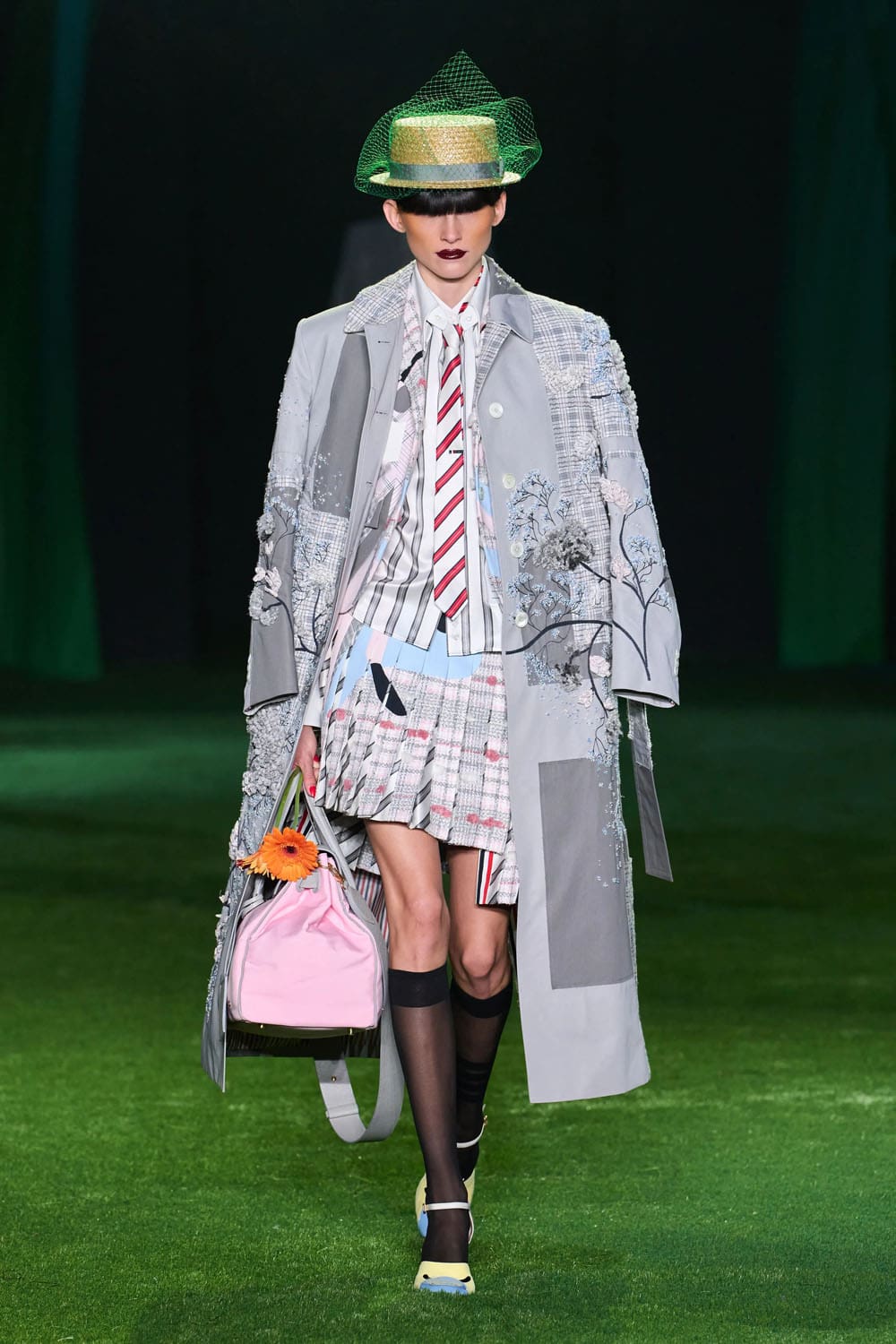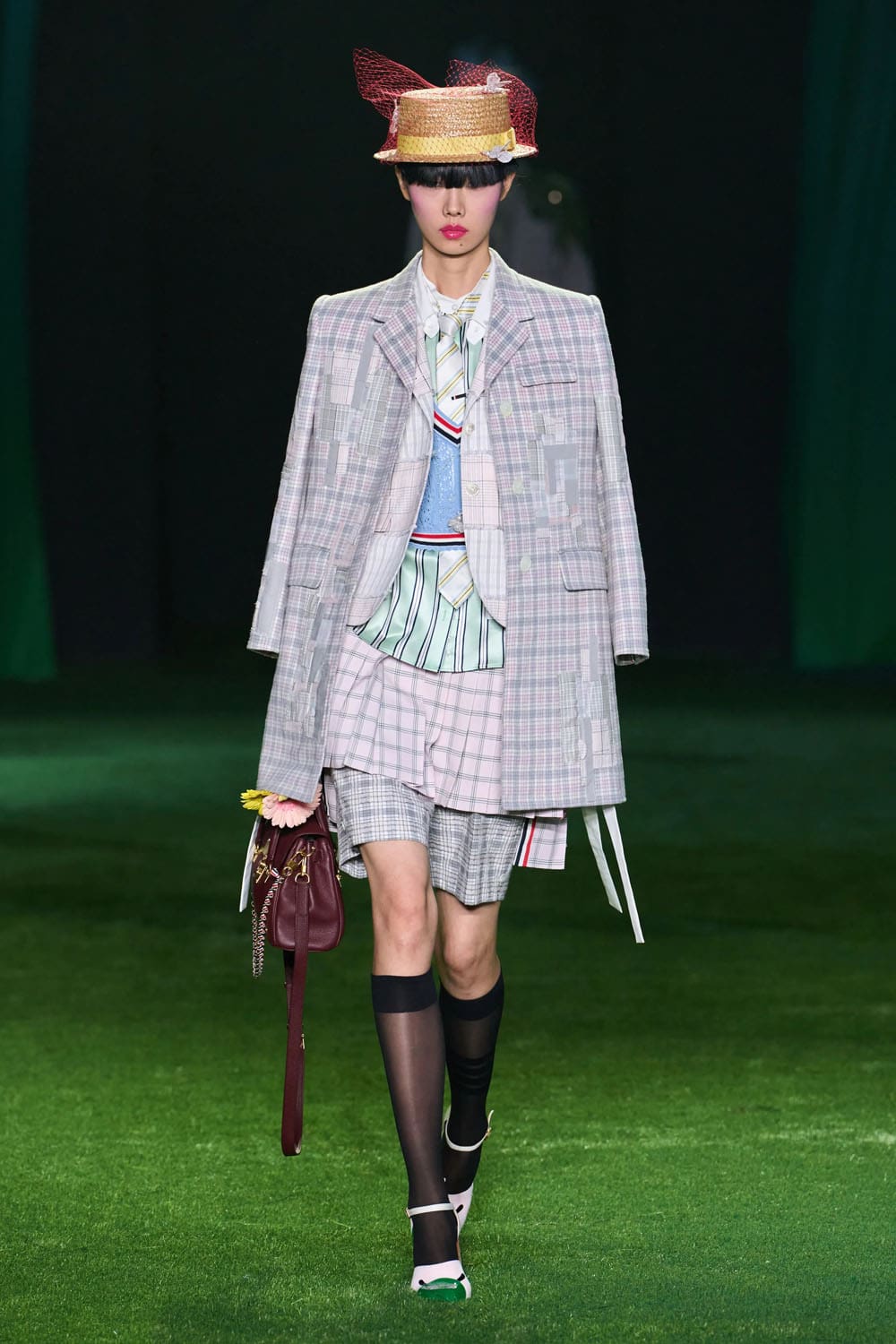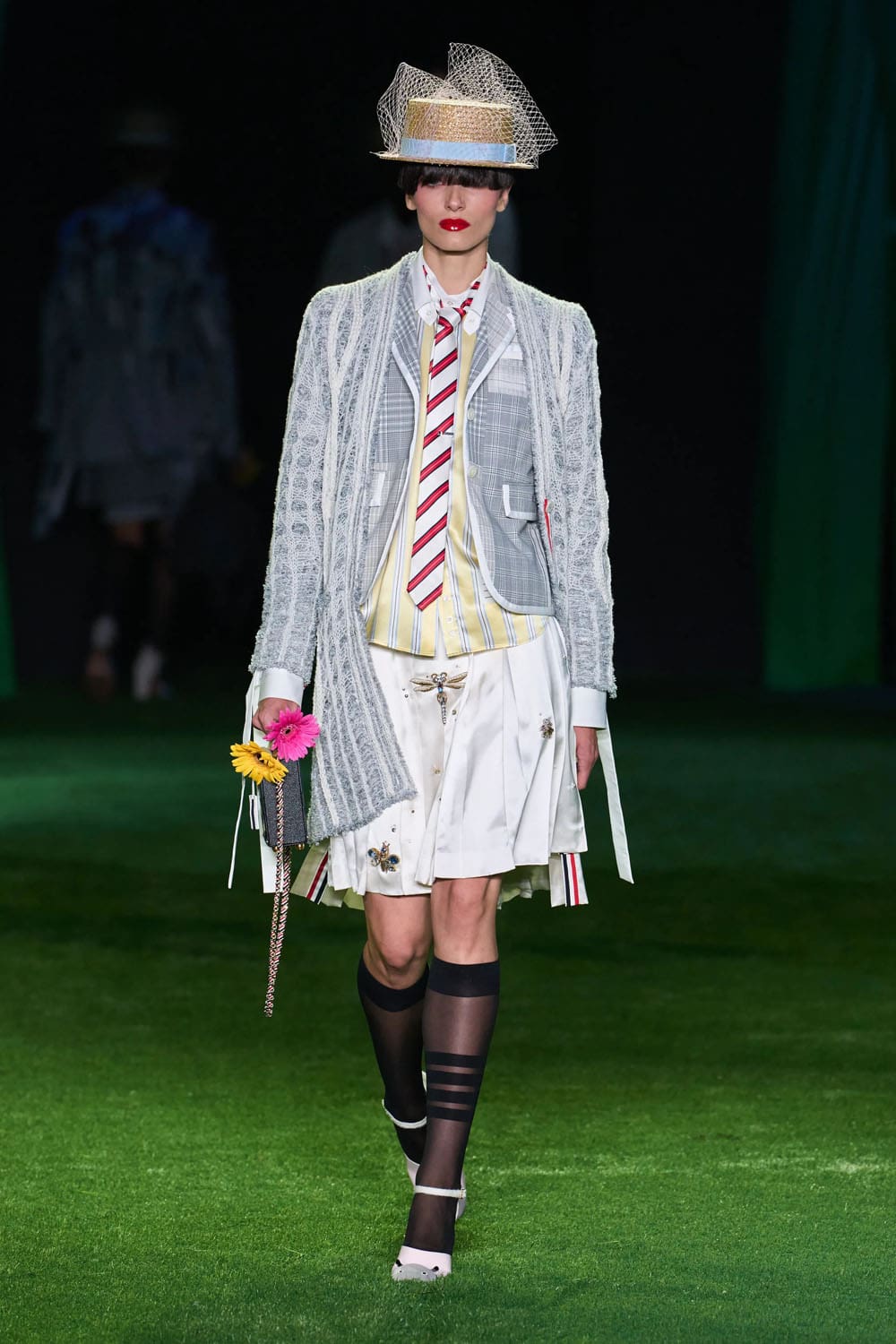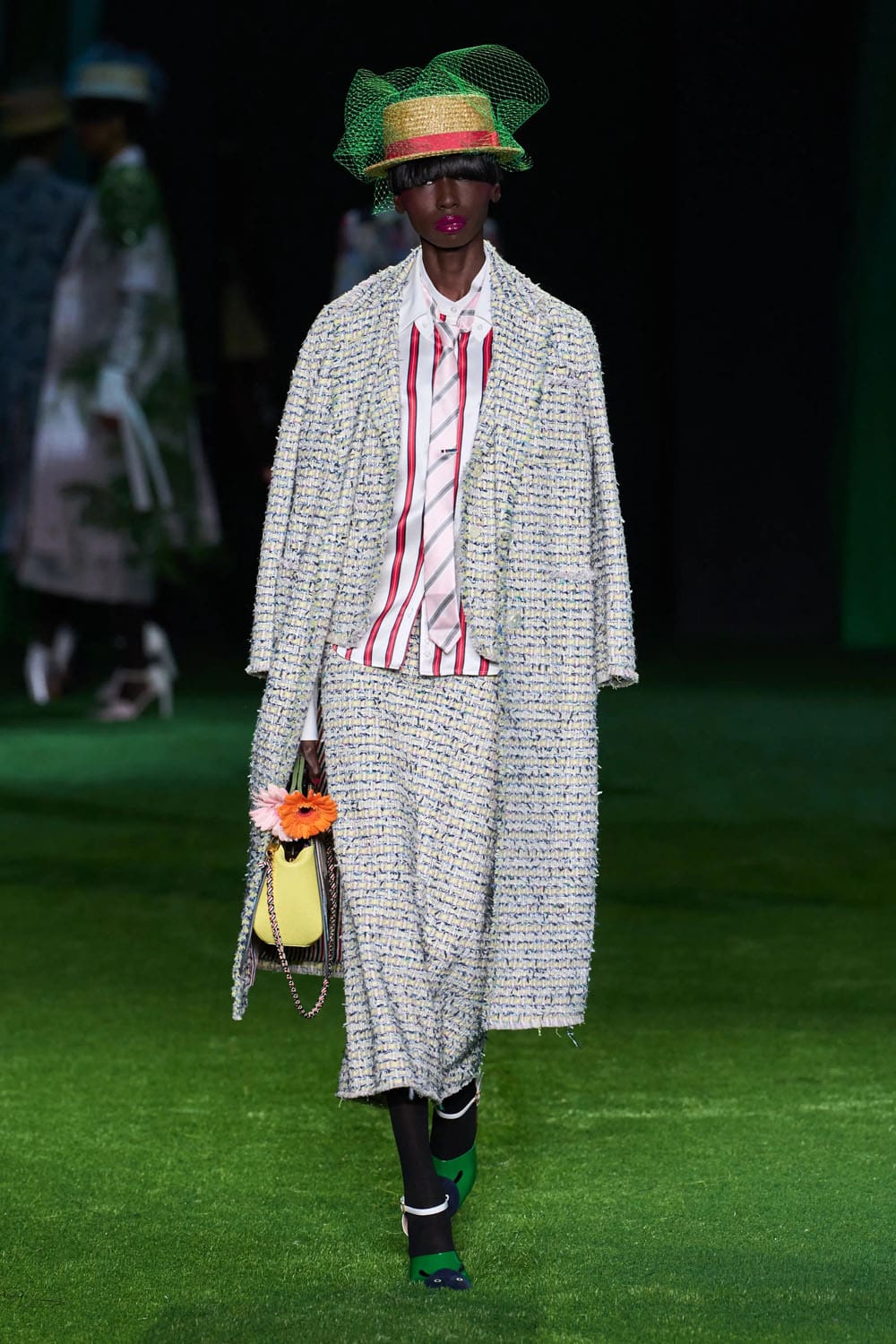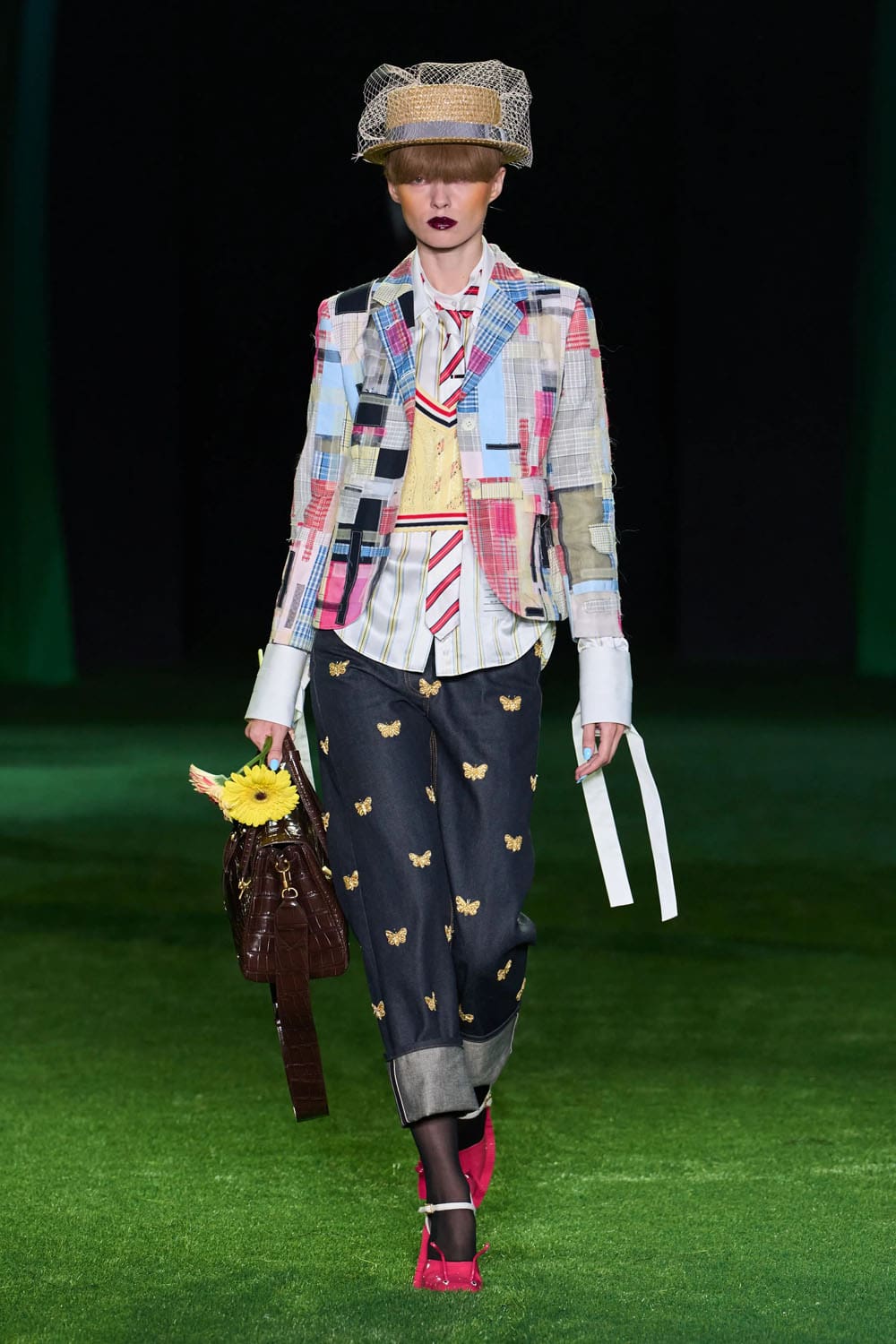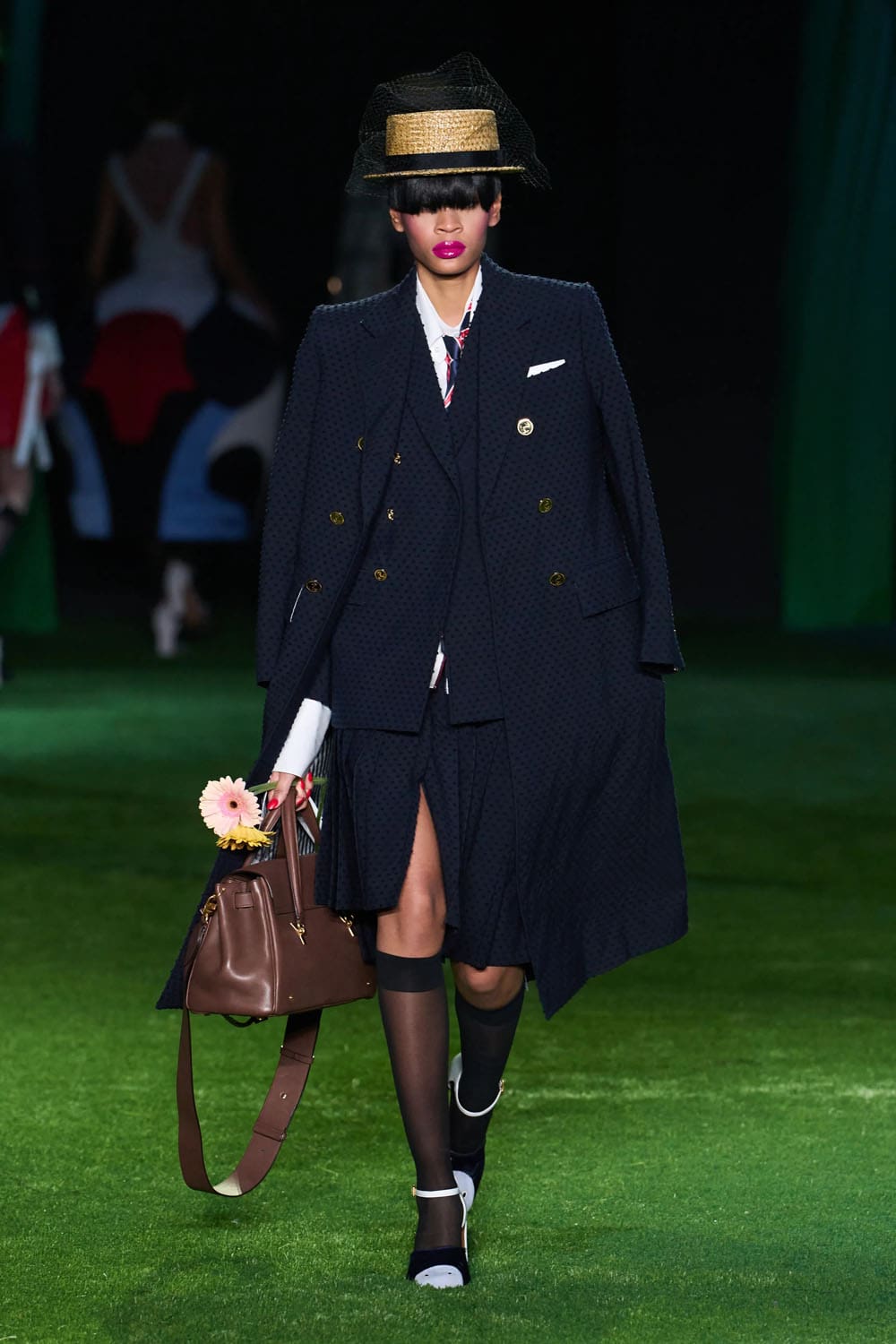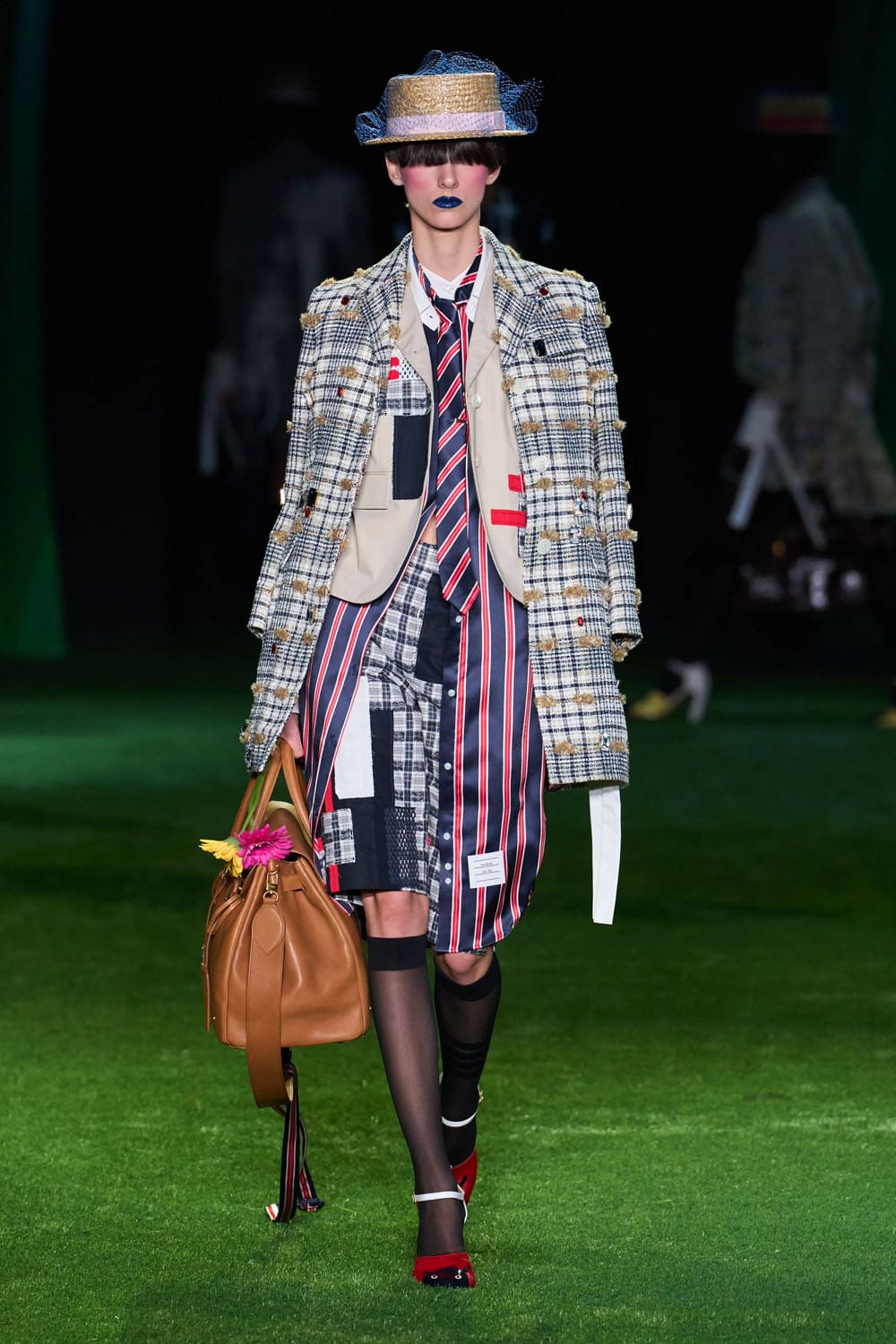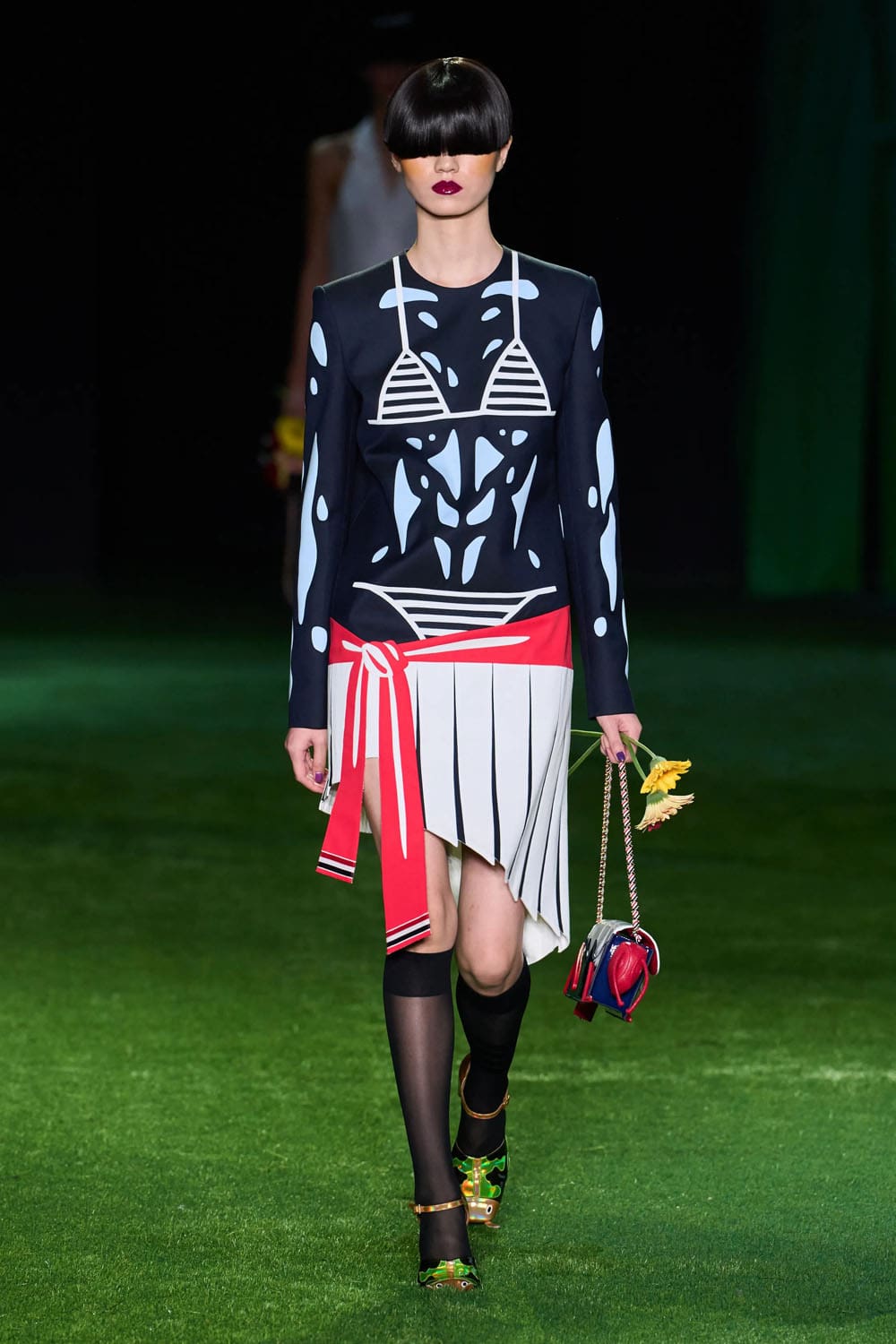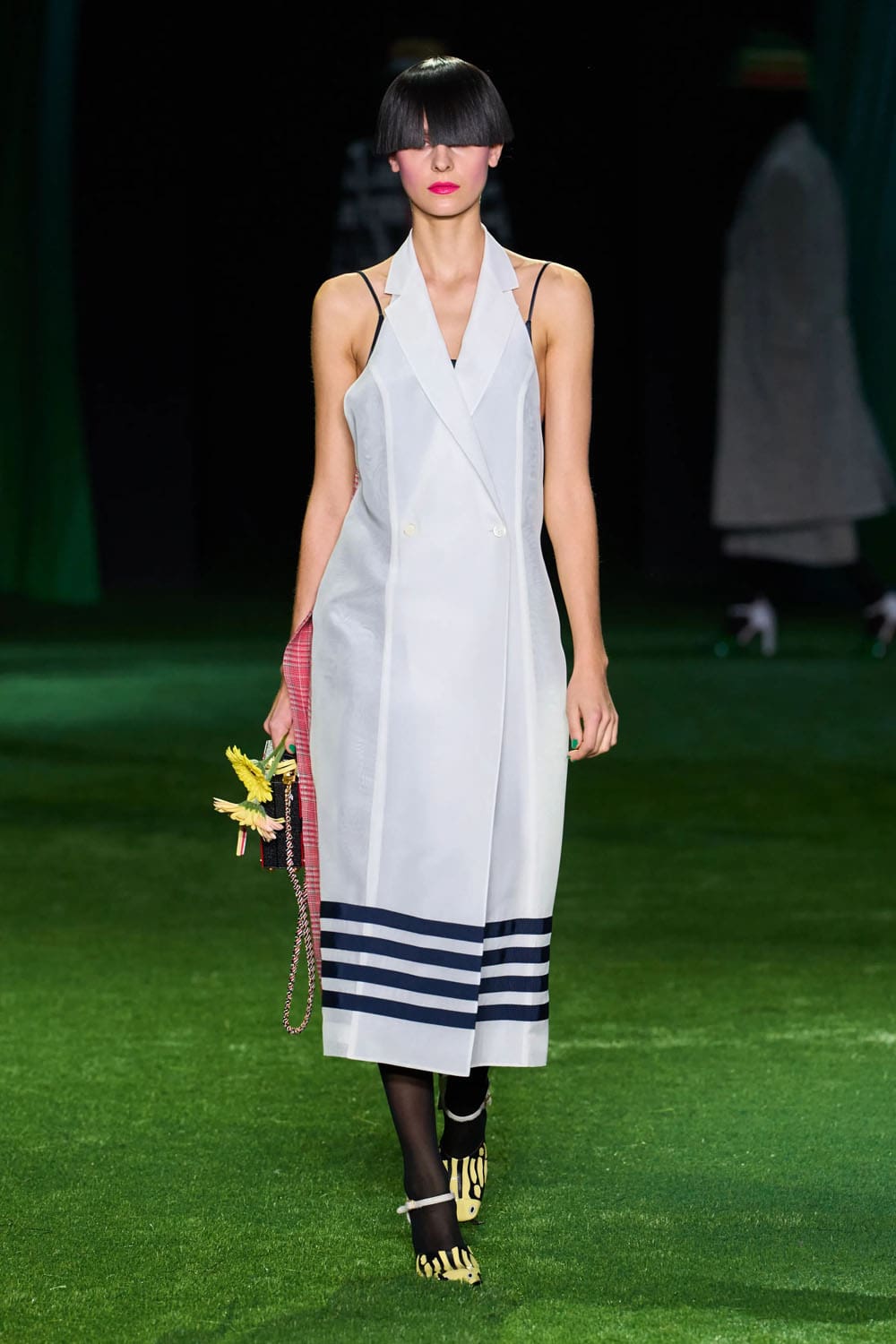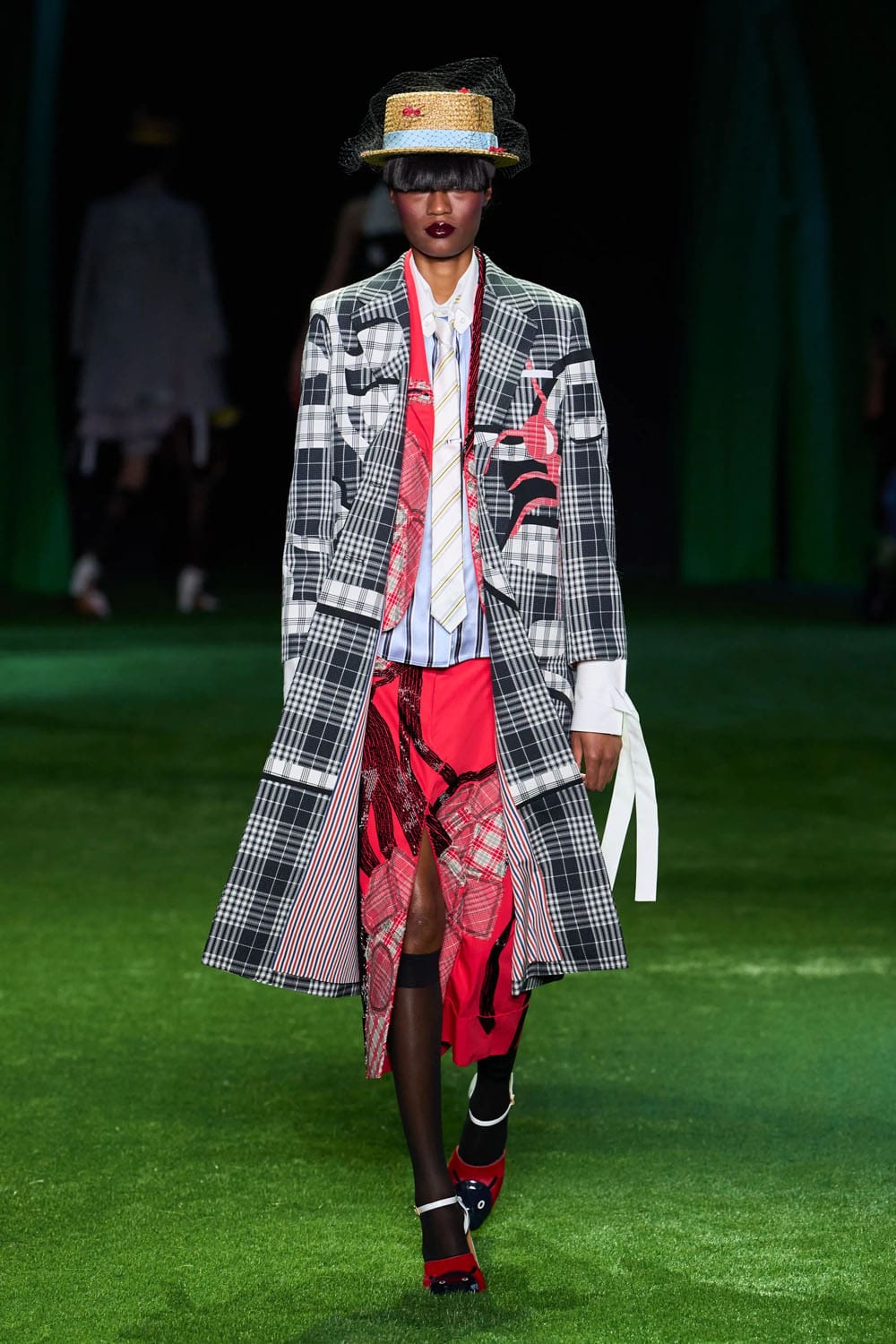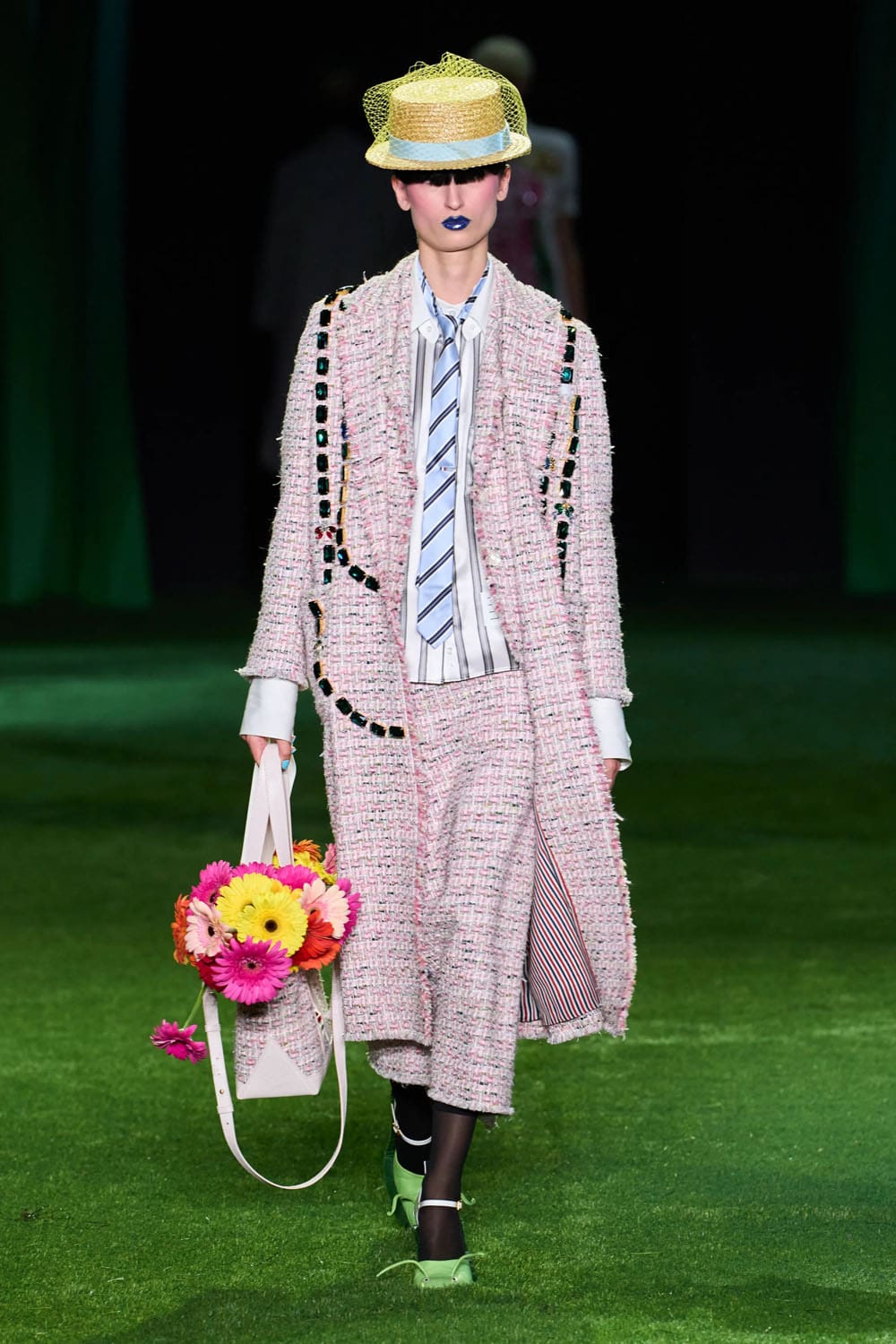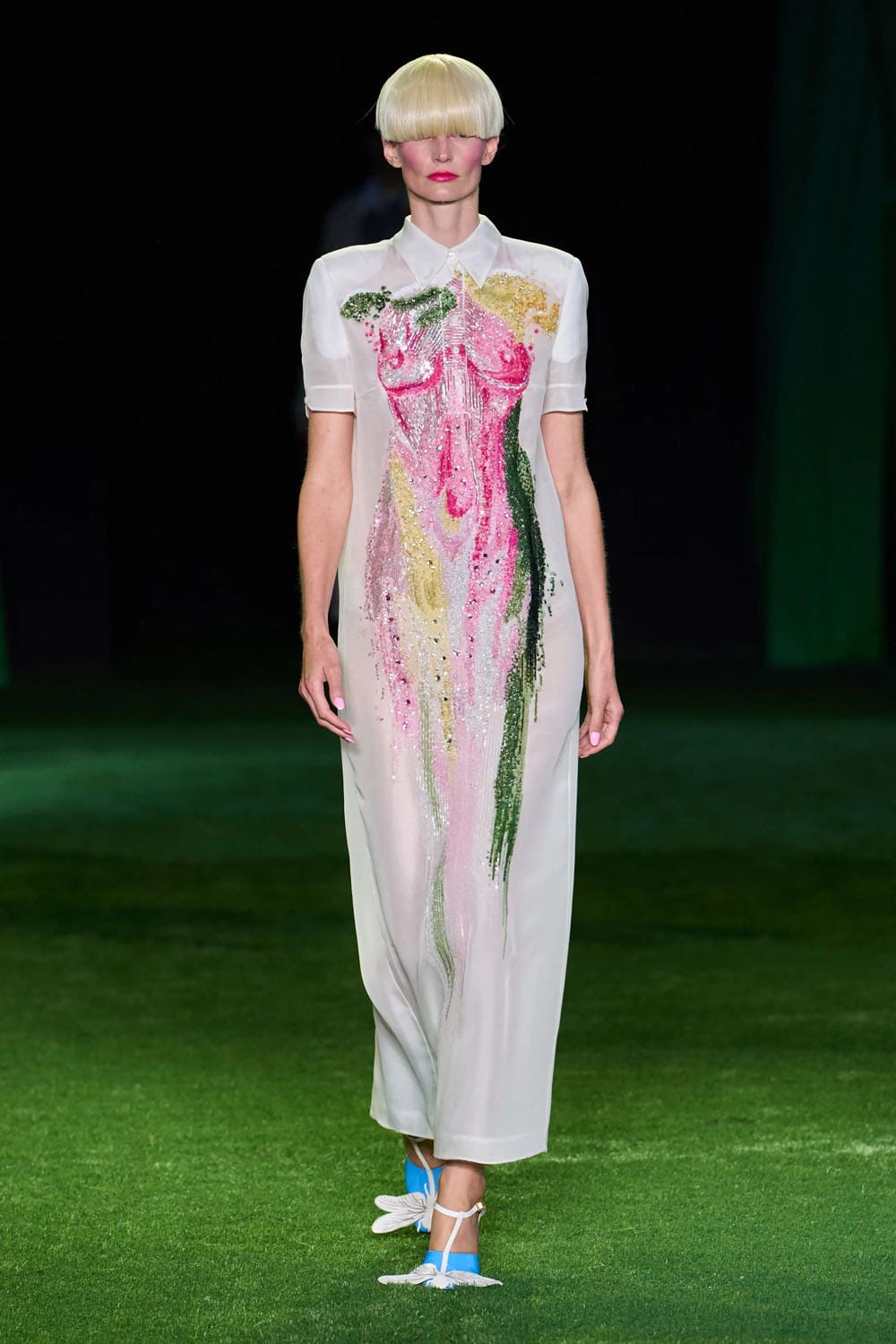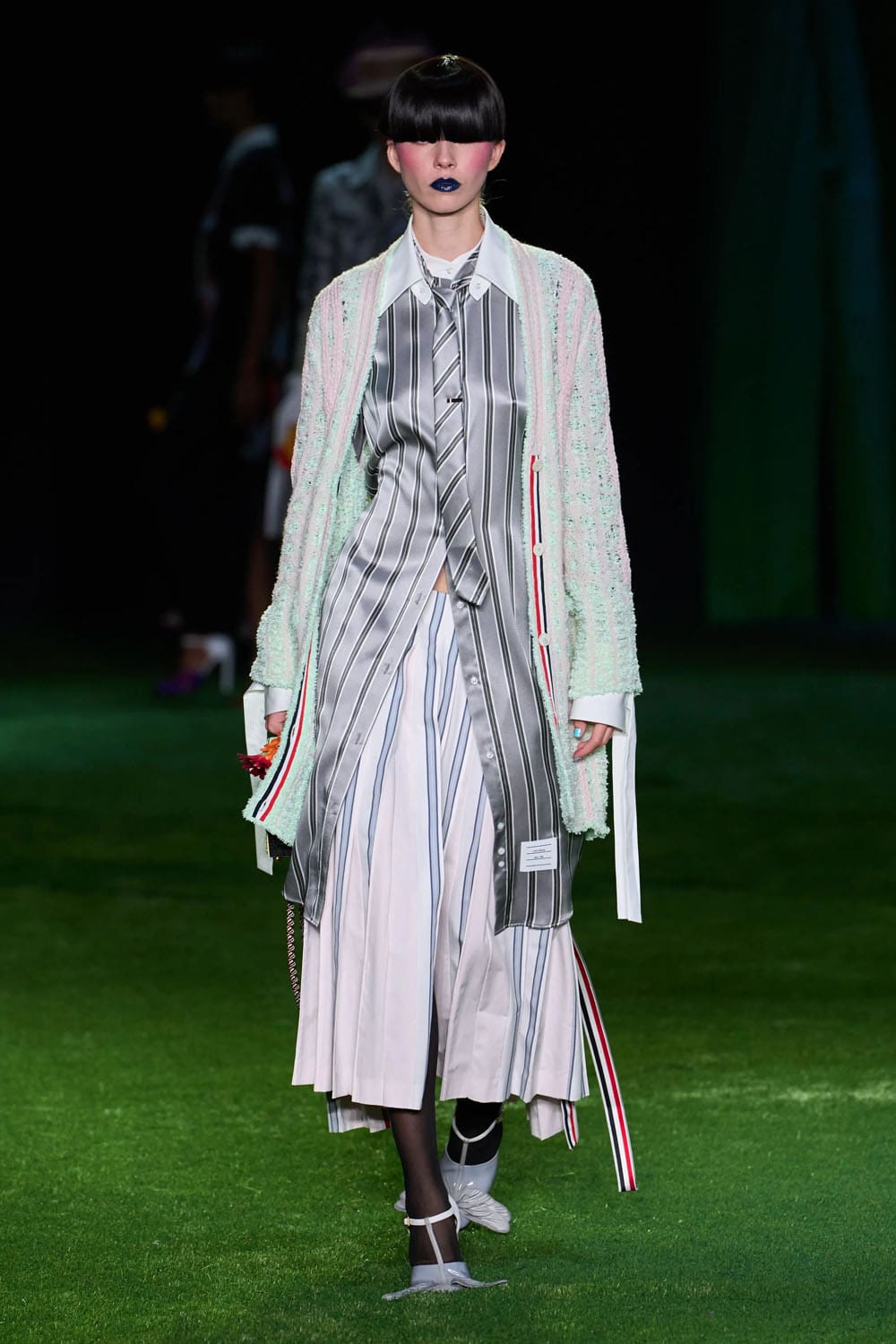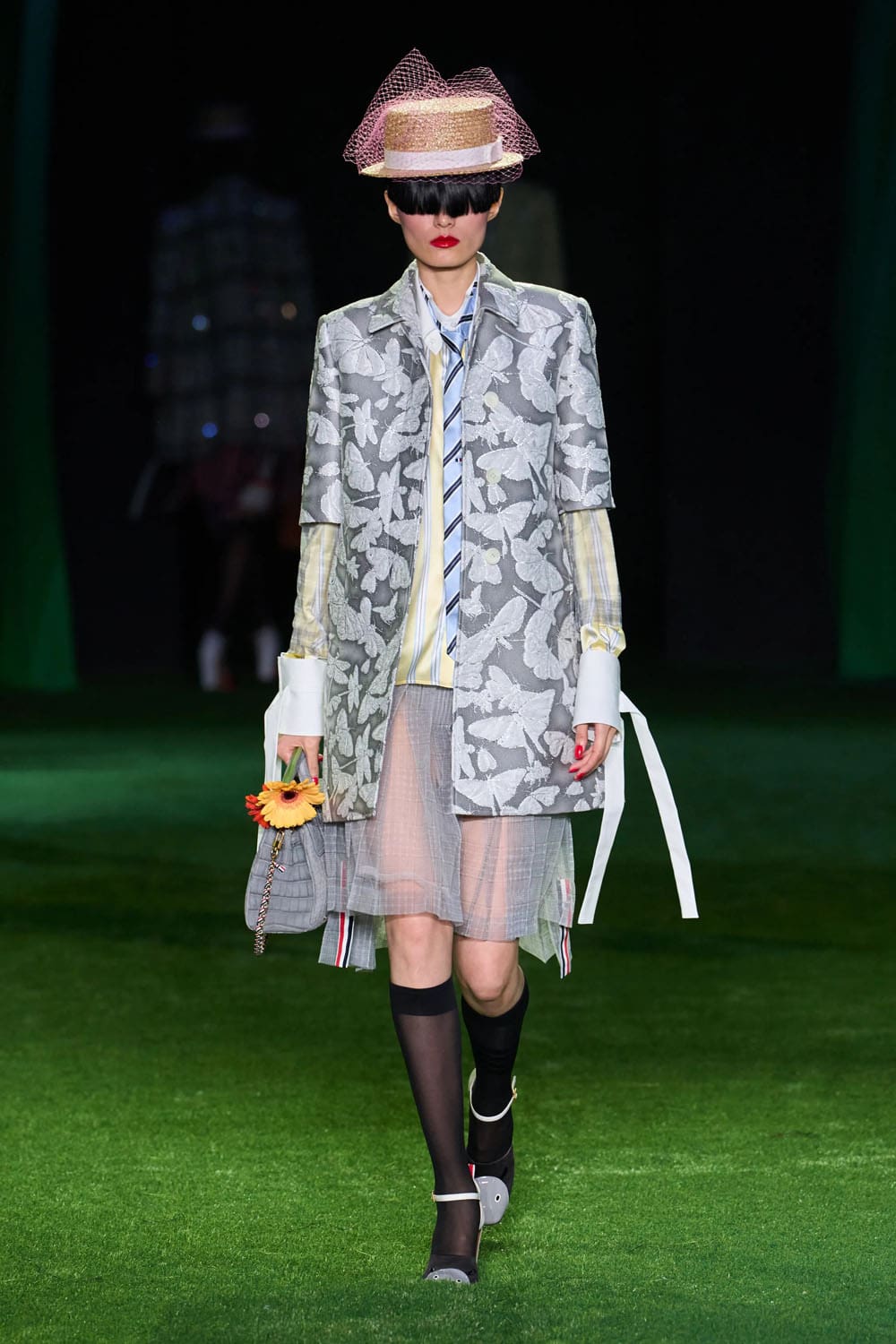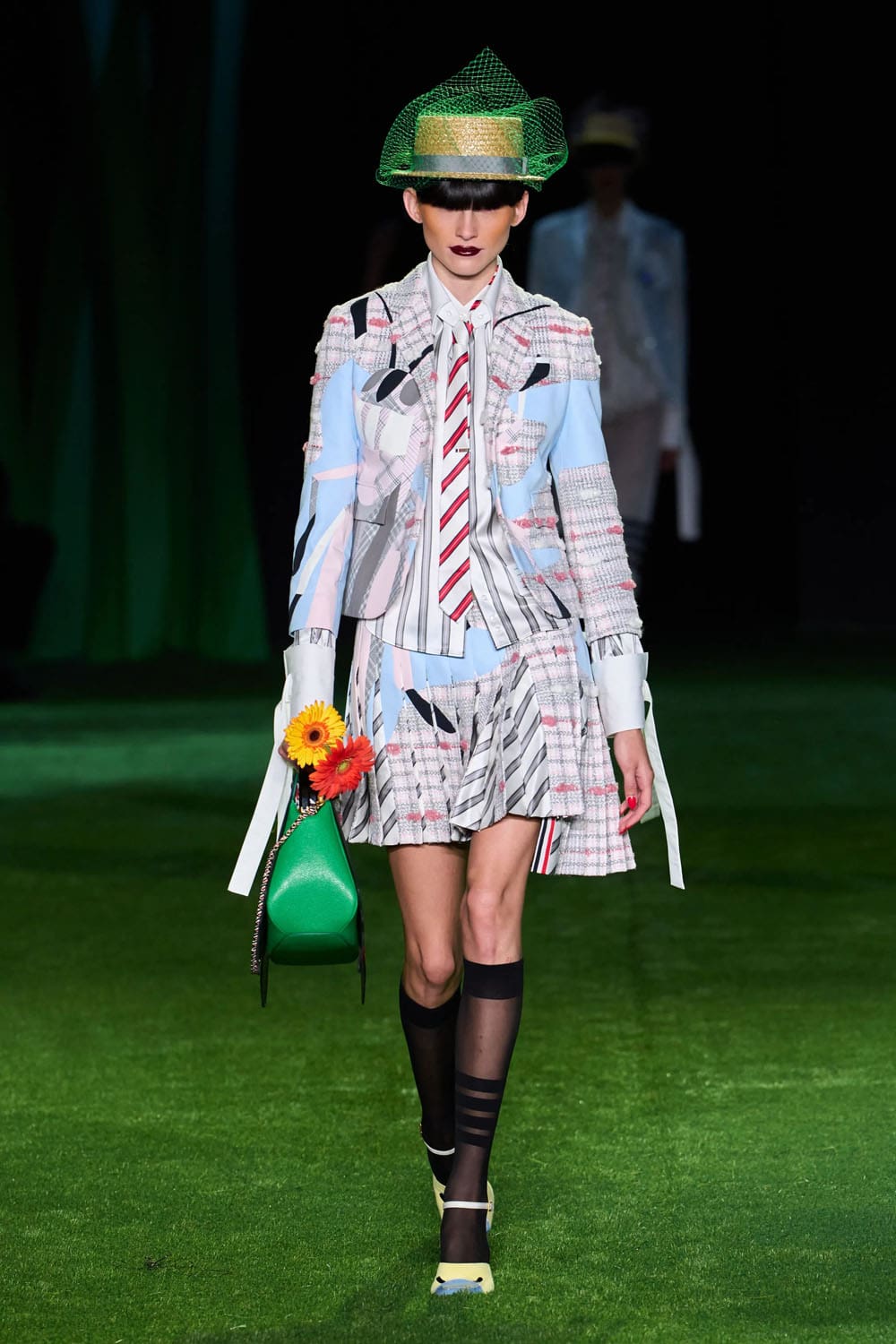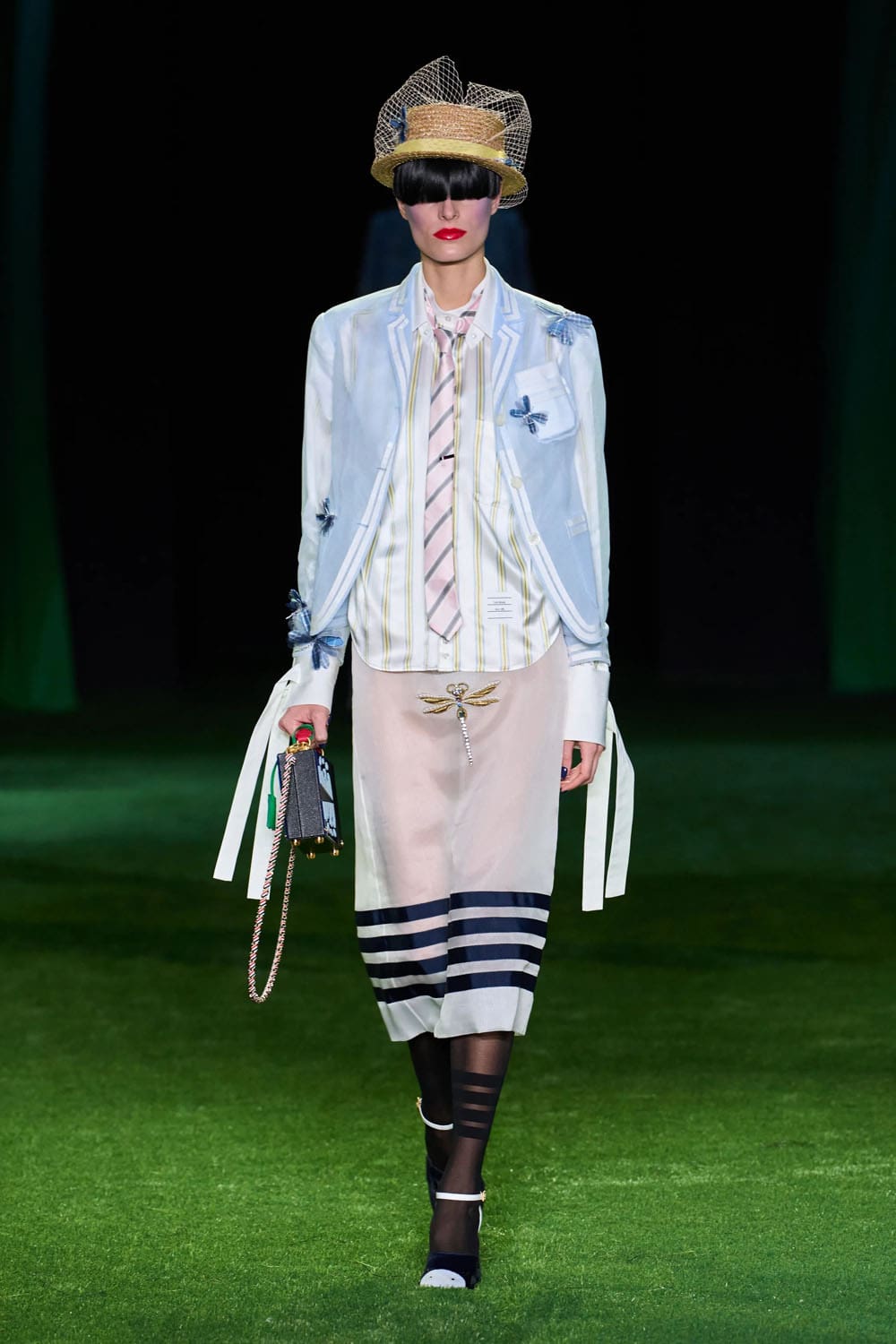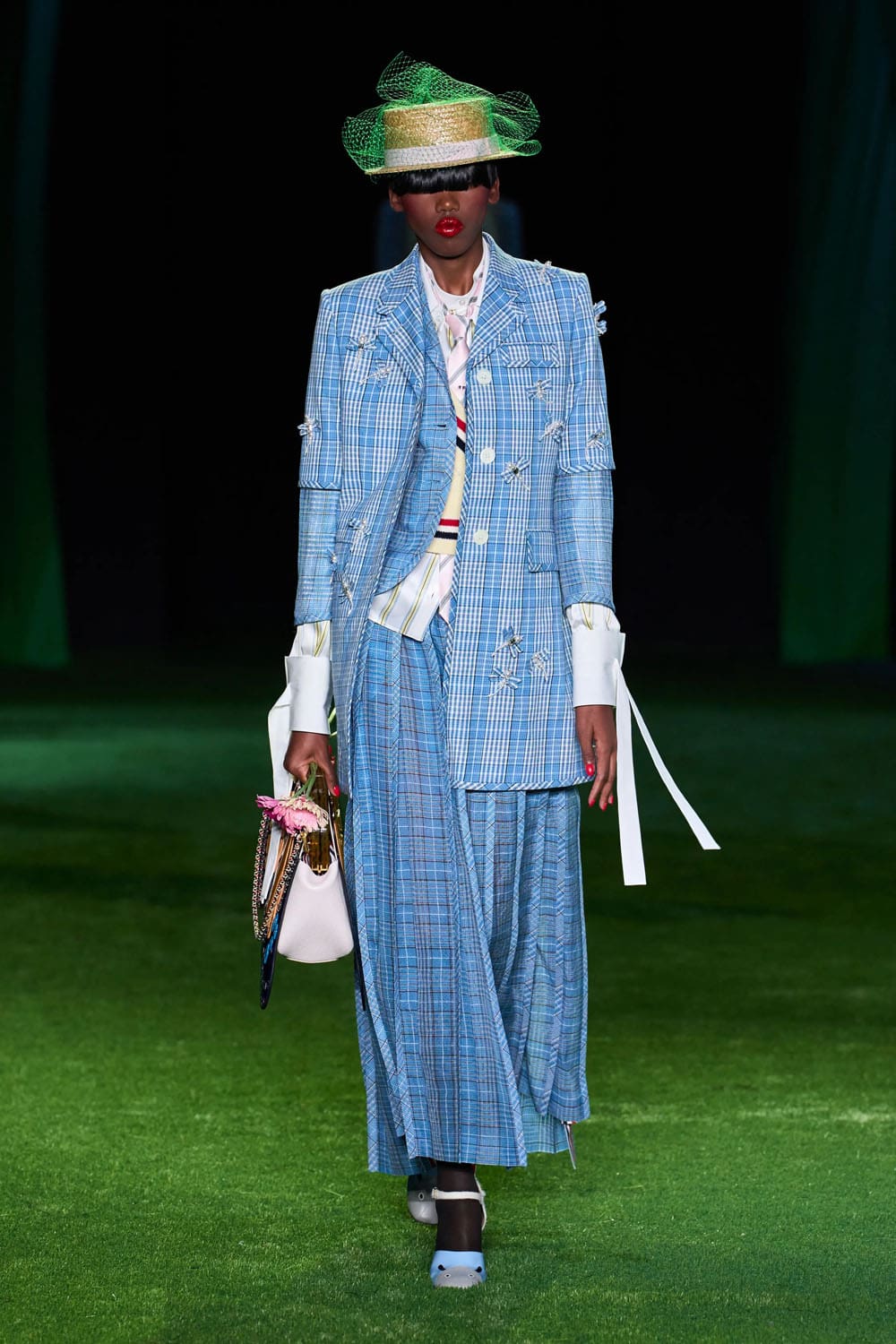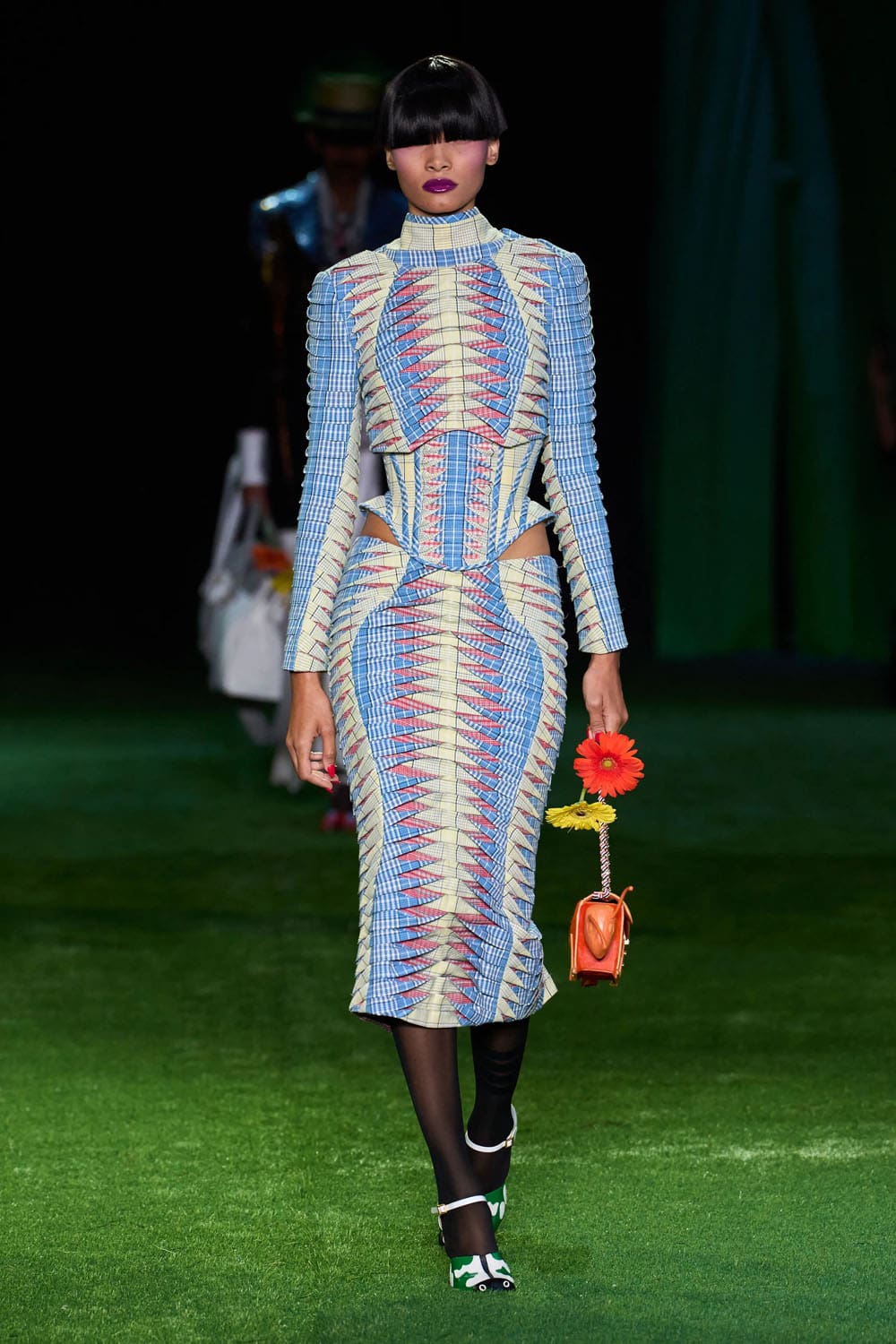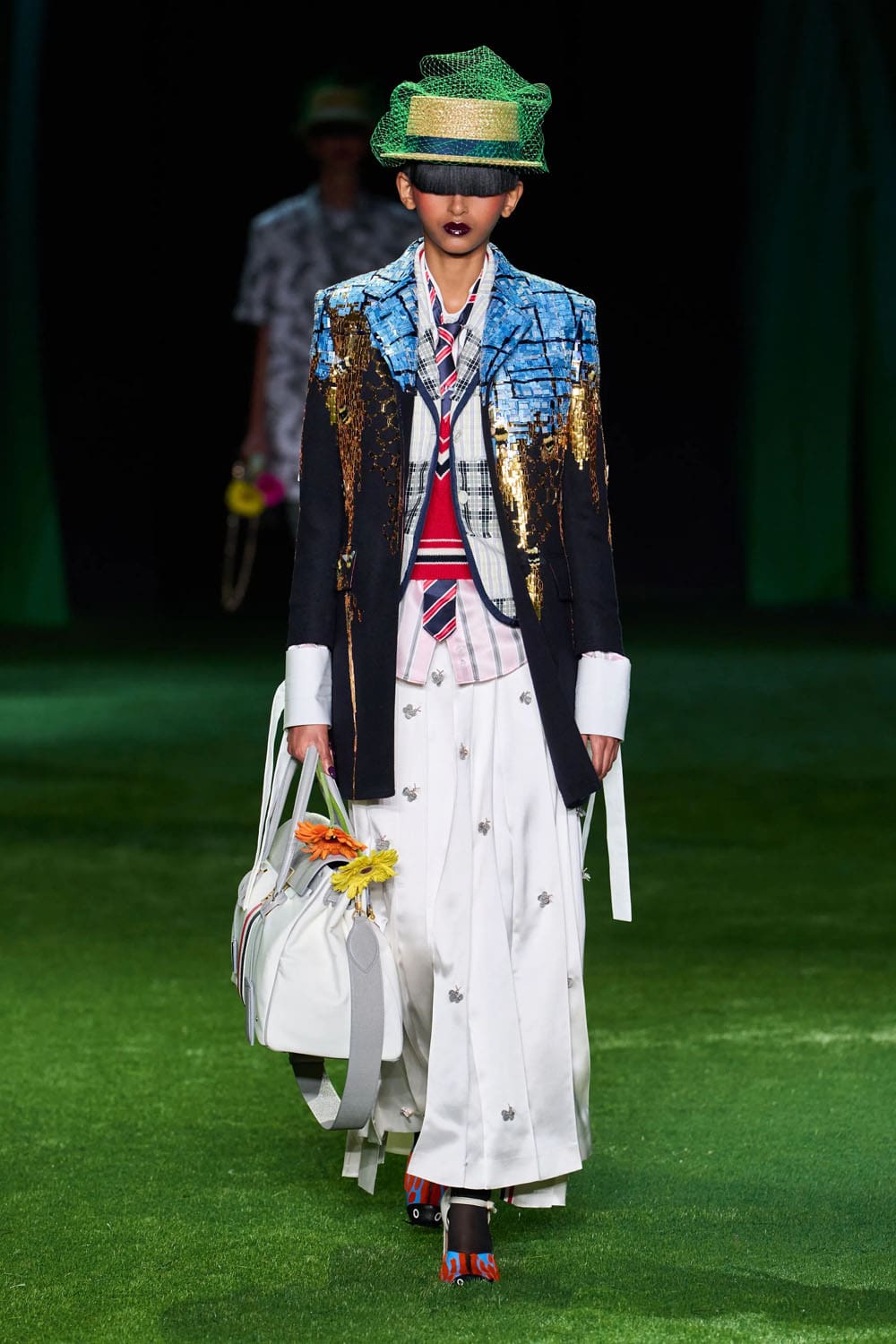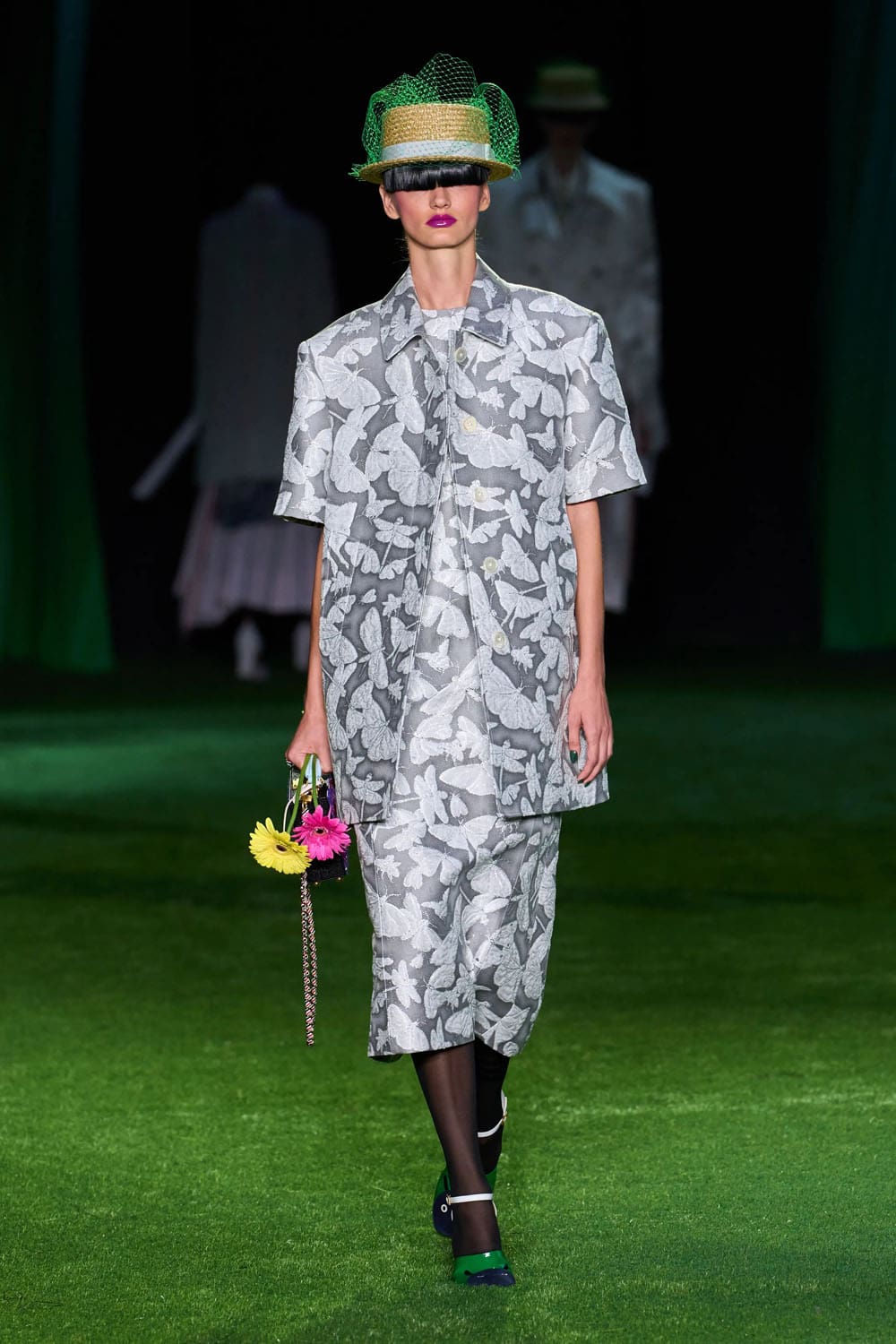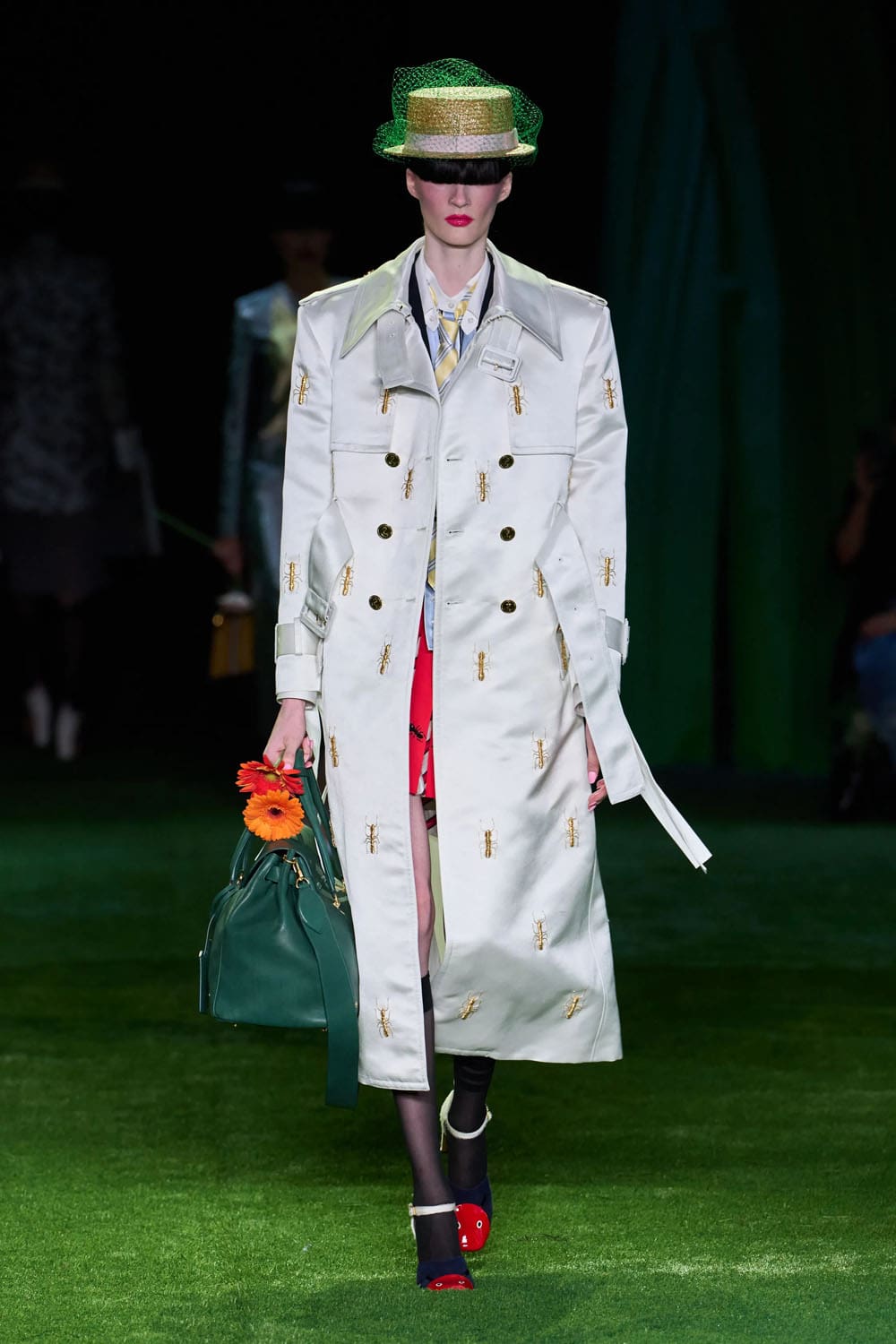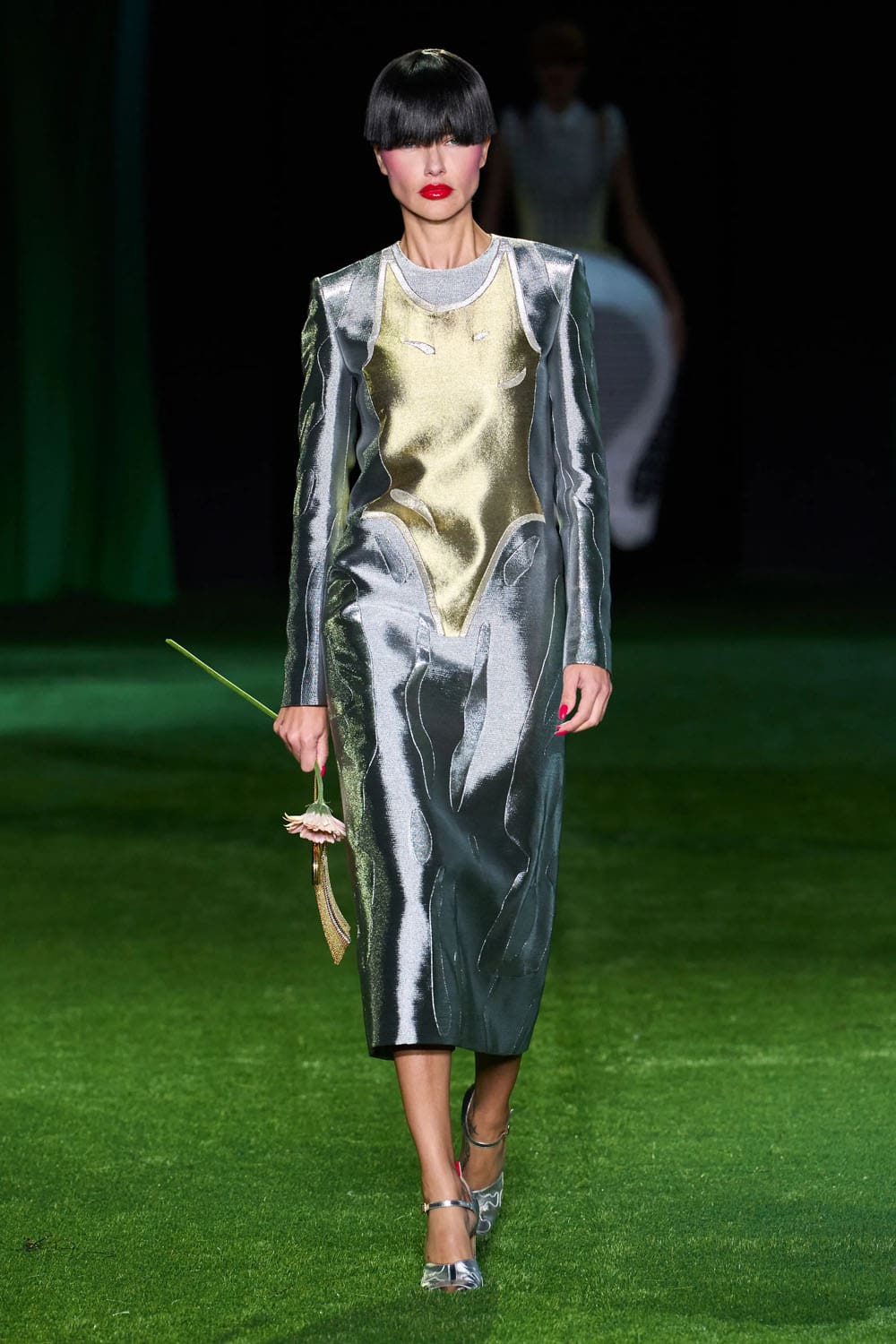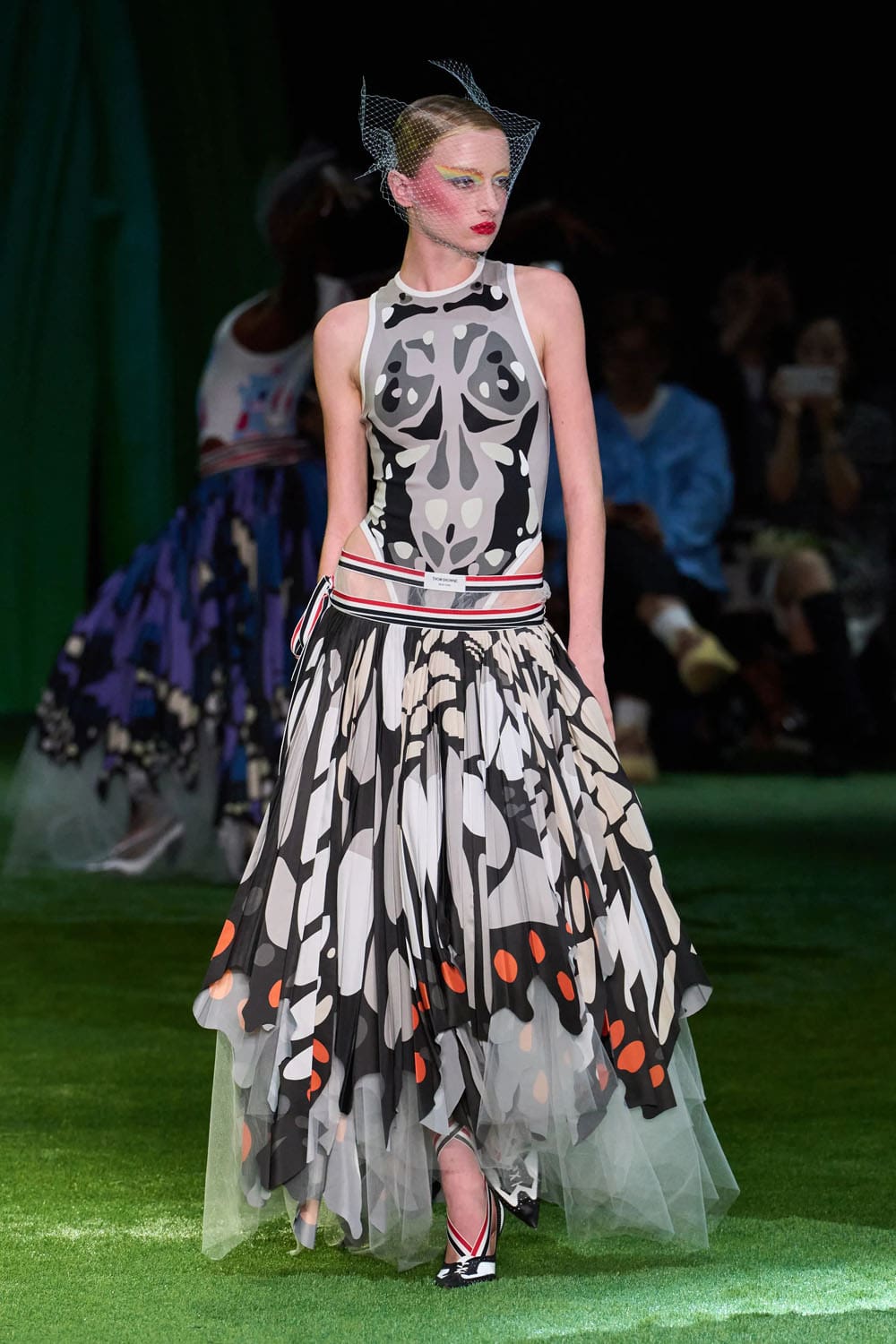
Collection Printemps 2027 de Thom Browne Femme : « Le jardin de la métamorphose sur mesure ». Article d’Eleonora de Gray, rédactrice en chef de RUNWAY MAGAZINE. Photo / Vidéo : Thom Browne.
The Shed and the Chrysalis
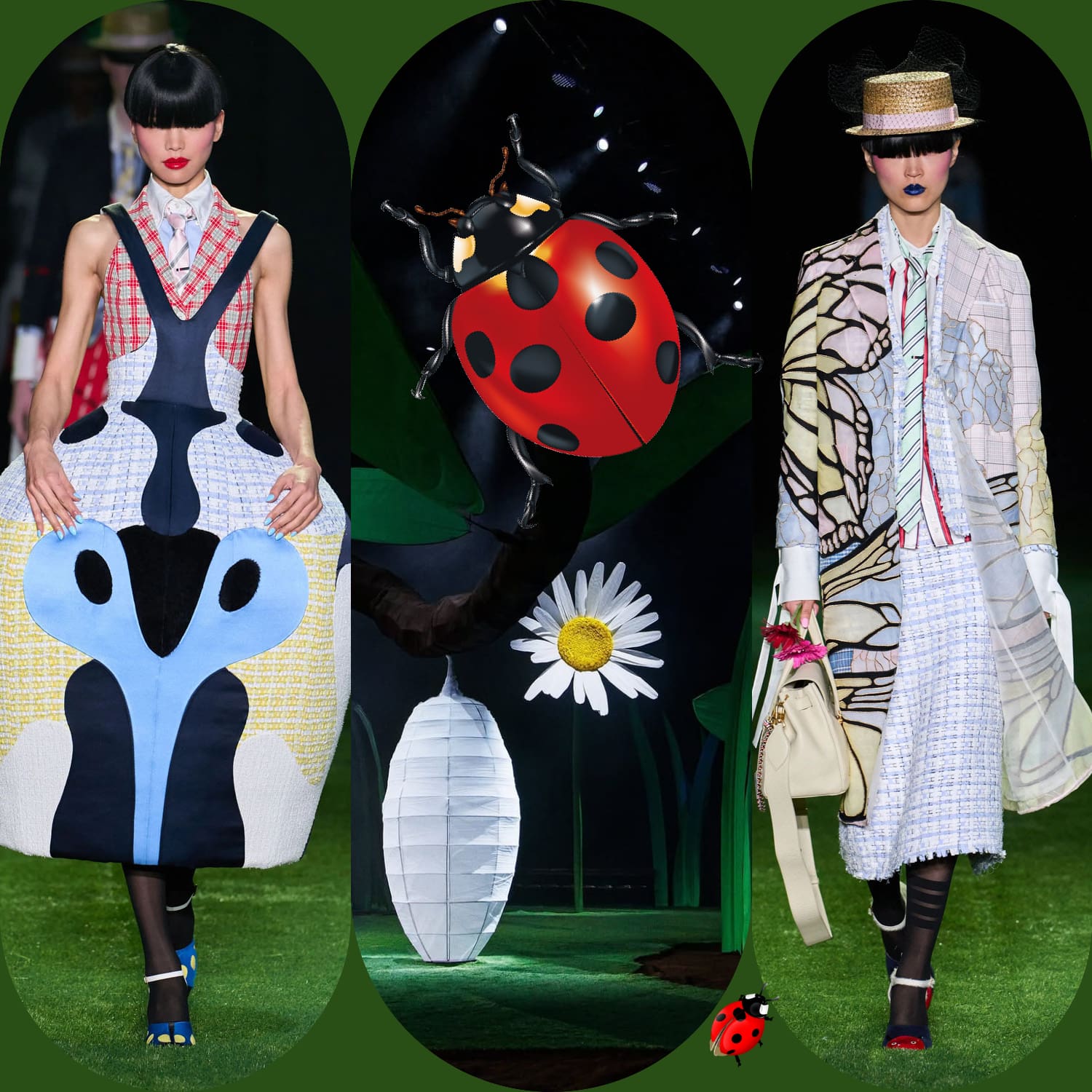
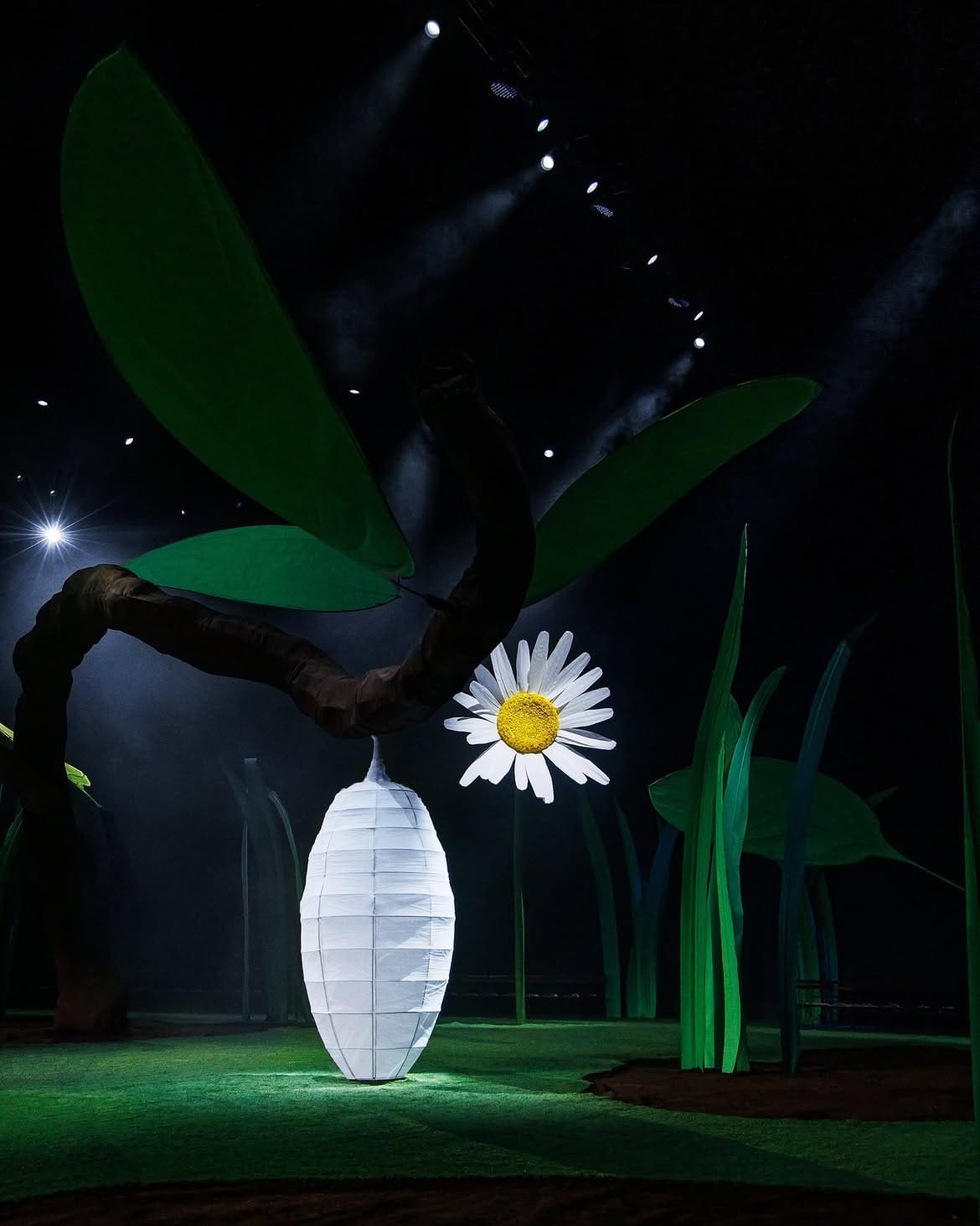
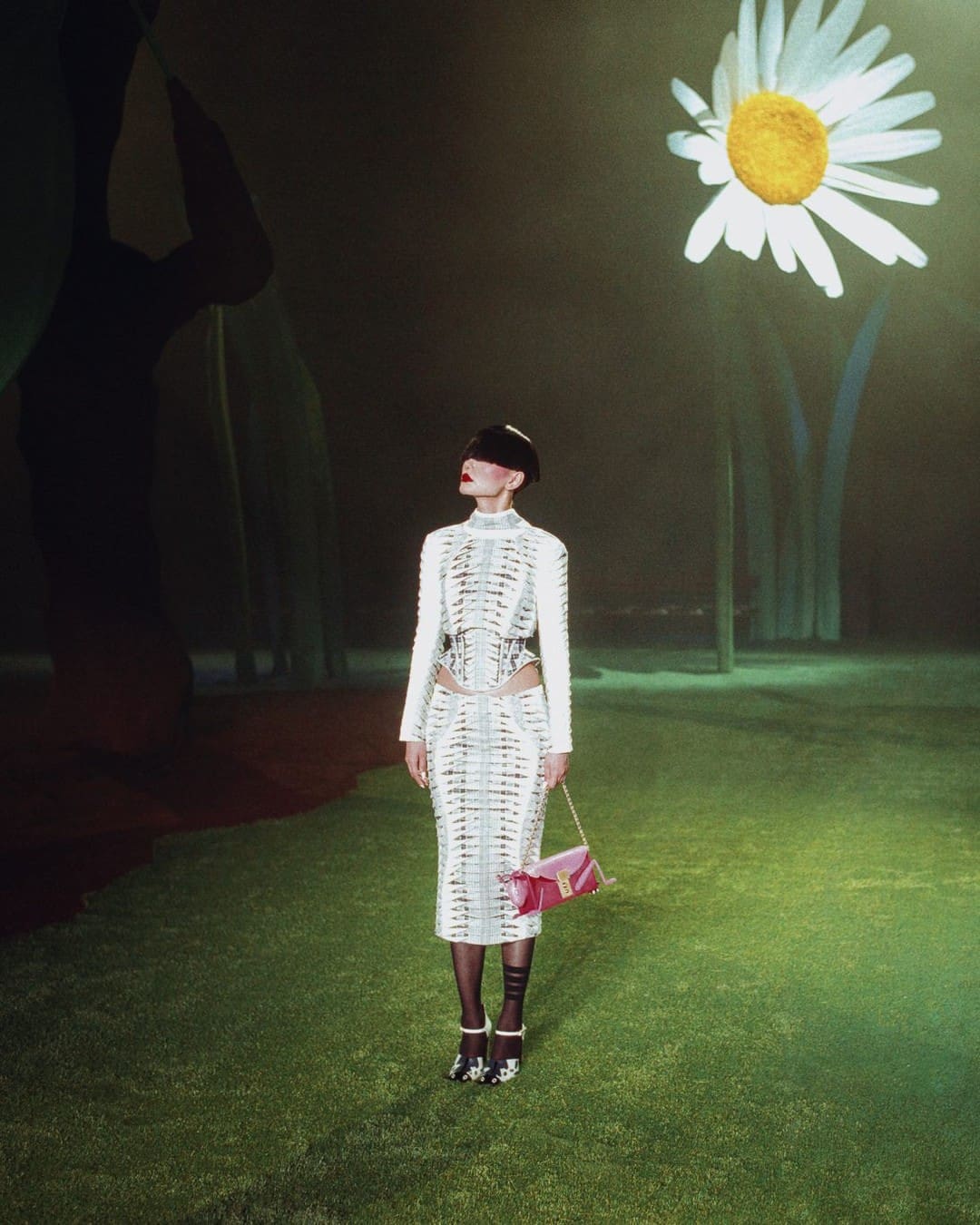
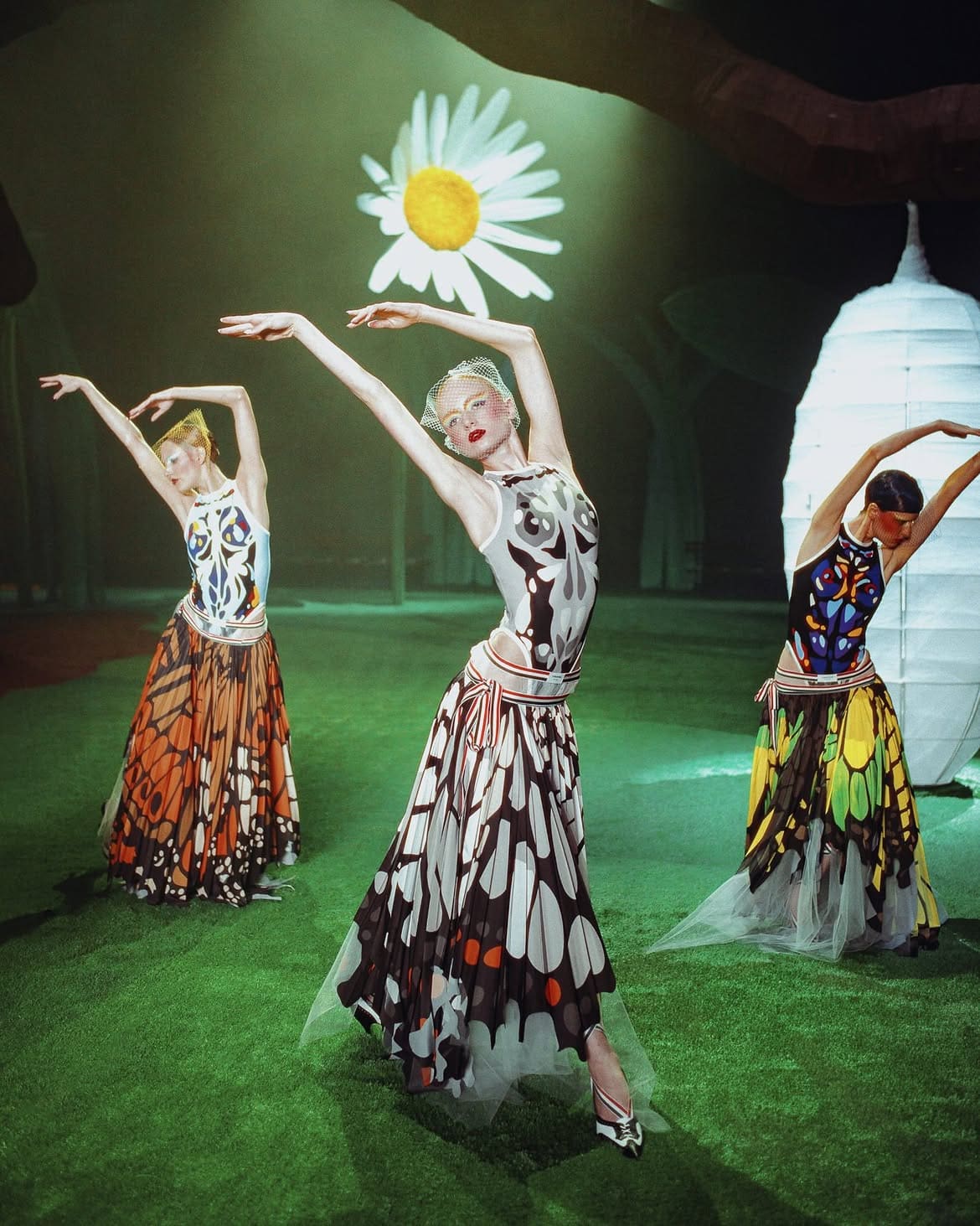
Leave it to Thom Browne to turn an entomologist’s laboratory into high-theatre sartorial poetry. Inside the monumental hall of The Shed in New York, the centerpiece was neither subtle nor modest: a monolithic chrysalis anchored the green-turfed runway, with coiled emerald tendrils and botanical shoots sprawling out in all four directions. Spring, in the lexicon of standard fashion calendars, is usually an excuse for pastel chiffon, flimsy floral prints, and polite optimism. Browne, New York’s most unrelenting precisionist, had an entirely different biology lesson in mind.
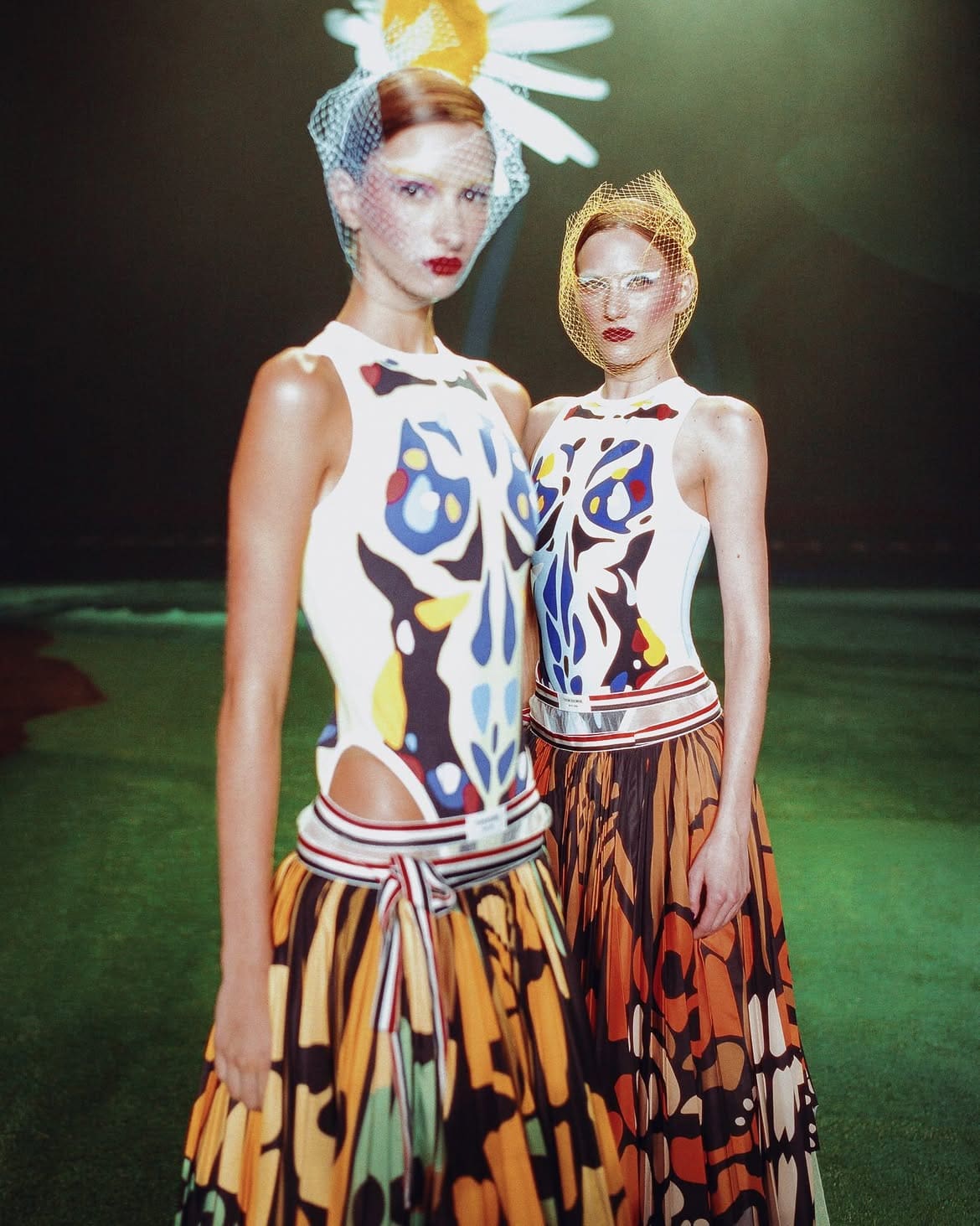
He went straight to nature, yet not to wallow in organic mud. This was an engineered ecosystem where life exists as a structured, manicured garden of extraordinary transformations. The overture did not rely on the customary brisk cadence of models marching in lines. Instead, a coordinated constituency of caterpillars danced in rhythmic unison around the chrysalis. In a ritual of theatrical necessity, one chosen creature was escorted into the fibrous cocoon. As the crawling troupe dissolved into the shadows, the garden unlocked its doors, revealing Browne’s grand thesis: metamorphosis is not merely biological fate; it is the ultimate couture achievement.
Subtle Nectar and Structured Flora
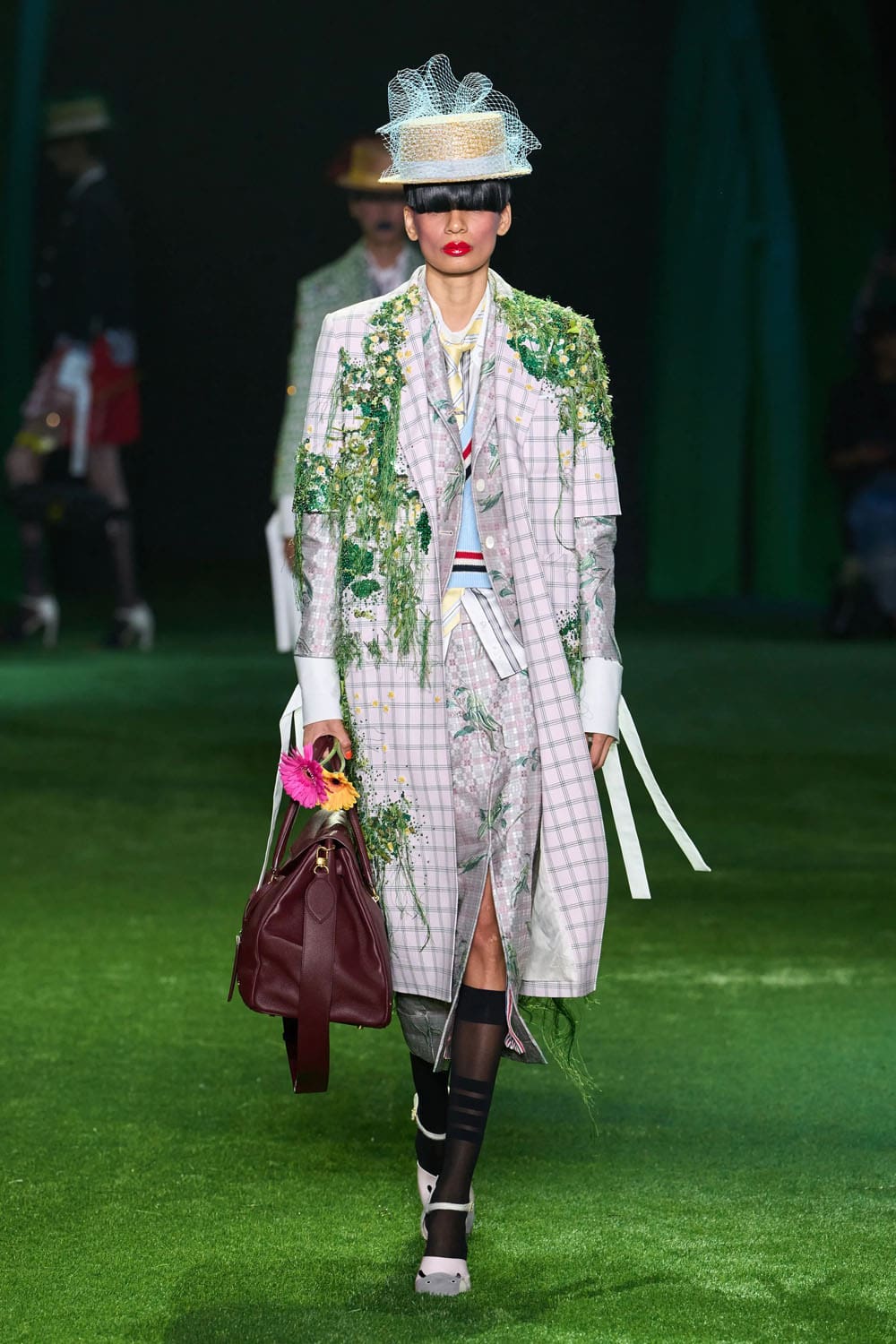
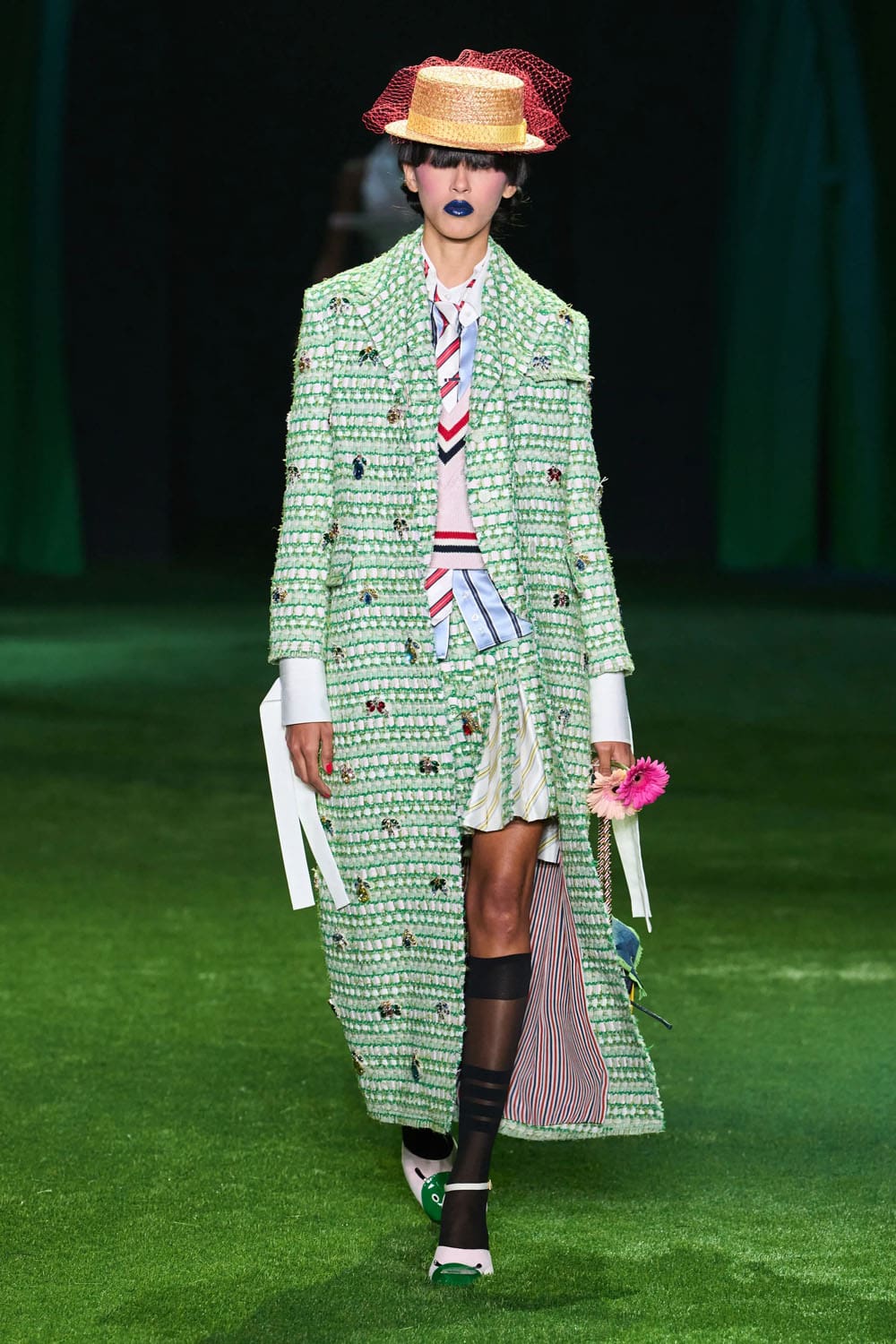
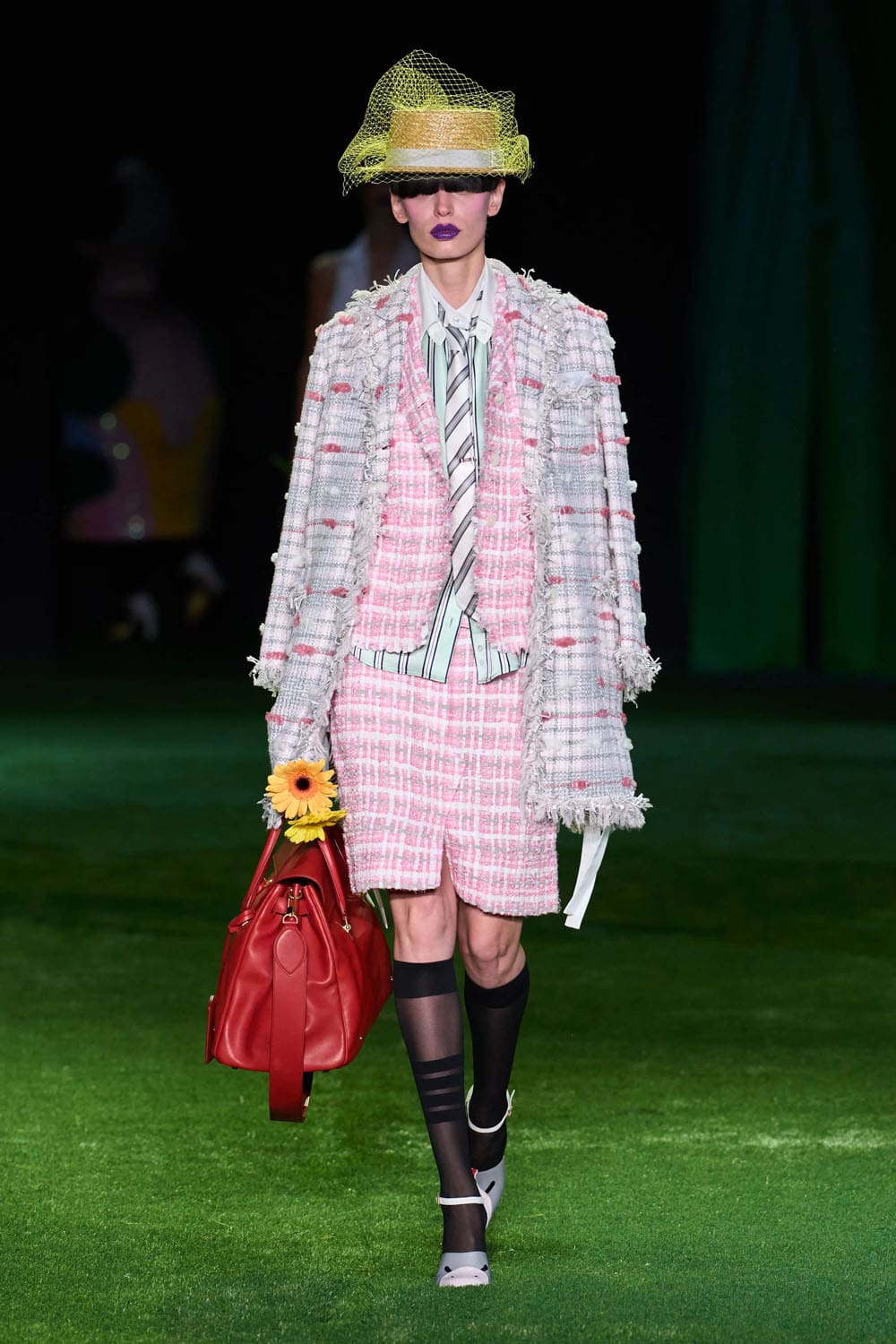
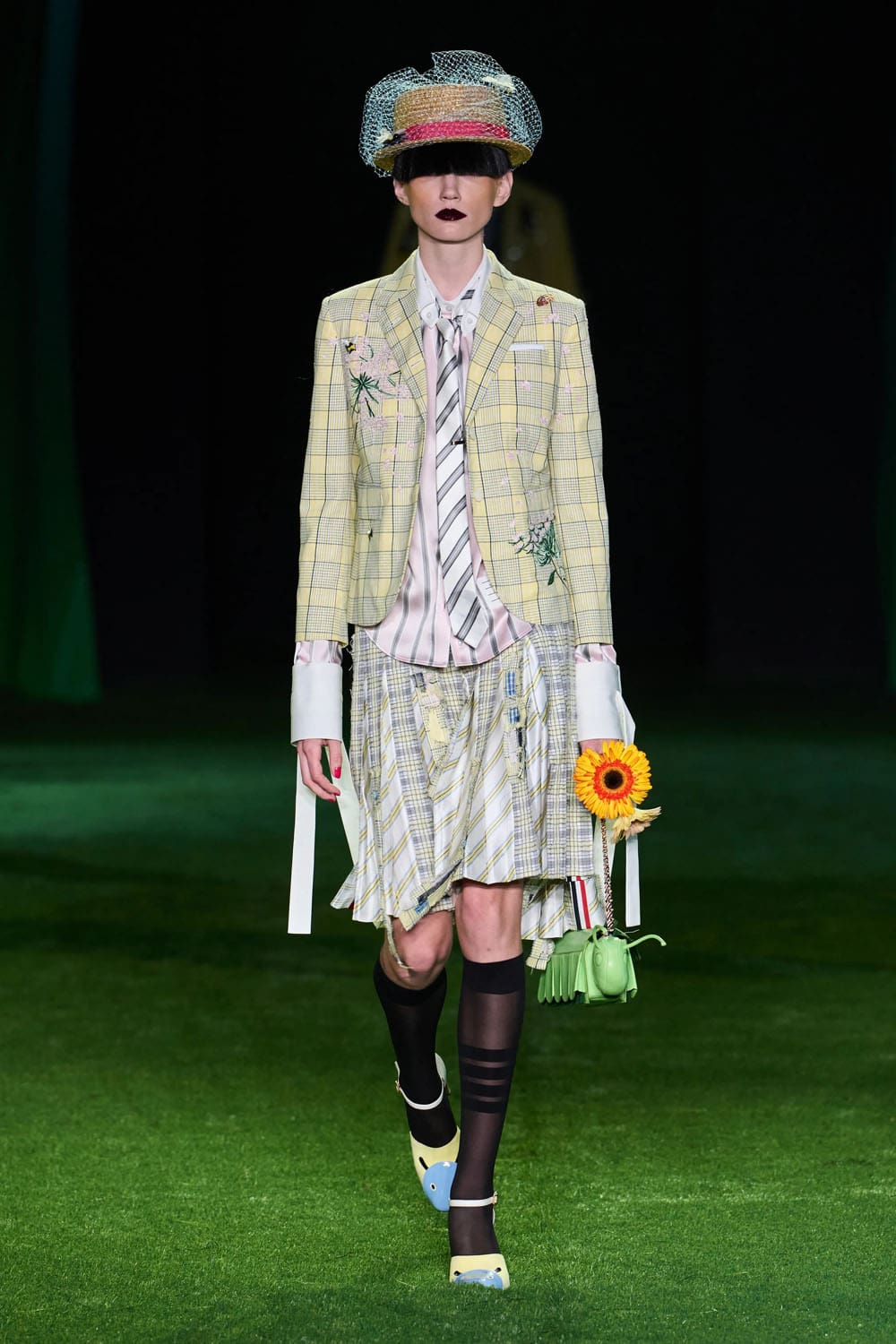
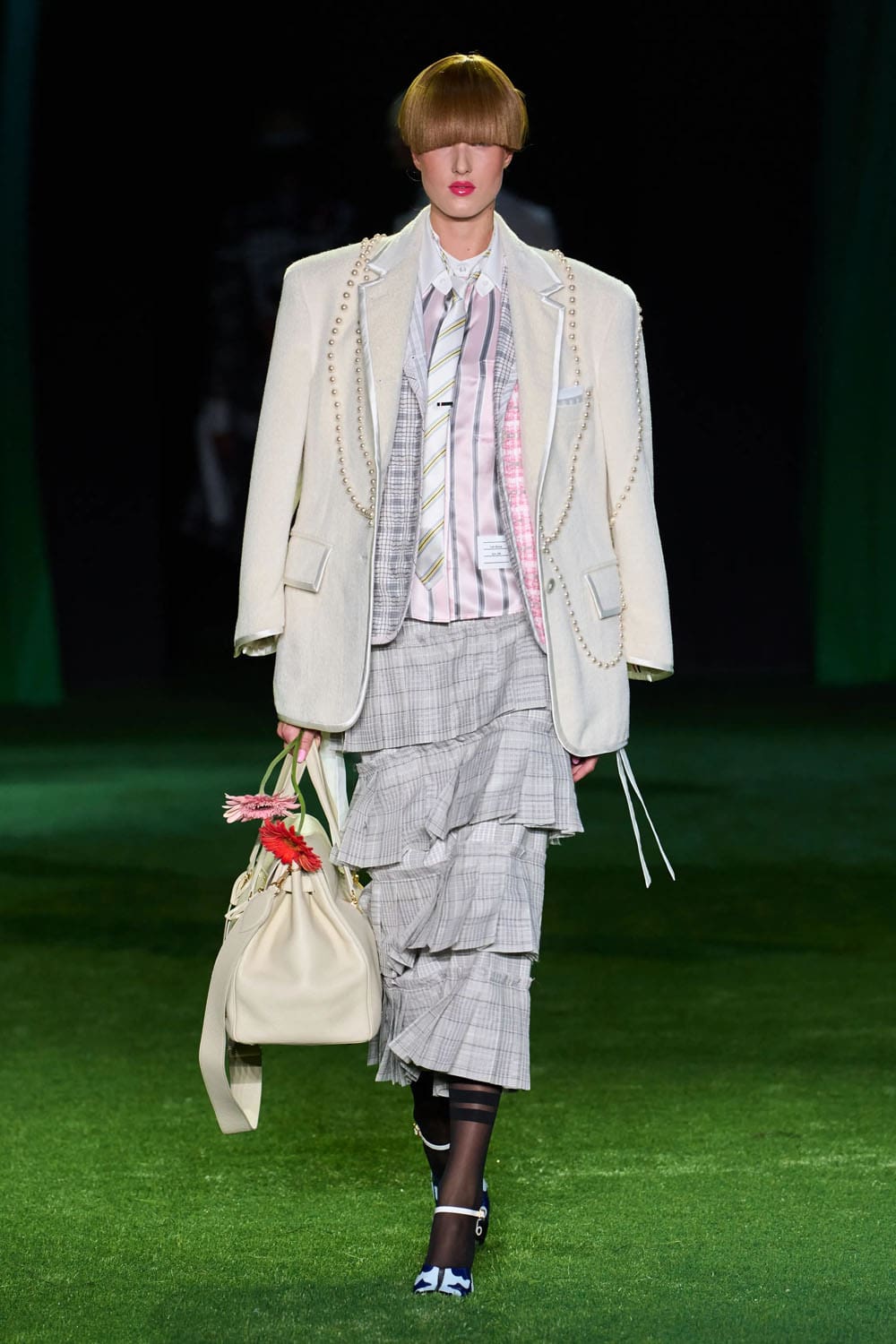
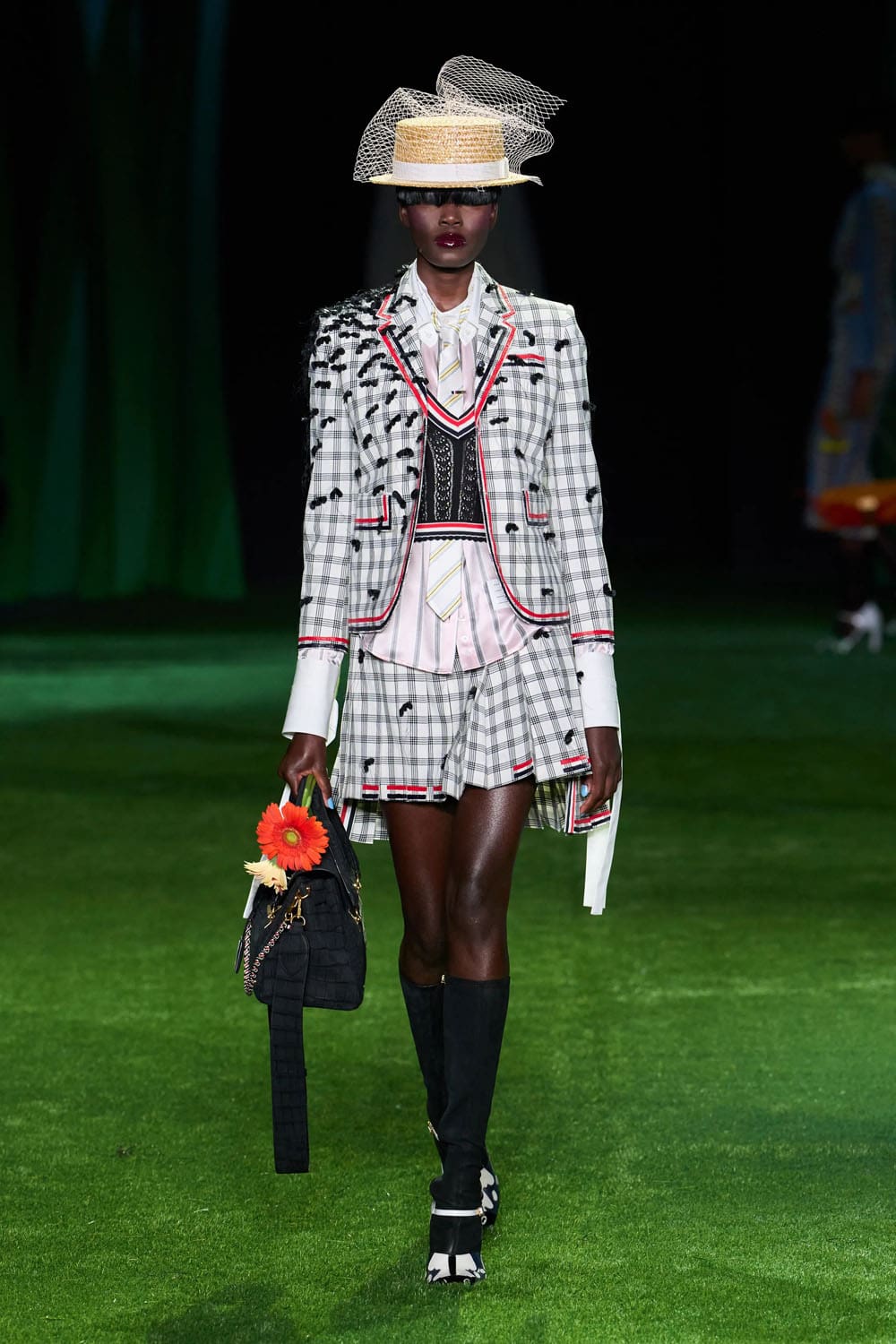
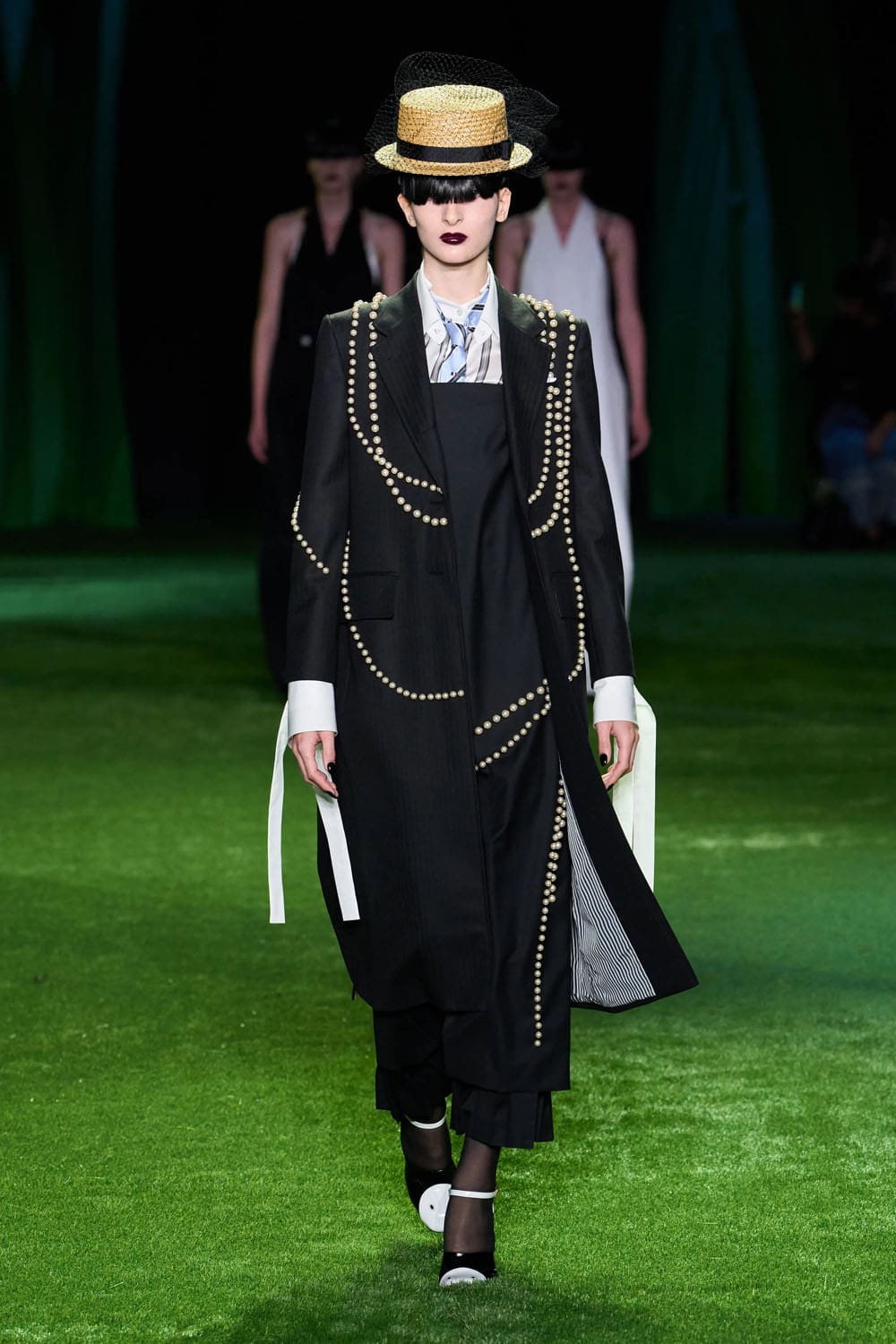
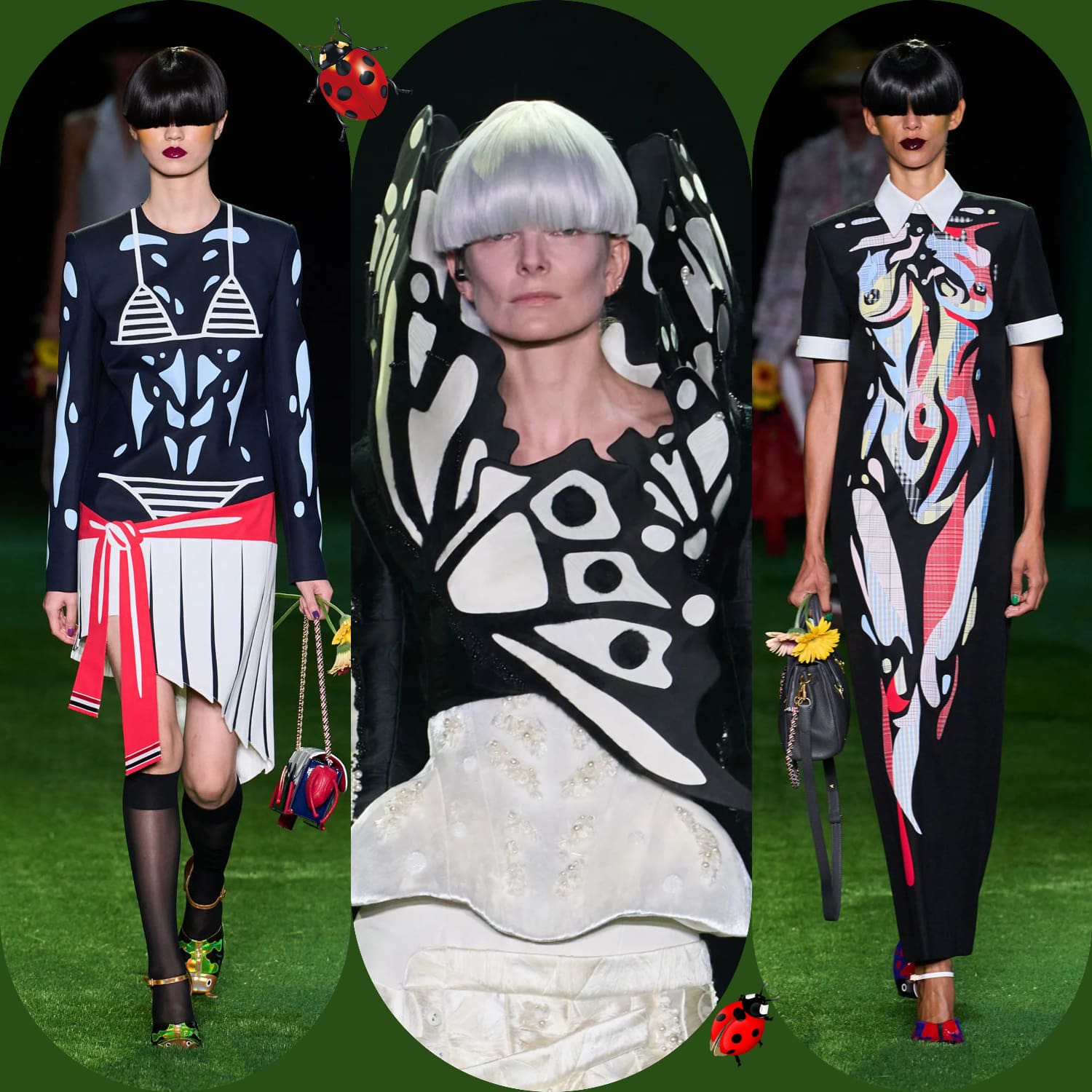
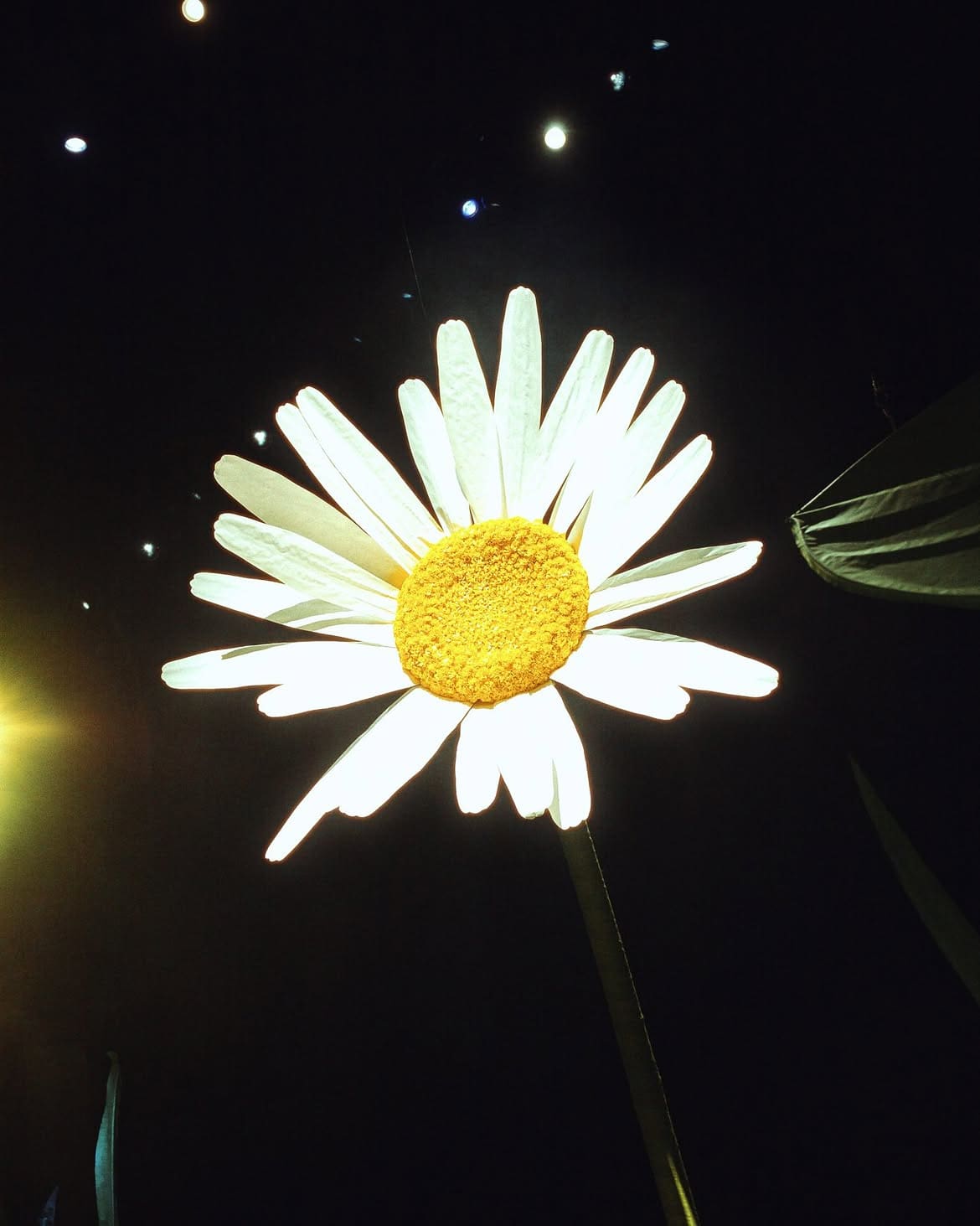
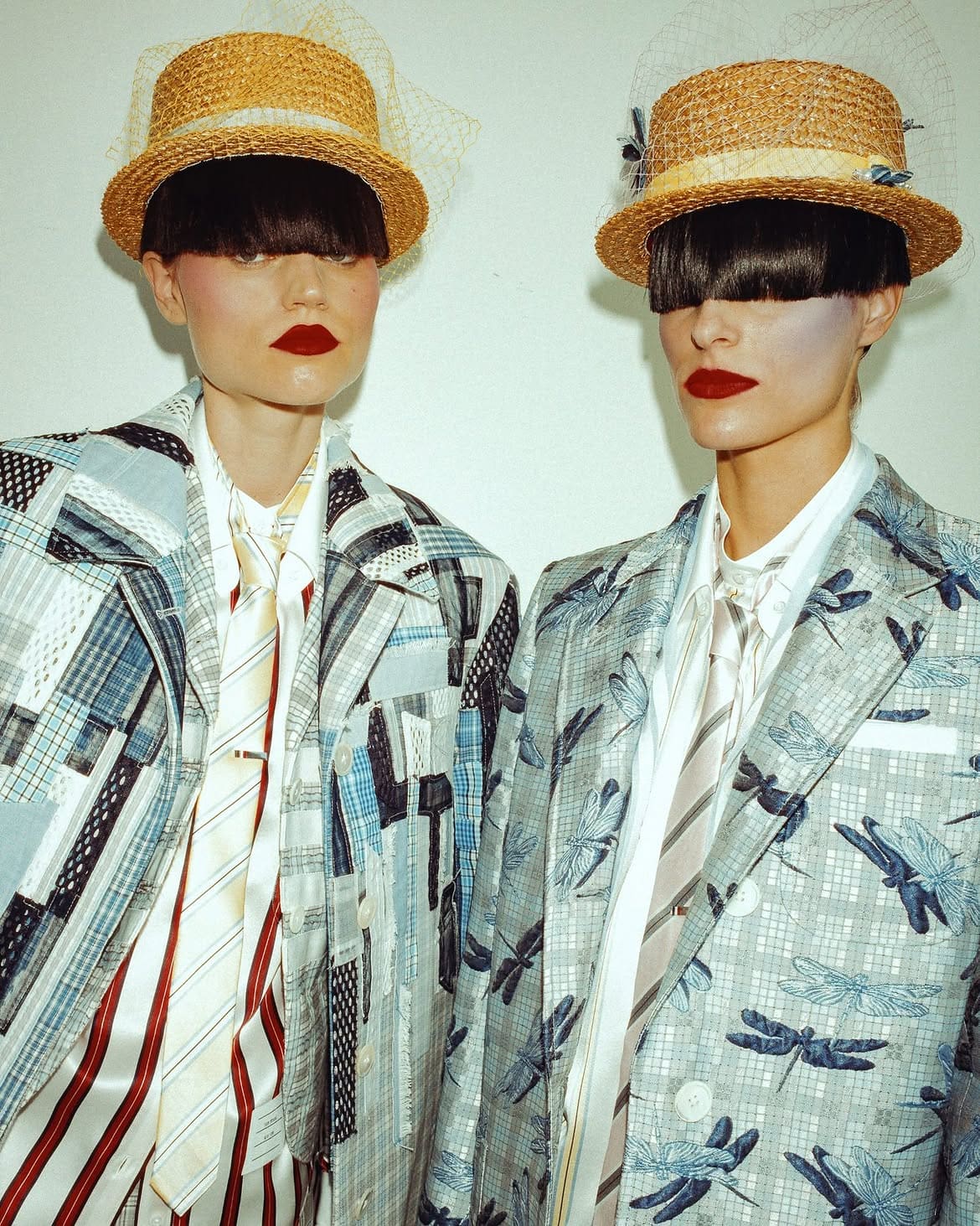
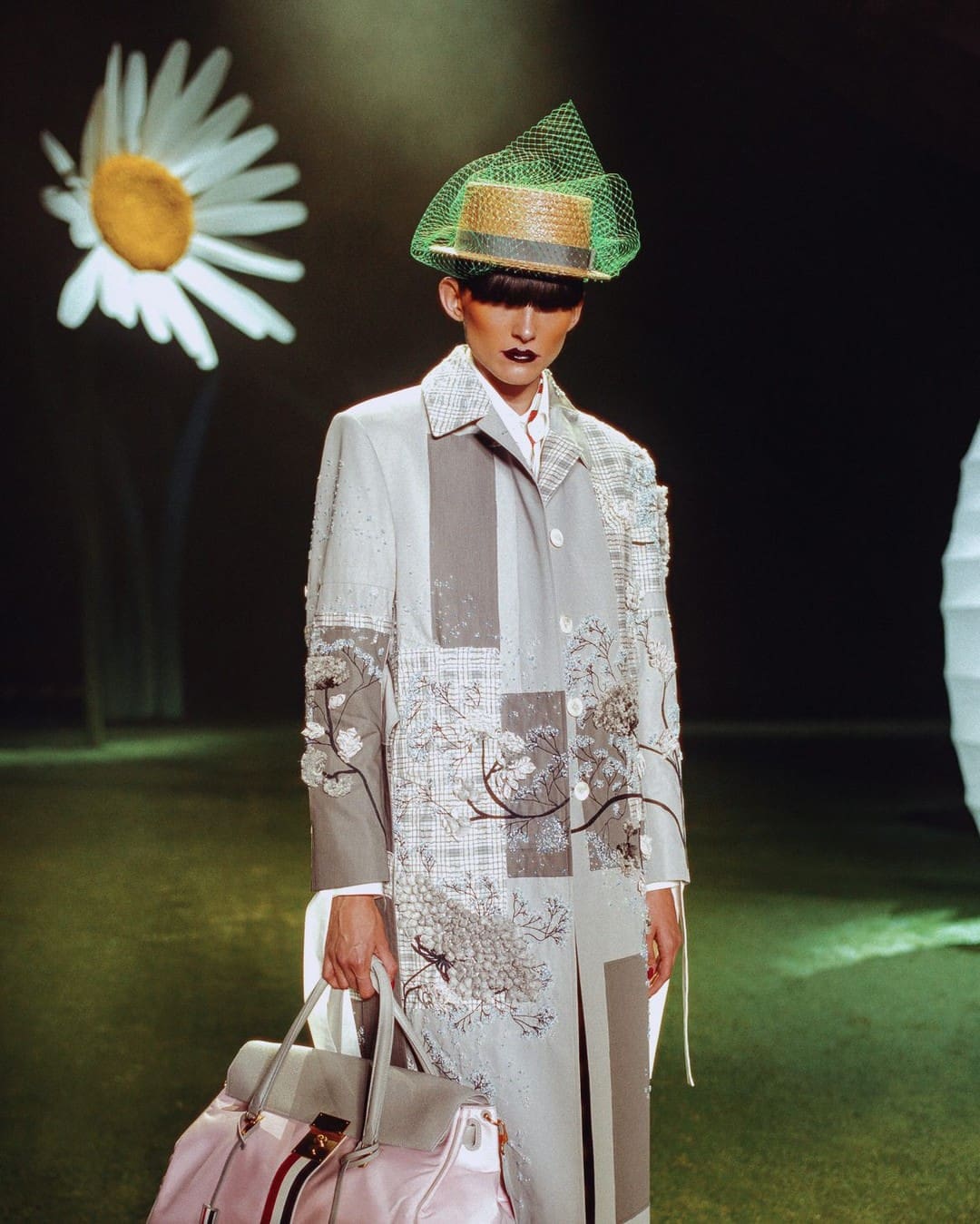
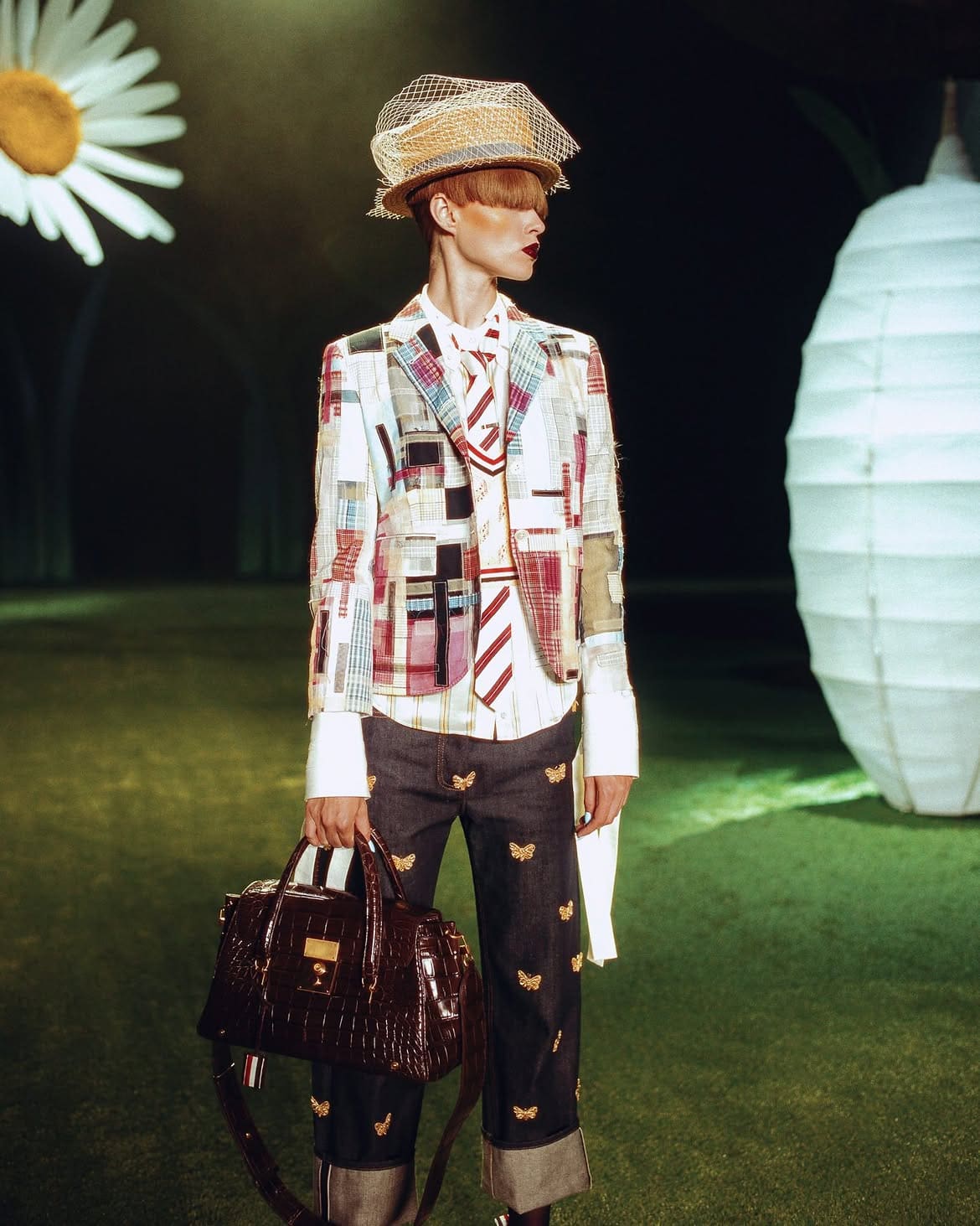
The collection unfolded with gentle, almost deceptive discipline. At first glance, Browne appeared to be toying with traditional botanical tropes, but always through his razor-sharp prism of grey flannels and impeccably engineered tweeds. A pristine white long-stemmed daisy curled up the lapel and torso of a tailored jacket, crowned by a solitary bumblebee sipping nectar from its center. Across a tone-on-tone checked coat, iridescent dragonflies were woven directly into the fabric matrix, appearing and disappearing with the light.
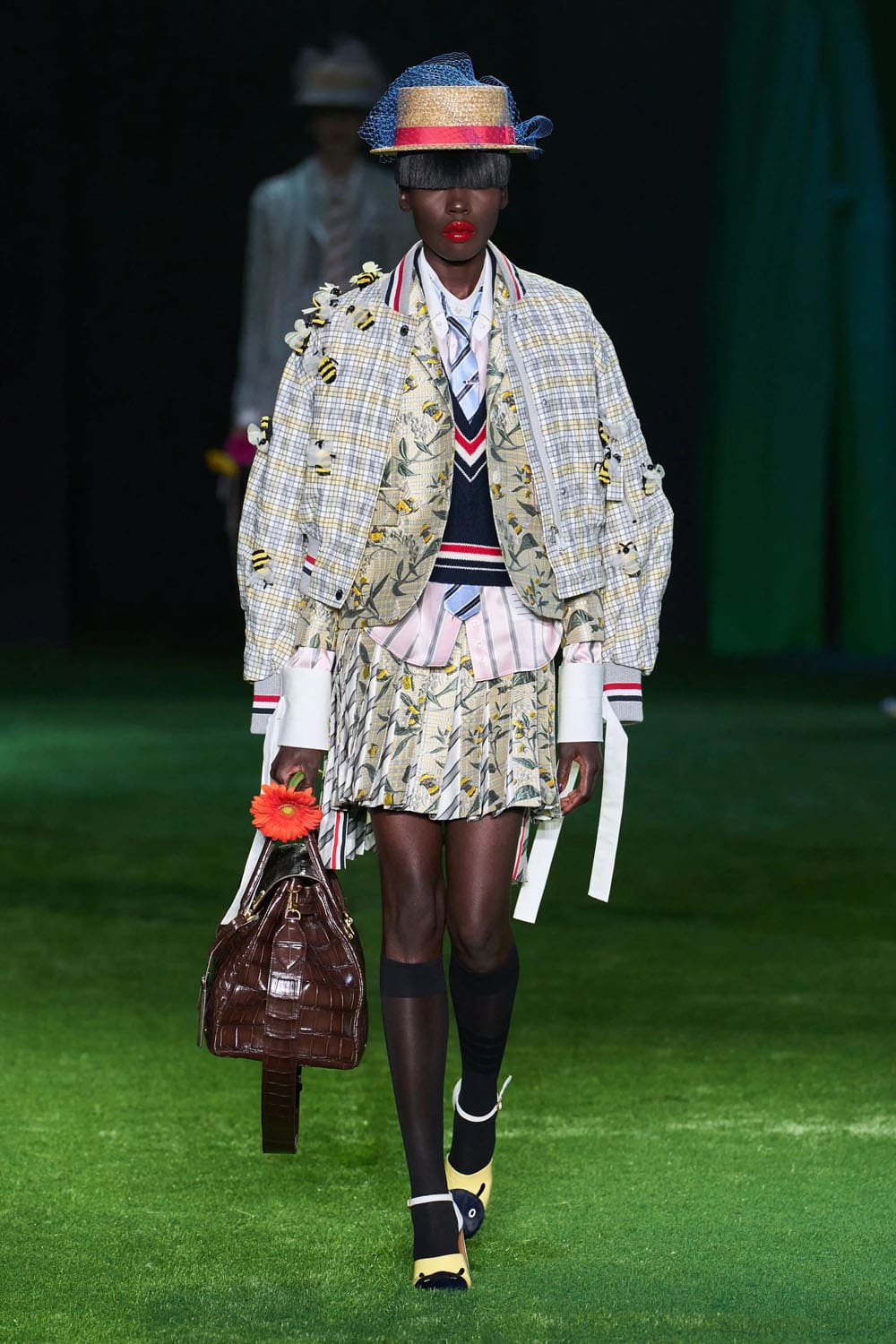
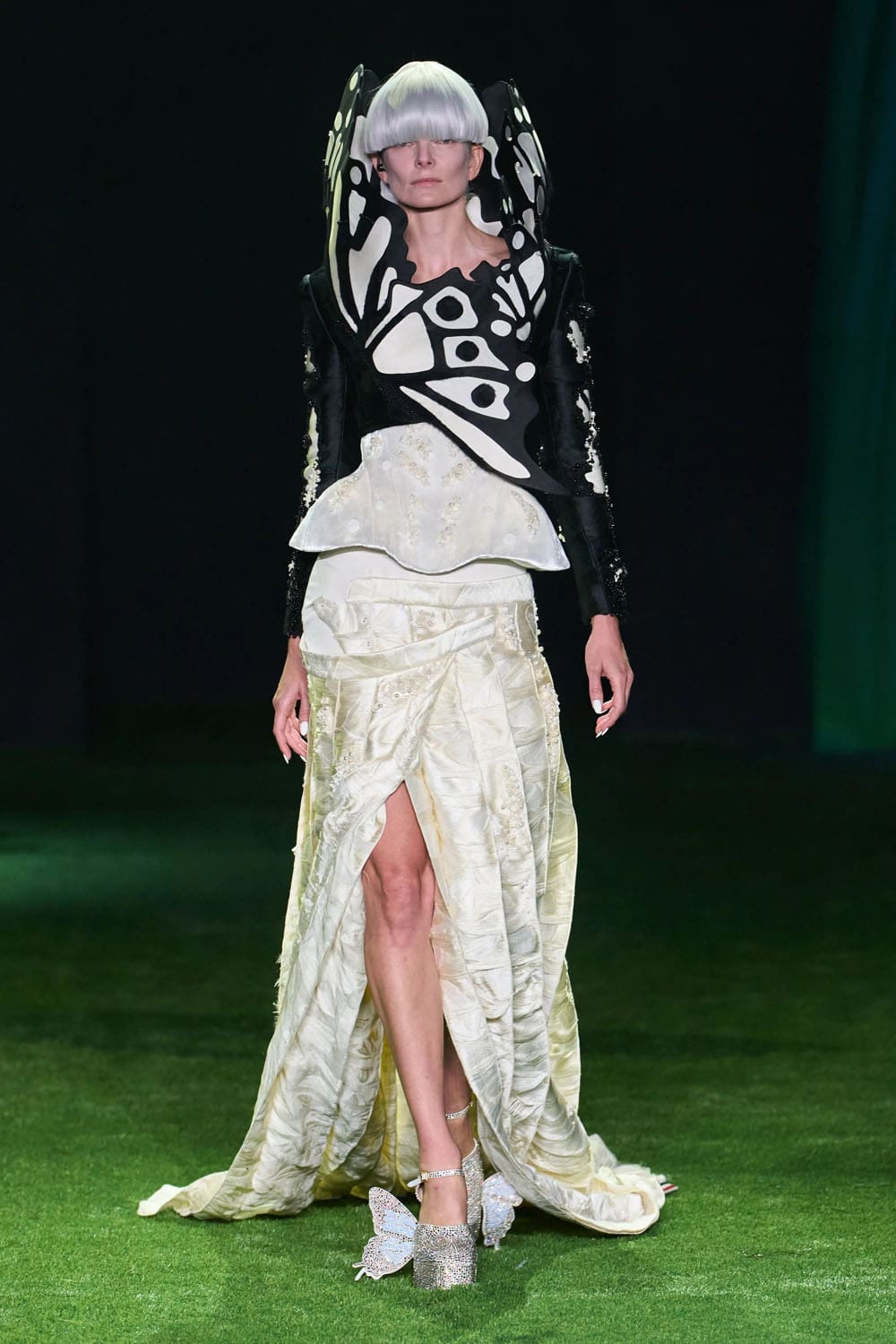
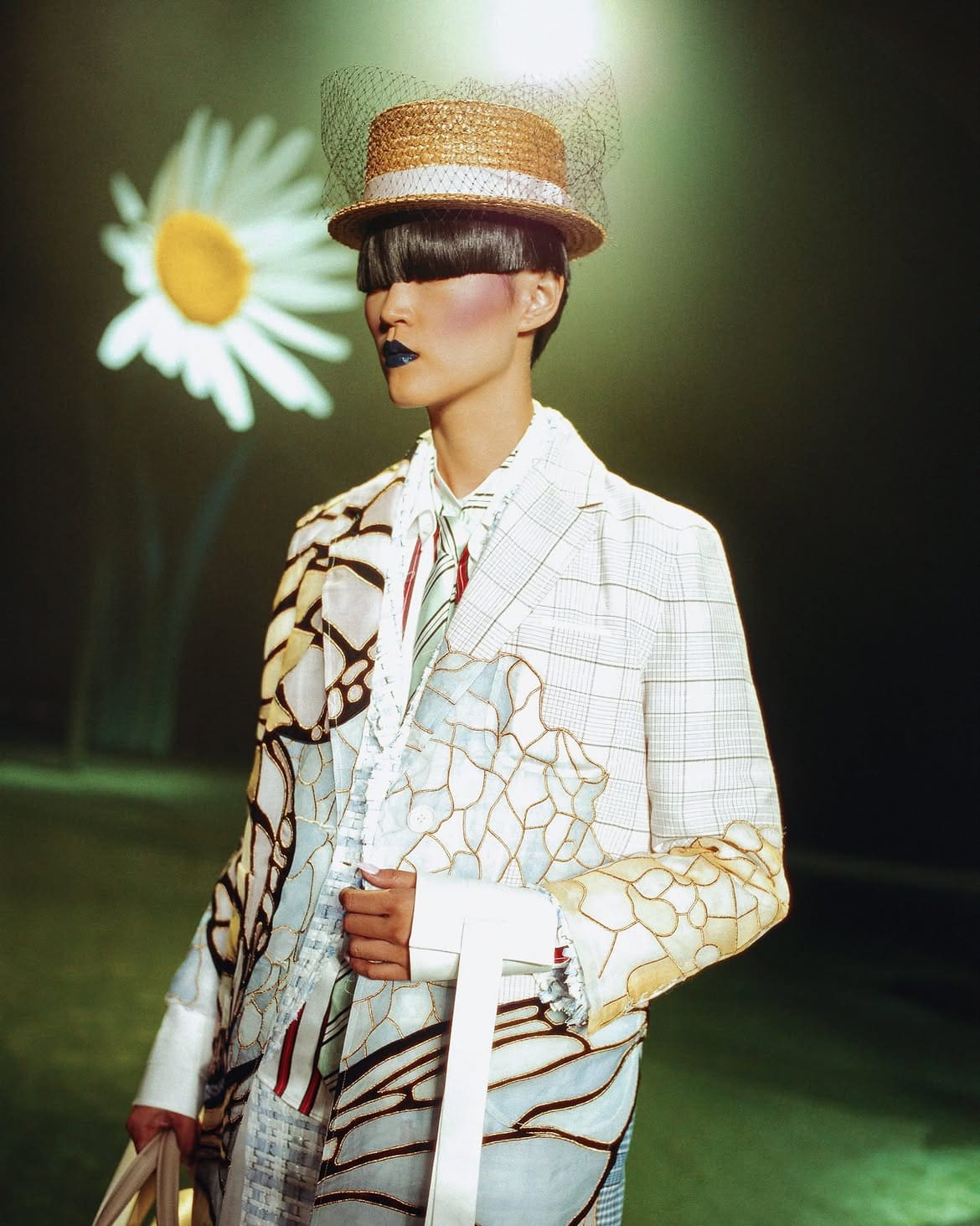
Winged creatures did not arrive as mere embellishments; they belonged to the architecture of the garments. Intarsia butterflies and bees alighted on rigid, sharp shoulders, their symmetrical wings engineered to bridge the seams, spanning gracefully from breastplate to back yoke. Browne established the premise: nature’s beauty is inherently rigorous, bound by geometry, balance, and unyielding order.
The Carapace and the Halter
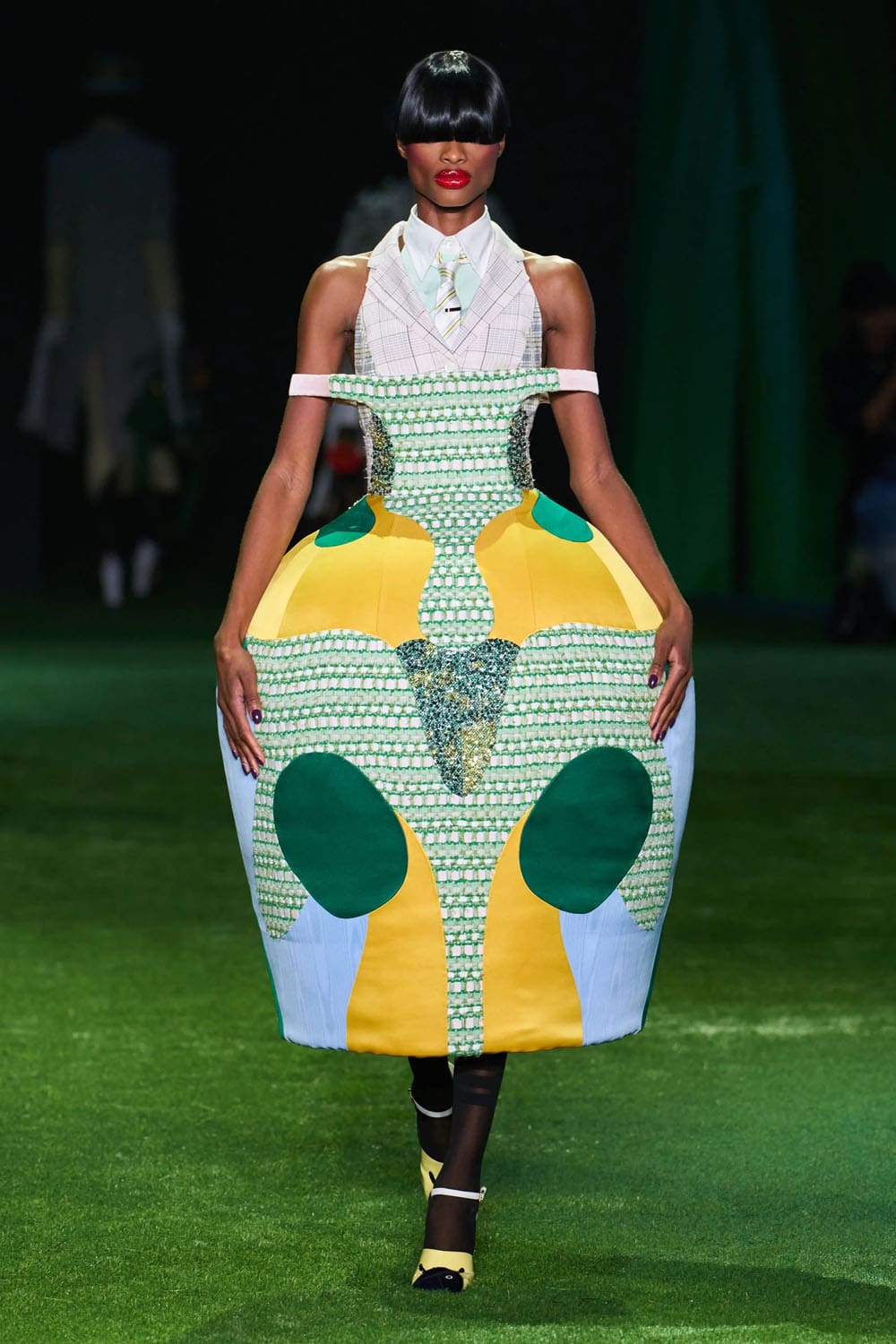
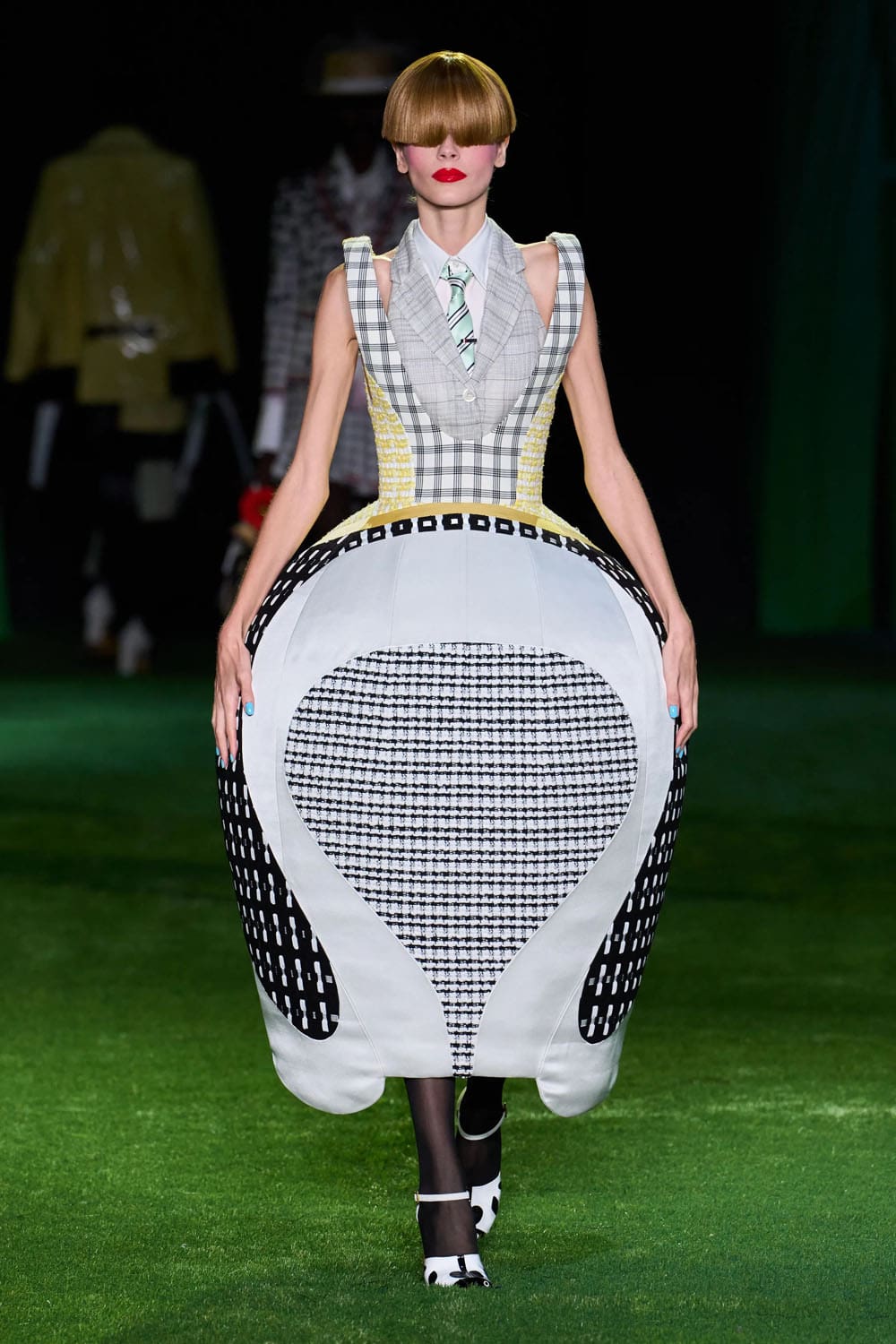
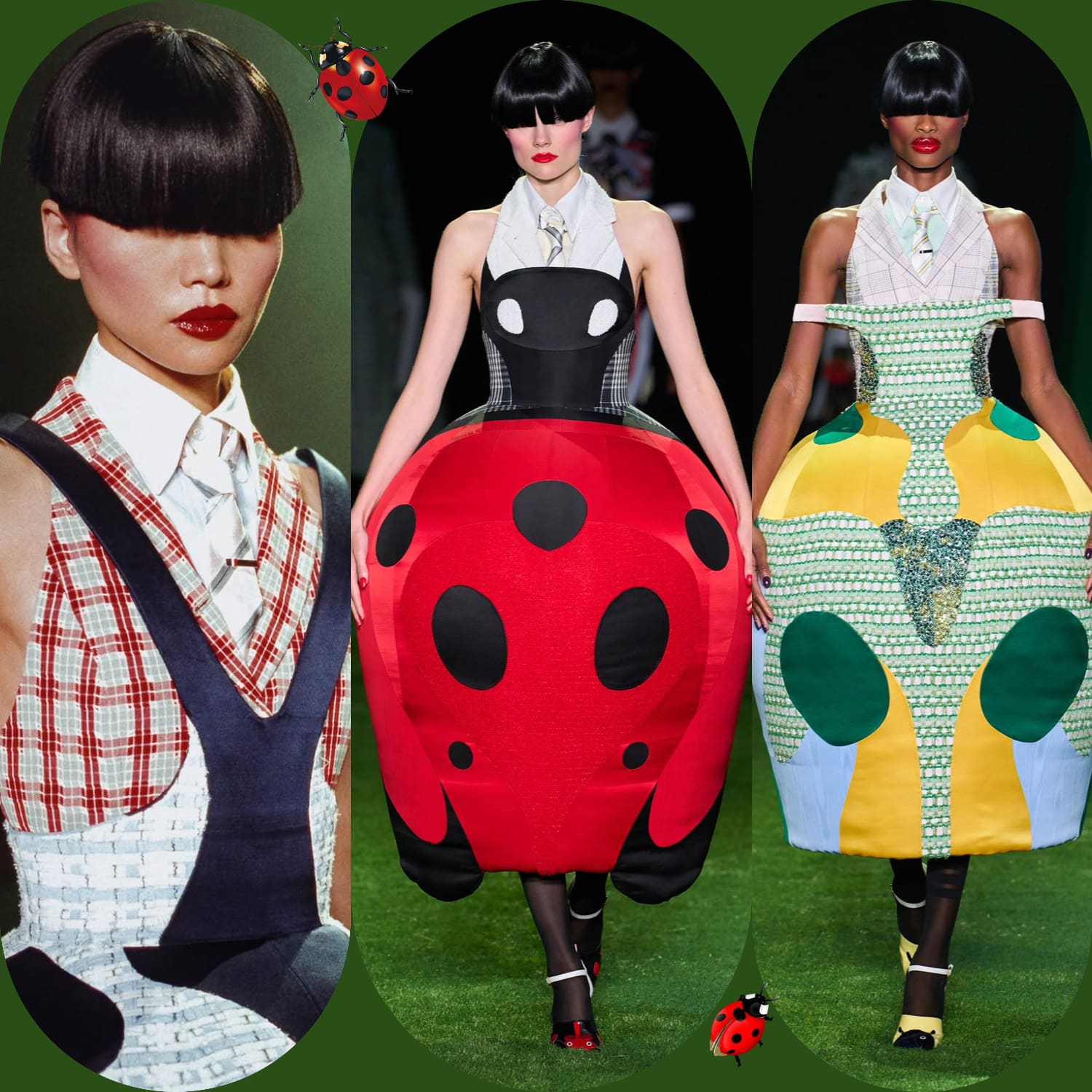
Then came the true evolutionary leap. Moving past two-dimensional motifs, the collection surged into three-dimensional entomological sculpture. Browne unleashed couture-grade patchwork techniques across monumental bulbous silhouettes that mimicked the hard exoskeletons of garden creatures.
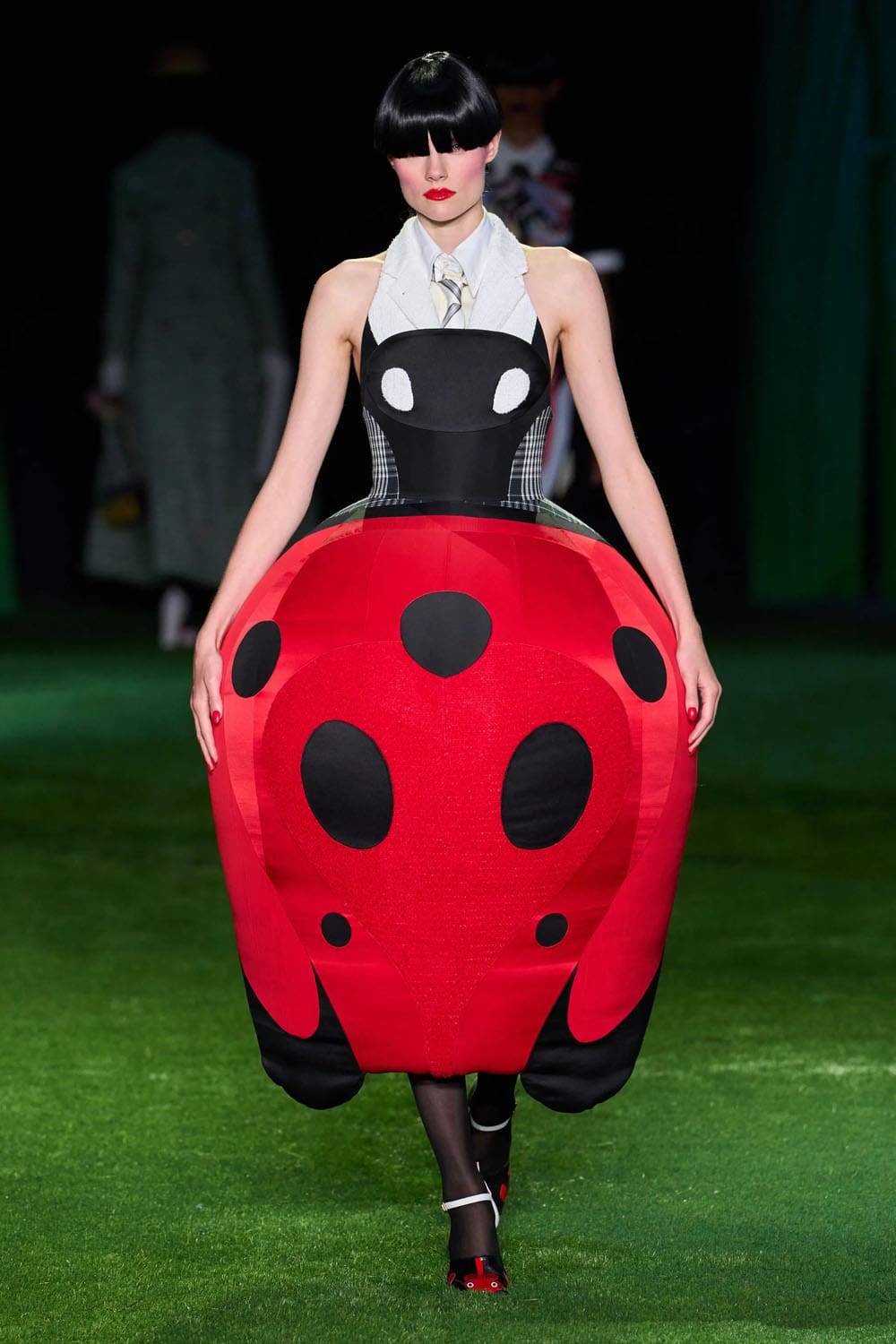
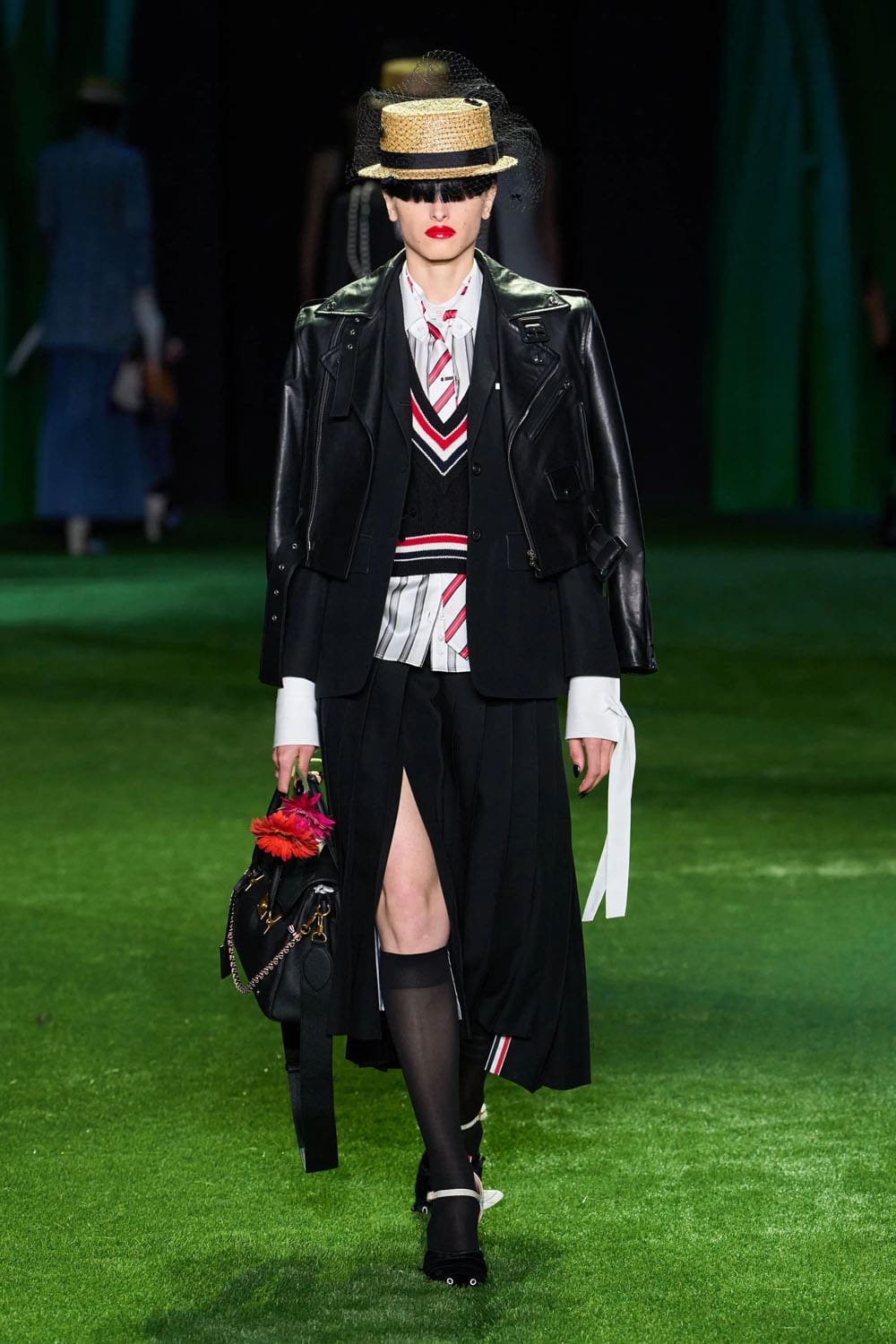
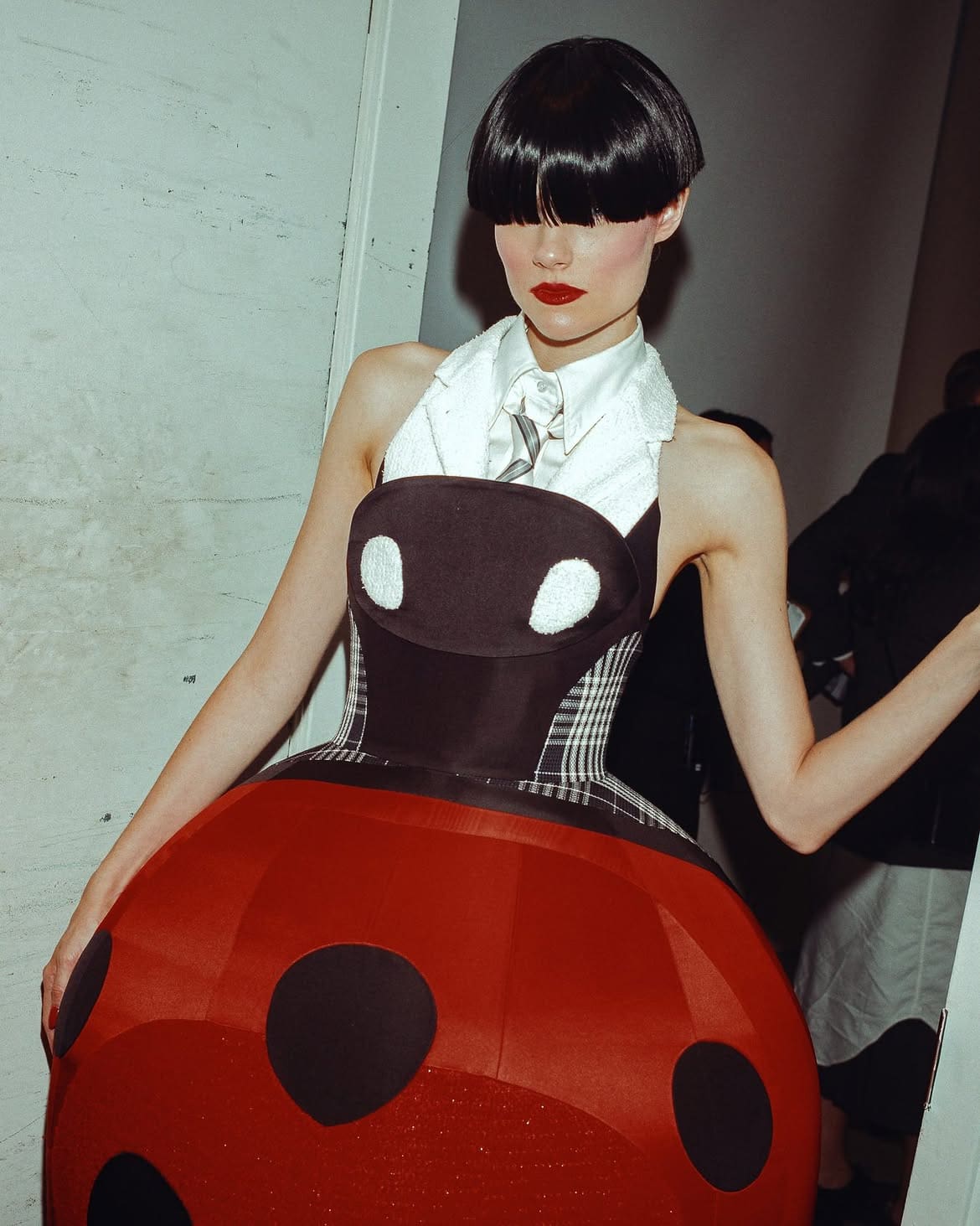
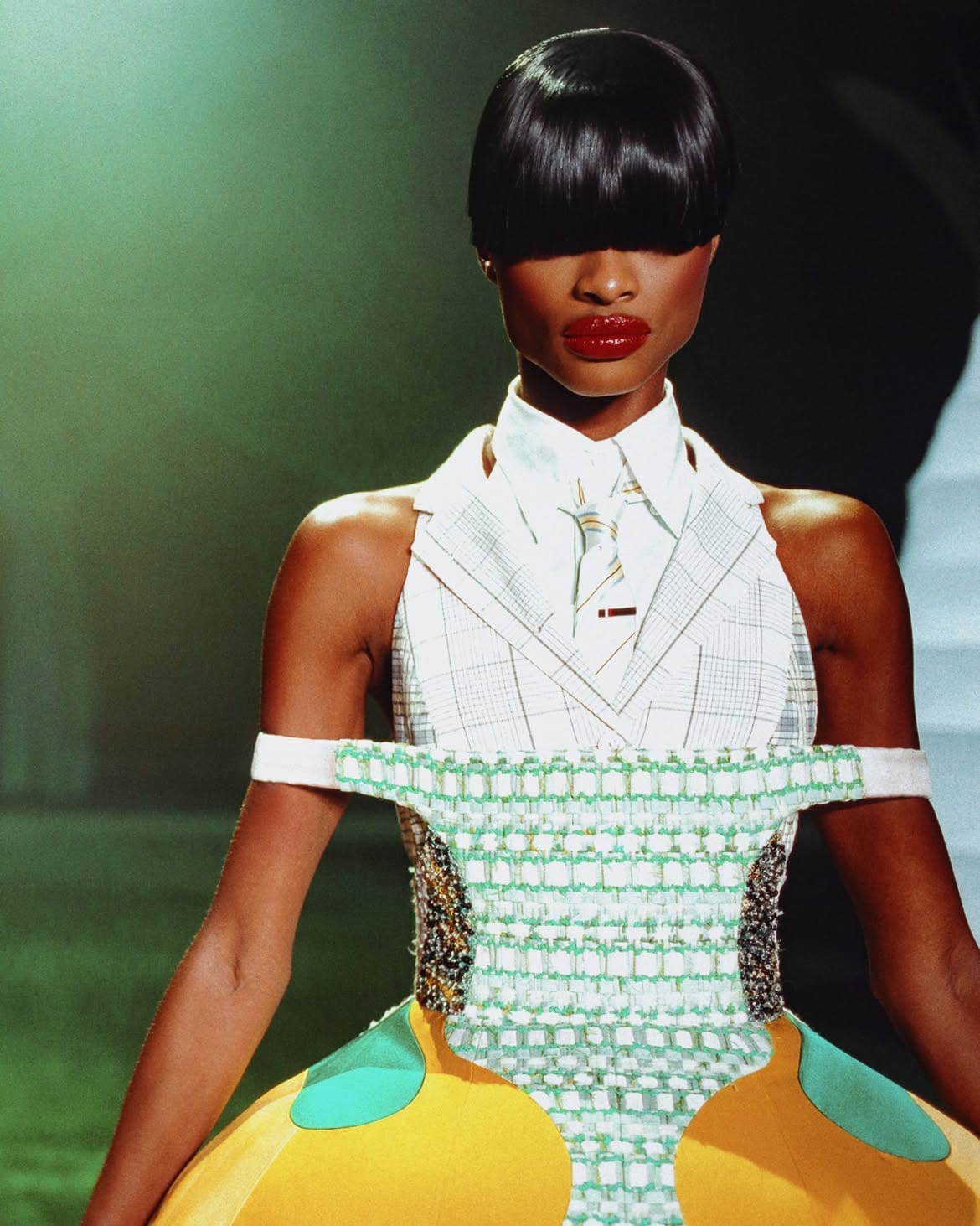
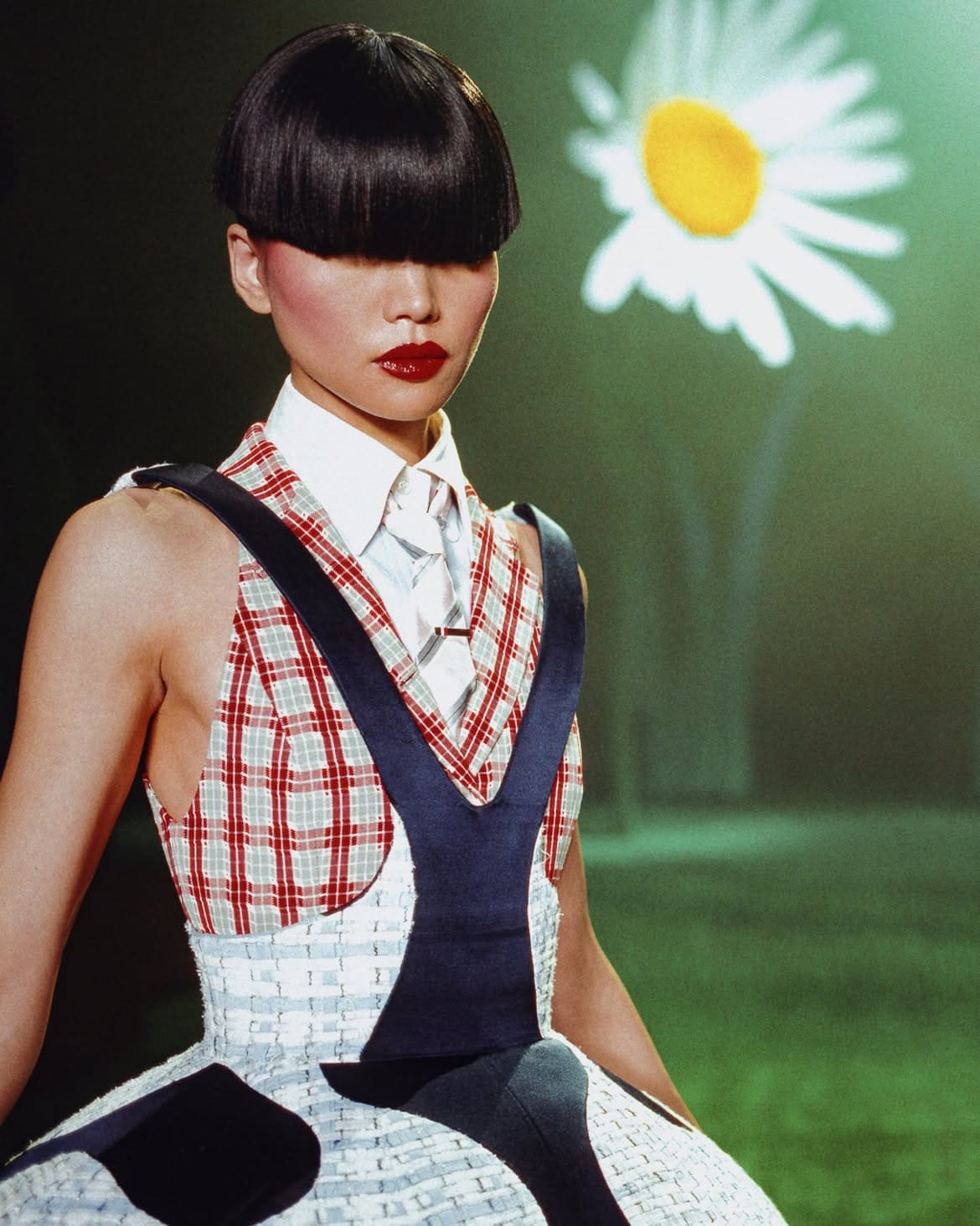
Underneath severe bowl-cut bangs and lacquered crimson lips, models emerged transformed into armored coleoptera. In one striking iteration, an explosive rounded skirt echoed the scarlet elytra of a ladybug, complete with pitch-black velvet spots suspended over an articulated black tail. Above this voluminous sphere, Browne preserved his austere uniform: a crisp halter-cut button-down, a knotted skinny tie, and a sharply notched collar peeking above a bodice shaped like insect eyes and mandibles.
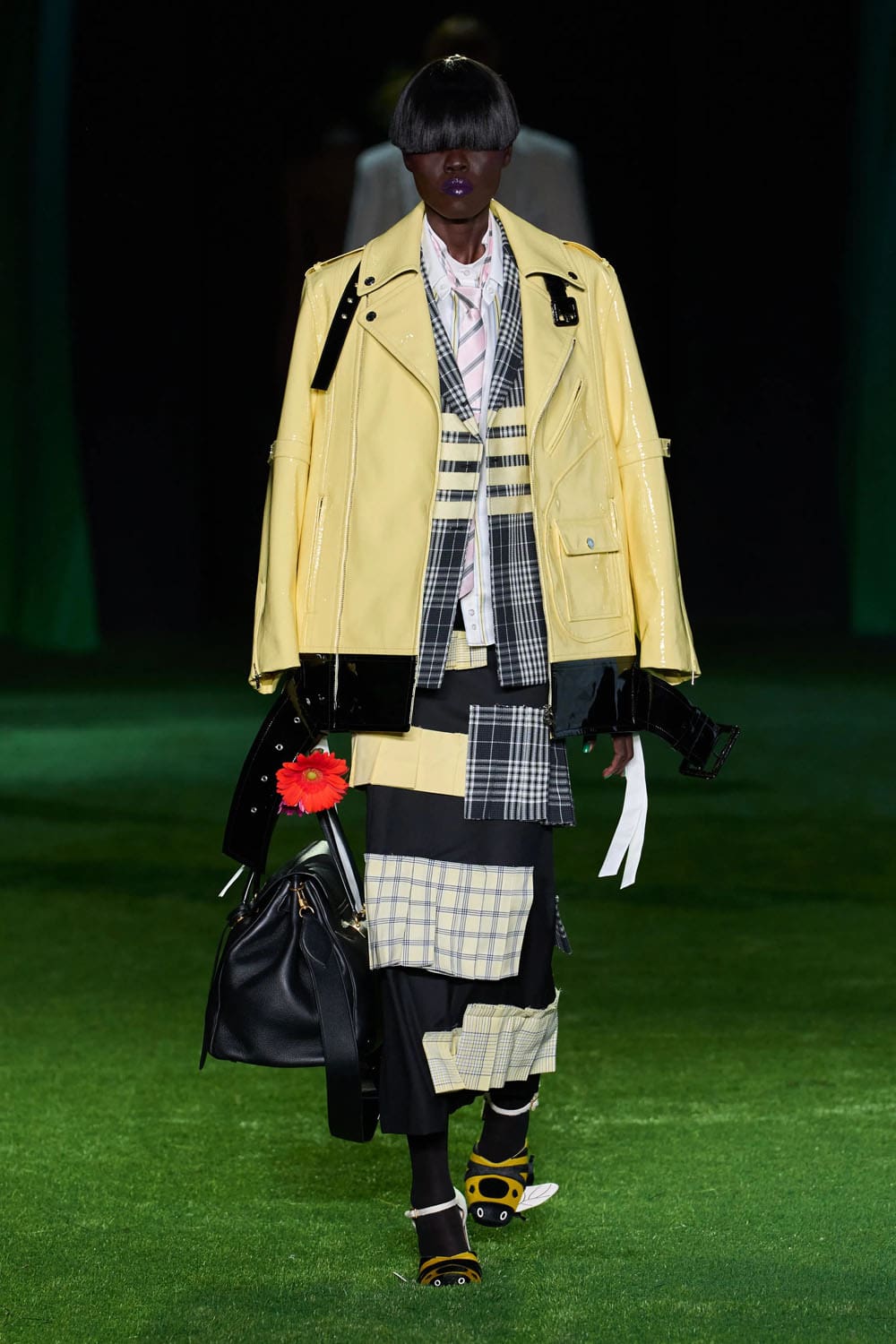
The insectile lexicon expanded into graphic monochrome houndstooths, pale lemon yellows, and tactile boucle weaves. Another silhouette emerged in stark ivory and black, its rounded dome mapped with perforated patterning and curved contours that evoked an alien scarab, framed by suspended plaid straps. Another took flight in pistachio greens, daffodil yellows, and turquoise tweed, where antennae and faceted compound eyes were translated into hand-cut fabric segments across the torso. In each sculpture, the rigid egg-shaped skirt curved down toward the ankles, suspended effortlessly beneath a tailor’s waistline.

Spiracles, Spiders, and the Wings of Dusk
Beneath the playful exterior lurked an unmistakable edge of calculated danger. Browne openly cited Pixar’s La vie d'un insecte as an initial spark—a sentiment echoed in his Milan menswear presentation earlier in the season—insisting he wanted room to play without sinking into academic solemnity. Yet the garden is rarely innocent.
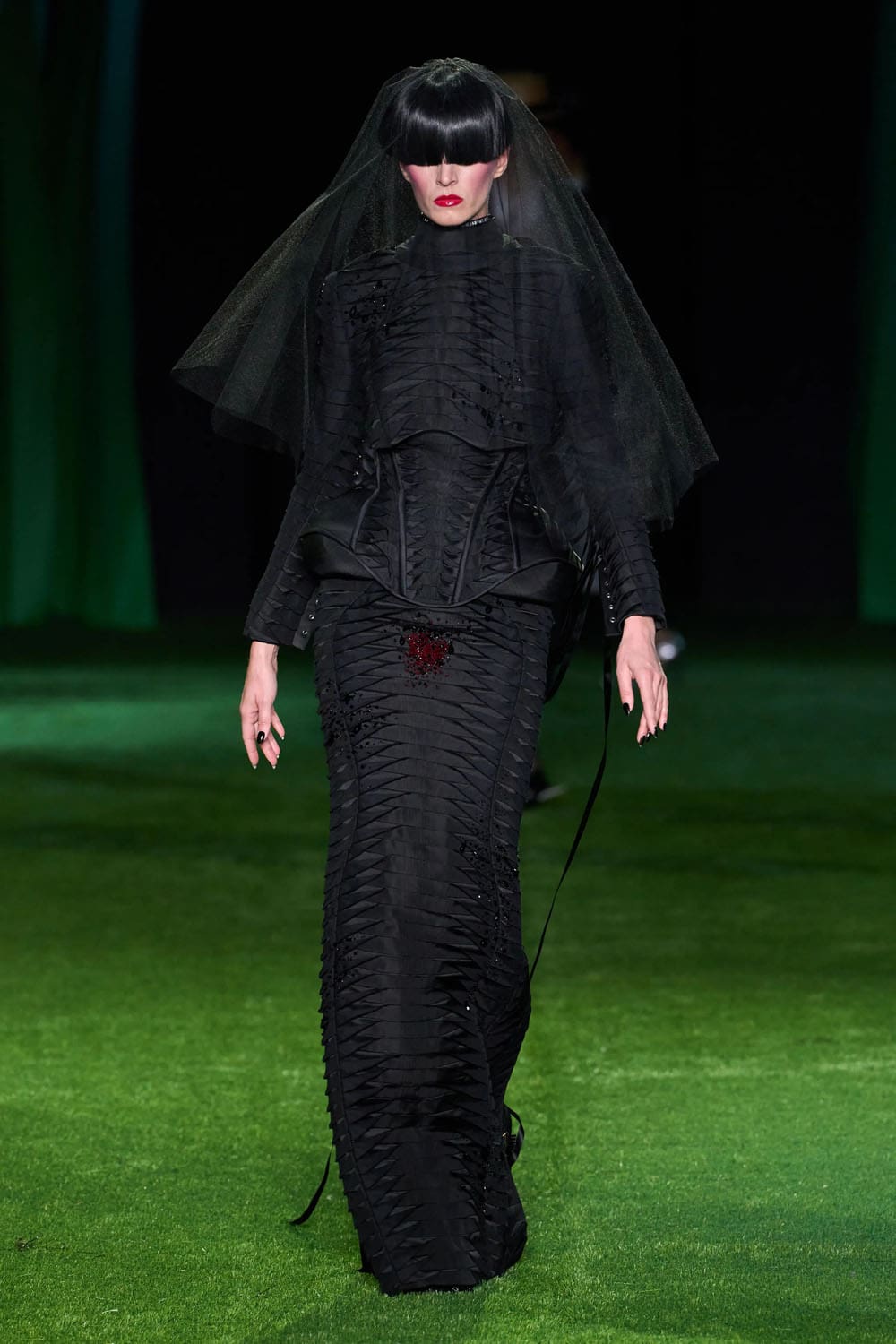
Contrasting the bulbous carapaces were hyper-fitted corset tops and pencil silhouettes manipulated through mind-bending geometric origami. Hundreds of delicate, paper-thin tucks and pleated concentric folds traced the human anatomy like the respiratory spiracles of a pupa. The pinnacle of this technical bravura was an all-black ensemble: a mercilessly fitted corset and floor-scraping skirt formed by hundreds of these spiracle ridges. Centered deliberately above the pelvis was an ominous, blood-red hourglass: the unmistakable signature of the black widow. It was a reminder that every flourishing garden harbors its predator, and true beauty always carries a sting.
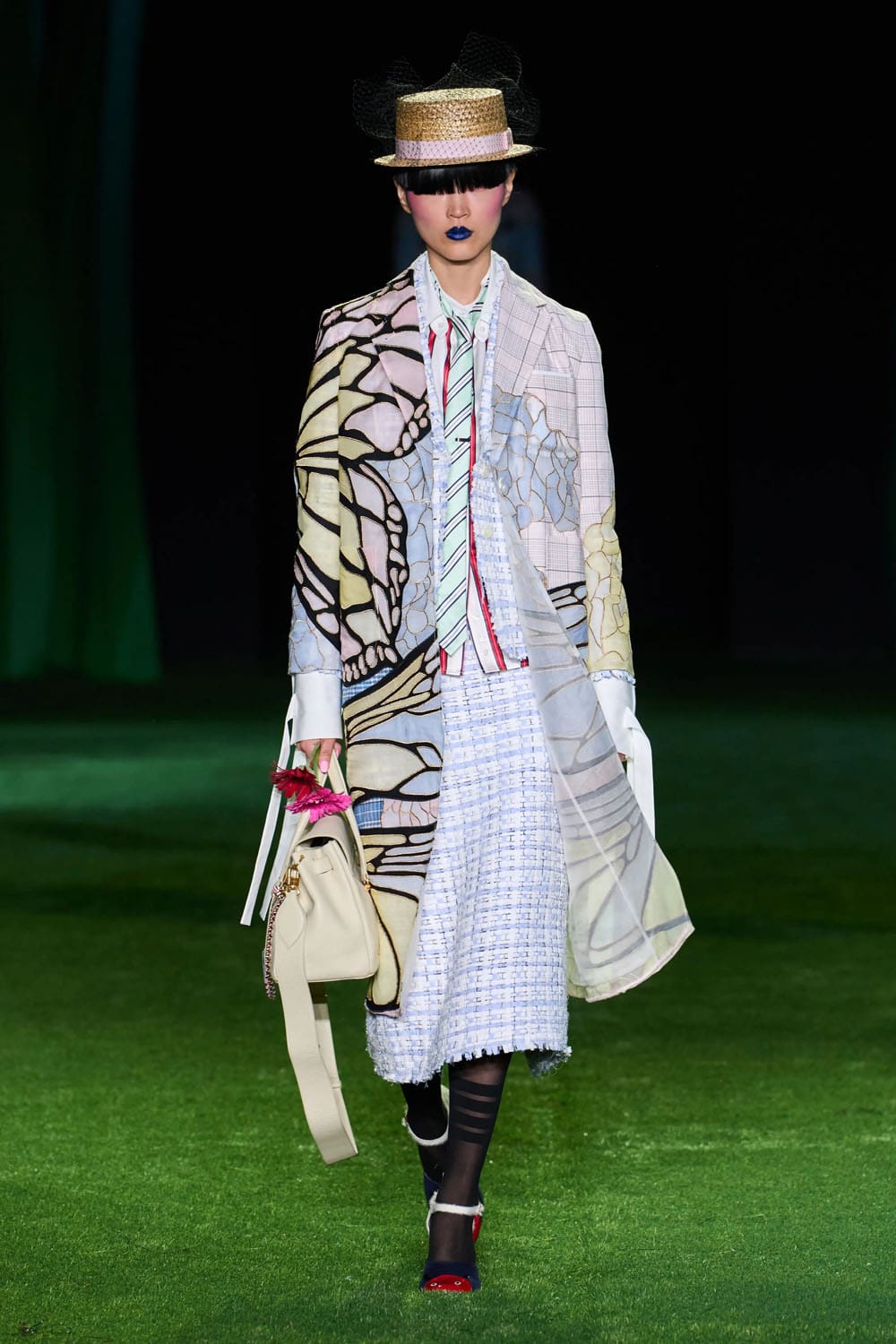
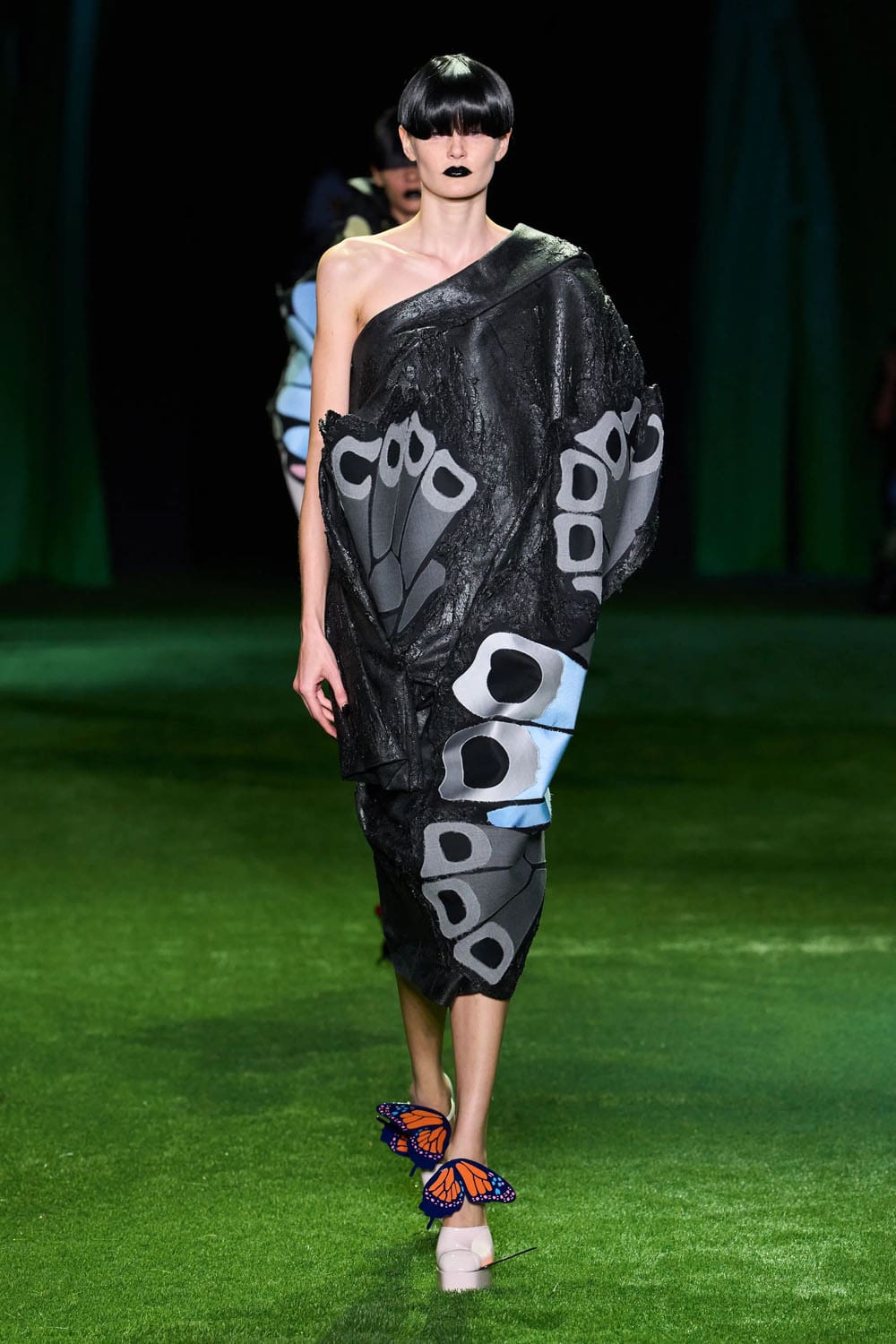
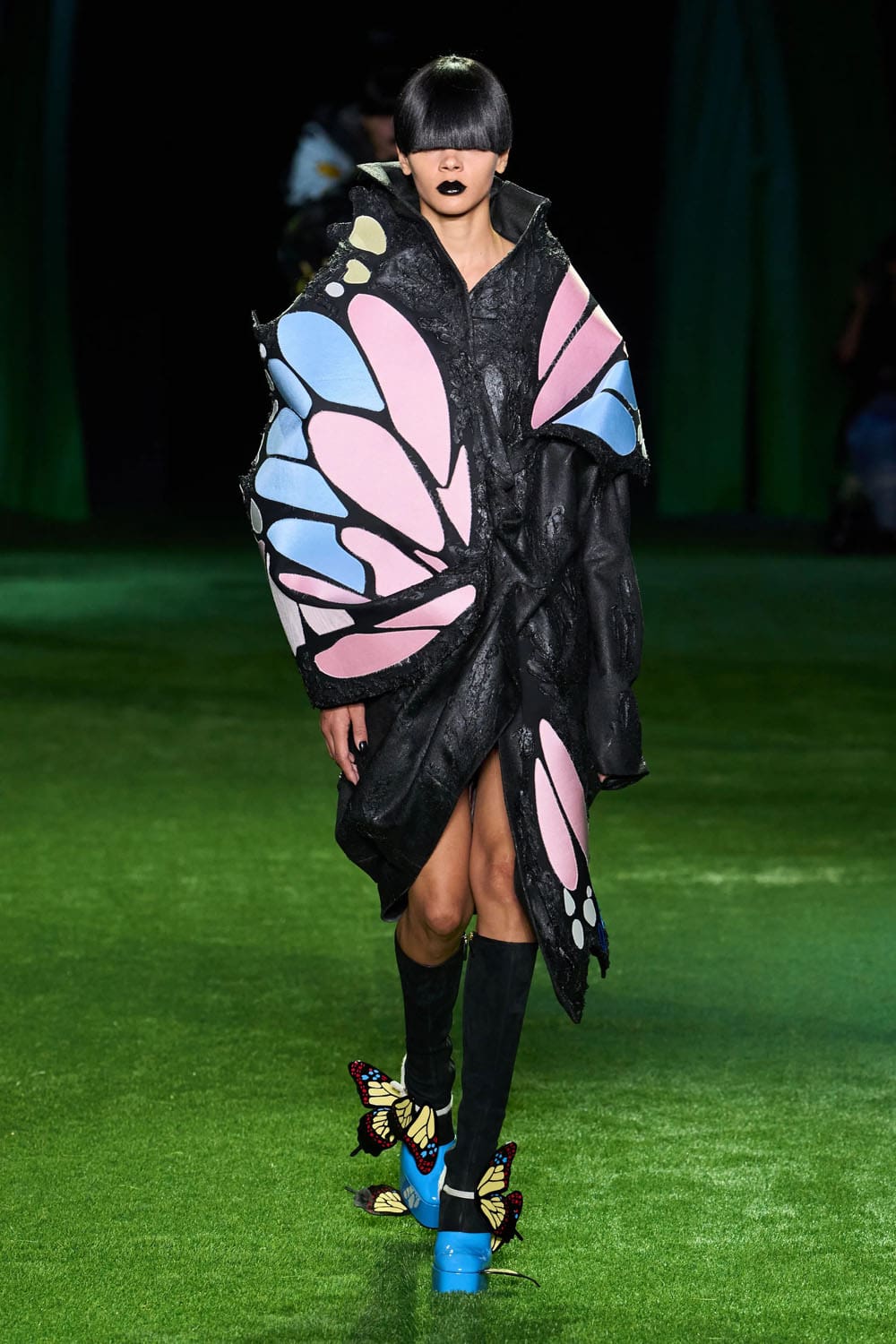
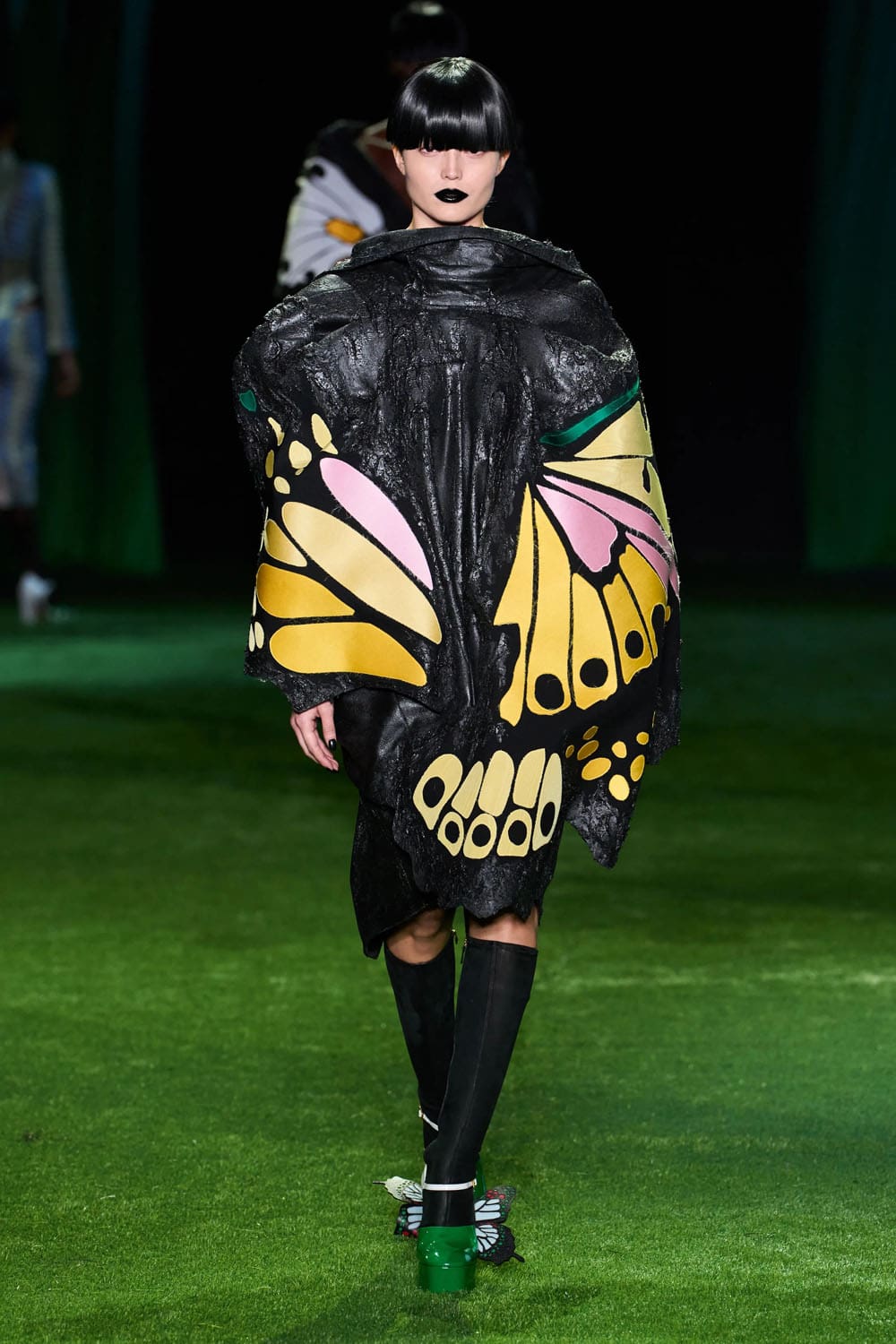
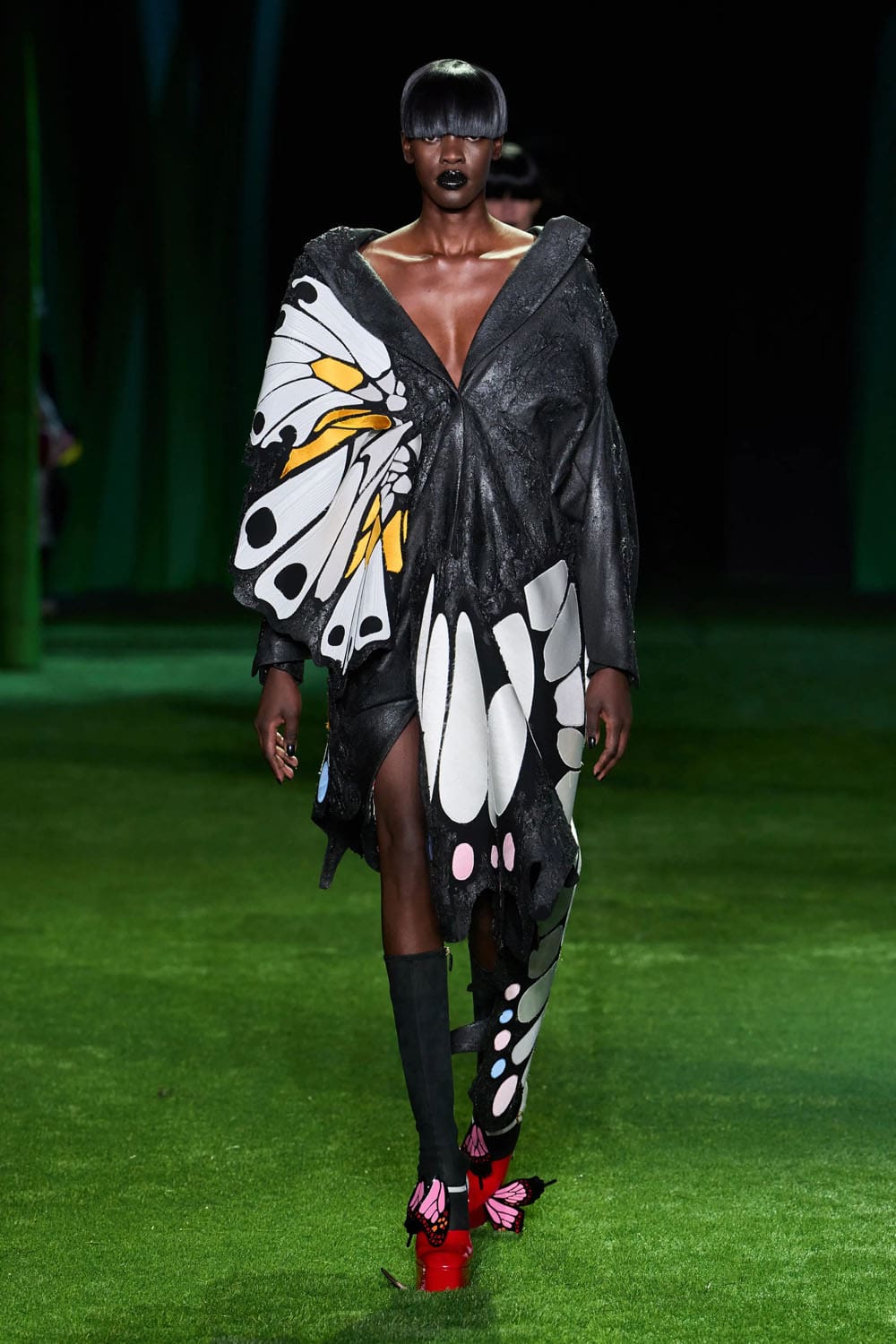
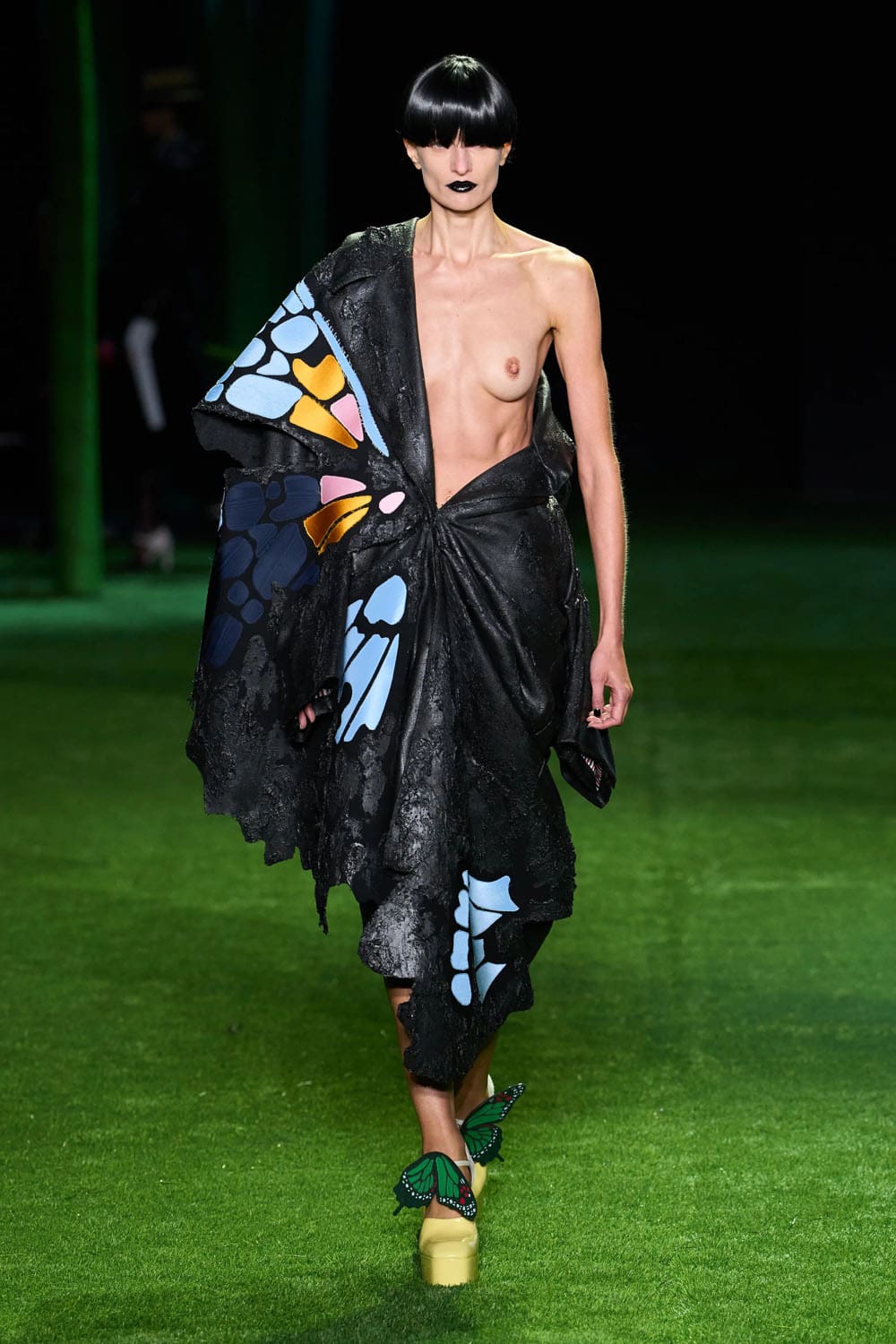
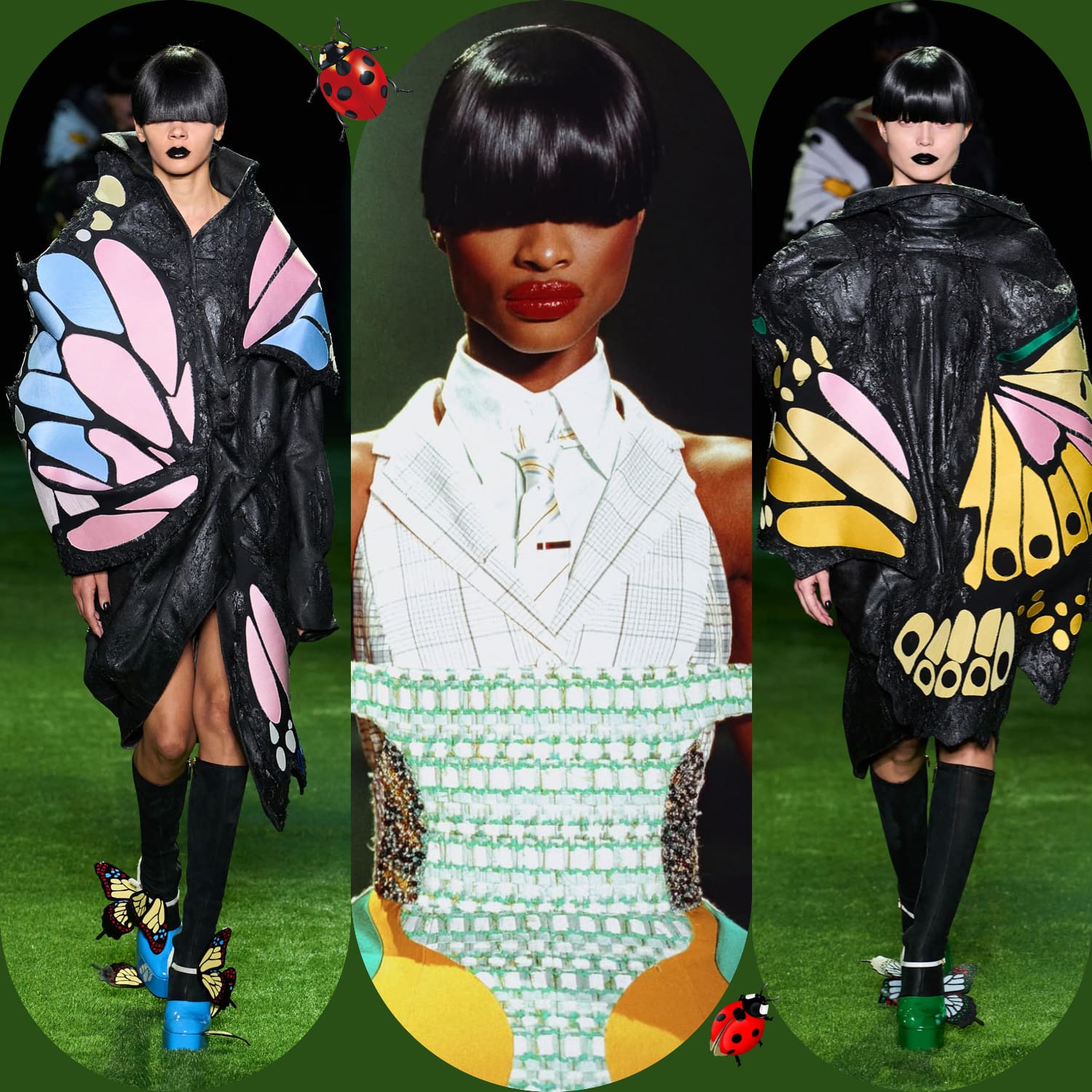
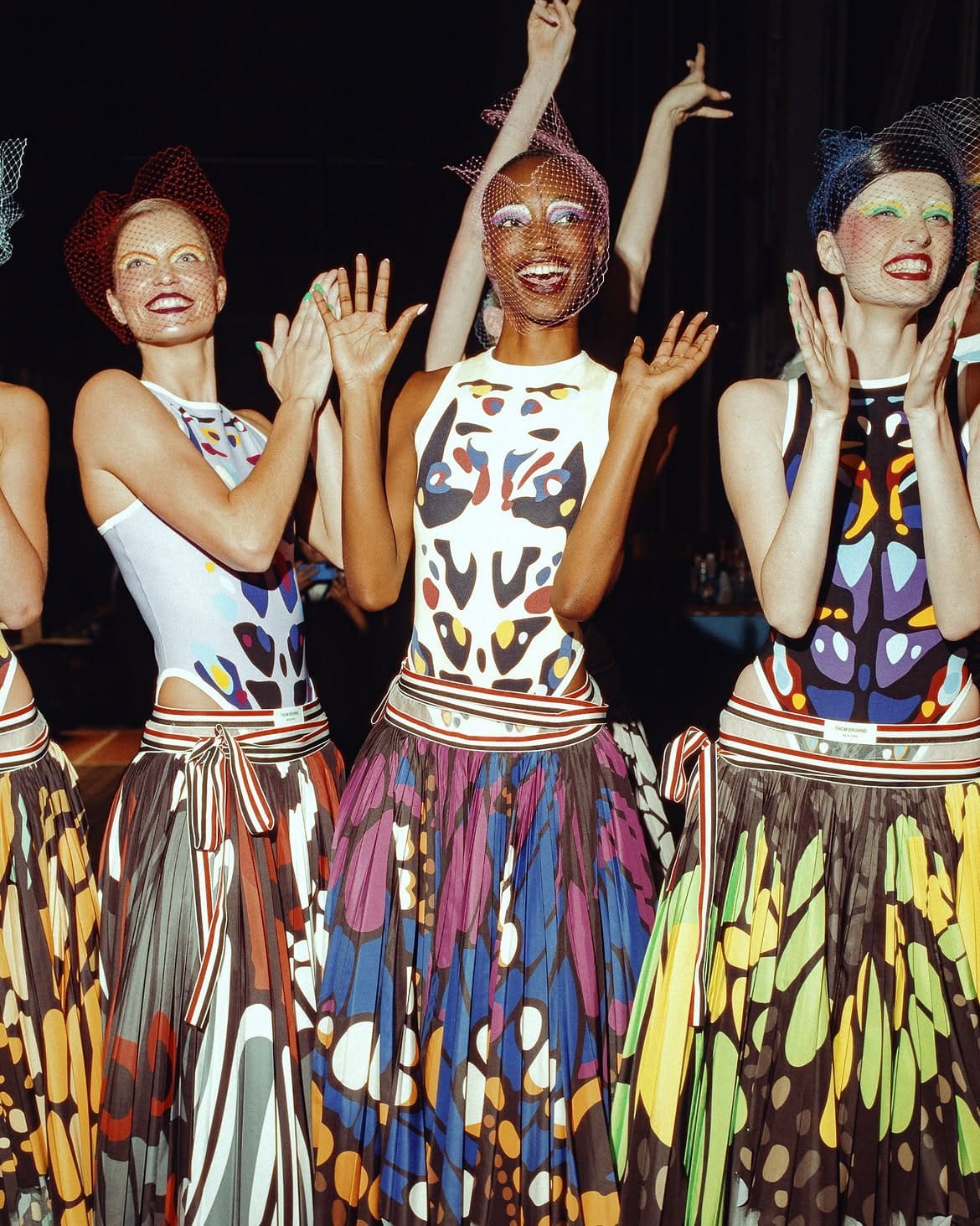
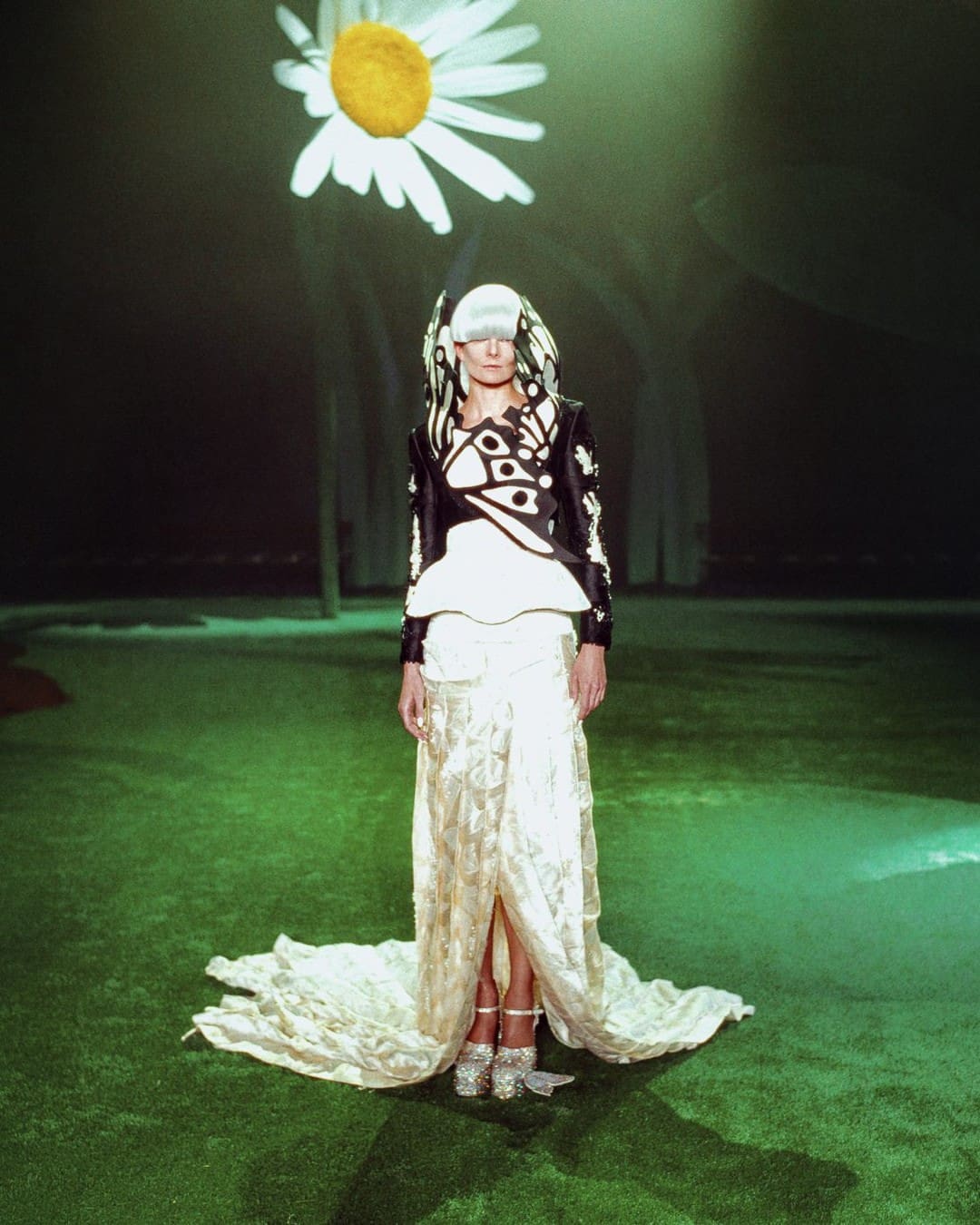
As the narrative reached its zenith, dusk settled across the meadow. Cocoon-like enveloping coats in crinkled, soot-textured black appeared, dramatically framed by monumental butterfly wings pieced into the heavy fabric. On one silhouette, soft pastel panels of sky blue and baby pink bloomed across the lapel and hem; on another, warm monarch-yellow, peach, and cream wings unfurled asymmetrically across the shoulder, echoed even down to winged boots fluttering at the ankles.
The Butterfly Returns
At last, the chrysalis stirred. The model nudged inside at the opening re-emerged into the light, shedding her larval shell to reveal a vivid, multicolored butterfly. It was an unmistakable triumph of renewal.
Browne’s garden proved to be neither pastoral cliché nor cold entomological study. It was a celebration of transformation: taking the humble, creeping forms of the earth and elevating them through meticulous human craft into something that commands the sky. In Browne’s universe, life is a garden where even the most rigid gray wool can grow wings, shed its past, and take flight.
See All Looks Thom Browne Women’s Spring 2027