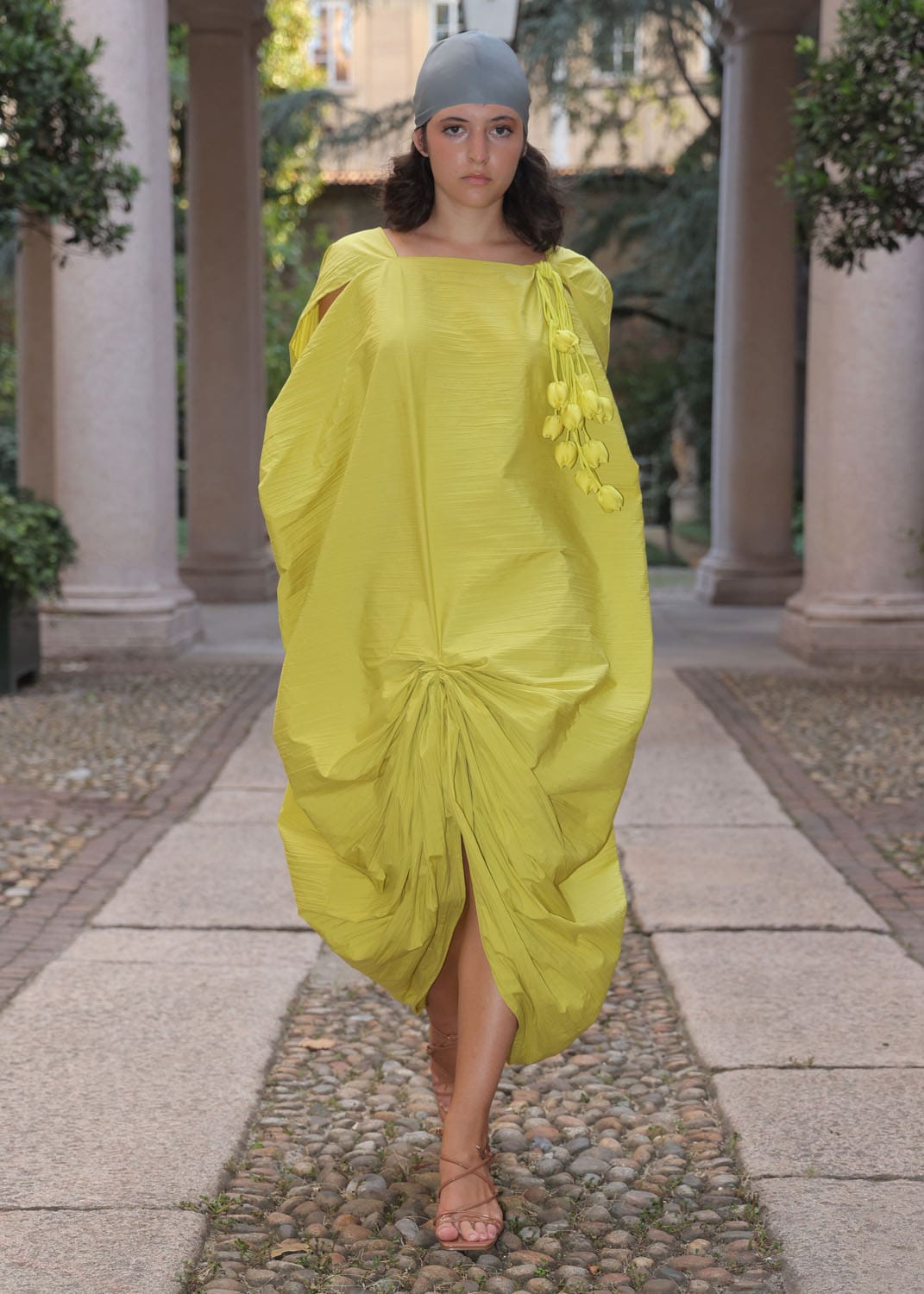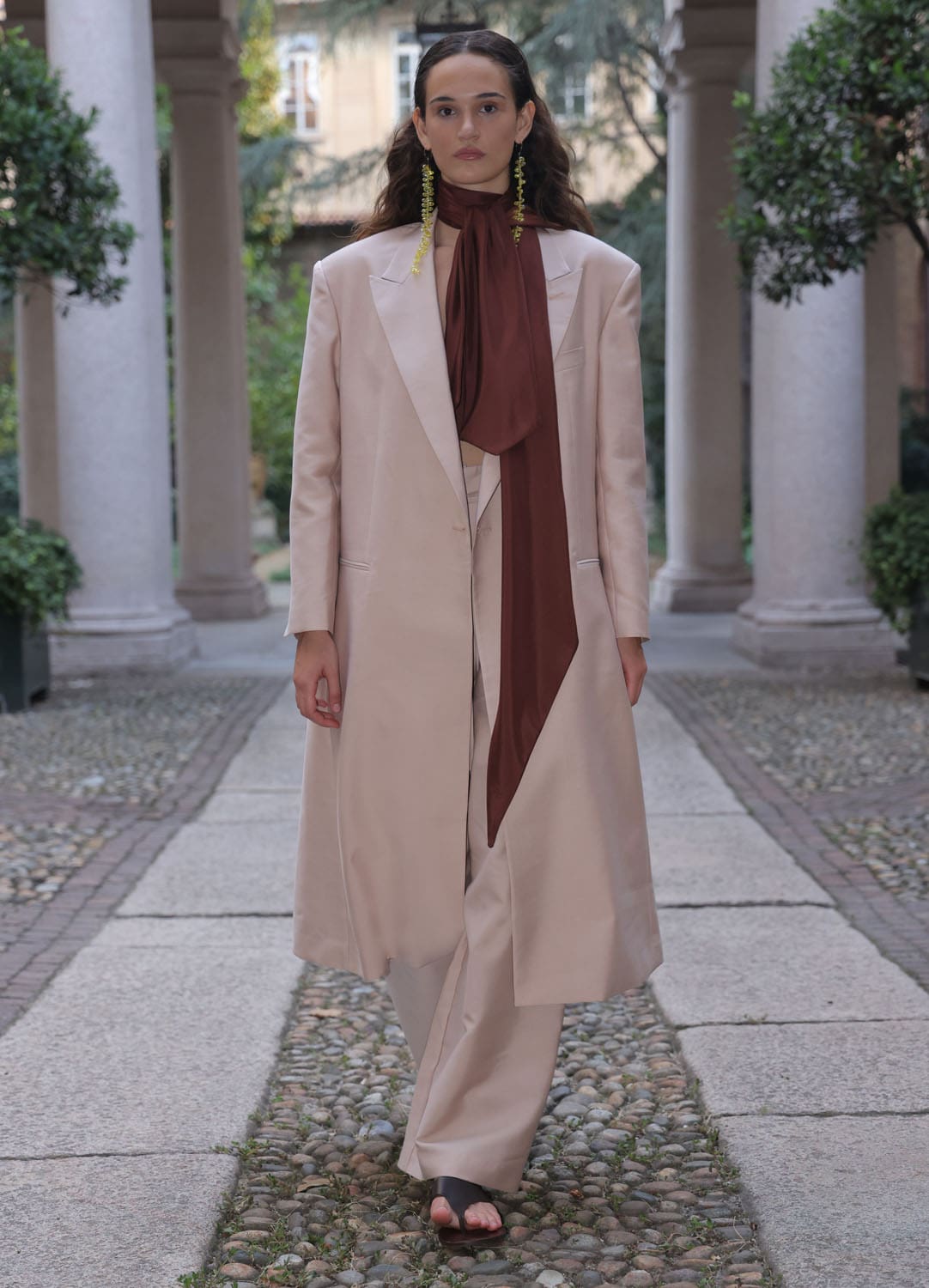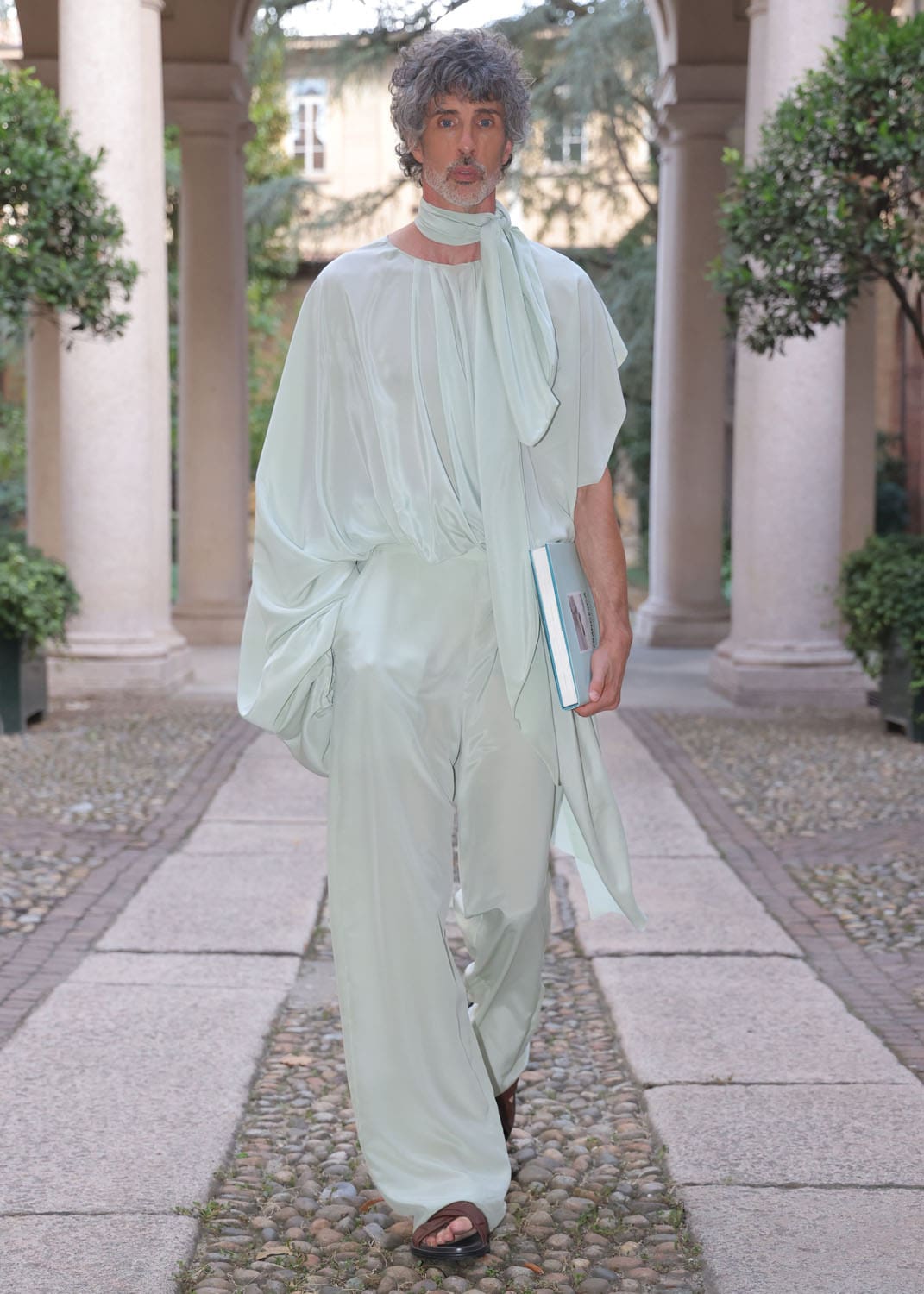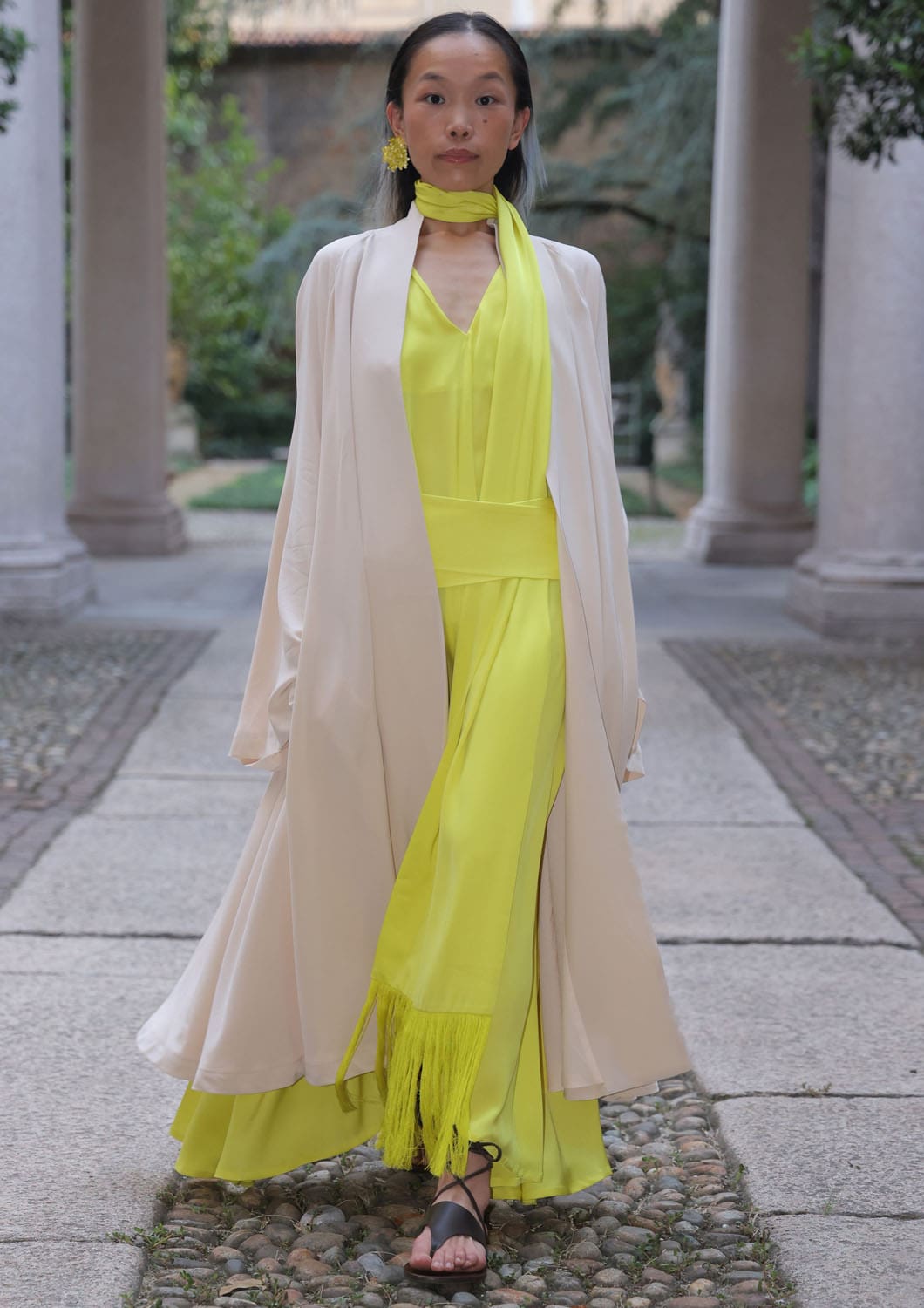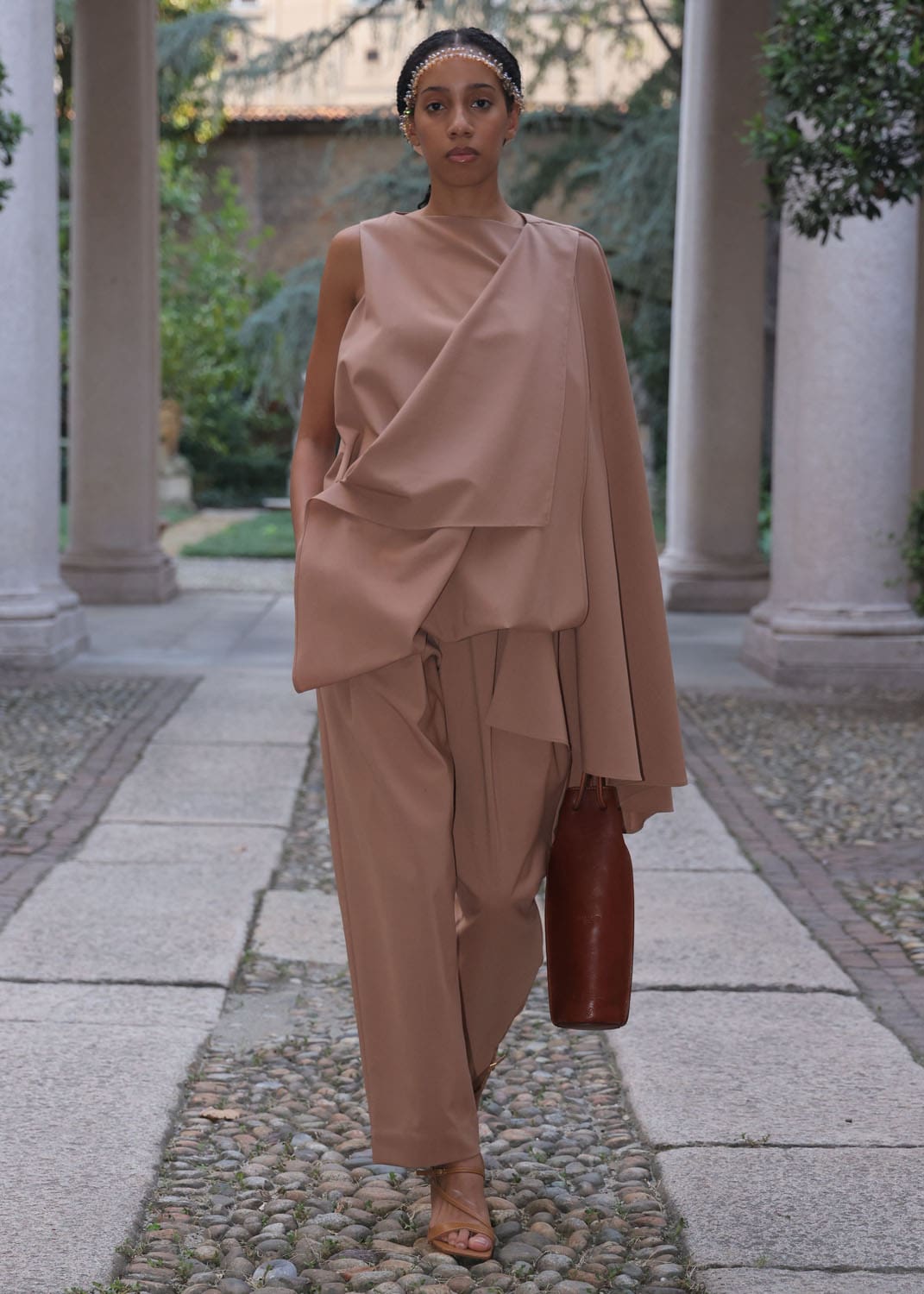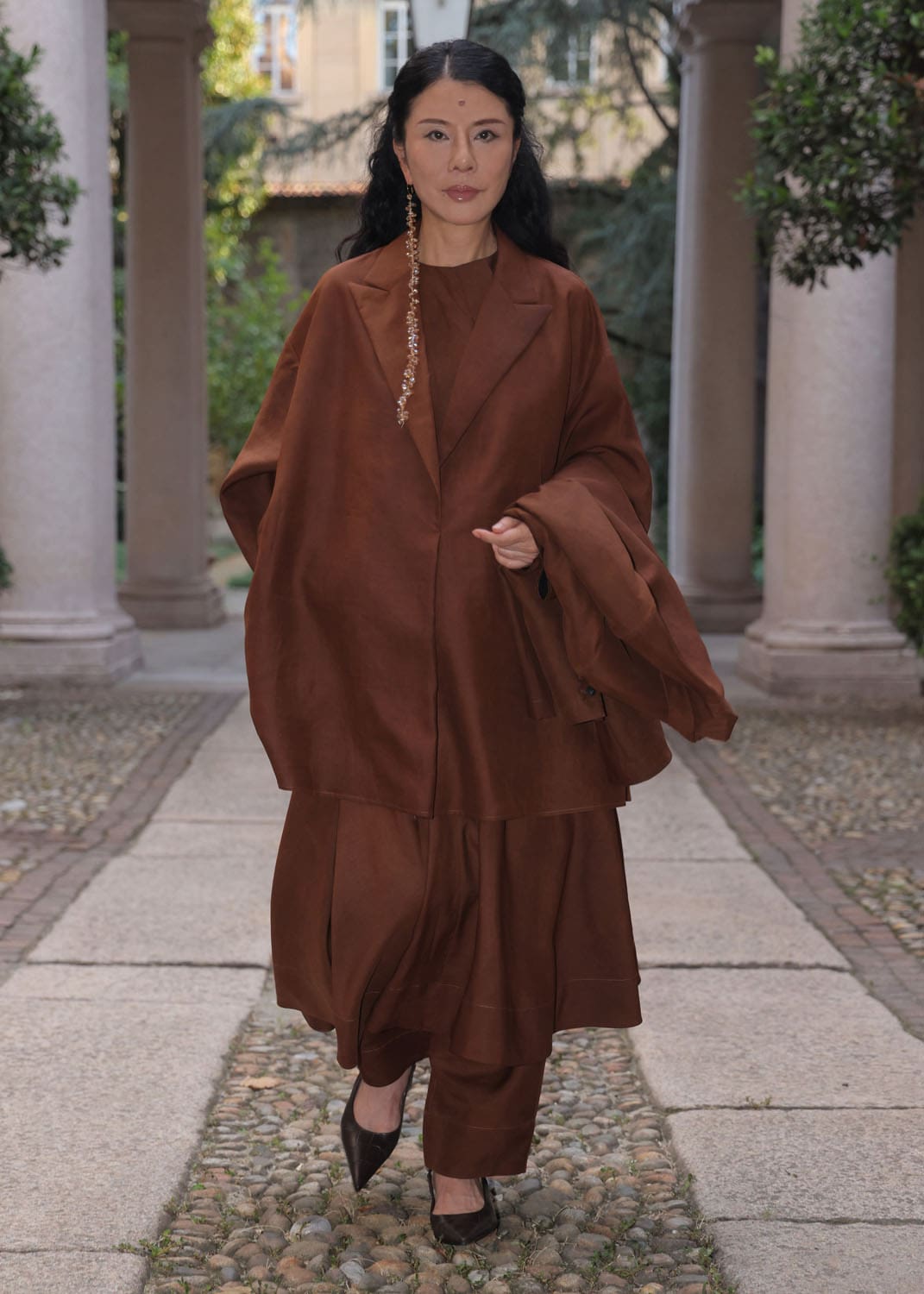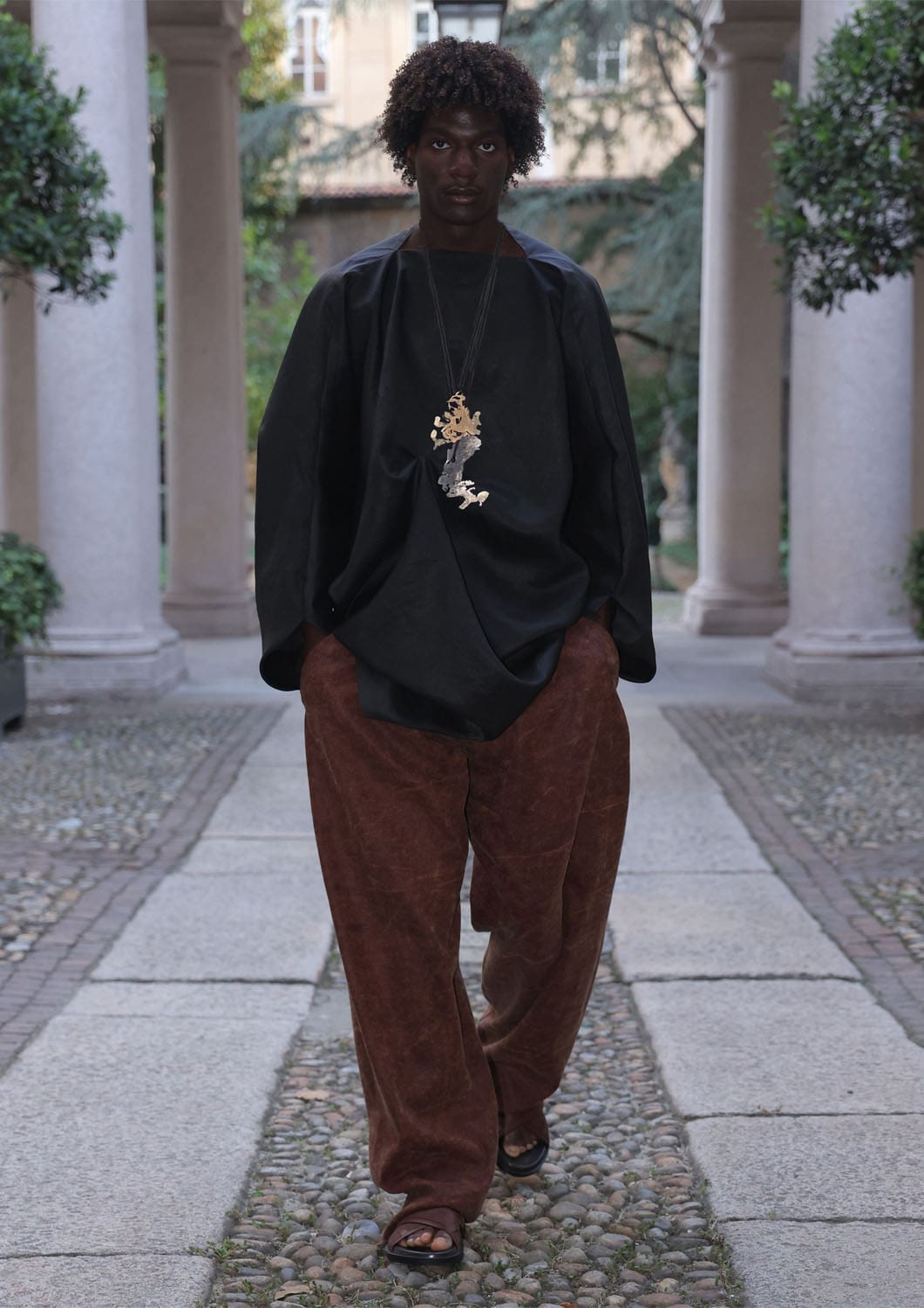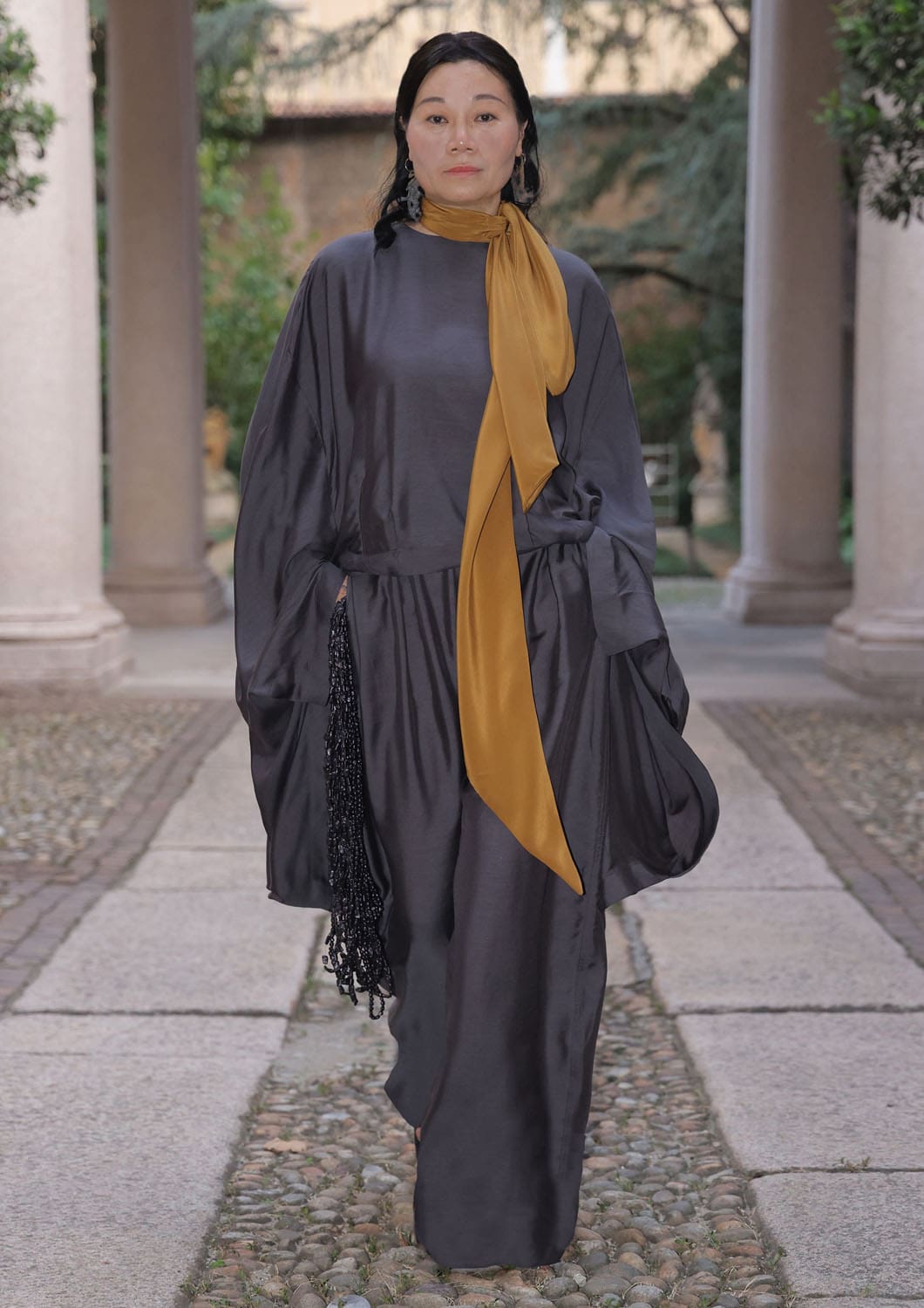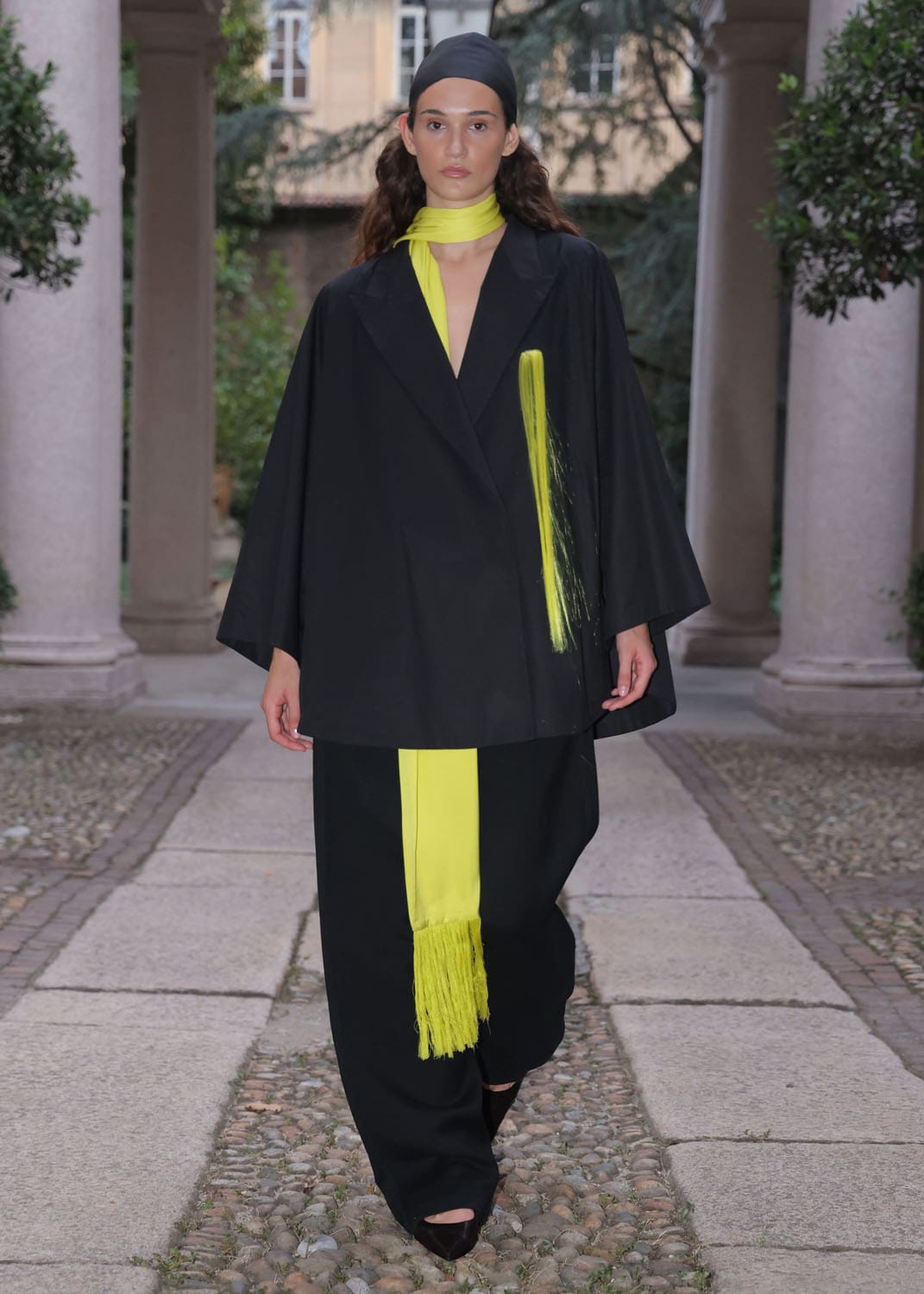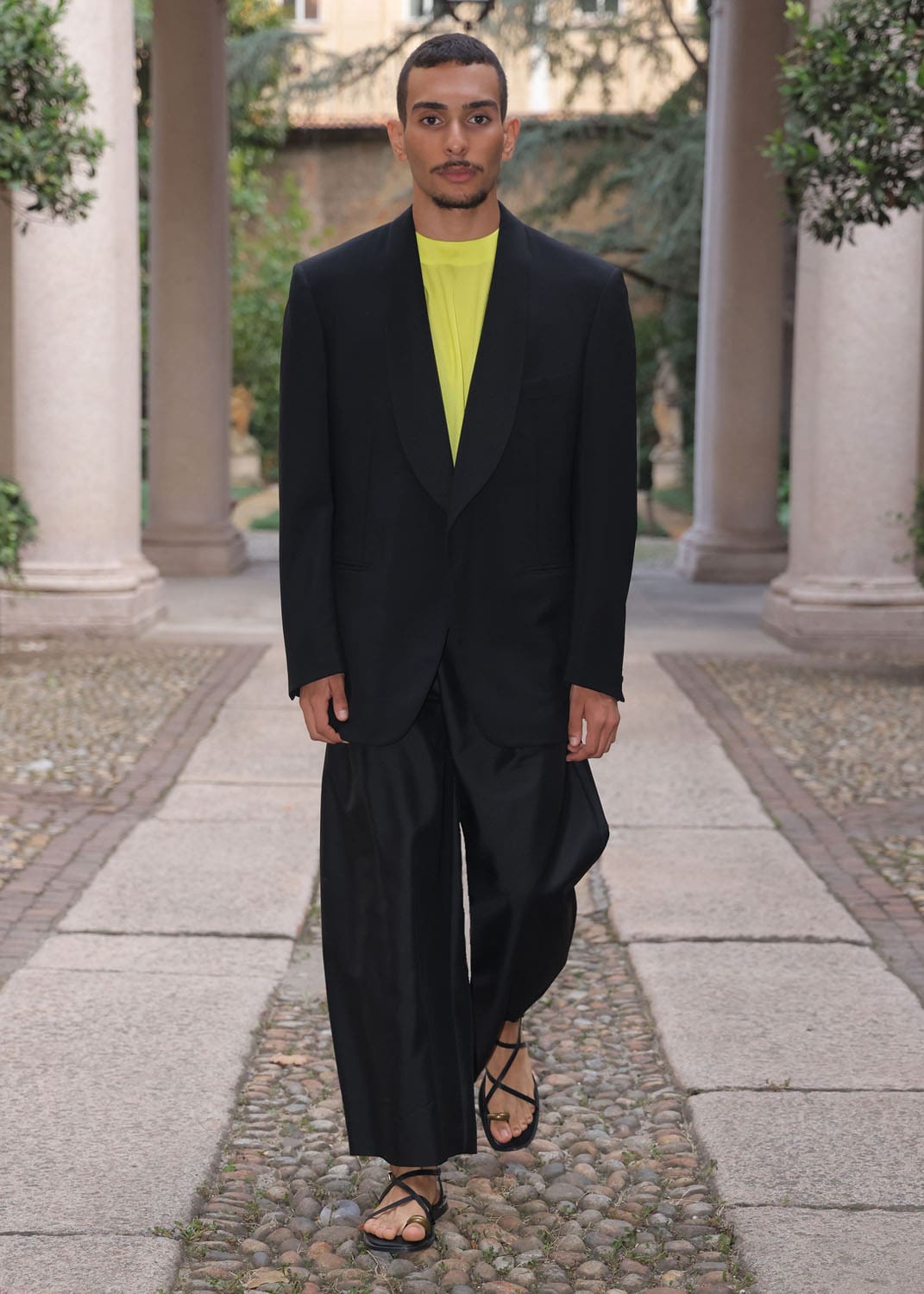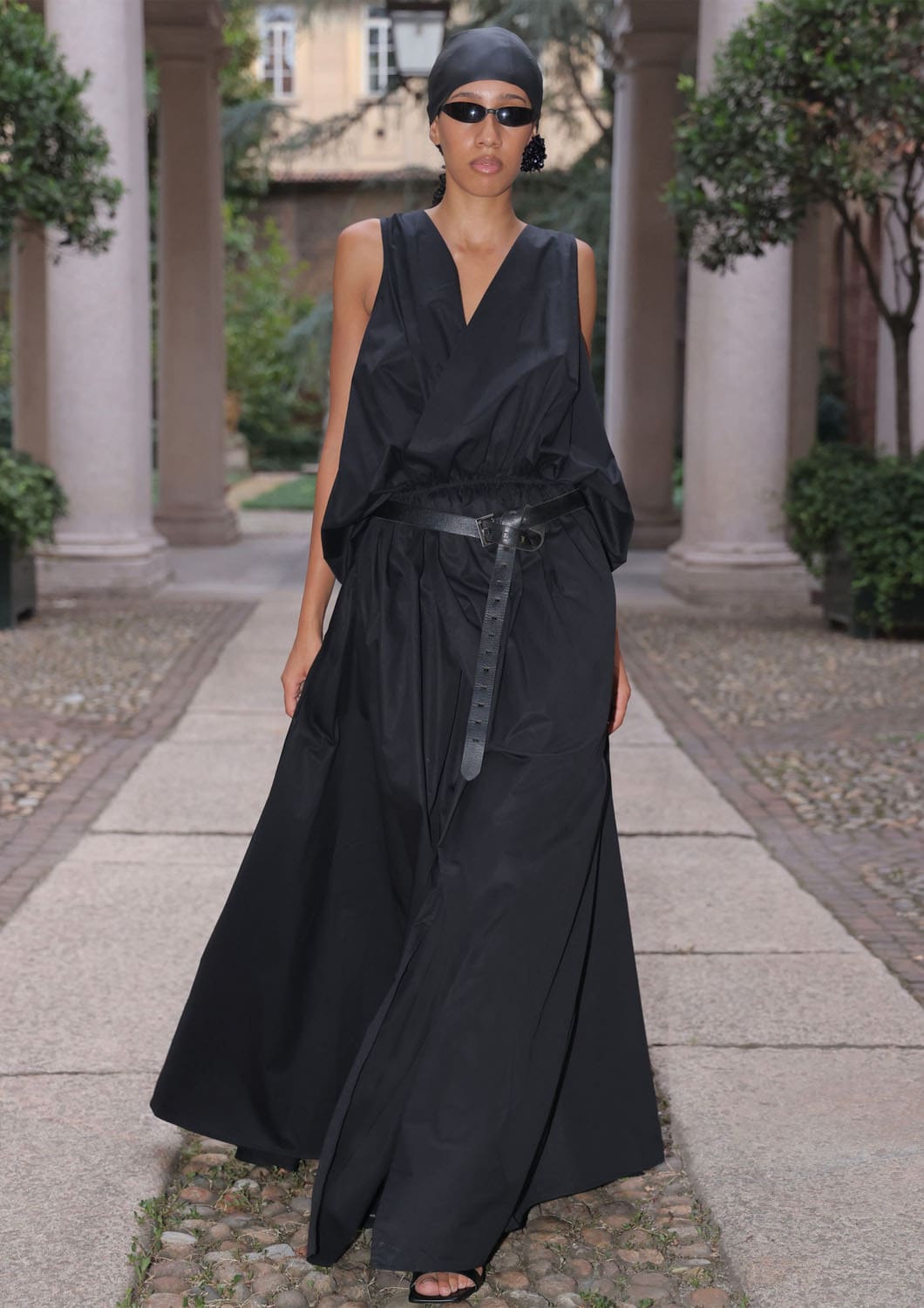
Alberto Zambelli Spring Summer 2027 “The Geometry of Pleats”. Story by Eleonora de Gray, Editor-in-Chief of RUNWAY MAGAZINE. Photo Courtesy: Alberto Zambelli.
The Architecture of Woolfian Independence
When Virginia Woolf asserted in 1929 that intellectual and creative autonomy demanded five hundred pounds a year and a room of one’s own, she was not writing a manual on interior decoration. She defined a spatial necessity for consciousness to exist uncompromised. Alberto Zambelli has taken this modern thesis and removed its drywall, translating domestic sanctuary into portable architecture for Spring/Summer 2027.
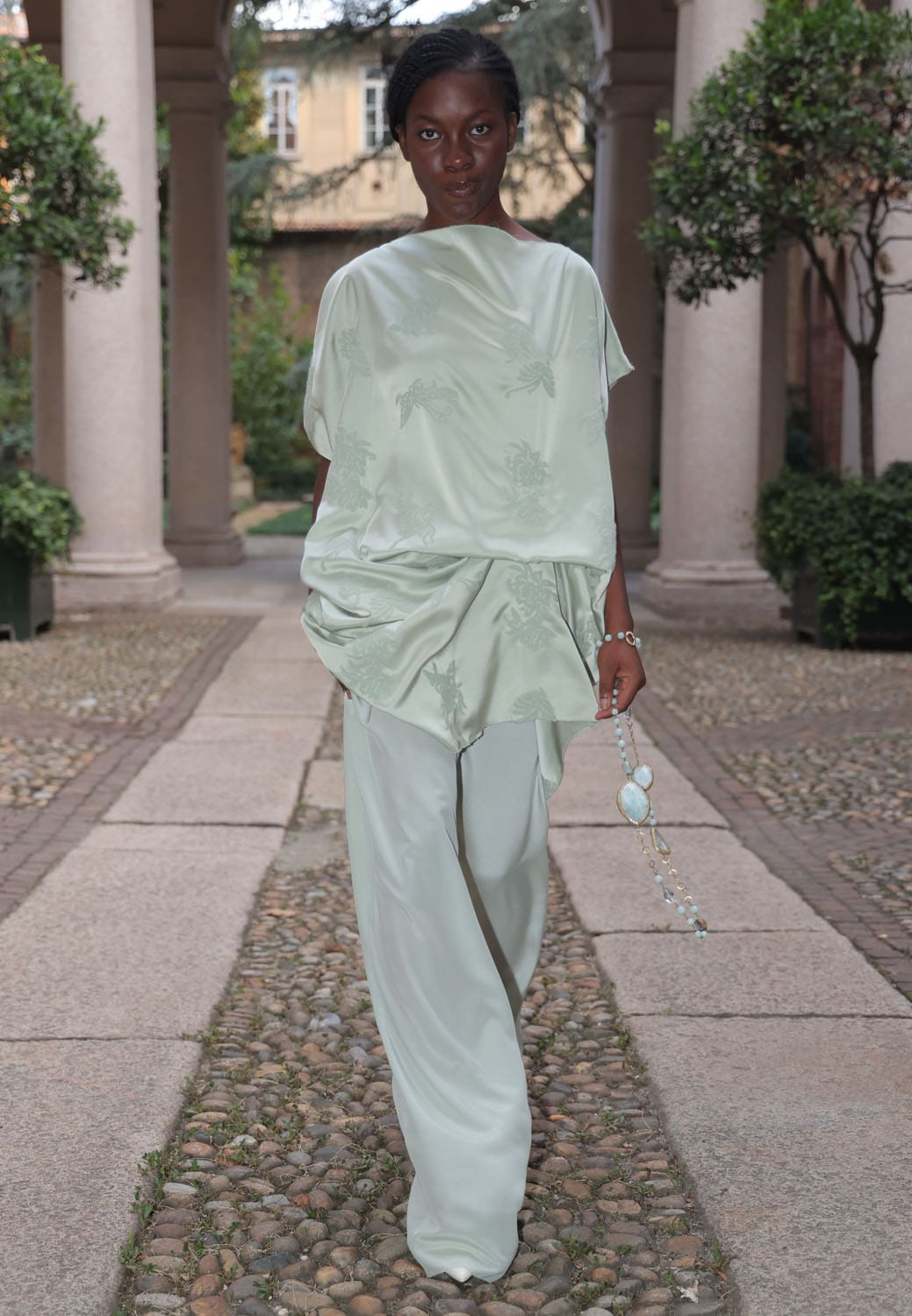
Titré T H E R O O M, the collection operates on a paradox: constructing boundary through detachment rather than enclosure. A room is not mortar or baseboards; it is the deliberate perimeter where individual thought takes physical shape. In a cultural climate overwhelmed by visual static and frantic brand posturing, Zambelli’s sartorial sanctuary arrives as an act of calculated self-determination. Here, independence wears pristine lime white, rejecting the claustrophobic tightness of conventional tailoring in pursuit of contemplative amplitude.
The Substance of Subtraction: Emptying the Canvas
To fully grasp Zambelli’s construction, one must leave Bloomsbury and encounter the ancient Chinese principle of 空 (Kōng)—the void pregnant with latent energy. In classical ink wash landscapes, the untouched silk does not denote absence; it constitutes the very air through which mist travels and breath circulates. Zambelli employs fabric under the exact same discipline. Subtraction is not a stylistic gimmick of minimalism, but a rigorous structural demand.
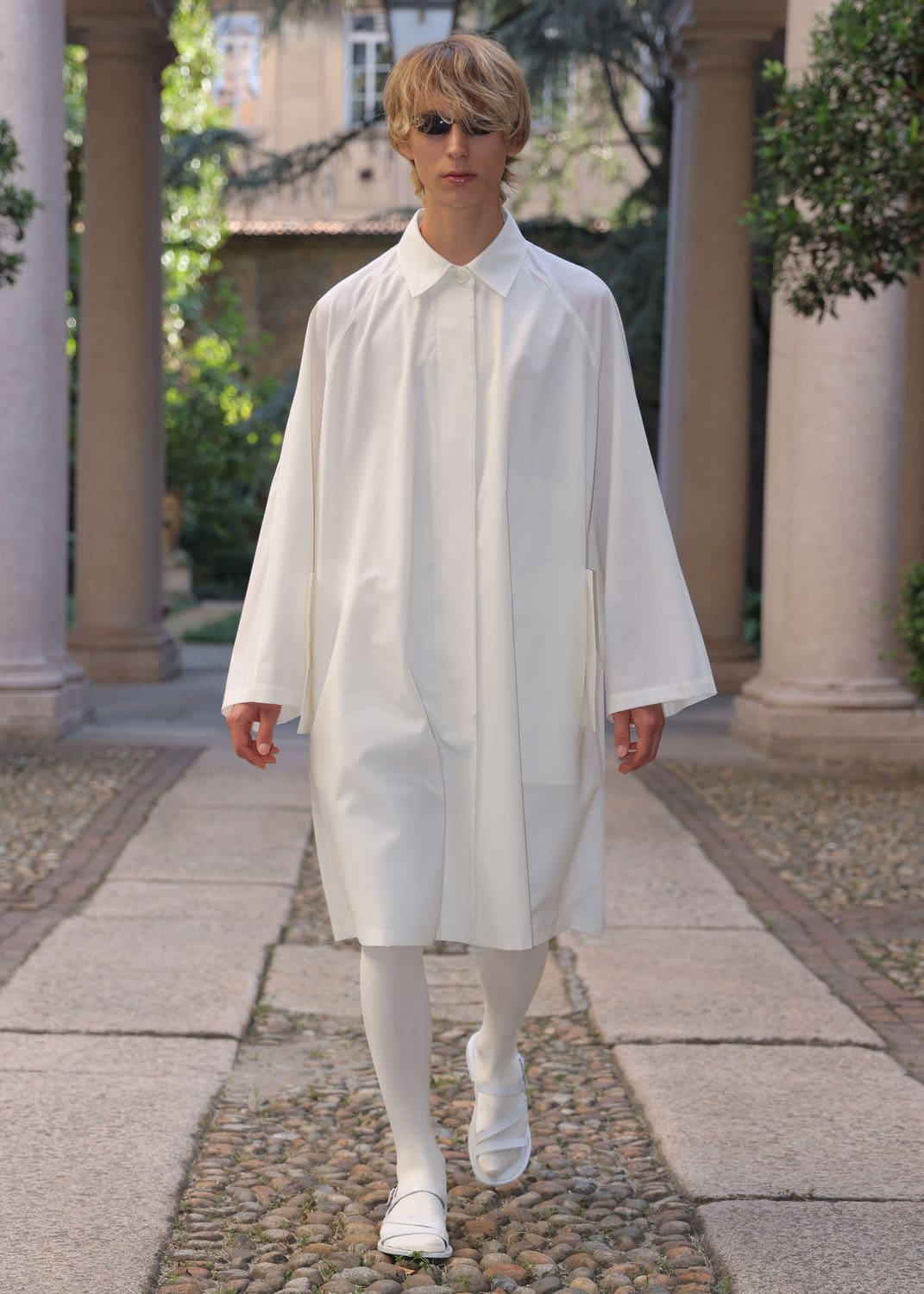
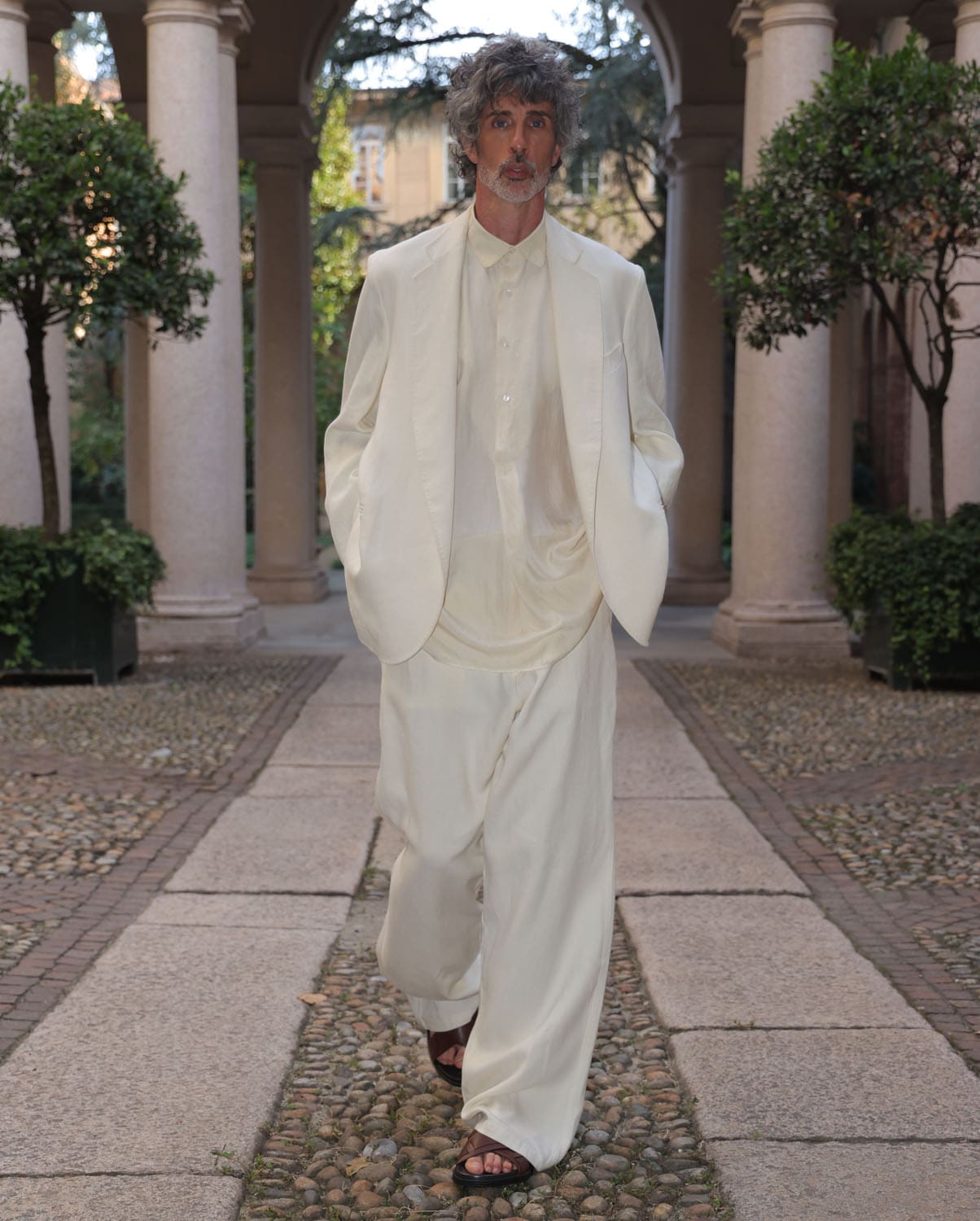
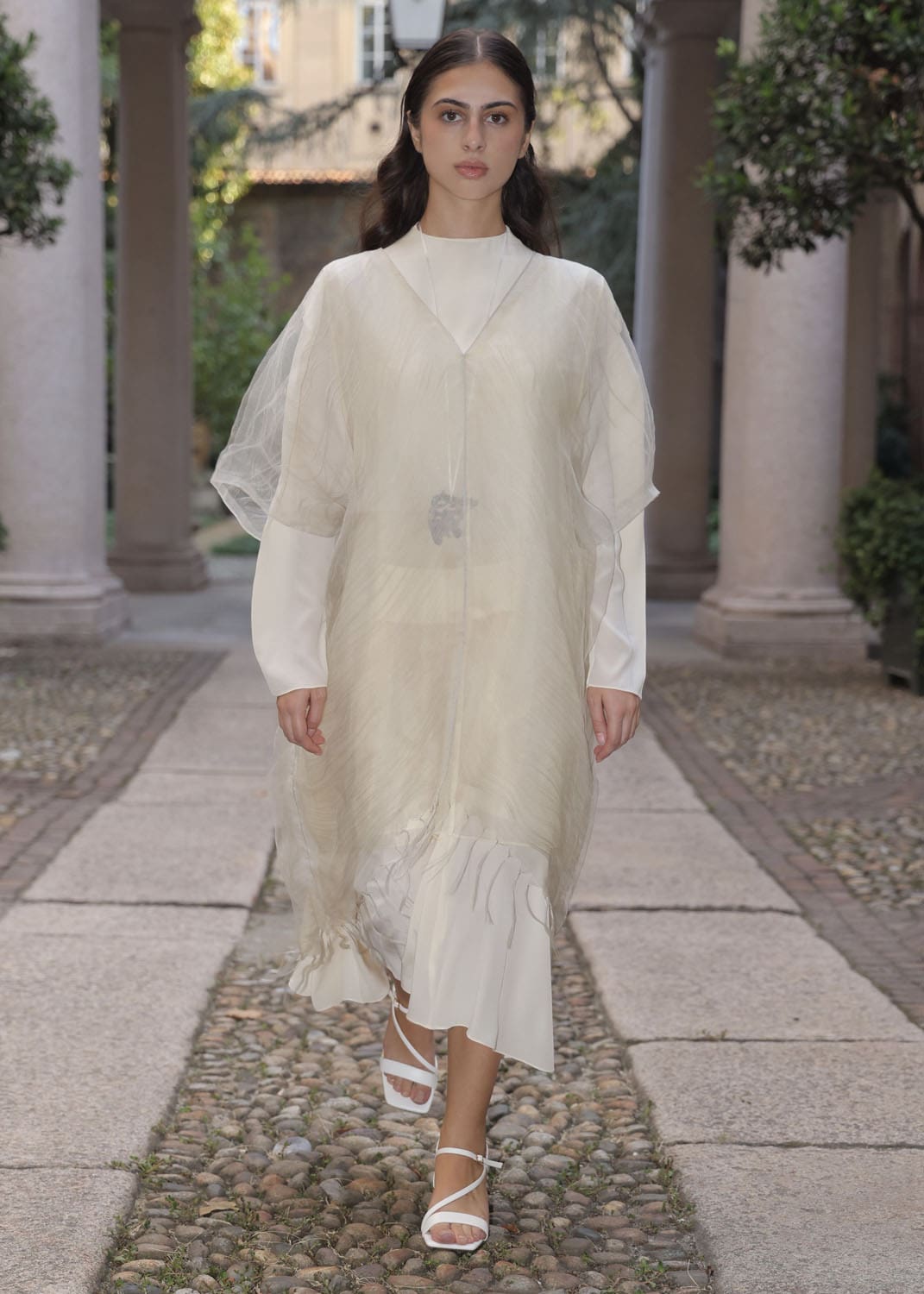
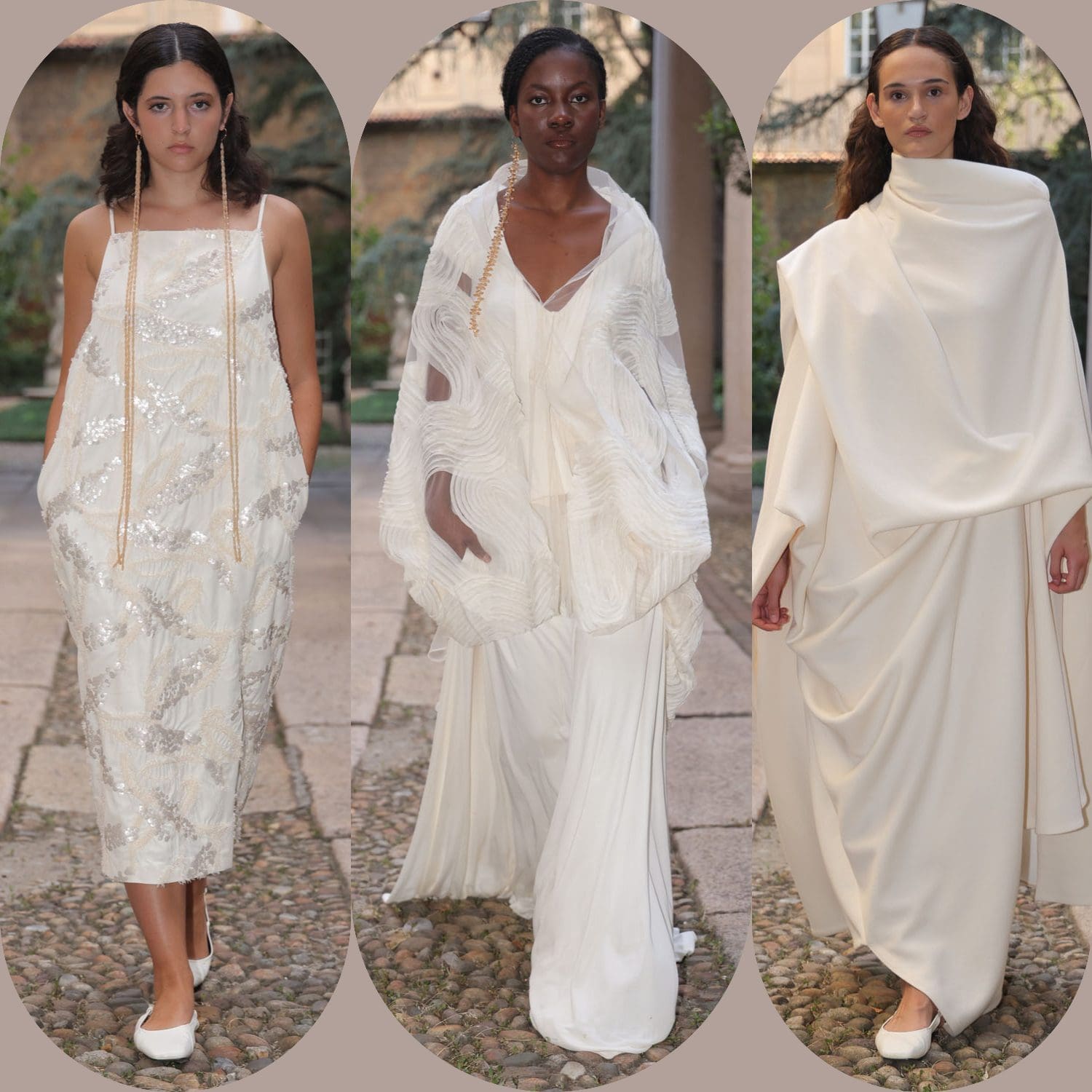
By allowing generous margins of air between epidermis and textile, garments cease to grip the anatomy. Instead, they frame the void. A fluid coat cut from technical Fresco wool illustrates this equilibrium: tailored with a precise, pointed collar, it falls into a sweeping, pristine A-line bell that hovers over matching white hosiery and pristine leather slides. The body is sheltered without being trapped, existing inside a private courtyard of silence and pure light.
Pleats, Scales, and the Weightless Cocoon
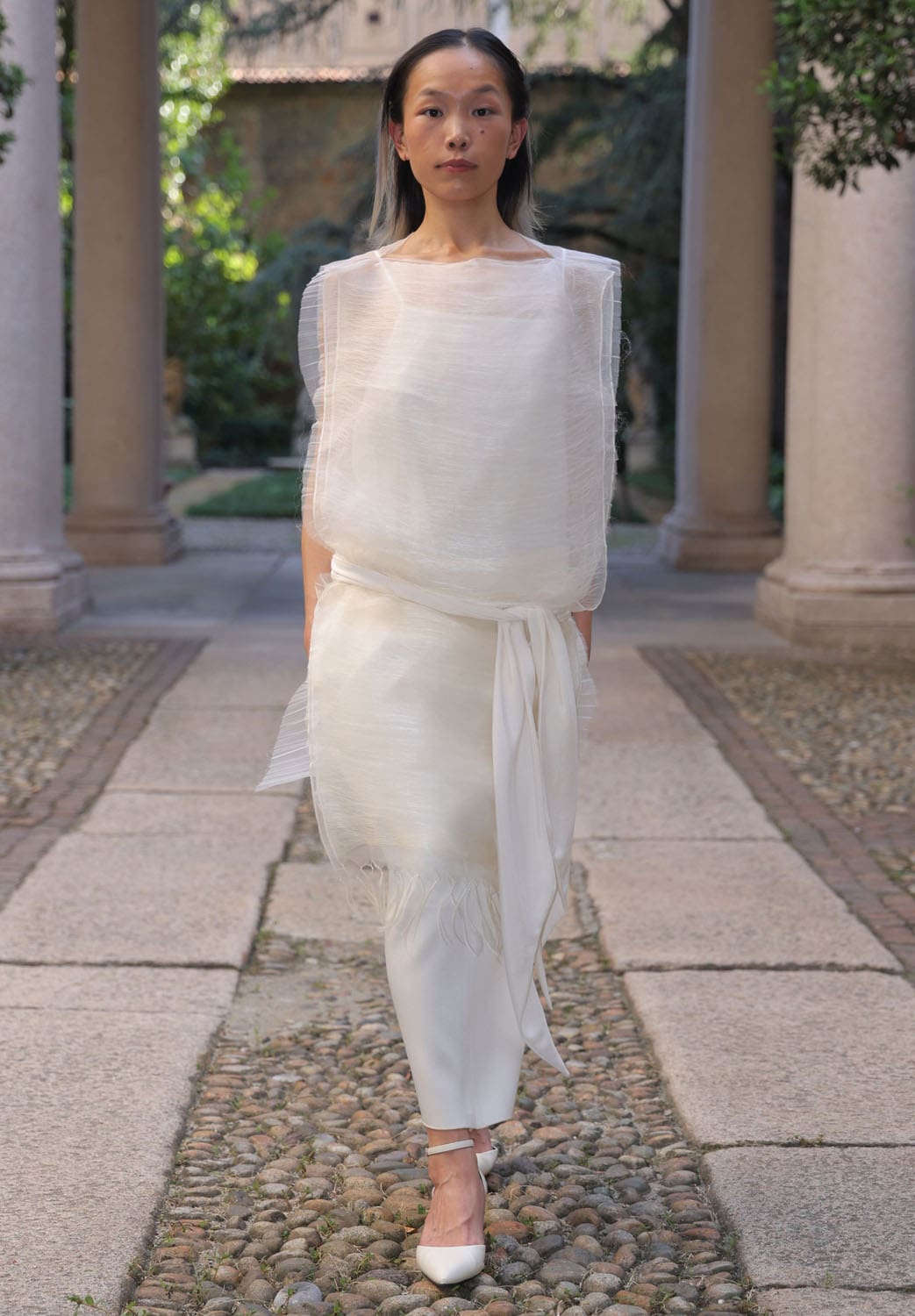
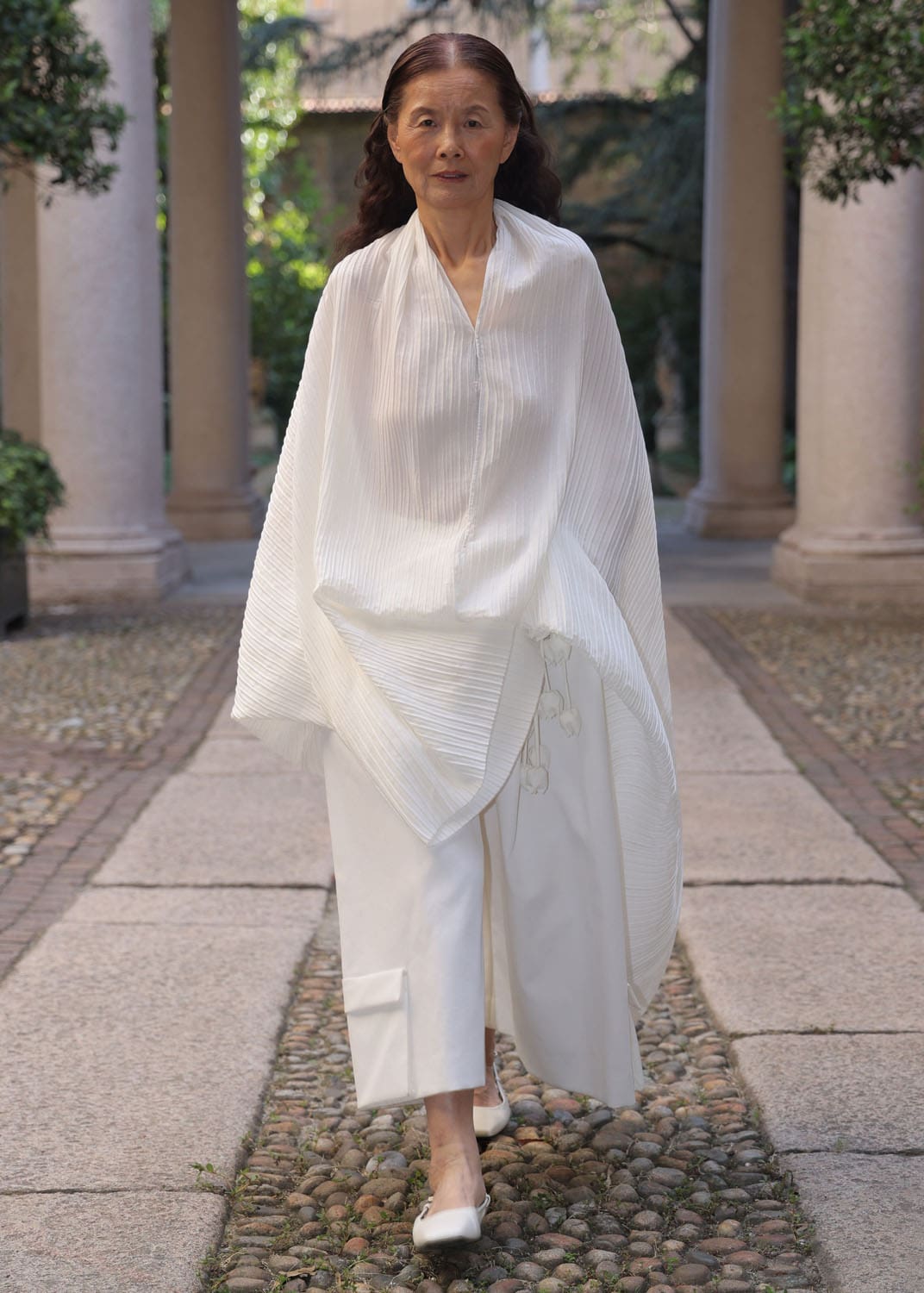
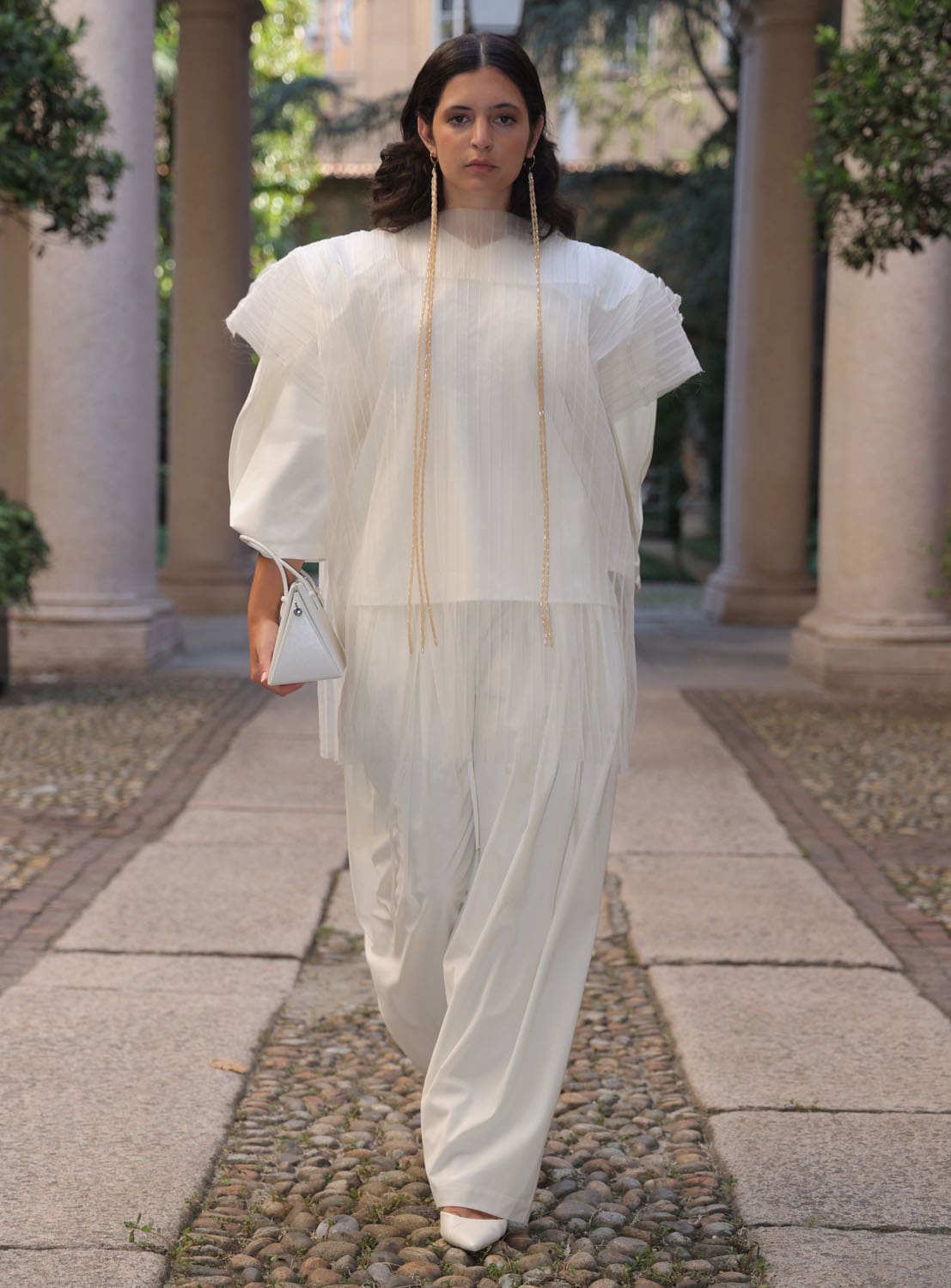
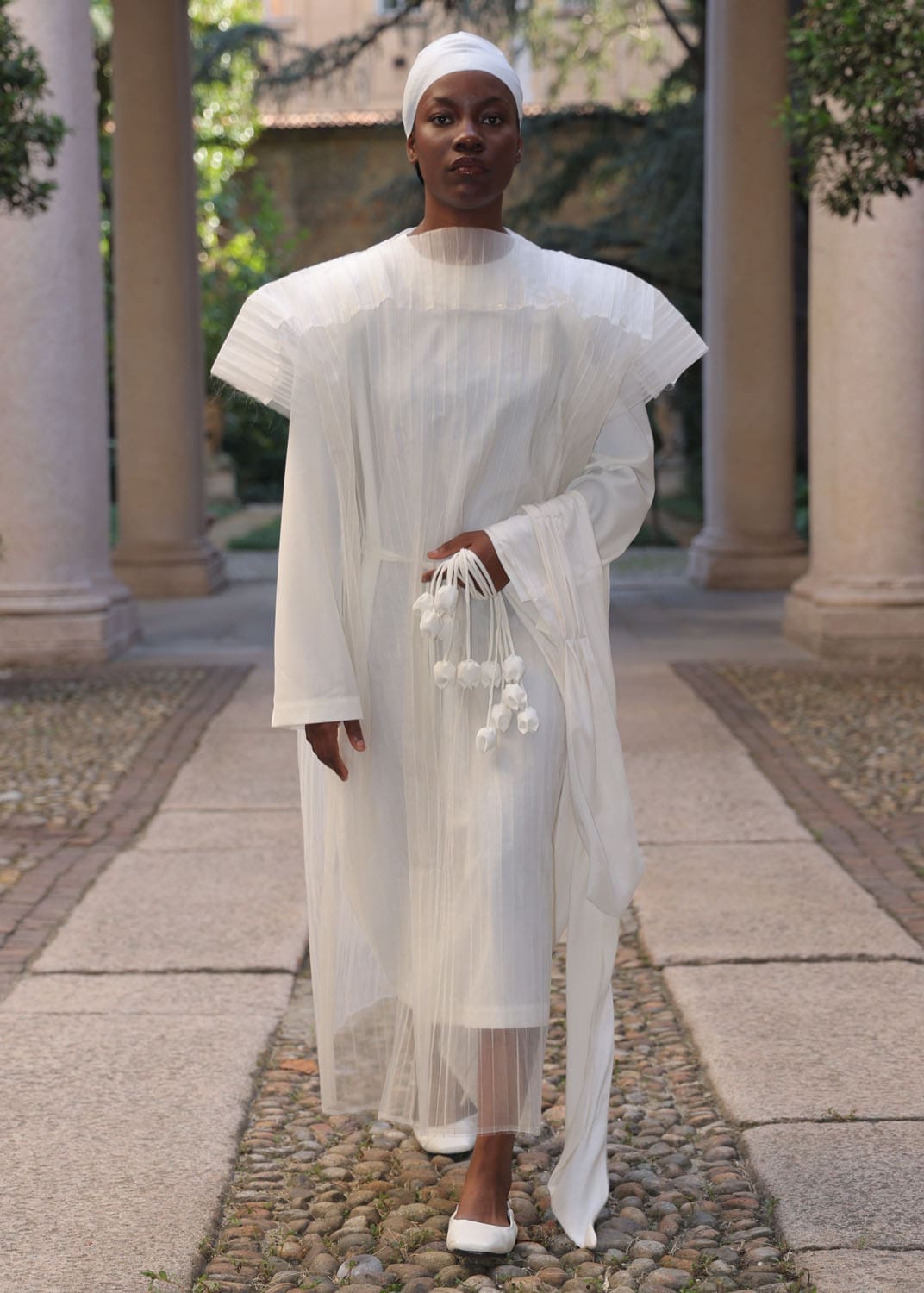
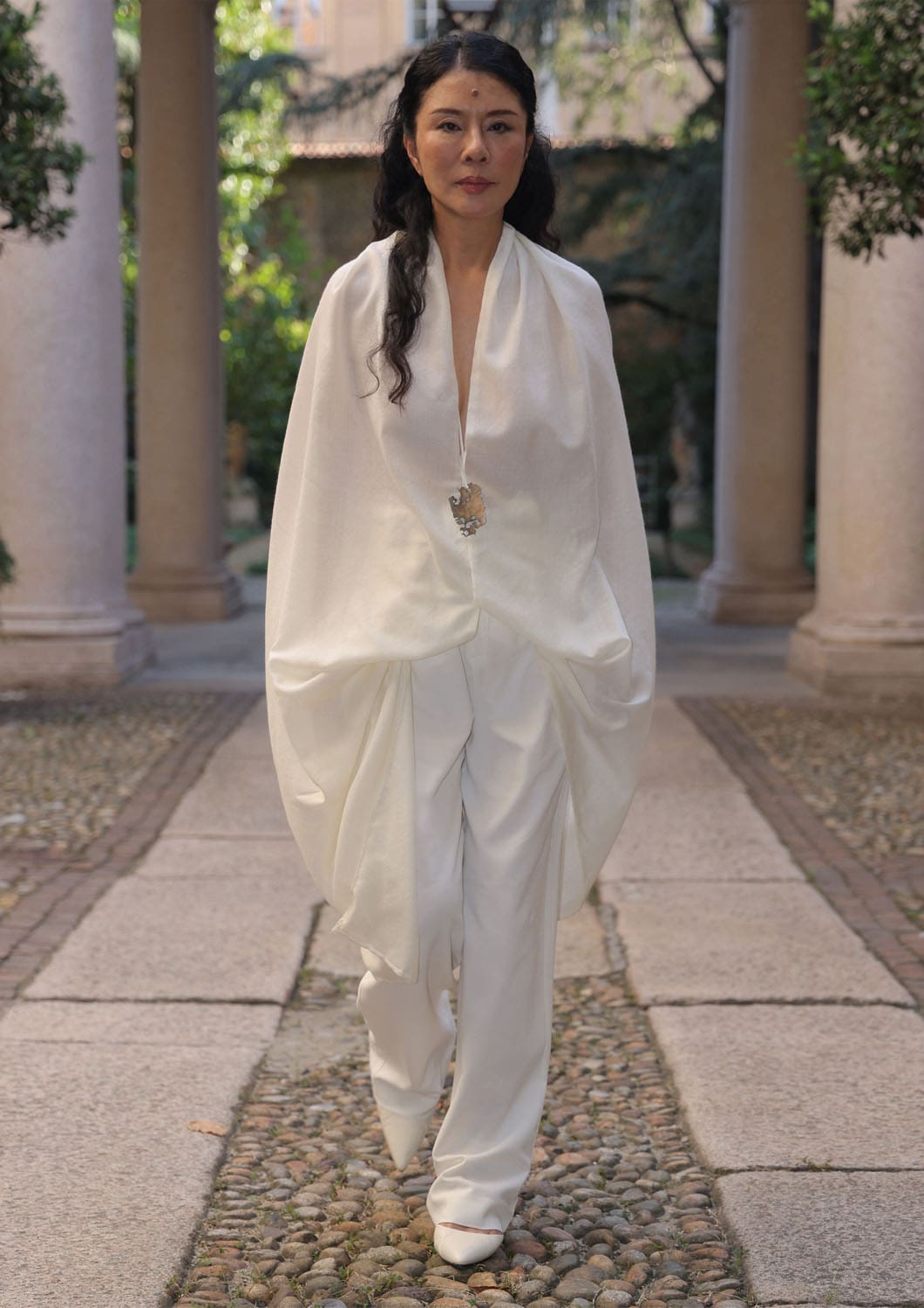
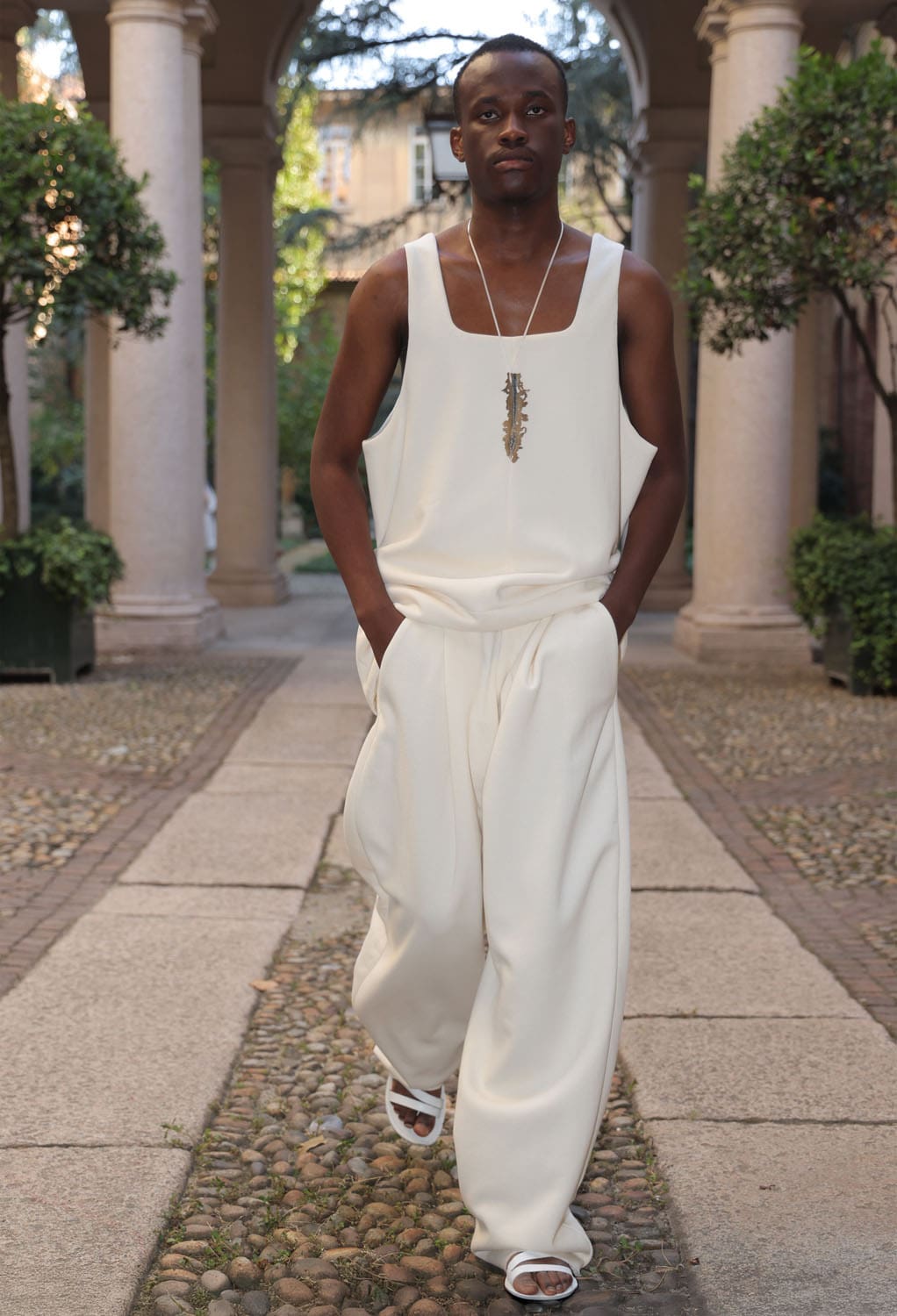
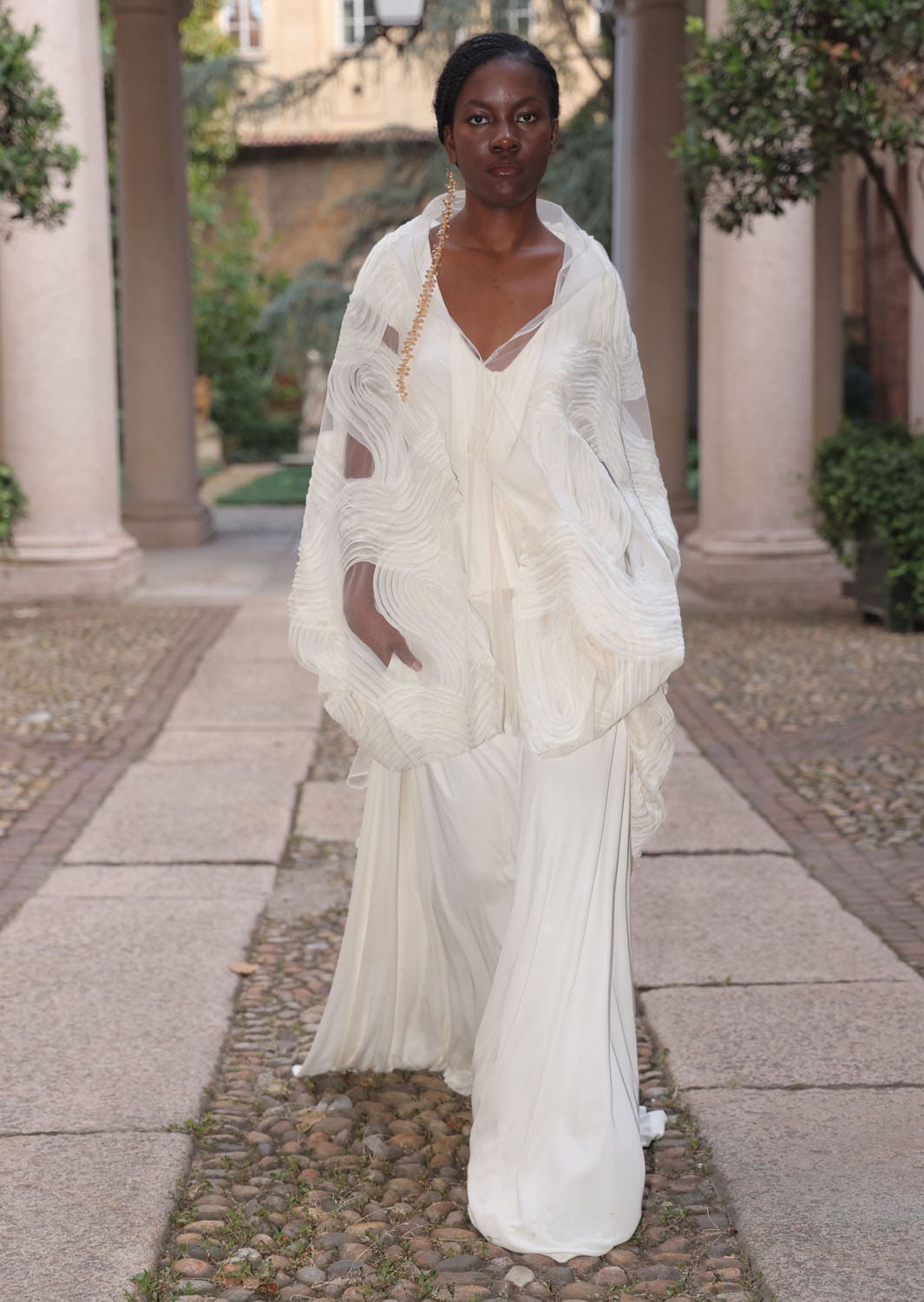
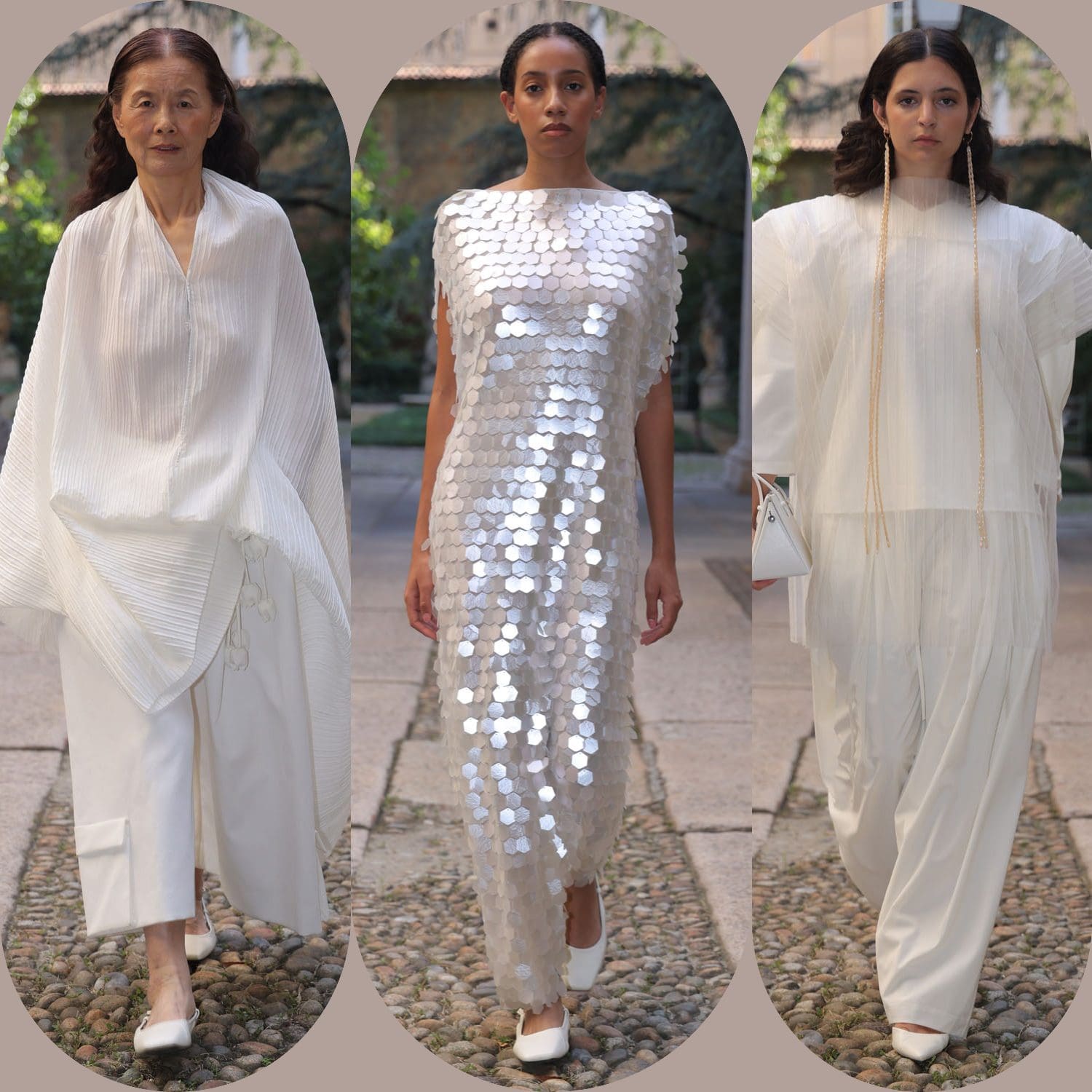
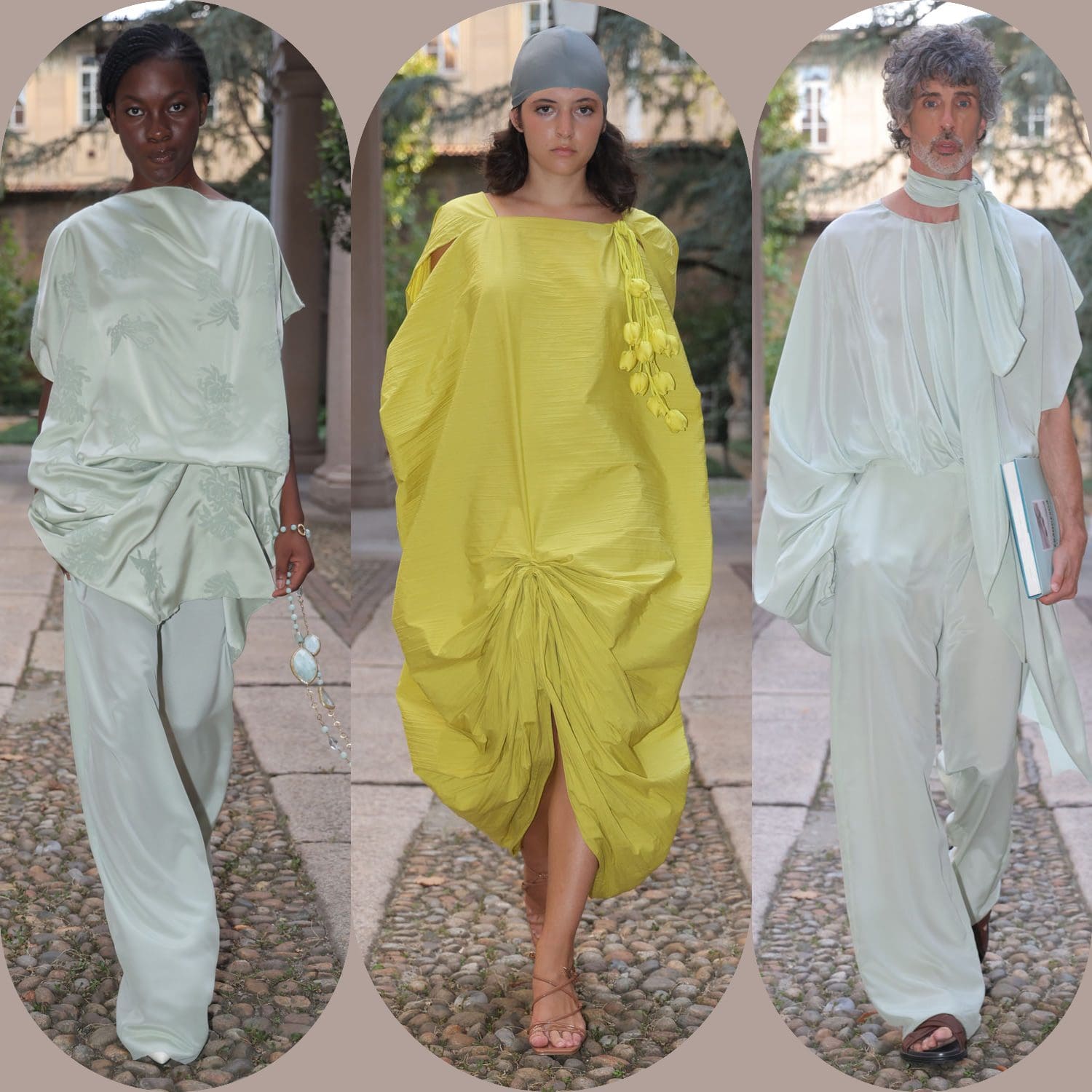
The study of volume unfolds through meticulous material manipulation, where ancient Eastern draping intersects with razor-sharp Italian craftsmanship. Consider the grand pleated stole worn over fluid wide trousers: gossamer micro-pleating cascades down the shoulders like an unfolded origami screen, catching natural daylight with quiet authority. Elsewhere, the pleats take on architectural prominence, forming winged, fan-like capes that sit cleanly across the clavicles, anchoring ethereal tunics finished with hanging droplet cordons. These pleats do not serve as decorative frills; they function as rhythmic score lines that measure the body’s movement through space.
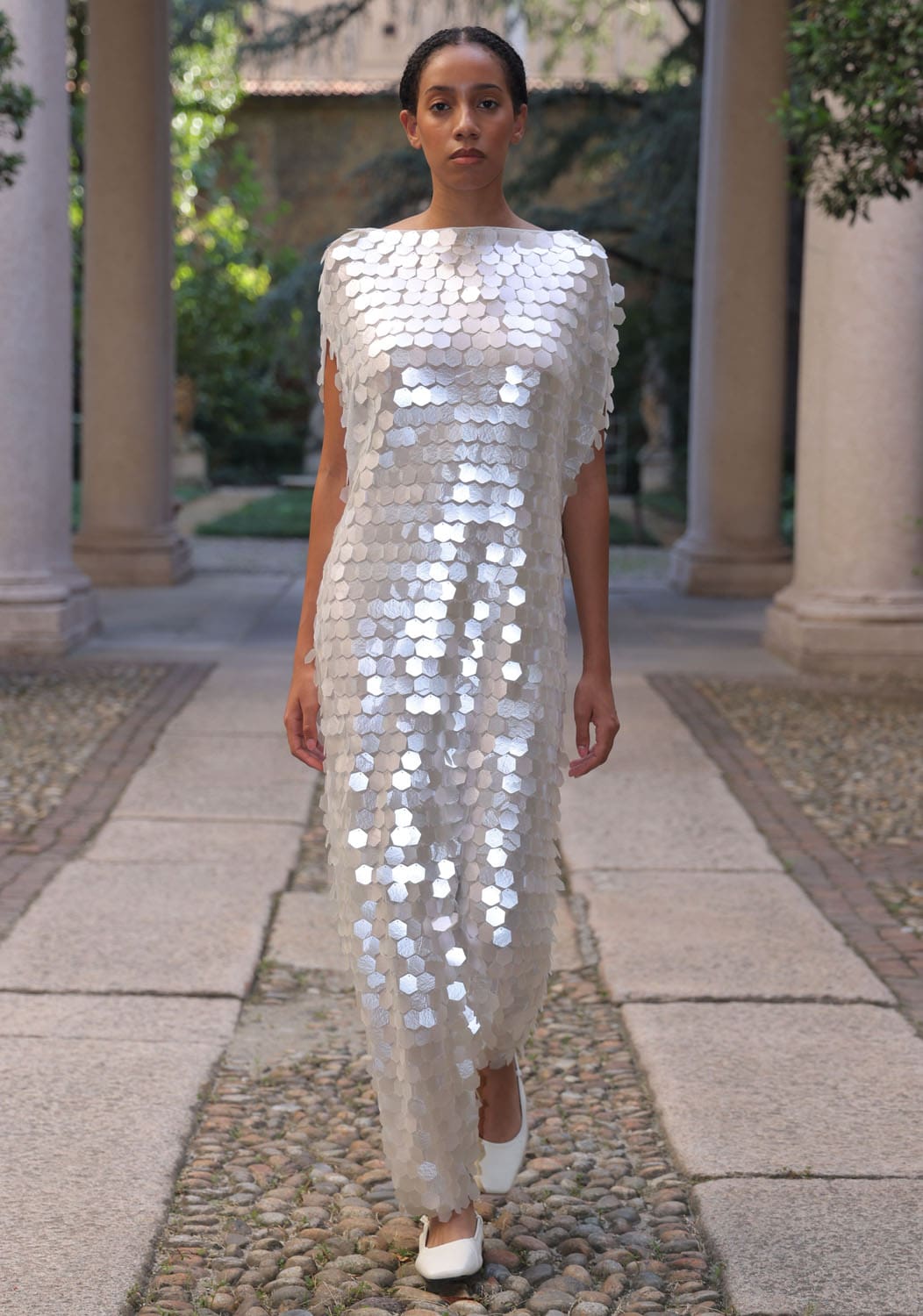
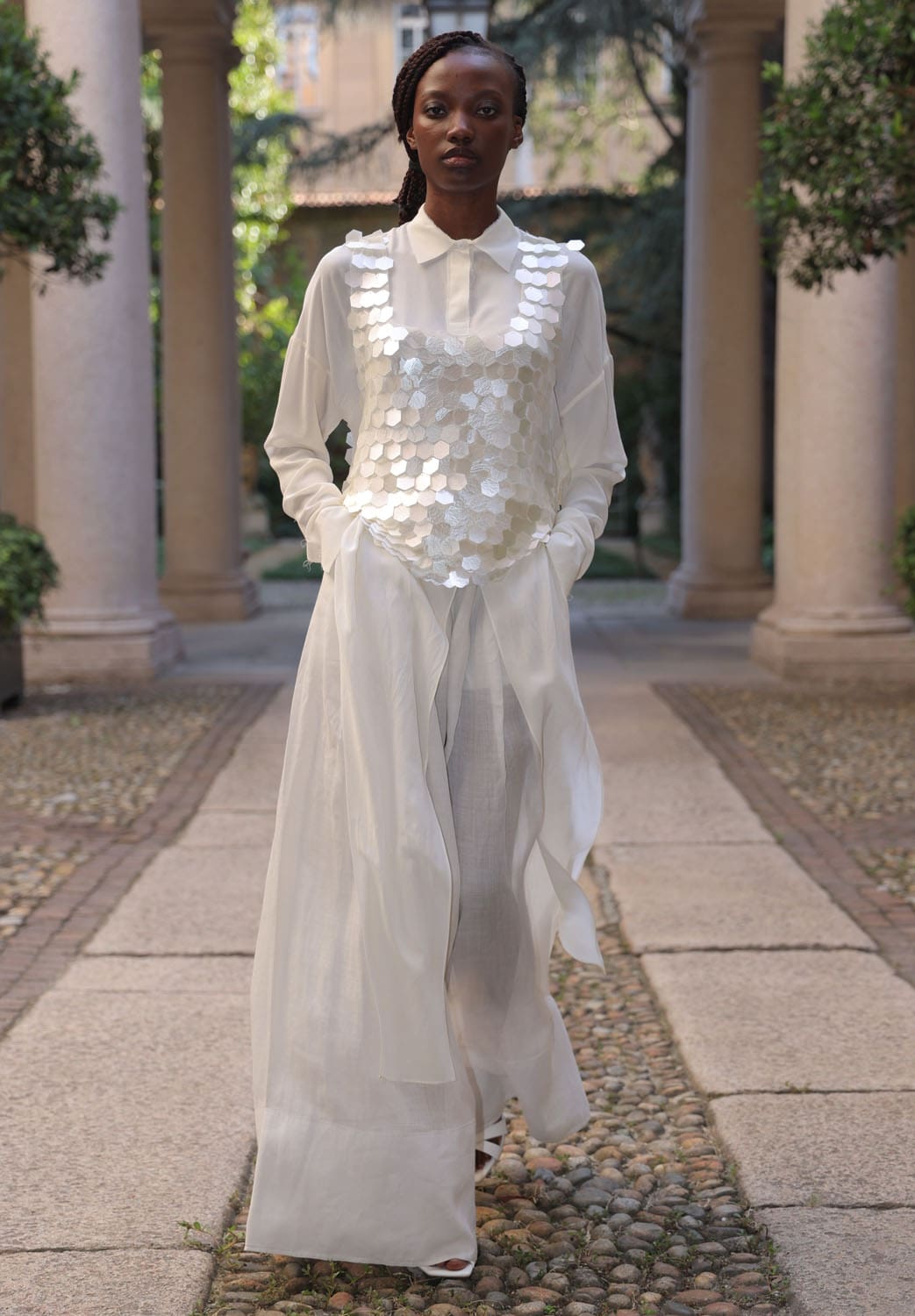
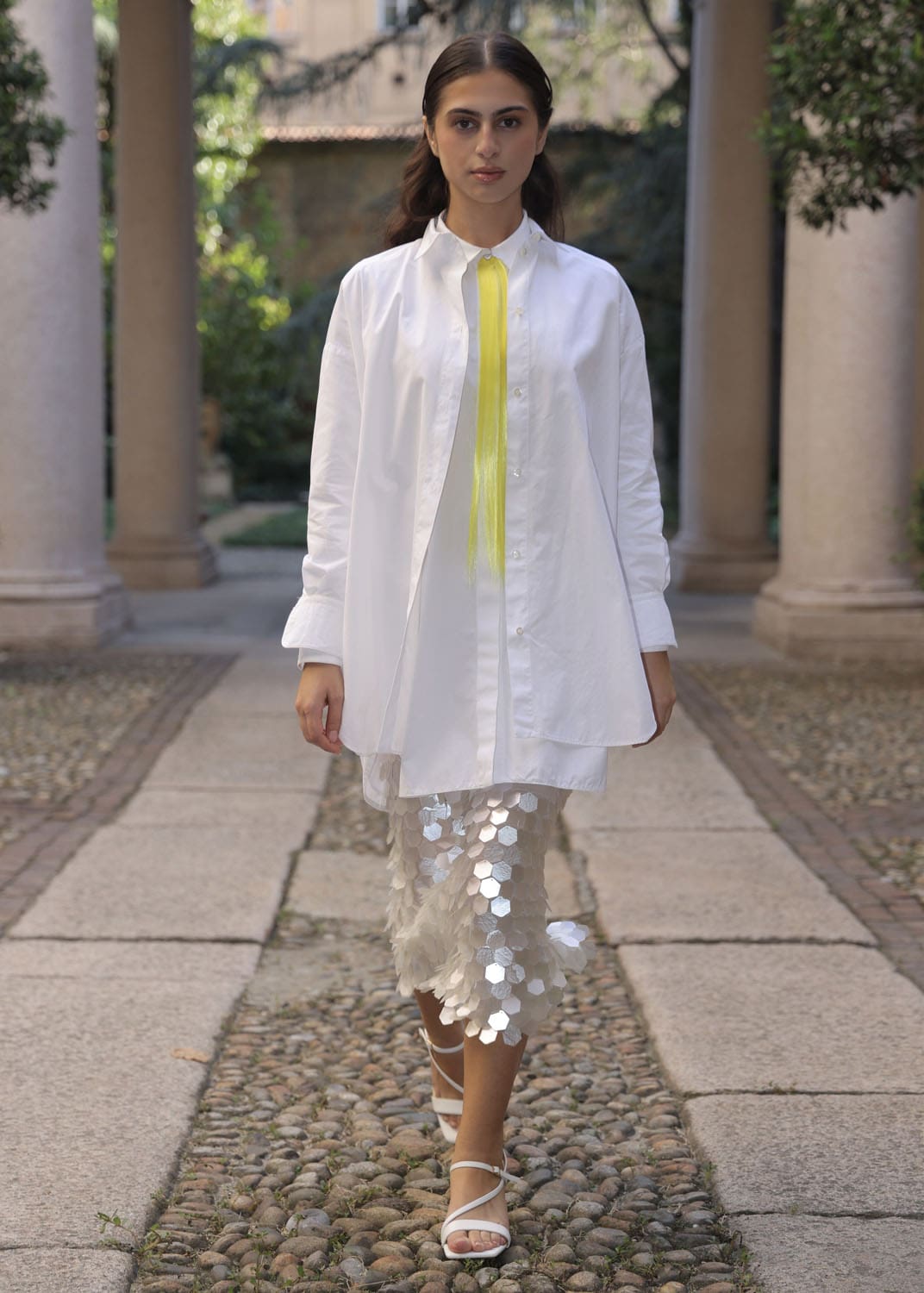
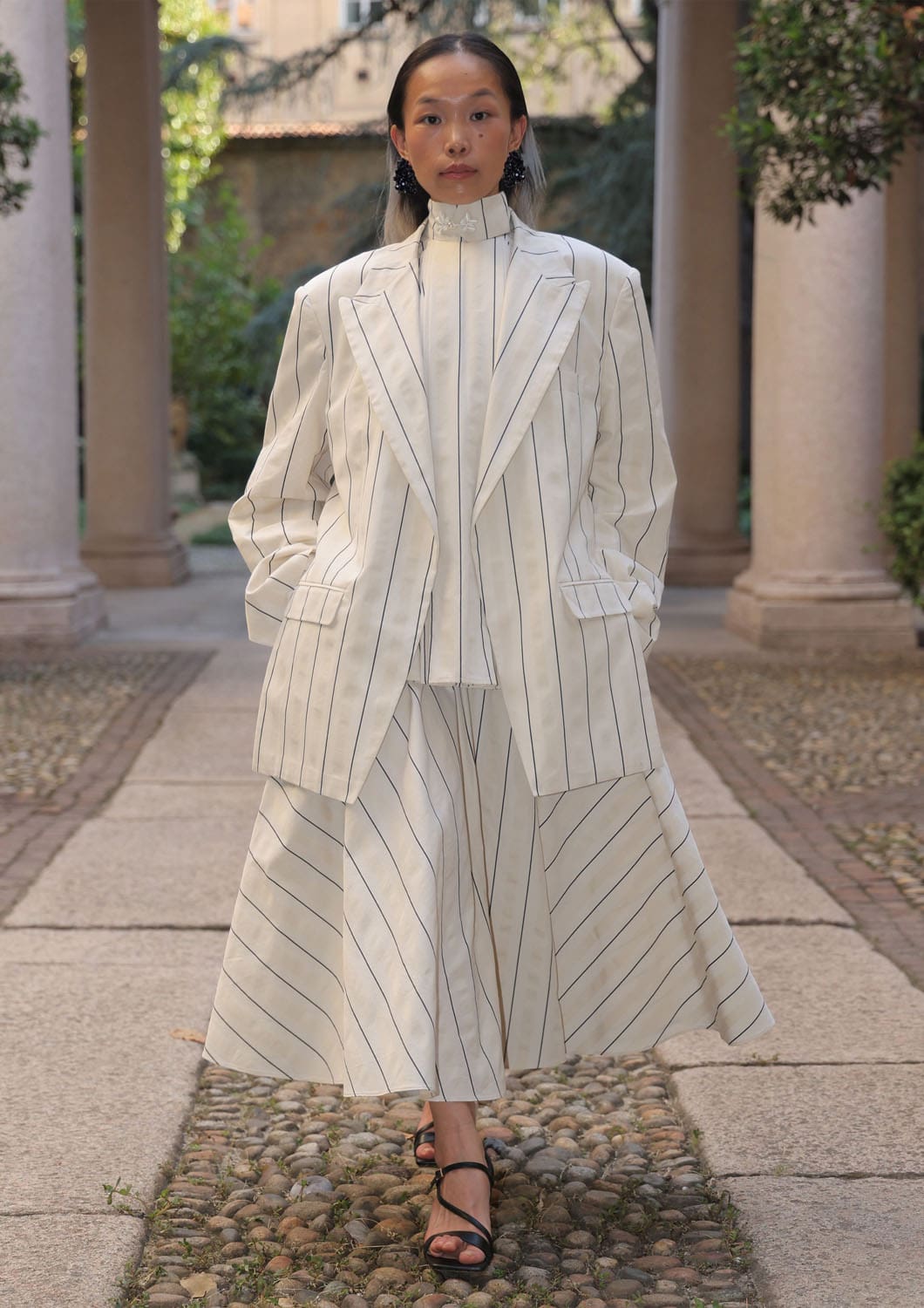
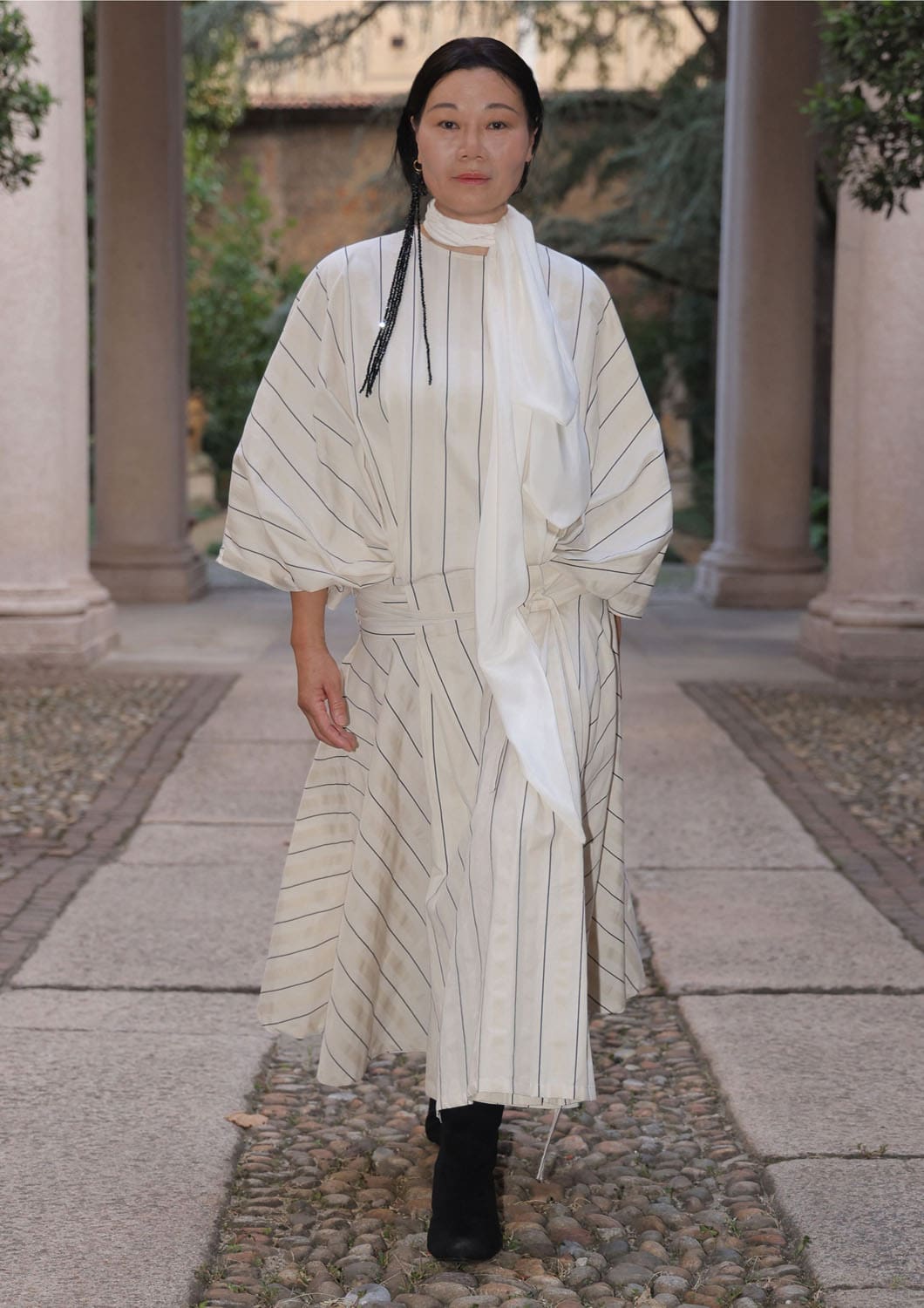
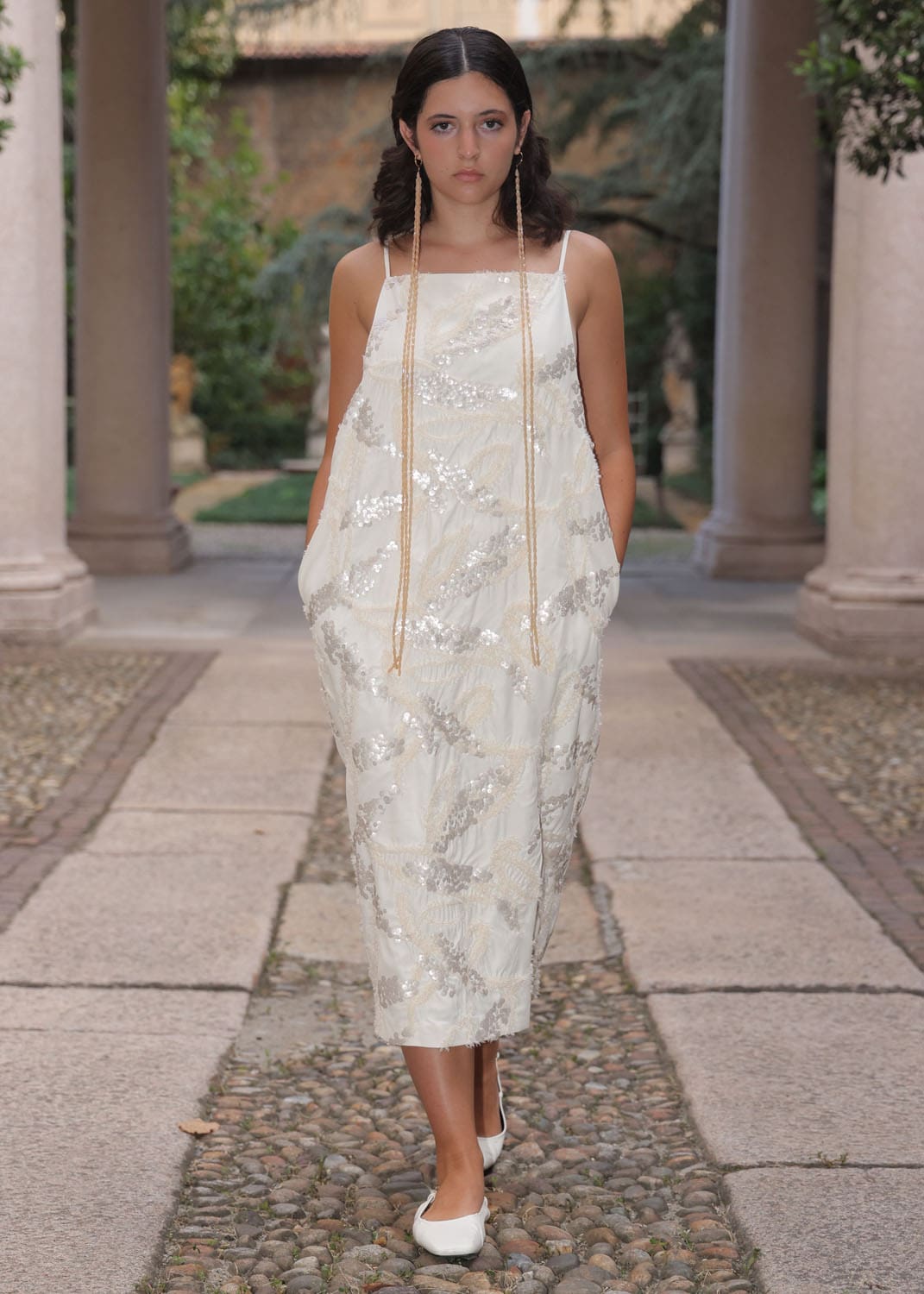
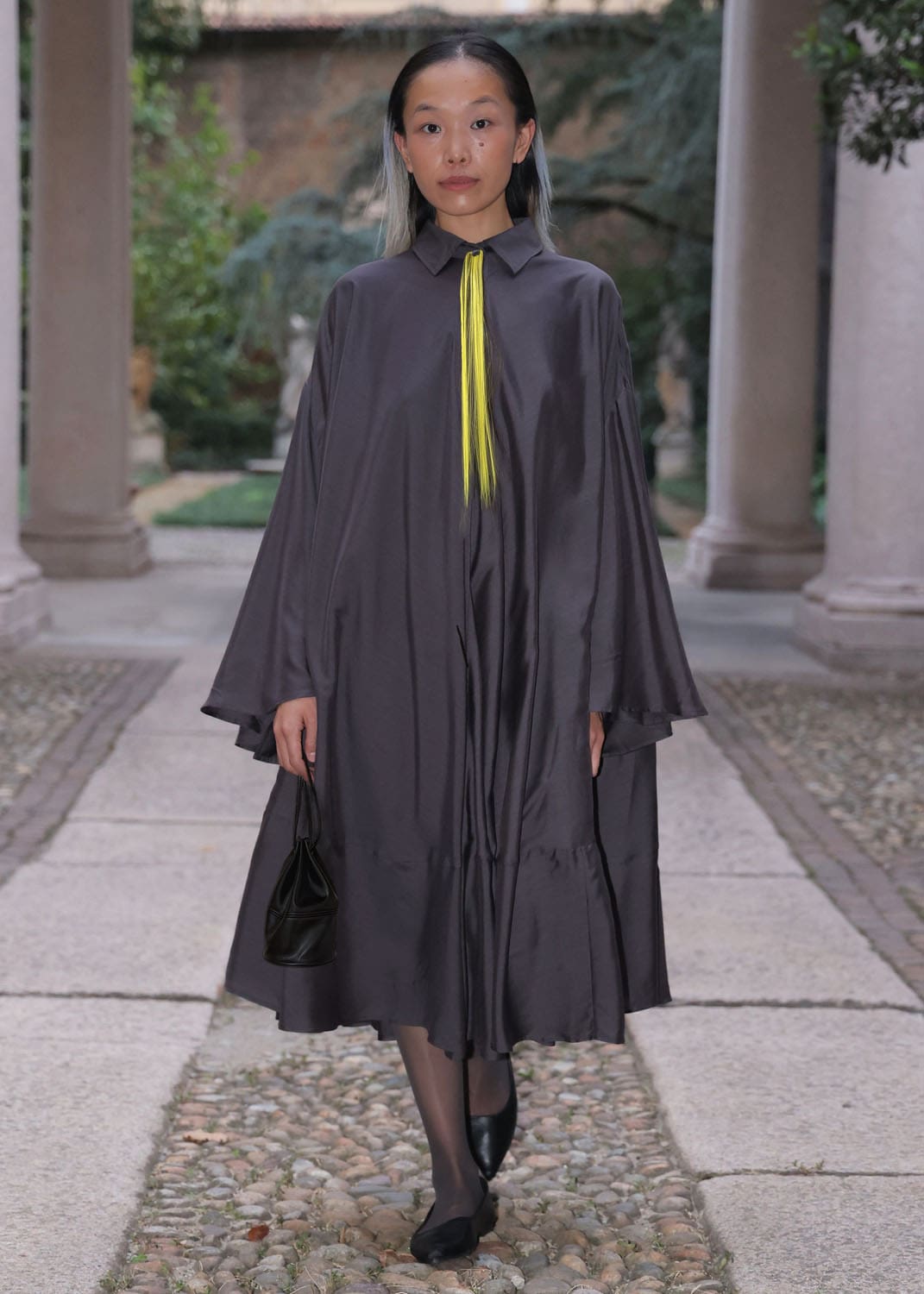
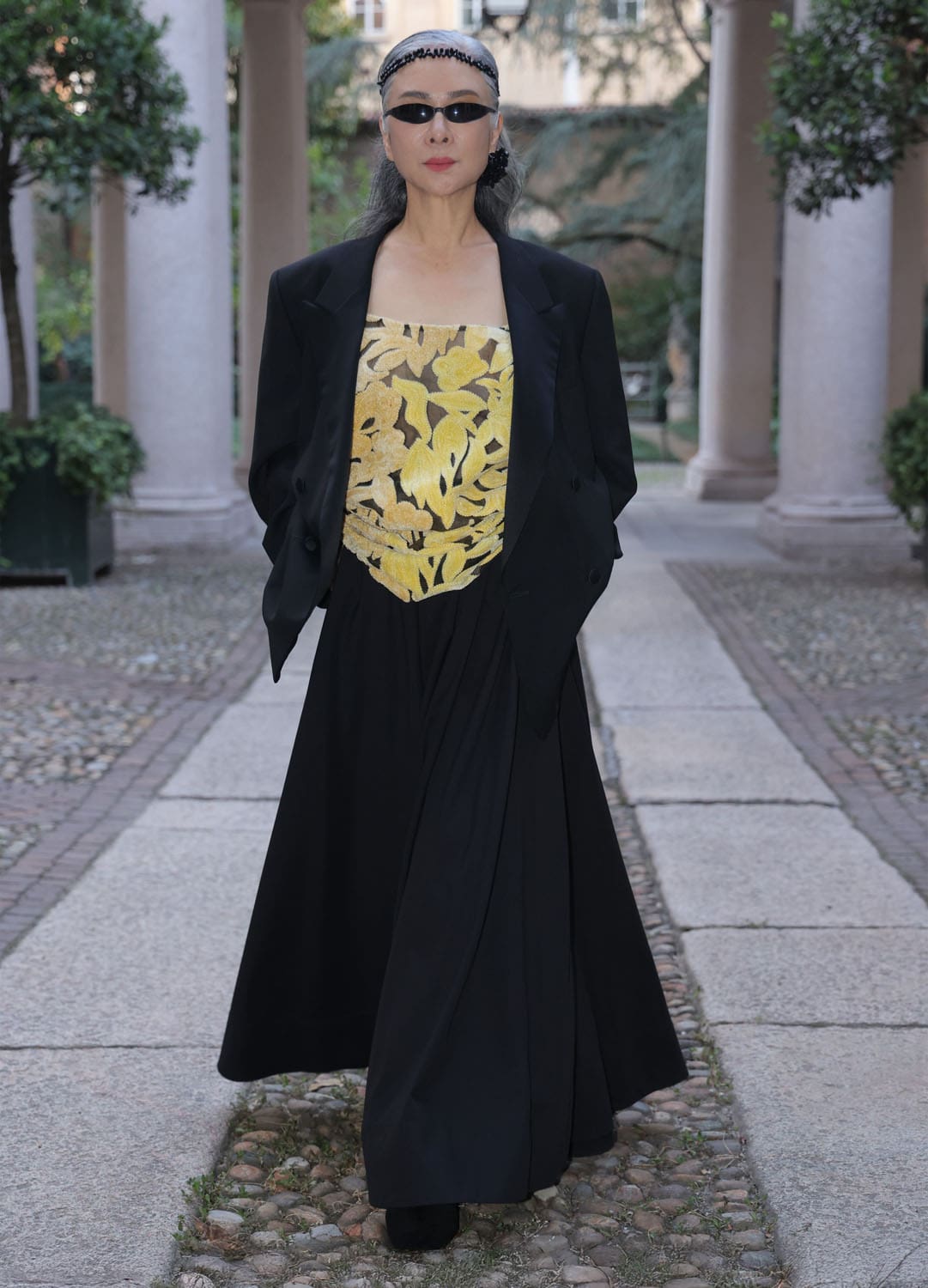
Then arrives the intervention of light through texture. Zambelli introduces iridescent mother-of-pearl paillettes, each hexagonal sequin linked to resemble aquatic armor or reptilian shed skins. In a columnar sleeveless gown, these luminescent plates shimmer against the cobblestones, catching sunlight like midday reflections across water. The motif repeats in hybrid variations: an artisanal iridescent bib layered squarely over a pristine collared shirt-dress, and a mid-length skirt whose articulated scales peek beneath an oversized cotton button-down accented by a vivid strand of sulphur silk thread. This contrast of austere cotton poplin against reflective paillettes encapsulates the dialogue between domestic utility and ceremonial introspection.
Volumes of Radical Restraint
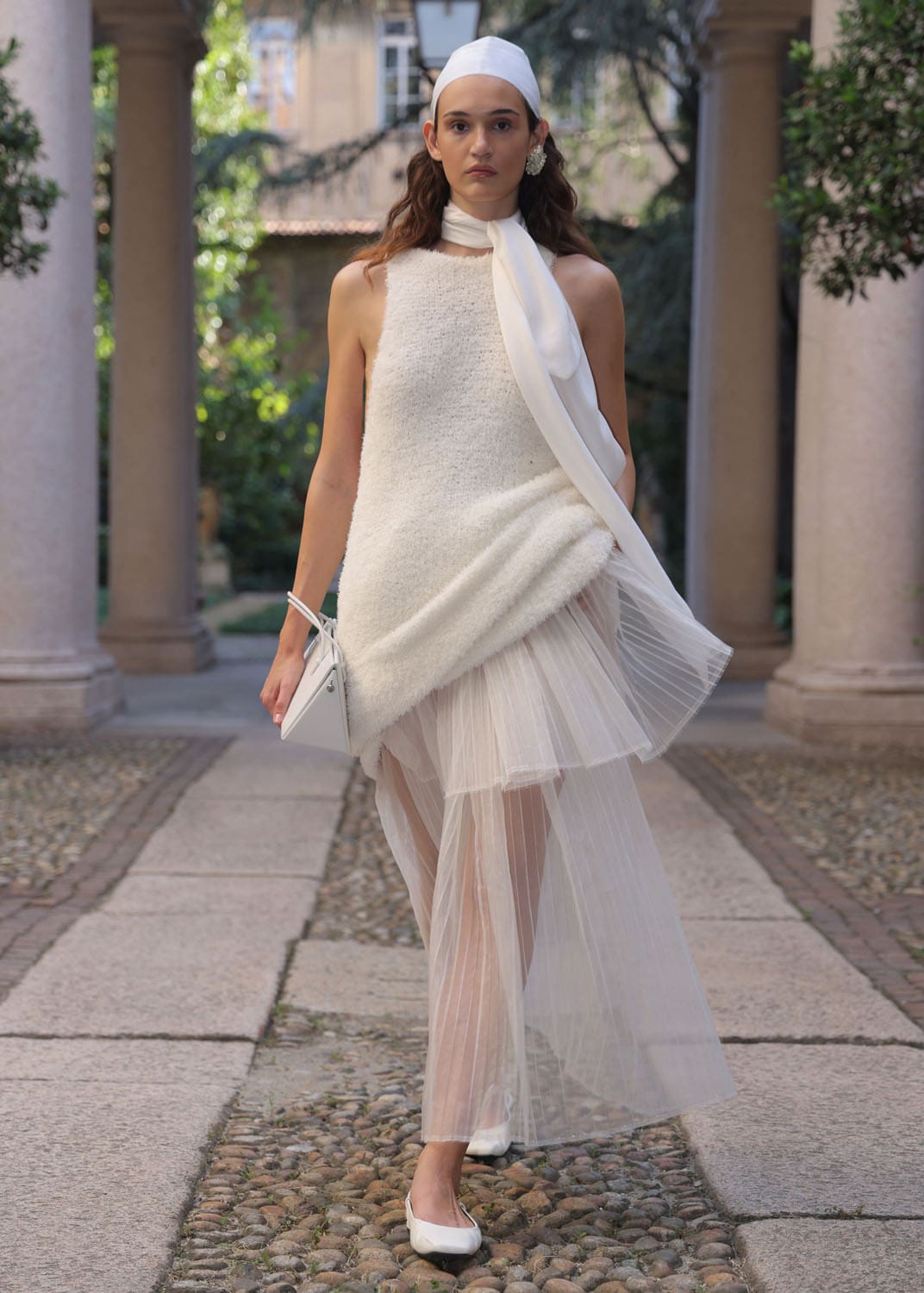
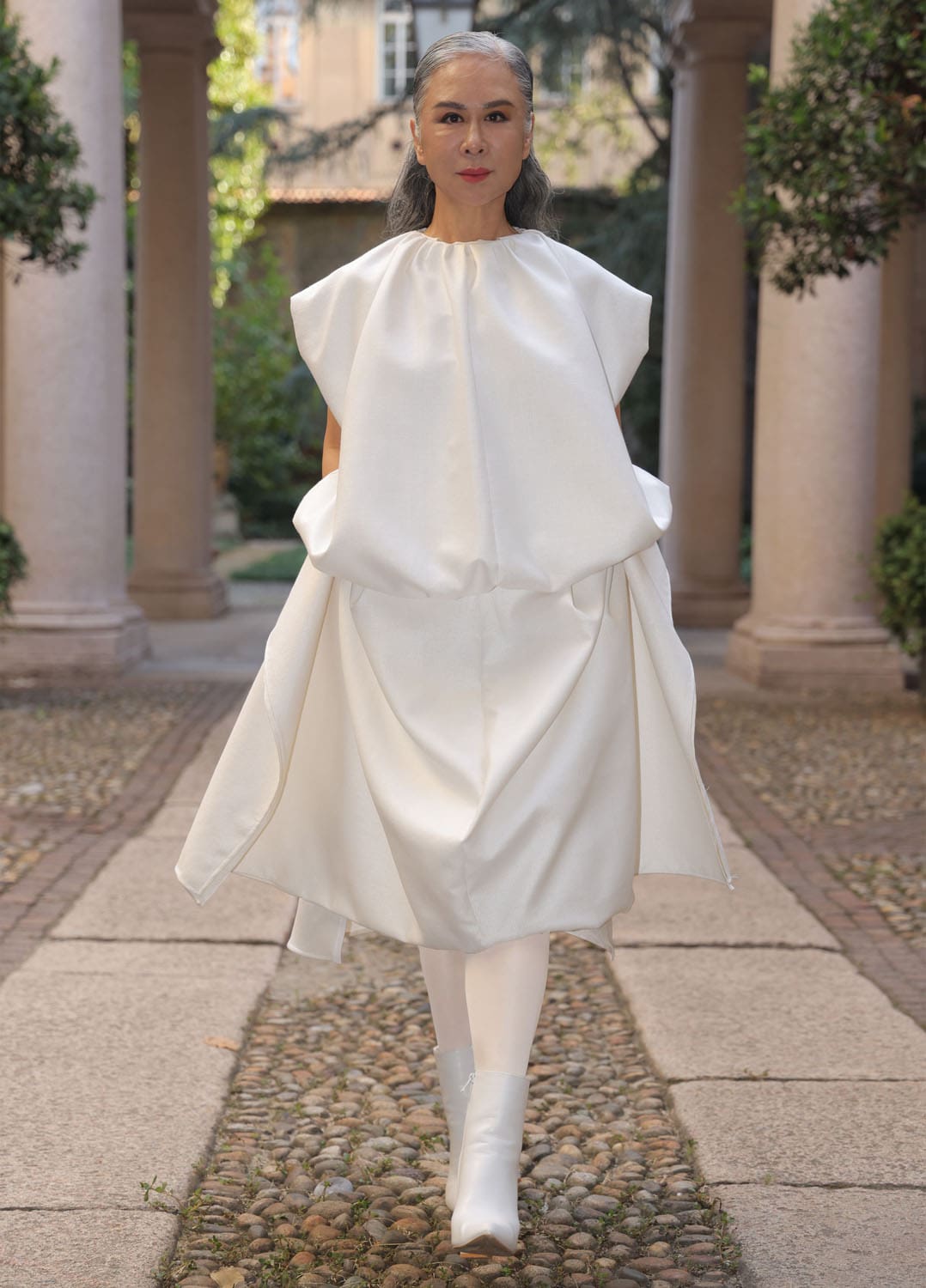
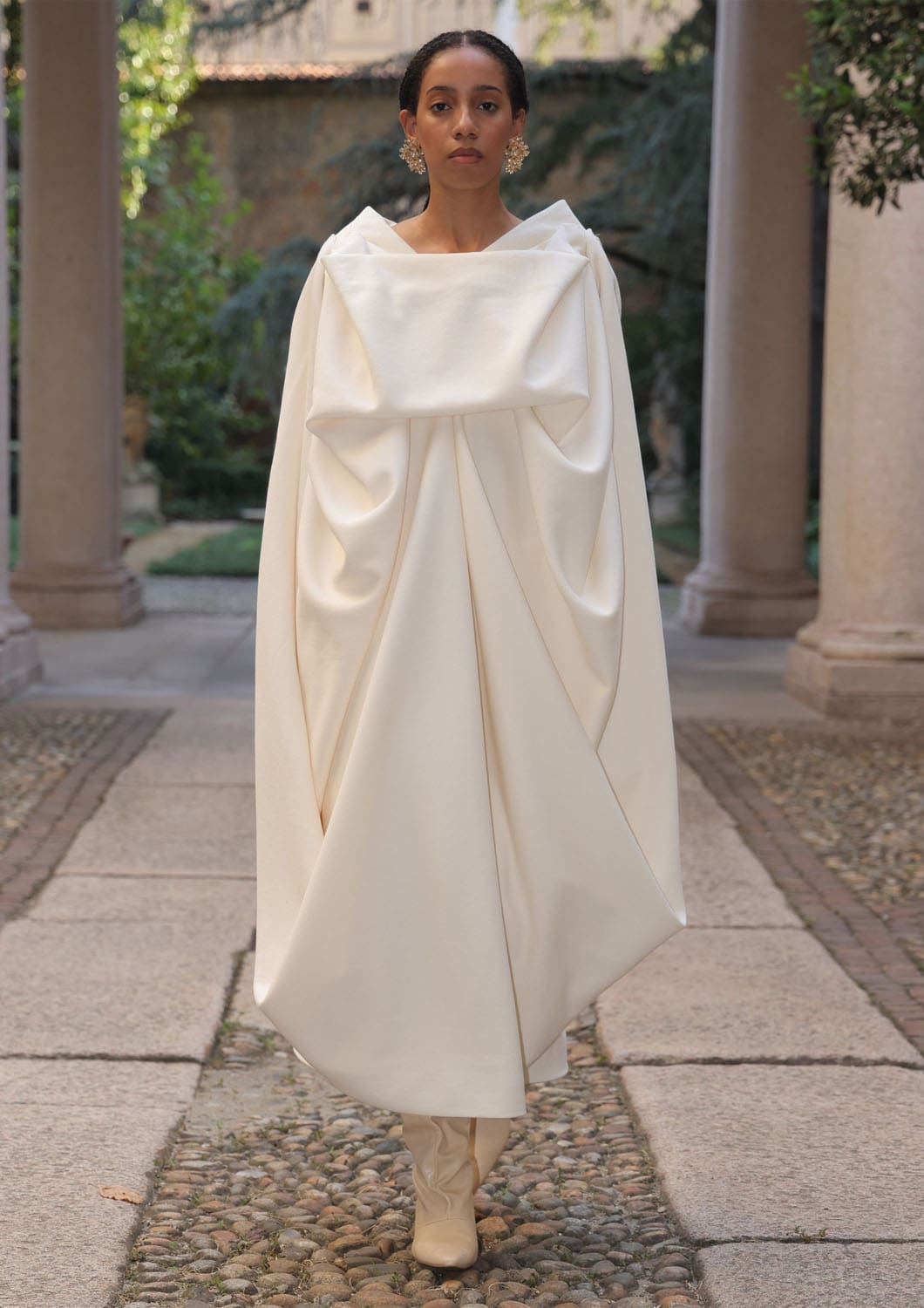
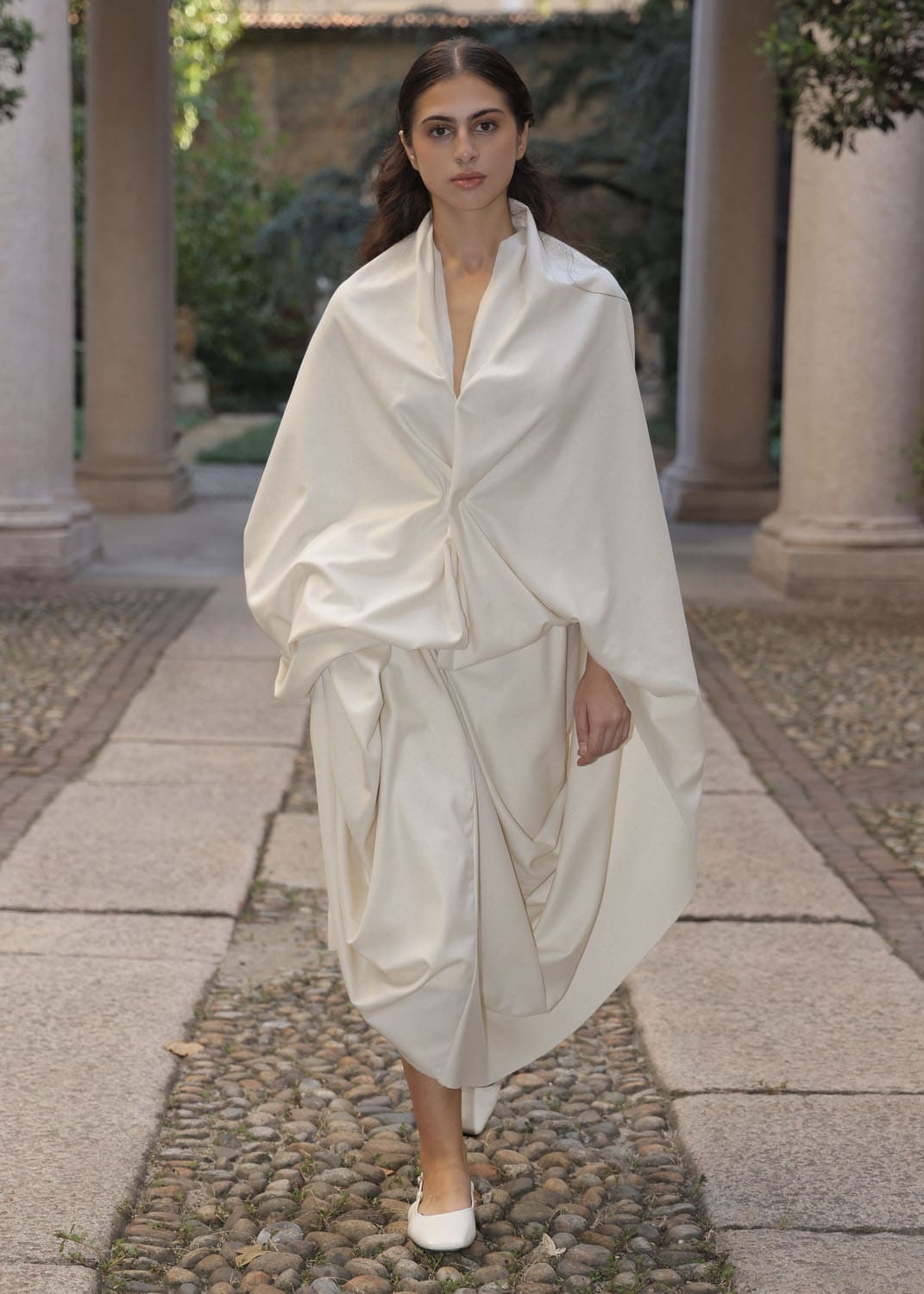
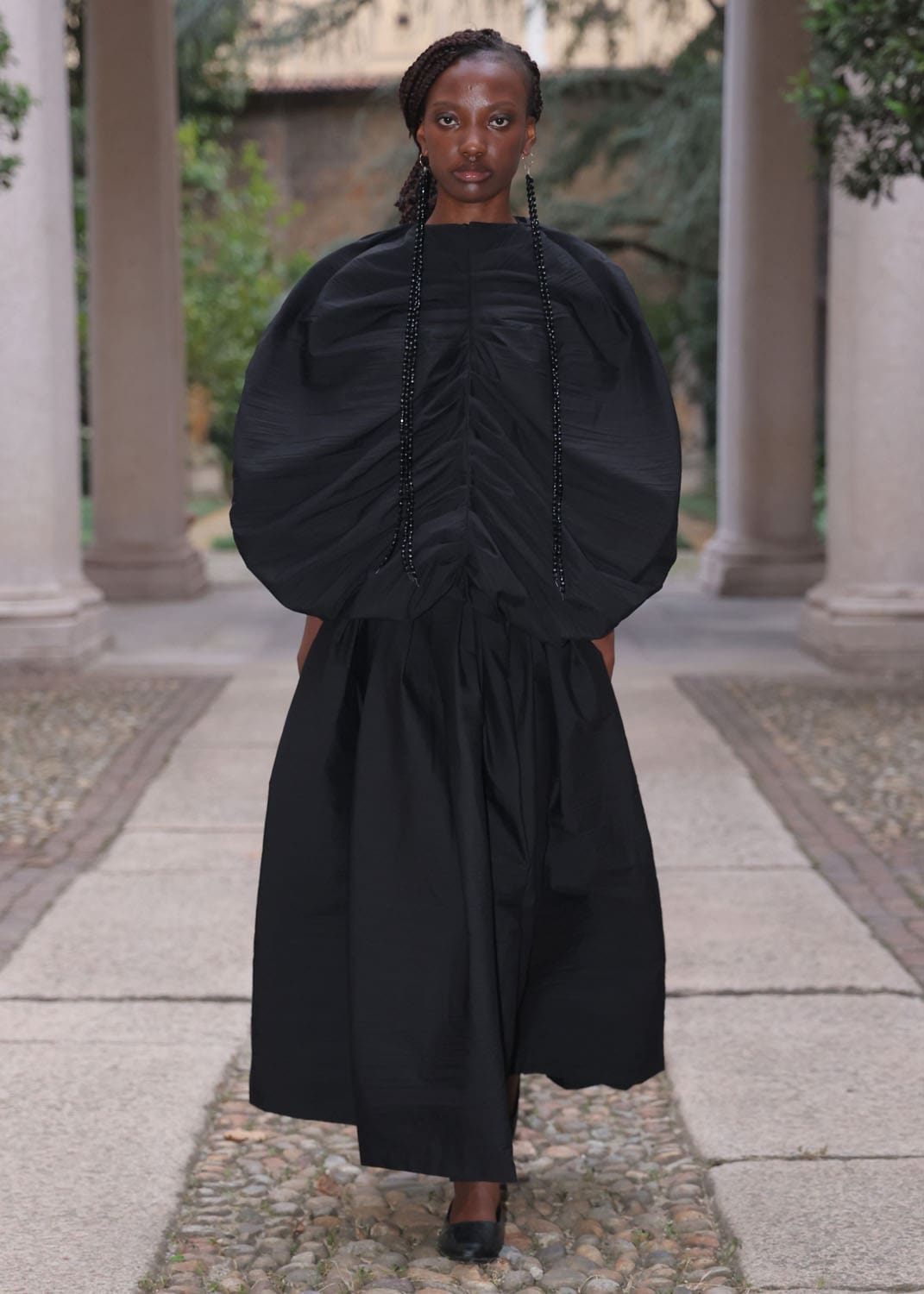
Where tailoring usually carves into the waist, Zambelli pursues circular silhouettes and cocoon forms. Look to the monumental egg-shaped cape dress sculpted from heavy cream fresco wool: folds fold over the bust in an origami fold, falling inward toward the knees in a seamless geometric shell. The model’s gilded ear adornment, crafted in lost-wax bronze by Andrea Mariconti, provides the singular baroque punctuation to an otherwise monastic study in proportion.
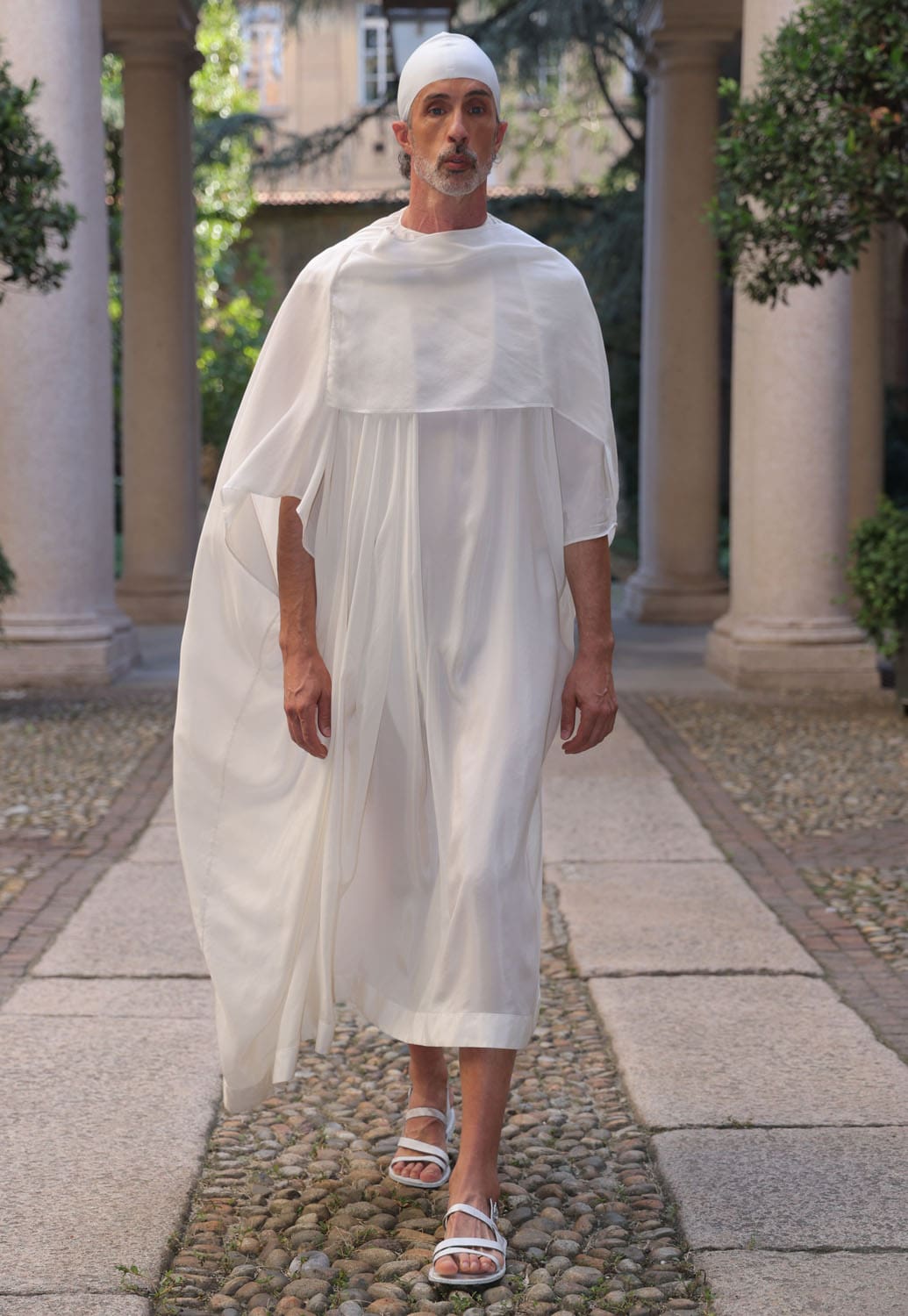
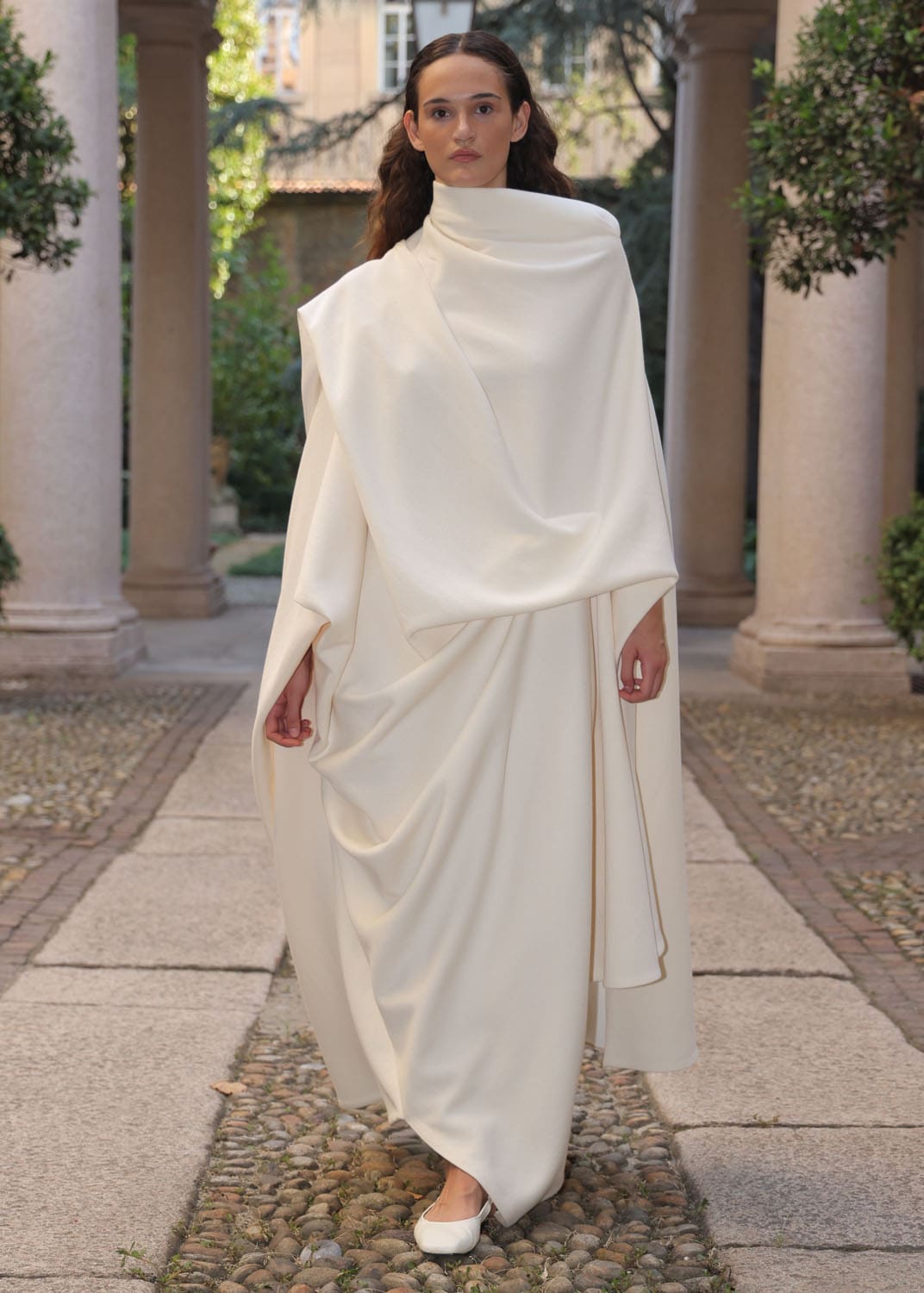
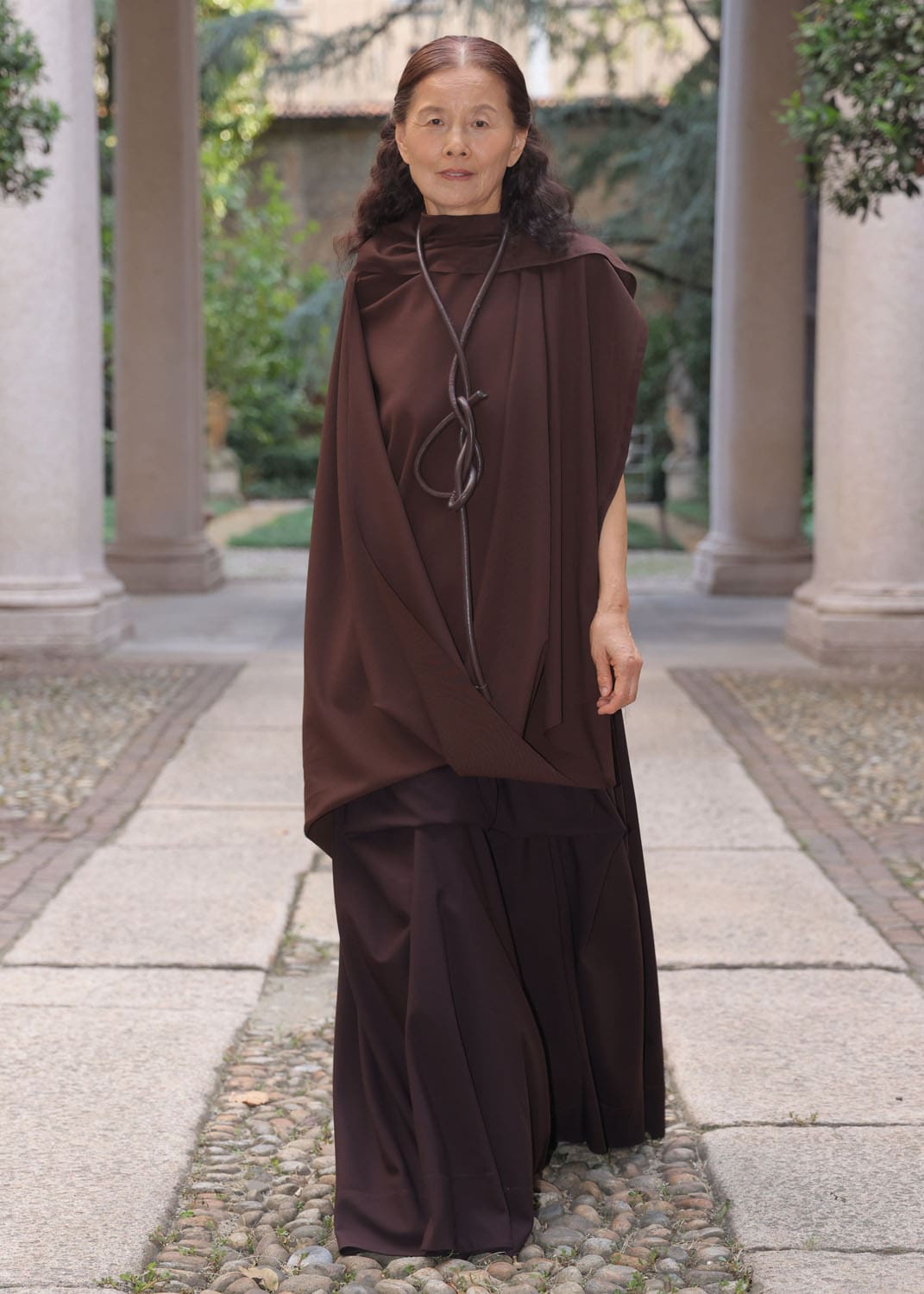
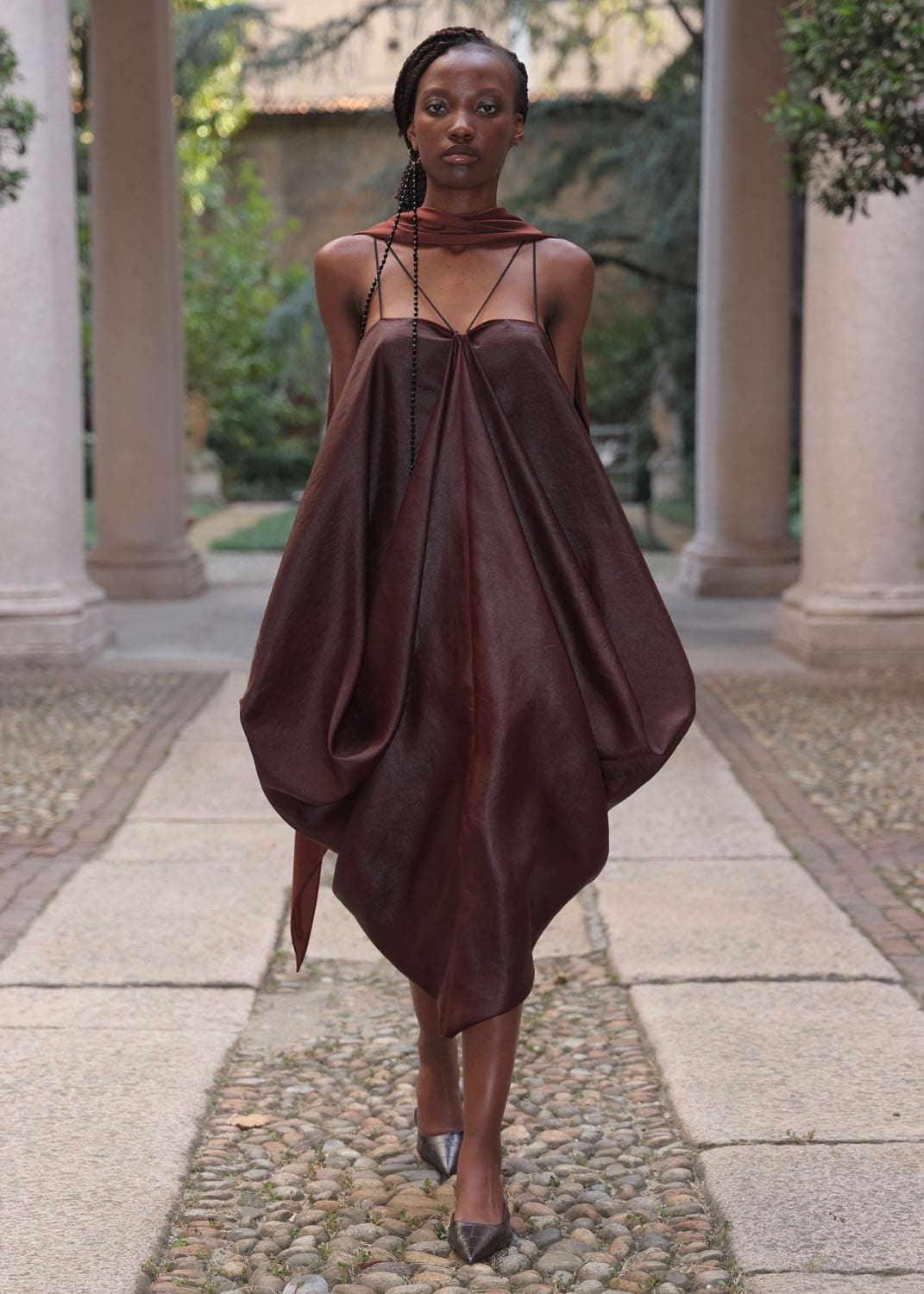
A draped asymmetric cocoon further explores this spatial containment. The textile wraps once around the throat in a generous cowl, cascading along the arm to create a monolithic sanctuary. There are no zippers shouting for attention, no visible fastenings to interrupt the cadence of the fold. The silhouette honors the Japanese iromuji philosophy—garments steeped in single tones that elevate material integrity over ornament.
The Sacred Perimeter
Fashion frequently mistaken noise for relevance. Zambelli counters this with an olfactory and visual silence, offering garments that act as tactile membranes between the self and the world. Through lime white, obsidian, sulphur, and deep mahogany, the collection establishes that the truest luxury today is neither excess nor spectacle. True luxury is the space one chooses to protect. By cutting garments that hold air, memory, and calm, Zambelli gives the modern nomad the rarest gift of all: an unshakeable room of one’s own.
See All Looks Alberto Zambelli Spring Summer 2027